Panasonic Launches New WhisperFit DC® with Bluetooth® Speakers for an Elevated Home Ventilation Experience
A smart ventilation solution that combines humidity control and high-quality audio, designed to help homebuilders elevate spaces for modern living.


Panasonic, a leading provider of ventilation and sustainable indoor living solutions to the building industry, announces its new WhisperFit DC® with Bluetooth Speakers. This next level exhaust fan brings together premium sound, smart connectivity and superior indoor ventilation in moist and humidity prone areas, such as bathrooms or laundry rooms. Featuring dual-device Bluetooth pairing, the WhisperFit DC with Bluetooth Speakers offers a unique option for builders, contractors, and developers seeking to manage moisture and enhance indoor air quality in their residential construction projects. The unit was designed with energy efficiency in mind, earning ENERGY STAR® certification and recognition by the Home Ventilating Institute for helping builders meet code requirements while delivering long-term value to homeowners.
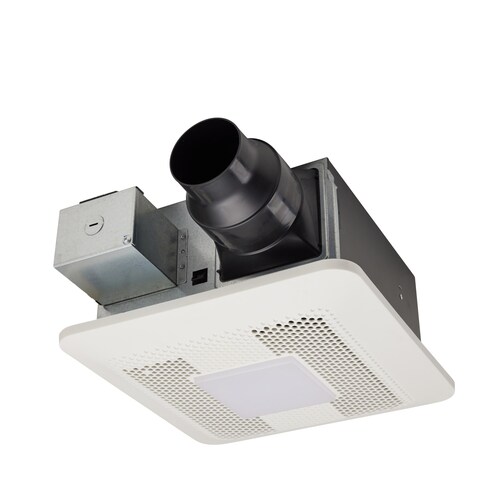
Offering simple installation for either a remodel or new construction, the WhisperFit DC with Bluetooth Speakers is ideal for both single and multi-family residential projects. The unit features the highest decibel rating, quick and seamless pairing for up to two devices, and optimal sound performance with speakers installed directly within the fan housing for reduced vibration. Installation is trouble-free for any type of new build or renovation, easily enhancing indoor air quality and energy-efficiency in high-humidity spaces everywhere.
The WhisperFit DC with Bluetooth Speakers offers key features like:
- Top-Tier Sound Performance: Features dual integrated speakers mounted inside the fan housing to deliver sound clarity with the highest decibel rating, even in moisture prone environments
- Convenient QuikConnect ™ Dual-Device Pairing: Allows simultaneous QuikConnect™ Bluetooth pairing for up to two Apple or Android devices with no need to disconnect and reconnect
- Long-Lasting LED Dimmable Lighting with Nightlight: Adds safety and ambiance with long-lasting, energy-efficient lighting and built-in nightlight with adjustable brightness
- Cost-Saving DC Motor Technology: Operates with a quiet, energy-efficient extended motor, helping to reduce long-term operational costs
- Whisper Quiet Operation: Ensures powerful ventilation with minimal noise for superior user satisfaction with a low sone rating of 0.4 at 80 cubic feet per minute (CFM) and 1.0 at 110 CFM
- Dynamic Pick-A-Flow™ Speed Selector: Offers 50/80/110 (CFM) airflow options to meet specific ventilation needs, simplifying selection and reducing inventory complexity
- Easy Installation Options: Installs quickly, in remodels or new construction, from below the ceiling using Flex-Z Fast brackets, fits 2×6 joists, supports both 3″ and 4″ ducts, plus works with existing ductwork
- Superior Warranty Offering: Provides long term peace of mind through Panasonic’s industry leading warranty offering 6-year electronically commutated motor (ECM) warranty, 3-year parts warranty, 5-year warranty on LED chip panel, and 1-year warranty on speakers
“Panasonic is a go-to partner for builders and homeowners seeking smarter, more efficient air quality solutions,” said Leon Van Oostende, Group Sales Manager at Panasonic Eco Systems North America. “The WhisperFit DC with Bluetooth Speakers is a perfect example of exciting, unexpected features in an essential home system. By integrating a dual-speaker system crafted for immersive audio into our trusted, energy-efficient ventilation fan, we’re not only enhancing homeowner comfort and convenience – we’re redefining what’s possible in indoor living solutions.”
For more information on the WhisperFit DC with Bluetooth Speakers visit: https://iaq.na.panasonic.com/whisperfit-dc-bt
For more information about Panasonic indoor air quality solutions, visit: https://iaq.na.panasonic.com/
About Panasonic Corporation of North America
Newark, NJ-based Panasonic Corporation of North America is a leading provider of Consumer Lifestyle technologies, as well as innovative Smart Mobility, Energy Transition, Immersive Experiences, and Integrated Supply Chain solutions. The company is the principal North American subsidiary of Osaka, Japan-based Panasonic Holdings Corporation. One of Interbrand’s Top 100 Best Global Brands of 2024, Panasonic is a leading technology partner and integrator to businesses, government agencies and consumers across the region. Learn more about Panasonic’s ideas and innovations at na.panasonic.com/us.
The Bluetooth® word mark and logos are registered trademarks owned by Bluetooth SIG, Inc. and any use of such marks by Panasonic is under license.
About The Author