
Galaxy Cluster
-
NASA
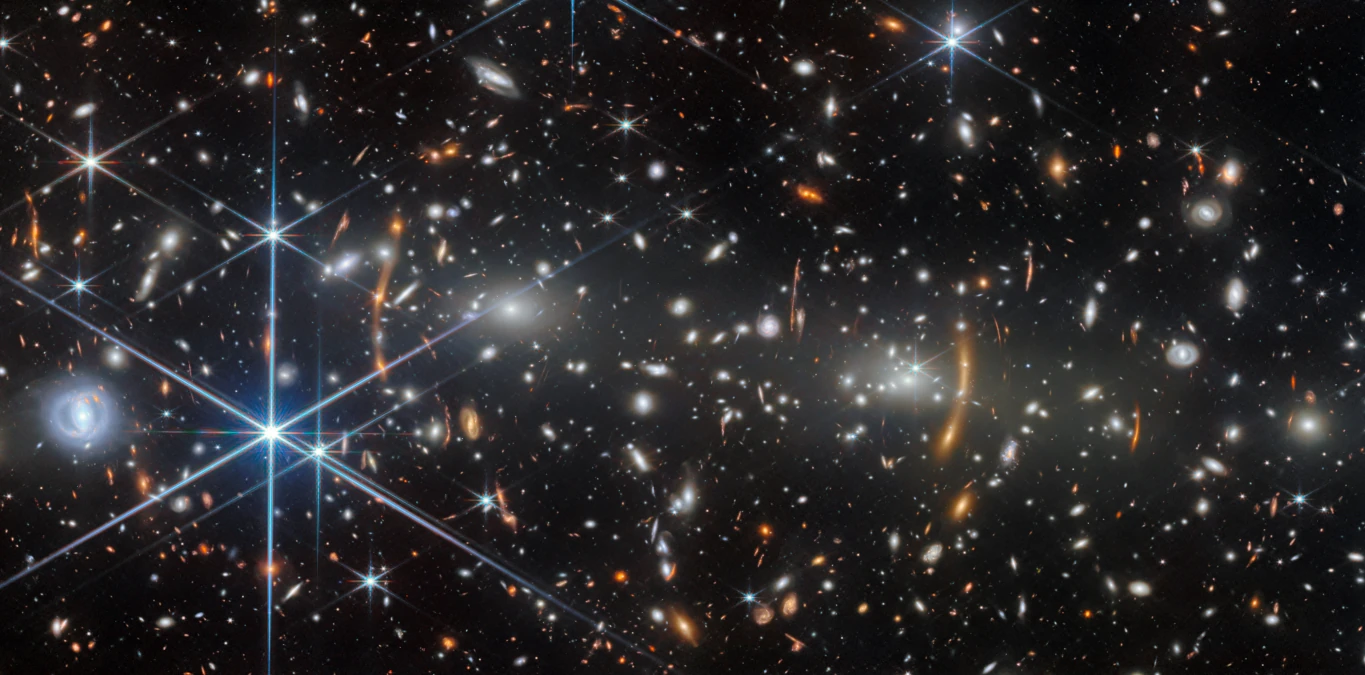
Young Galaxy Cluster
NASA’s James Webb Space Telescope takes us 4.4 billion years in the past with this July 3, 2026, image of a young galaxy cluster, MACS J0553.4-3342. The cluster is composed of two actively merging sub-clusters, roughly equal in mass. Each sub-cluster is anchored on an immensely bright and massive elliptical galaxy, easily identifiable as the two brightest points in the…
Read More » -
NASA
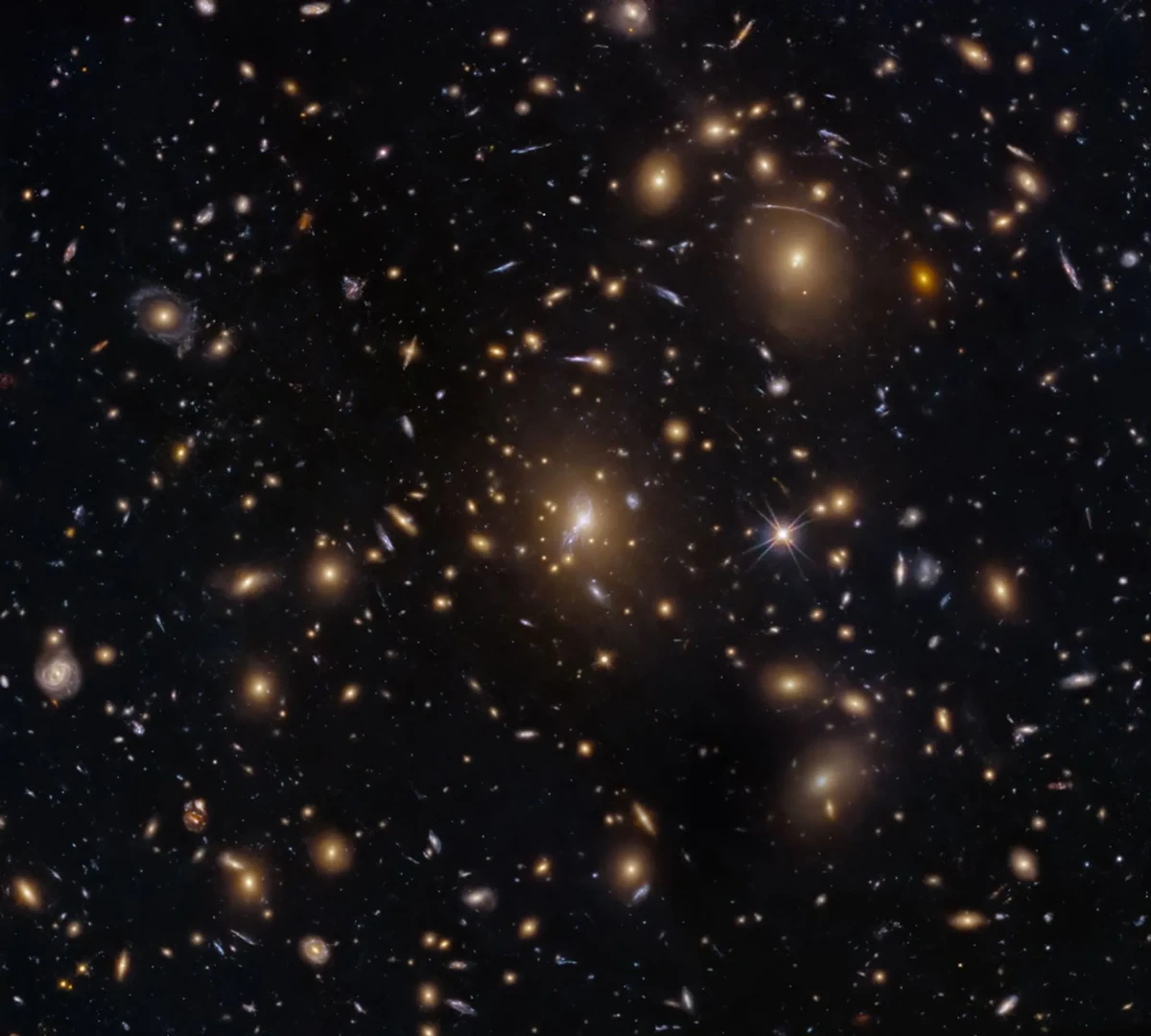
Hubble Sees Swarm of Galaxies
Looking somewhat like a swarm of bees returning to their hive, this NASA Hubble Space Telescope image released on June 12, 2026, features the galaxy cluster MACS0329-0211. Galaxy clusters like MACS0329-0211 are important signposts in the story of how the structure of the universe evolved, and are the ultimate telescopic lenses, placing gravitationally lensed galaxies from the earliest stages of the universe…
Read More » -
NASA
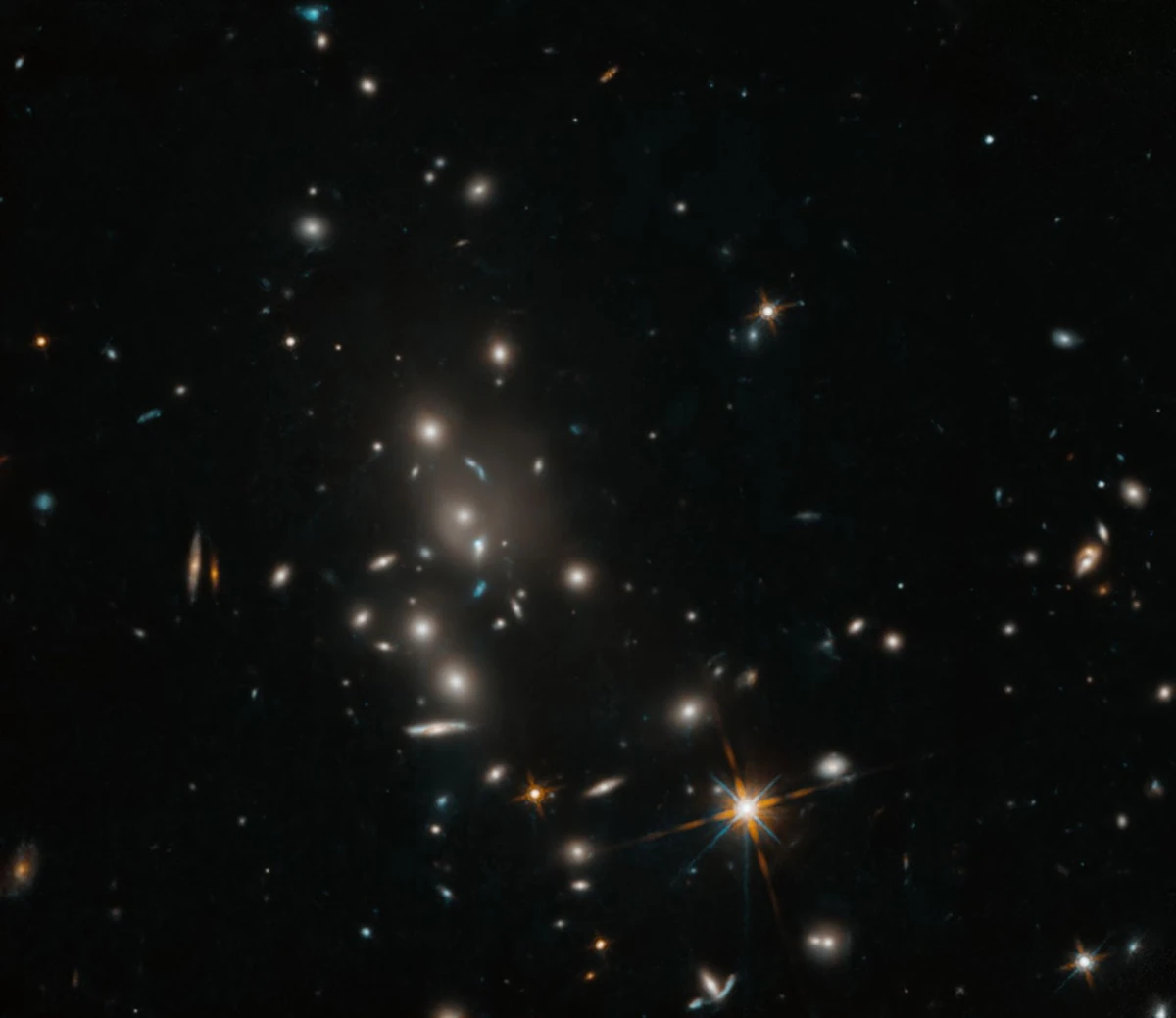
Hubble Captures Galaxy Cluster
Look closely at this image from NASA’s Hubble Space Telescope and you’ll see galaxies of various shapes and sizes clustered together toward the center-left of the image. A few foreground stars shine brightly and are easily distinguished by the spikes that appear to extend outward from each star. These spikes, called diffraction spikes, are the result of how point sources of light (such…
Read More » -
NASA
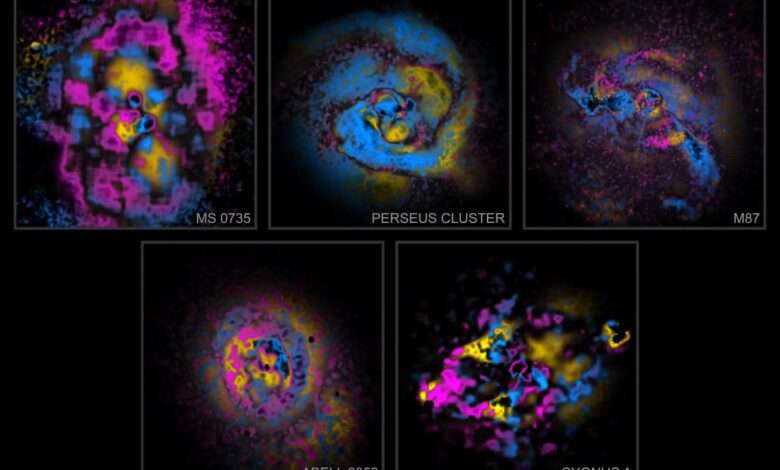
Painting Galaxy Clusters by Numbers (and Physics)
Galaxy clusters are the most massive objects in the universe held together by gravity, containing up to several thousand individual galaxies and huge reservoirs of superheated, X-ray-emitting gas. The mass of this hot gas is typically about five times higher than the total mass of all the galaxies in galaxy clusters. In addition to these visible components, 80% of the…
Read More » -
NASA
Hubble Snaps Galaxy Cluster’s Portrait
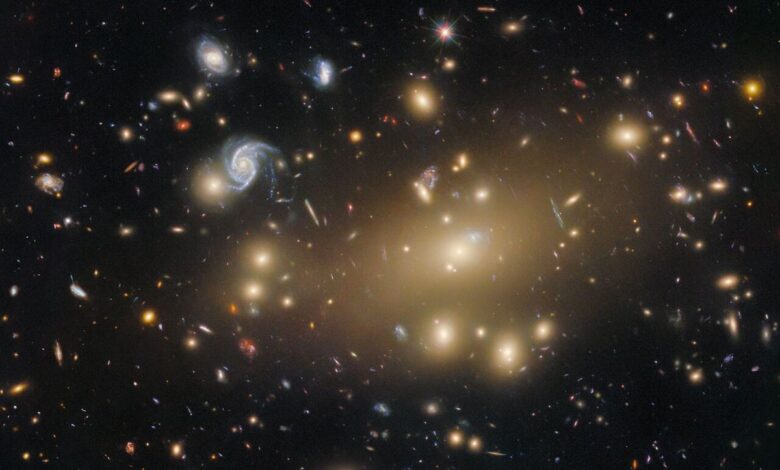
A massive, spacetime-warping cluster of galaxies is the setting of today’s NASA/ESA Hubble Space Telescope image. The galaxy cluster in question is Abell 209, located 2.8 billion light-years away in the constellation Cetus (the Whale). This Hubble image of Abell 209 shows more than a hundred galaxies, but there’s more to this cluster than even Hubble’s discerning eye can see. Abell 209’s…
Read More » -
NASA

Galaxy Clusters on Course to Crash Again, NASA’s Chandra Finds
New observations from NASA’s Chandra X-ray Observatory and other telescopes have captured a rare cosmic event: two galaxy clusters have collided and are now poised to head back for another swipe at each other. Galaxy clusters are some of the largest structures in the Universe. Held together by gravity, they are monster-sized collections of hundreds or thousands of individual galaxies,…
Read More » -
NASA
NASA’s Chandra Finds Galaxy Cluster That Crosses the Streams
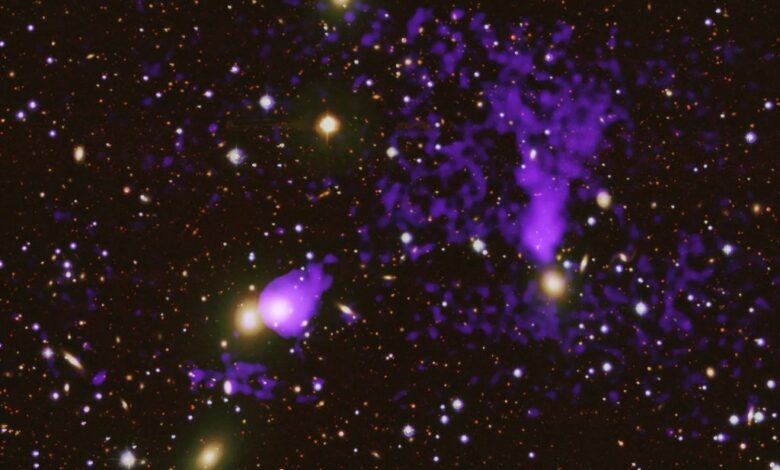
Astronomers using NASA’s Chandra X-ray Observatory have found a galaxy cluster has two streams of superheated gas crossing one another. This result shows that crossing the streams may lead to the creation of new structure. Researchers have discovered an enormous, comet-like tail of hot gas — spanning over 1.6 million light-years long — trailing behind a galaxy within the galaxy cluster called Zwicky 8338 (Z8338 for short). This…
Read More » -
NASA

Spotted: ‘Death Star’ Black Holes in Action
A team of astronomers have studied 16 supermassive black holes that are firing powerful beams into space, to track where these beams, or jets, are pointing now and where they were aimed in the past, as reported in our latest press release. Using NASA’s Chandra X-ray Observatory and the U.S. National Science Foundation (NSF) National Radio Astronomical Observatory’s (NRAO) Very Large Baseline Array (VLBA), they…
Read More »