
Galileo Spacecraft
-
NASA
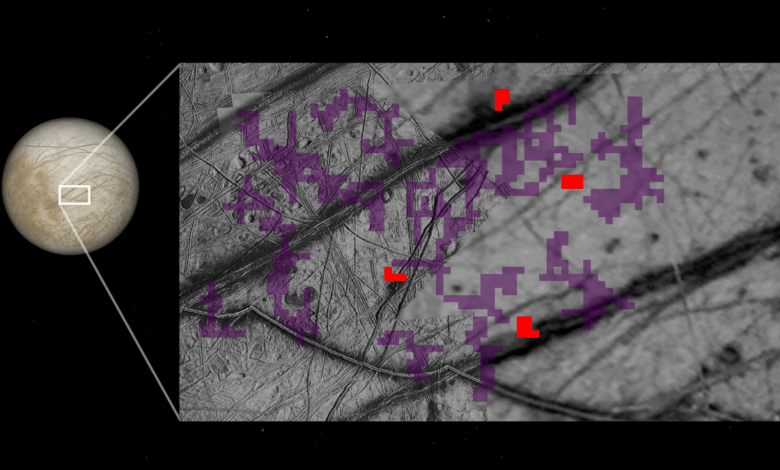
Ammonia-Bearing Compounds Discovered at Surface of Jupiter’s Moon Europa
Description Advanced analysis of decades-old data from NASA’s Galileo spacecraft identifies ammonia-bearing compounds discovered on the surface of Jupiter’s moon Europa, as shown in this composite image. Zooming in on an area about 250 miles (about 400 kilometers) wide, the black-and-white mosaic to the right is composed of multiple images from Galileo’s Solid-State Imaging camera. Overlaid are representations of data…
Read More » -
NASA
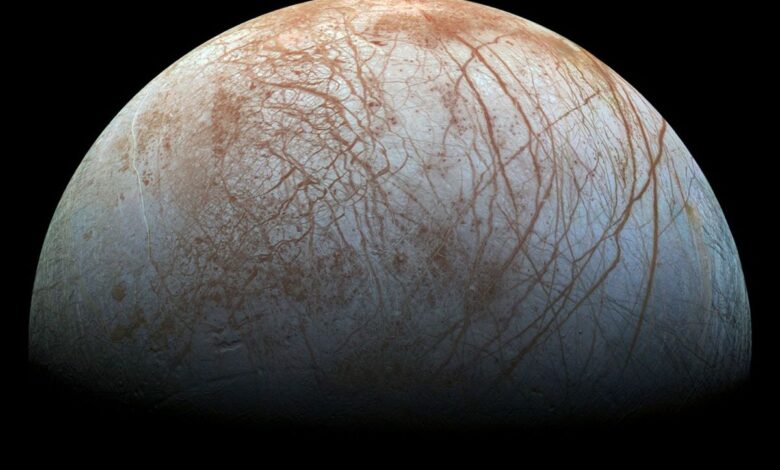
Europa’s Stunning Surface
Downloads View All Europa Resources JPG May 28, 2025 JPEG (2.59 MB) The puzzling, fascinating surface of Jupiter’s icy moon Europa looms large in this newly-reprocessed color view, made from images taken by NASA’s Galileo spacecraft in the late 1990s. This is the color view of Europa from Galileo that shows the largest portion of the moon’s surface at the…
Read More » -
Press Releases

3-D Cilix Crater on Europa
ownloads View All Europa Resources May 29, 2025 JPEG (367.26 KB) This view of Cilix impact crater on Europa was created in 2013 using 3-D stereo images taken by NASA’s Galileo spacecraft, combined with advanced image processing techniques. The crater has a diameter of about 11 miles (18 kilometers). This image, which combines a 3-D Digital Elevation Model, or DEM,…
Read More » -
NASA
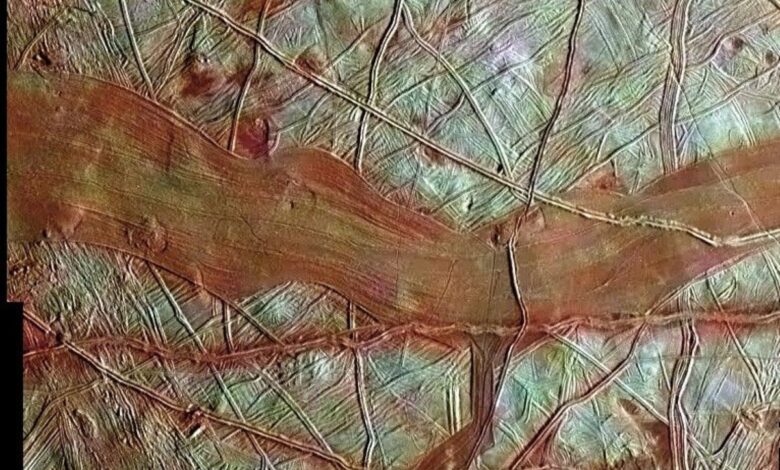
Reddish Bands on Europa
Downloads View All Europa Resources TIF May 28, 2025 TIFF (1.64 MB) This colorized image of Europa is a product of clear-filter grayscale data from one orbit of NASA’s Galileo spacecraft, combined with lower-resolution color data taken on a different orbit. The blue-white terrains indicate relatively pure water ice, whereas the reddish areas contain water ice mixed with hydrated salts,…
Read More » -
NASA
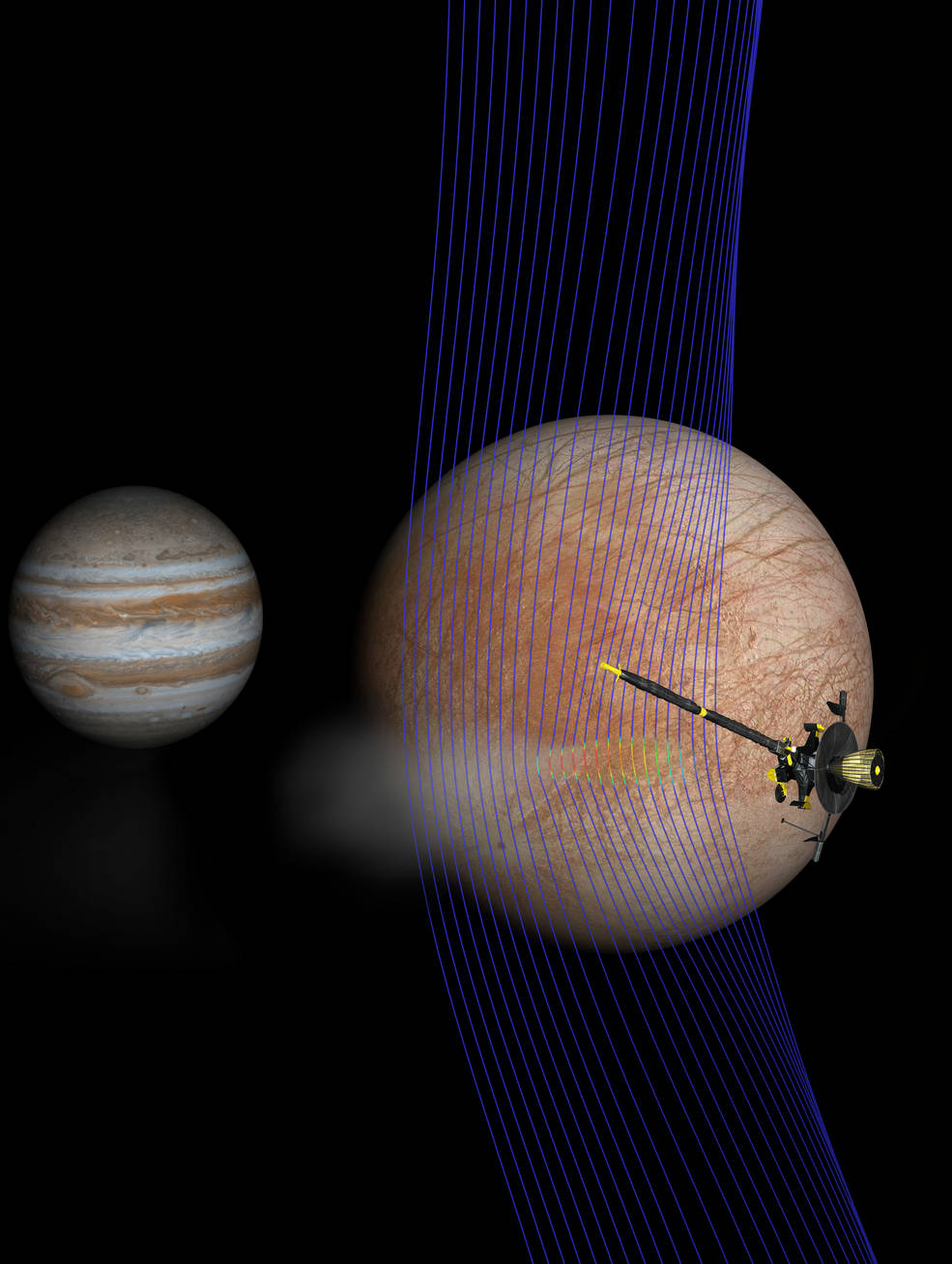
Old Data Reveal New Evidence of Europa Plumes
Scientists re-examining data from an old mission bring new insights to the tantalizing question of whether Jupiter’s moon Europa has the ingredients to support life. The data provide independent evidence that the moon’s subsurface liquid water reservoir may be venting plumes of water vapor above its icy shell. Data collected by NASA’s Galileo spacecraft in 1997 were put through new and advanced…
Read More »