
Gravity Waves
-
NASA
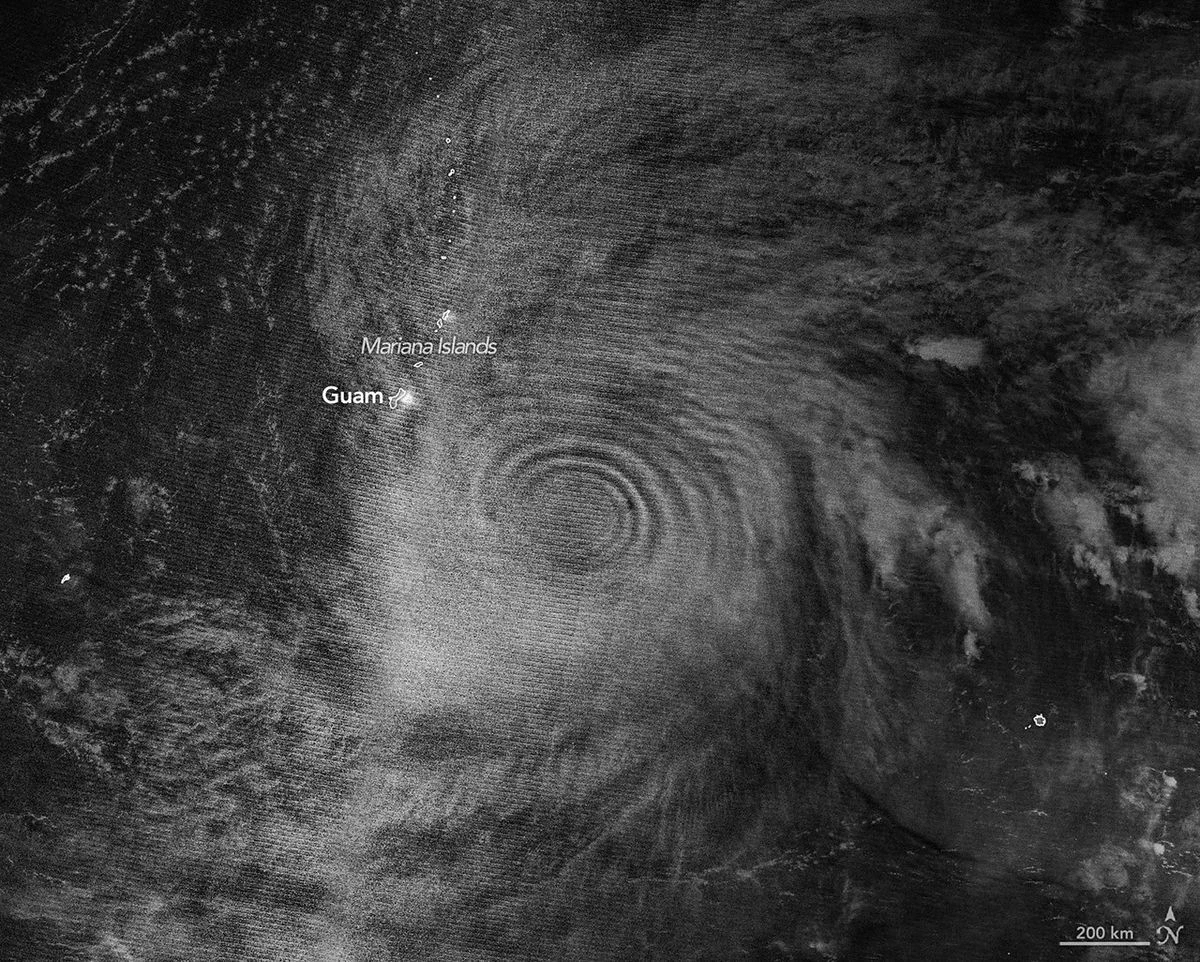
Gravity Waves From Super Typhoon Sinlaku
In mid-April 2026, Super Typhoon Sinlaku churned across the North Pacific Ocean and brought heavy rain and flooding to the Mariana Islands. The storm reached “violent typhoon” status—the highest intensity on the scale used by the Japan Meteorological Agency and roughly equivalent to a category 5 storm on the Saffir-Simpson wind scale. Sinlaku was one of only a handful of tropical cyclones of that intensity known to have occurred…
Read More » -
NASA
Hurricane Helene’s Gravity Waves Revealed by NASA’s AWE
On Sept. 26, 2024, Hurricane Helene slammed into the Gulf Coast of Florida, inducing storm surges and widespread impacts on communities in its path. At the same time, NASA’s Atmospheric Waves Experiment, or AWE, recorded enormous swells in the atmosphere that the hurricane produced roughly 55 miles above the ground. Such information helps us better understand how terrestrial weather can affect…
Read More » -
NASA
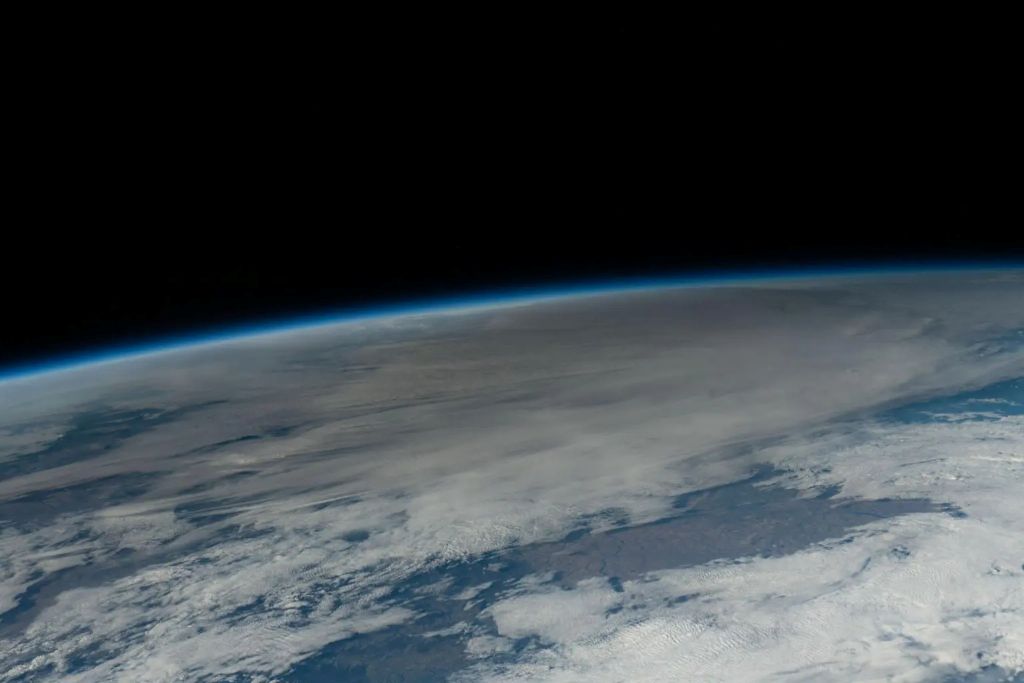
Eclipses Create Atmospheric Gravity Waves, NASA Student Teams Confirm
Student teams from three U.S. universities became the first to measure what scientists have long predicted: eclipses can generate ripples in Earth’s atmosphere called atmospheric gravity waves. The waves’ telltale signature emerged in data captured during the North American annular solar eclipse on Oct. 14, 2023, as part of the Nationwide Eclipse Ballooning Project (NEBP) sponsored by NASA. Through NEBP,…
Read More »