
Hubble Space Telescope
-
NASA
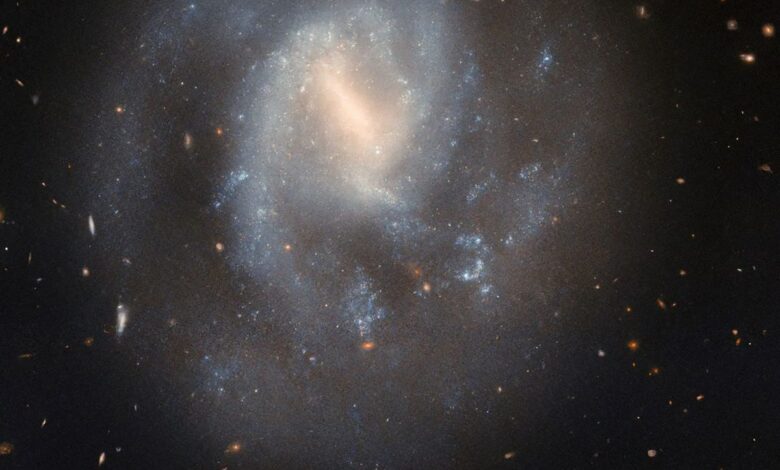
Hubble Studies a Spiral’s Supernova Scene
This serene spiral galaxy hides a cataclysmic past. The galaxy IC 758, shown in this NASA/ESA Hubble Space Telescope image, is situated 60 million light-years away in the constellation Ursa Major. Hubble captured this image in 2023. IC 758 appears peaceful, with its soft blue spiral arms curving gently around its hazy barred center. However, in 1999, astronomers spotted a powerful explosion…
Read More » -
NASA
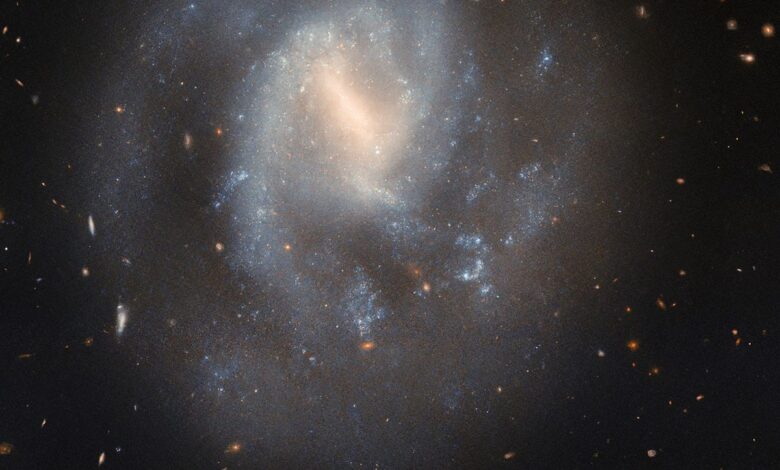
Hubble Studies a Spiral’s Supernova Scene
This serene spiral galaxy hides a cataclysmic past. The galaxy IC 758, shown in this NASA/ESA Hubble Space Telescope image, is situated 60 million light-years away in the constellation Ursa Major. Hubble captured this image in 2023. IC 758 appears peaceful, with its soft blue spiral arms curving gently around its hazy barred center. However, in 1999, astronomers spotted a powerful explosion…
Read More » -
NASA
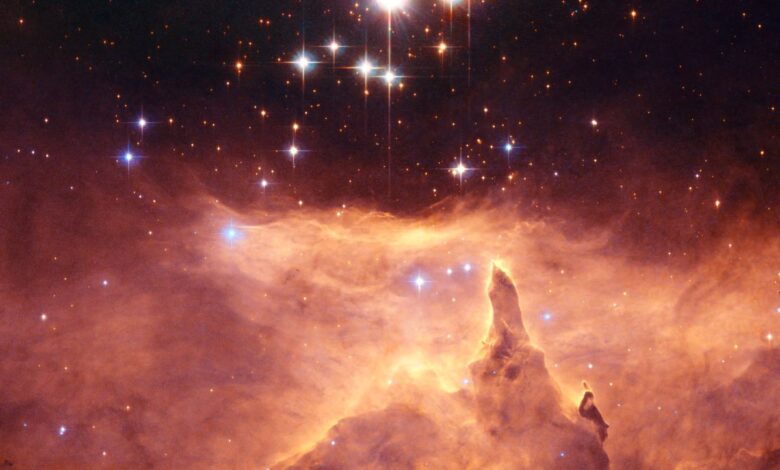
Far Out
Pismis 24, the star cluster seen here in an image released on Dec. 11, 2006, lies within the much larger emission nebula called NGC 6357, located about 8,000 light-years from Earth. The brightest object in the picture was once thought to be a single star with an incredibly large mass of 200 to 300 solar masses. That would have made…
Read More » -
NASA
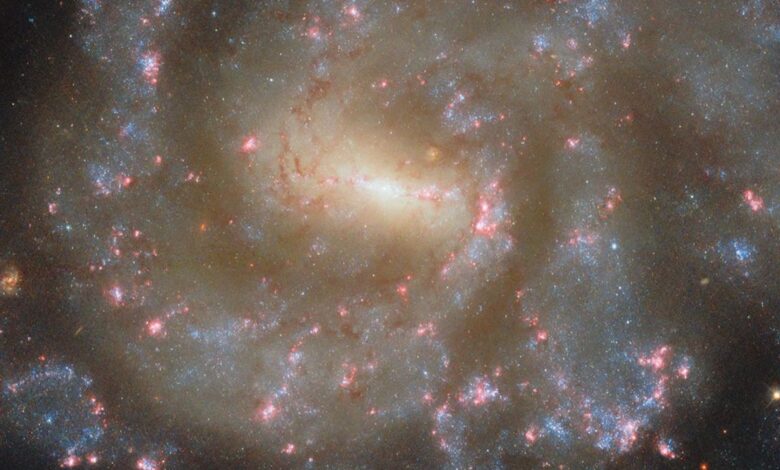
Hubble Captures Starry Spectacle
A galaxy ablaze with young stars is the subject of this NASA/ESA Hubble Space Telescope image. Named NGC 685, this galaxy is situated about 64 million light-years away in the constellation Eridanus (the River). NGC 685 is a barred spiral because its feathery spiral arms sprout from the ends of a bar of stars at the galaxy’s center. The Milky Way is…
Read More » -
NASA
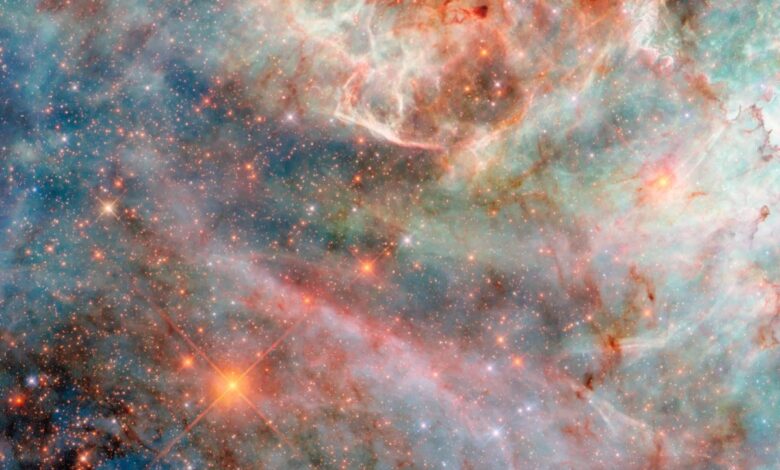
Hubble Captures Cotton Candy Clouds
This NASA/ESA Hubble Space Telescope image features a sparkling cloudscape from one of the Milky Way’s galactic neighbors, a dwarf galaxy called the Large Magellanic Cloud. Located 160,000 light-years away in the constellations Dorado and Mensa, the Large Magellanic Cloud is the largest of the Milky Way’s many small satellite galaxies. This view of dusty gas clouds in the Large Magellanic Cloud…
Read More » -
NASA

How a Childhood Telescope Launched a NASA Career
Christina Zeringue remembers being 10 years old, looking to the sky through her new telescope to view the Moon and planets on Christmas night. It opened her eyes to space and inspired her journey from the backyard to NASA’s Stennis Space Center near Bay St. Louis, Mississippi. “I became fascinated with astronomy and learning about stars and constellations, the solar…
Read More » -
NASA
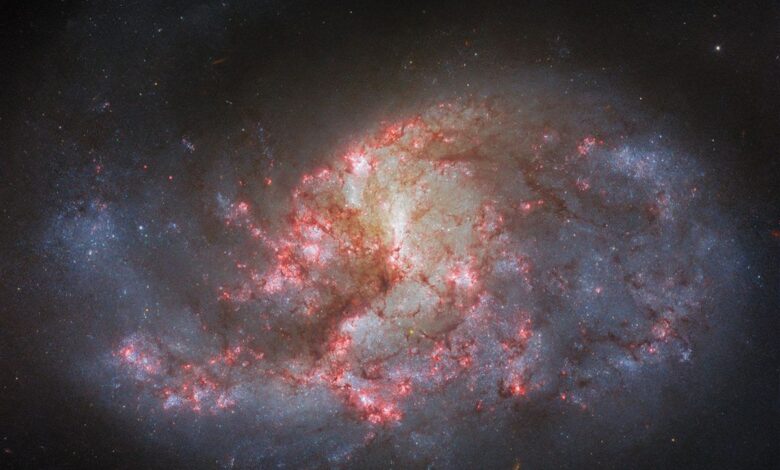
Hubble Filters a Barred Spiral
This NASA/ESA Hubble Space Telescope image features a luminous tangle of stars and dust called the barred spiral galaxy NGC 1385, located about 30 million light-years away. Hubble released an earlier image of NGC 1385, but the two images are notably different. This more recent image has far more pinkish-red and umber shades, whereas cool blues dominate the earlier image. This chromatic variation…
Read More » -
NASA
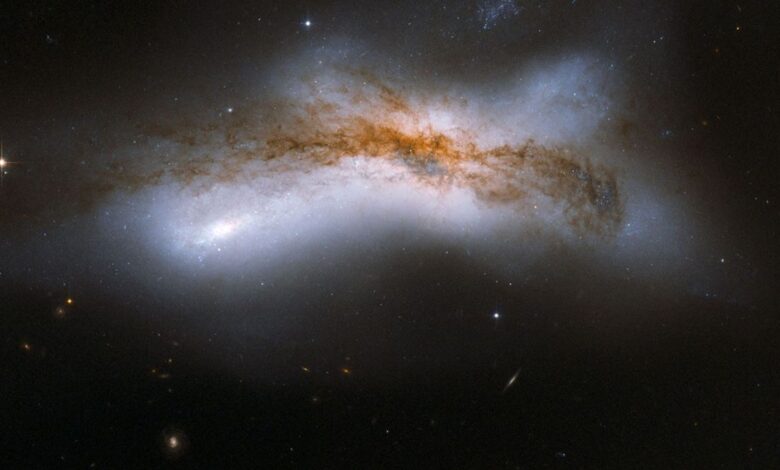
Apocalypse When? Hubble Casts Doubt on Certainty of Galactic Collision
As far back as 1912, astronomers realized that the Andromeda galaxy — then thought to be only a nebula — was headed our way. A century later, astronomers using NASA’s Hubble Space Telescope were able to measure the sideways motion of Andromeda and found it was so negligible that an eventual head-on collision with the Milky Way seemed almost certain. A smashup between our…
Read More » -
NASA
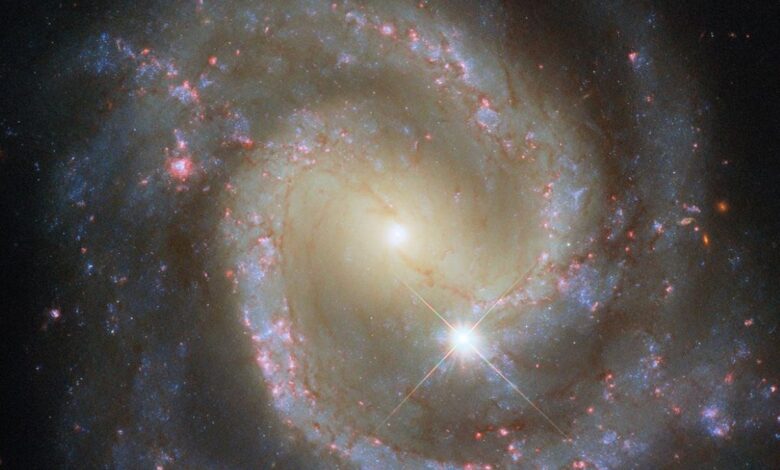
Hubble Spies Paired Pinwheel on Its Own
A single member of a galaxy pair takes centerstage in this NASA/ESA Hubble Space Telescope image. This beautiful spiral galaxy is NGC 3507, which is situated about 46 million light-years away in the constellation Leo (the Lion). NGC 3507’s classification is a barred spiral because the galaxy’s sweeping spiral arms emerge from the ends of a central bar of stars rather than…
Read More » -
NASA

Hubble Images Galaxies Near and Far
This NASA/ESA Hubble Space Telescope image offers us the chance to see a distant galaxy now some 19.5 billion light-years from Earth (but appearing as it did around 11 billion years ago, when the galaxy was 5.5 billion light-years away and began its trek to us through expanding space). Known as HerS 020941.1+001557, this remote galaxy appears as a red arc partially…
Read More »