
Hubble Space Telescope
-
NASA
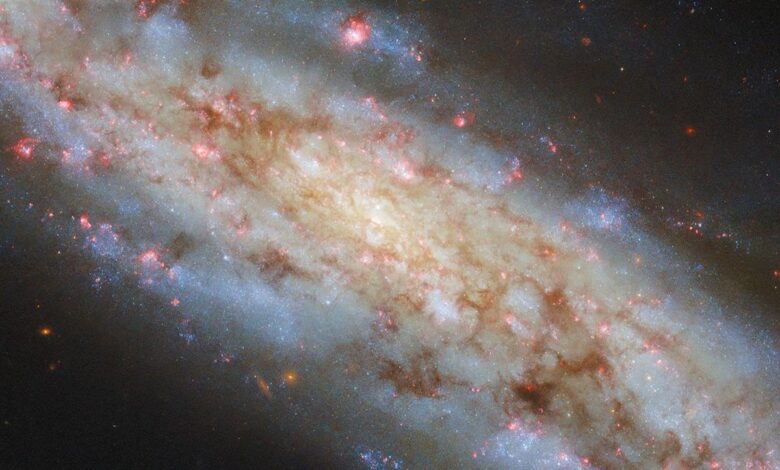
Hubble Spies a Spiral So Inclined
The stately and inclined spiral galaxy NGC 3511 is the subject of this NASA/ESA Hubble Space Telescope image. The galaxy is located 43 million light-years away in the constellation Crater (The Cup). From Hubble’s vantage point in orbit around Earth, NGC 3511 is tilted by about 70 degrees, intermediate between face-on galaxies that display the full disk of the spiral and its…
Read More » -
NASA
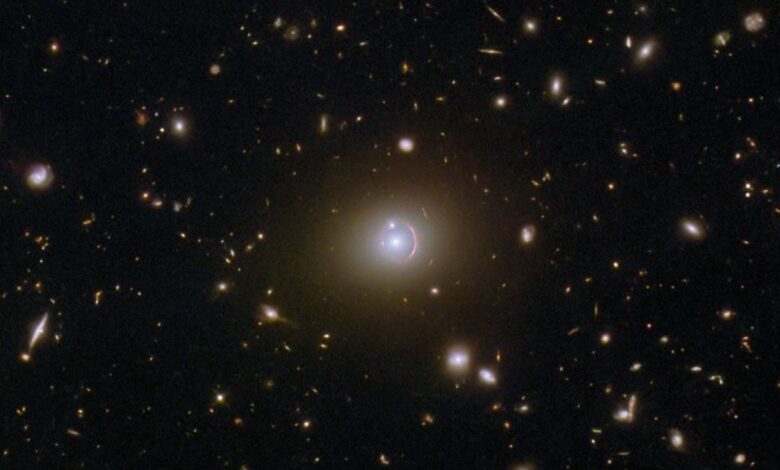
Hubble Images Galaxies Near and Far
This NASA/ESA Hubble Space Telescope image offers us the chance to see a distant galaxy now some 19.5 billion light-years from Earth (but appearing as it did around 11 billion years ago, when the galaxy was 5.5 billion light-years away and began its trek to us through expanding space). Known as HerS 020941.1+001557, this remote galaxy appears as a red arc partially…
Read More » -
NASA
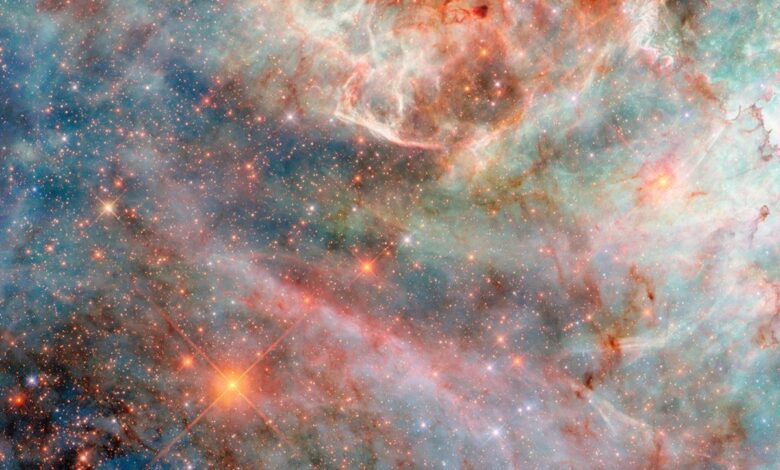
Hubble Captures Cotton Candy Clouds
This NASA/ESA Hubble Space Telescope image features a sparkling cloudscape from one of the Milky Way’s galactic neighbors, a dwarf galaxy called the Large Magellanic Cloud. Located 160,000 light-years away in the constellations Dorado and Mensa, the Large Magellanic Cloud is the largest of the Milky Way’s many small satellite galaxies. This view of dusty gas clouds in the Large Magellanic Cloud…
Read More » -
NASA
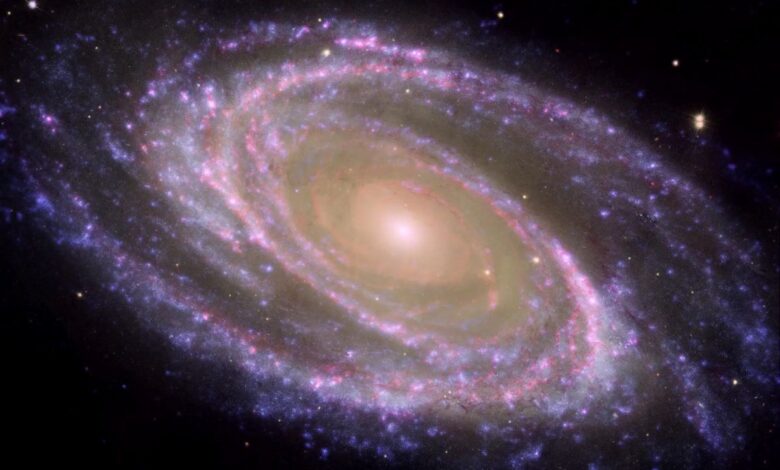
Pretty in Pink
The spiral galaxy known as Messier 81 (M81) has a rosy tint in this June 1, 2007, composite image that incorporates data from NASA’s Spitzer and Hubble Space Telescopes, and NASA’s Galaxy Evolution Explorer. Discovered by the German astronomer Johann Elert Bode in 1774, M81 is one of the brightest galaxies in the night sky. It is located 11.6 million light-years from Earth in the…
Read More » -
NASA
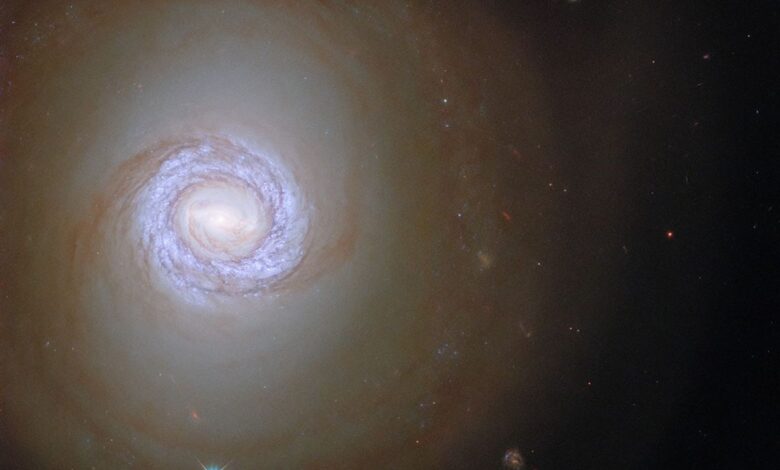
Hubble Pinpoints Young Stars in Spiral Galaxy
In this image, the NASA/ESA Hubble Space Telescope peers into the spiral galaxy NGC 1317 in the constellation Fornax, located more than 50 million light-years from Earth. Visible in this galaxy image is a bright blue ring that hosts hot, young stars. NGC 1317 is one of a pair, but its rowdy larger neighbor, NGC 1316, lies outside Hubble’s field of view.…
Read More » -
NASA
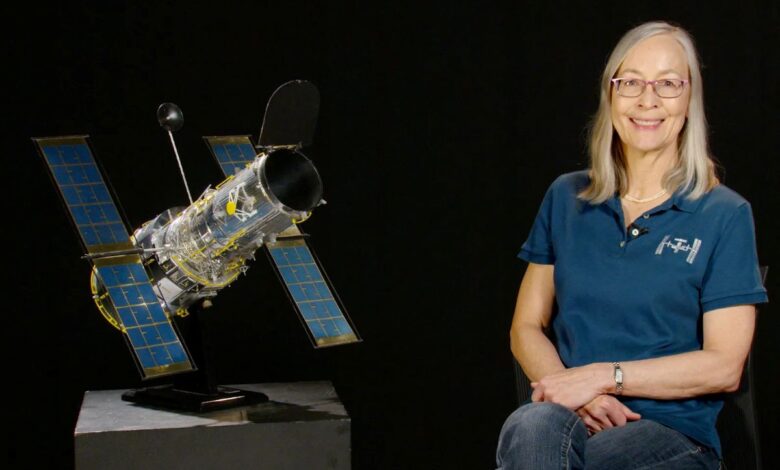
NASA Glenn Engineer Highlights Research for Hubble Servicing Missions
April 24 marked the 35th anniversary of the launch of NASA’s Hubble Space Telescope. The iconic space observatory remains a household name —the most well-recognized and scientifically productive telescope in history. Engineers at NASA’s Glenn Research Center in Cleveland played a significant role in how the telescope functions today. NASA’s Glenn Research Center researchers Kim de Groh, left, and Joyce Dever conducted…
Read More » -
NASA
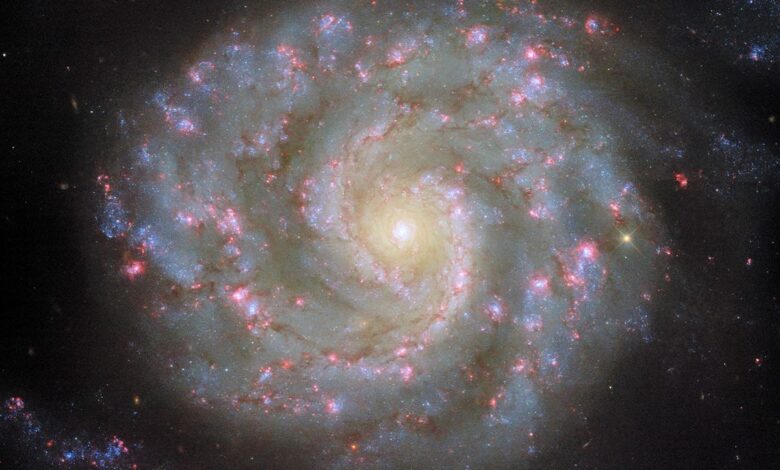
Hubble Comes Face-to-Face with Spiral’s Arms
The spiral galaxy NGC 3596 is on display in this NASA/ESA Hubble Space Telescope image that incorporates six different wavelengths of light. NGC 3596 is situated 90 million light-years from Earth in the constellation Leo, the Lion. British astronomer Sir William Herschel first documented the galaxy in 1784. NGC 3596 appears almost perfectly face-on when viewed from Earth, showcasing the galaxy’s neatly…
Read More » -
NASA
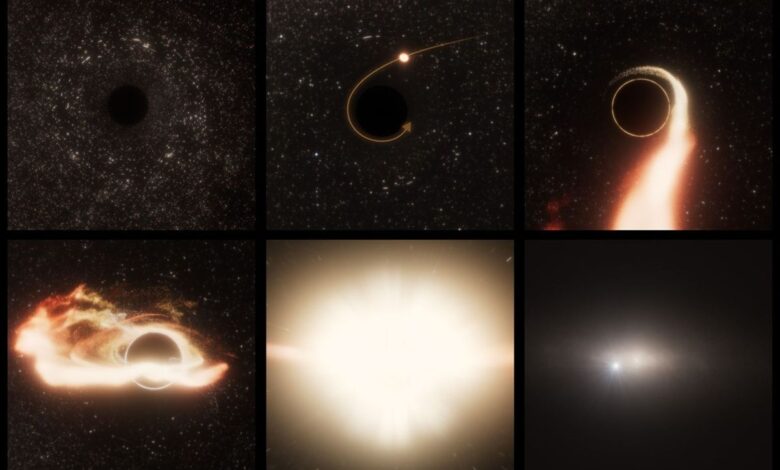
NASA’s Hubble Pinpoints Roaming Massive Black Hole
Like a scene out of a sci-fi movie, astronomers using NASA telescopes have found “Space Jaws.” Lurking 600 million light-years away, within the inky black depths between stars, there is an invisible monster gulping down any wayward star that plummets toward it. The sneaky black hole betrayed its presence in a newly identified tidal disruption event (TDE) where a hapless…
Read More » -
NASA
Hubble Images a Peculiar Spiral
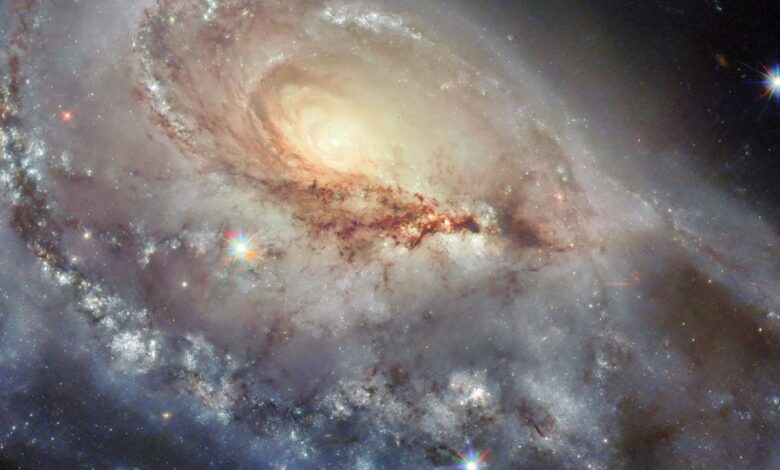
A beautiful but skewed spiral galaxy dazzles in this NASA/ESA Hubble Space Telescope image. The galaxy, called Arp 184 or NGC 1961, sits about 190 million light-years away from Earth in the constellation Camelopardalis (The Giraffe). The name Arp 184 comes from the Atlas of Peculiar Galaxies compiled by astronomer Halton Arp in 1966. It holds 338 galaxies that are oddly shaped…
Read More » -
NASA
Hubble Images a Peculiar Spiral
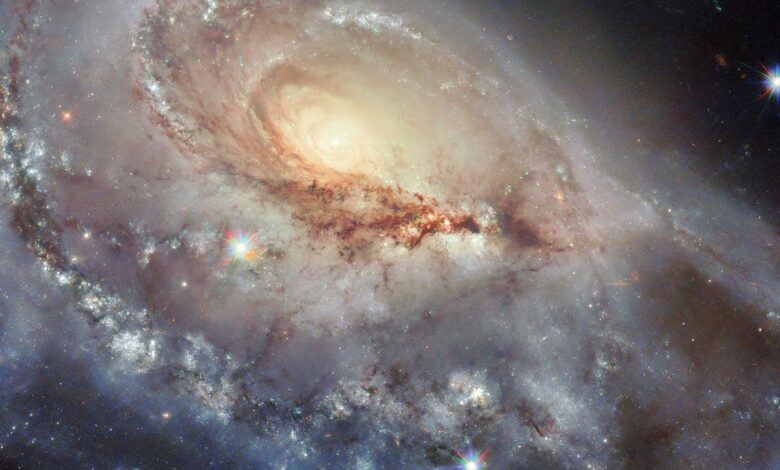
A beautiful but skewed spiral galaxy dazzles in this NASA/ESA Hubble Space Telescope image. The galaxy, called Arp 184 or NGC 1961, sits about 190 million light-years away from Earth in the constellation Camelopardalis (The Giraffe). The name Arp 184 comes from the Atlas of Peculiar Galaxies compiled by astronomer Halton Arp in 1966. It holds 338 galaxies that are oddly shaped…
Read More »