
Hubble Space Telescope
-
Markets
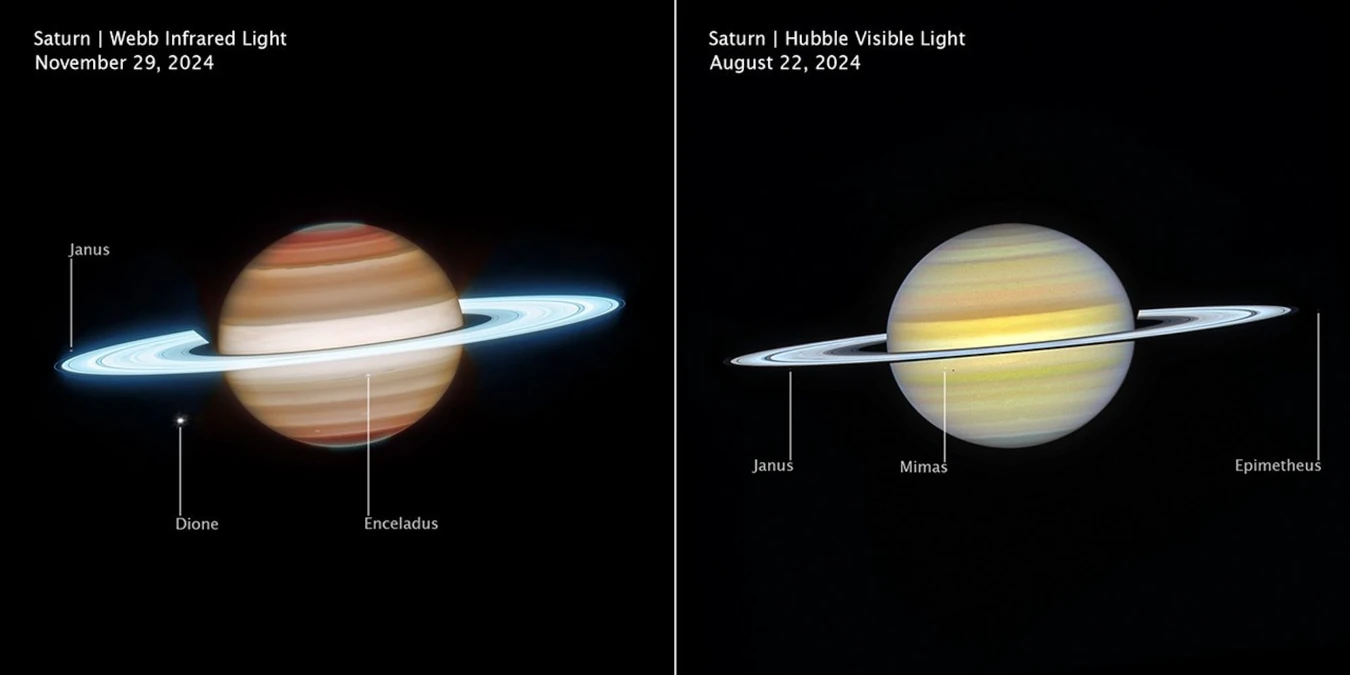
NASA Webb, Hubble Share Most Comprehensive View of Saturn to Date
NASA’s James Webb Space Telescope and Hubble Space Telescope have teamed up to capture new views of Saturn, revealing the planet in strikingly different ways. Observing in complementary wavelengths of light, the two space observatories provide scientists with a richer, more layered understanding of the gas giant’s atmosphere. Both sense sunlight reflected from Saturn’s banded clouds and hazes, but where…
Read More » -
NASA
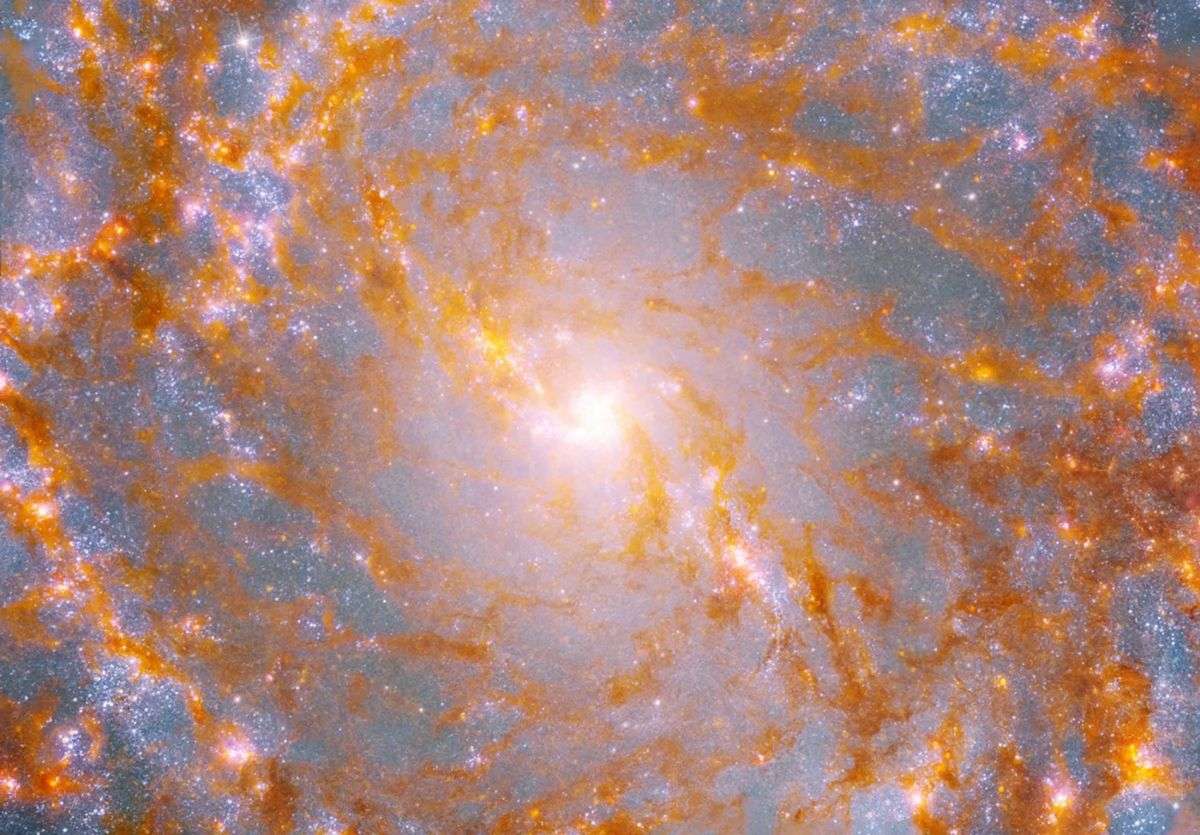
NASA’s Hubble, Webb Telescopes Survey Pinwheel Galaxy
This March 16, 2026, image from NASA’s Hubble Space Telescope and the James Webb Space Telescope takes a closer look at the core of Messier 101, also known as the Pinwheel Galaxy. At 25 million light-years away, M101 is one of the closest “face-on” spiral galaxies to us. With that in mind, Hubble’s ultraviolet, visible, and near-infrared data were taken…
Read More » -
NASA
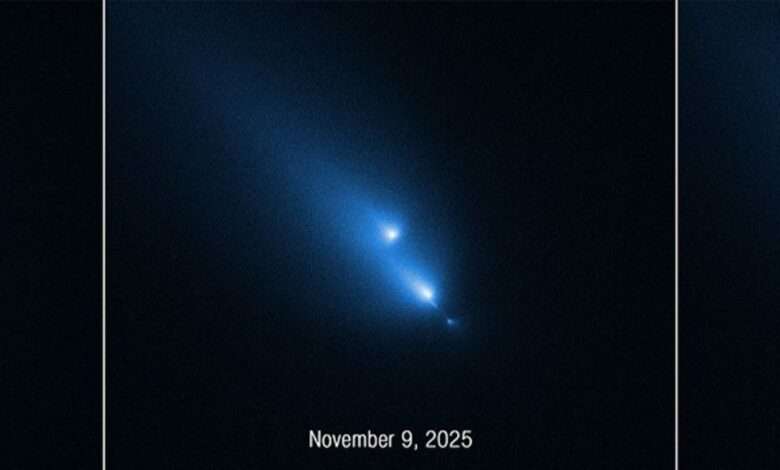
NASA’s Hubble Unexpectedly Catches Comet Breaking Up
In a happy twist of fate, NASA’s Hubble Space Telescope just witnessed a comet in the act of breaking apart. The chance of that happening while Hubble watched is extraordinarily minuscule. The findings published Wednesday in the journal Icarus. The comet K1, whose full name is C/2025 K1 (ATLAS)—not to be confused with interstellar comet 3I/ATLAS—was not the original target of the Hubble…
Read More » -
NASA
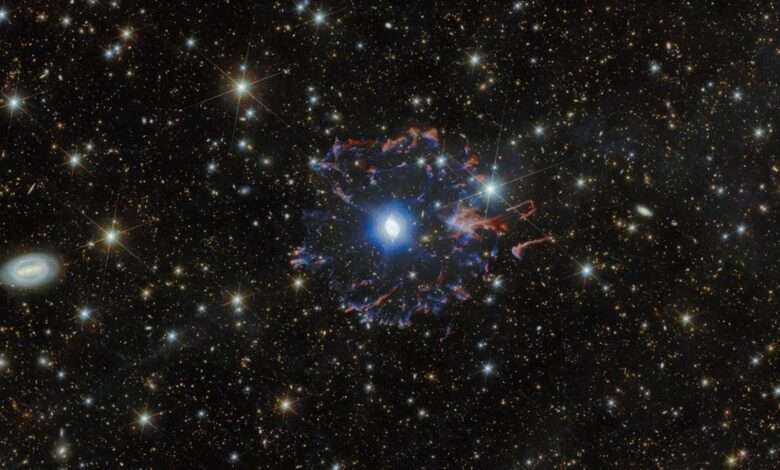
Telescopes Team Up for New View of Cat’s Eye Nebula
This March 3, 2026, image combines views from ESA’s (European Space Agency) Euclid and NASA’s Hubble Space Telescope to feature one of the most visually intricate remnants of a dying star: the Cat’s Eye Nebula, also known as NGC 6543. This extraordinary planetary nebula lies 4,400 light-years away in the constellation Draco and has captivated astronomers for decades with its elaborate and multilayered structure. See…
Read More » -
NASA
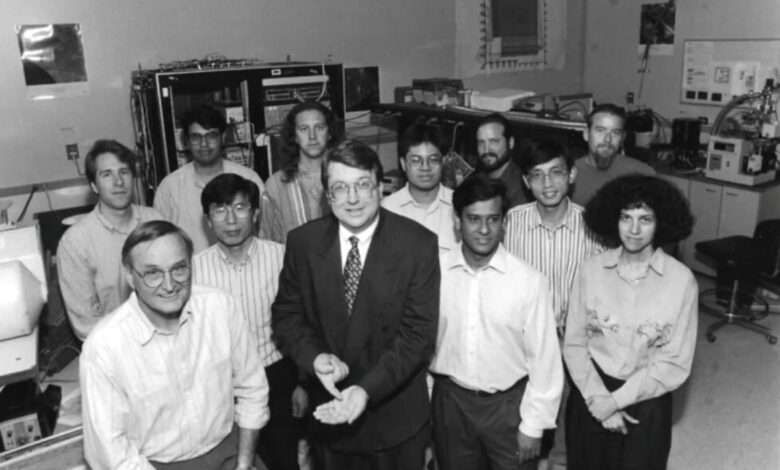
Technology Originally Developed for Space Missions Now Integral to Everyday Life
In the 1980s, sensors used to produce high-quality images for space science (including the amazing images from NASA’s Hubble Space Telescope) and other applications employed charge coupled device (CCD) technology. Dr. Eric Fossum was originally hired at JPL in 1990 to advance CCD technology for use in interplanetary space missions, but he ended up advancing another technology called complementary metal-oxide…
Read More » -
NASA
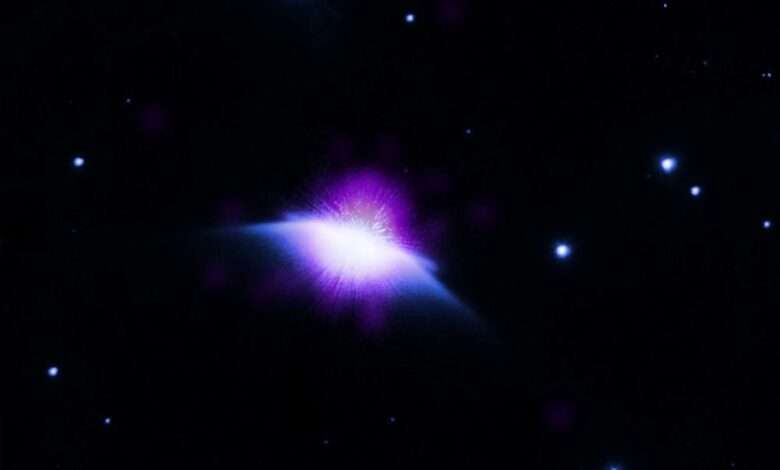
Young ‘Sun’ Caught Blowing Bubbles by NASA’s Chandra
For the first time, a much younger version of the Sun has been caught red-handed blowing bubbles in the galaxy, by astronomers using NASA’s Chandra X-ray Observatory. HD 61005 in X-ray, infrared, and optical light CurtainToggle2-UpImage Details The bubble – called an “astrosphere” – completely surrounds the juvenile star. Winds from the star’s surface are blowing up the bubble and…
Read More » -
NASA
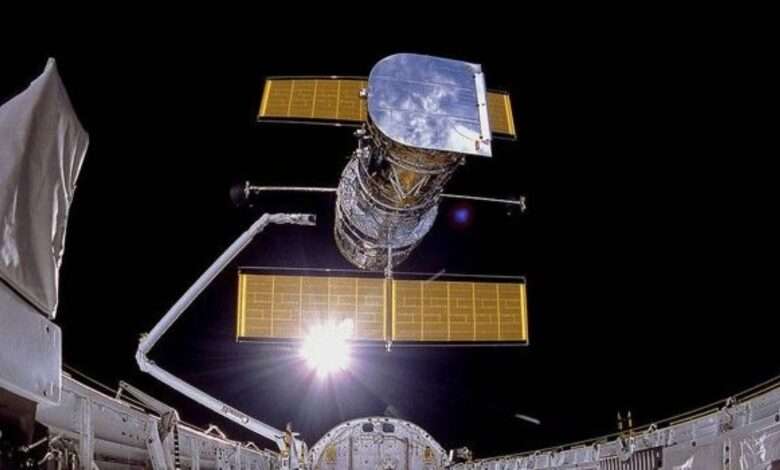
The Gestation of the Hubble
Looking through the atmosphere is like looking through a piece of old stained glass. The glass has defects that distort the image. The atmosphere also has defects that distort the image, but the defects in the atmosphere move, thus blurring the image as well. The glass is colored, so only some colors get through. Until the mid-20th century, that did…
Read More » -
NASA
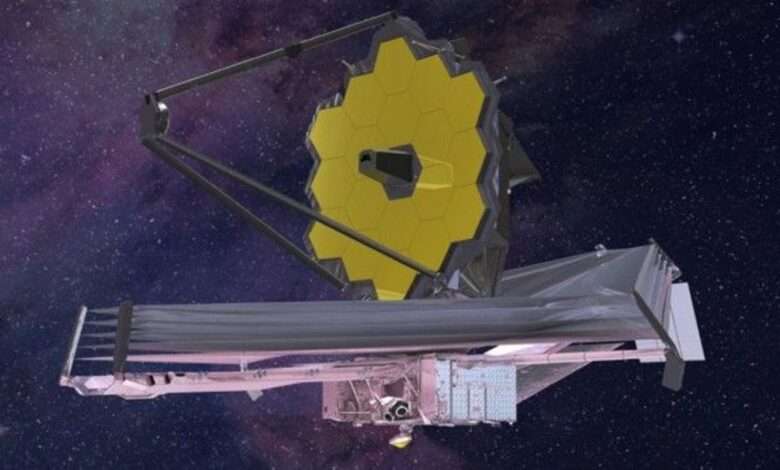
The Sky Belongs to All of Us
How did a little girl born in India soon after its independence from the British Empire, become a program scientist for NASA’s Hubble Space Telescope, and the first female program scientist for the James Webb Space Telescope, Stratospheric Observatory for Infrared Astronomy (SOFIA), Gravity Probe B, and other astrophysics flight missions? The story starts in October 1957, when I was…
Read More » -
NASA
NASA’s Hubble Identifies One of Darkest Known Galaxies
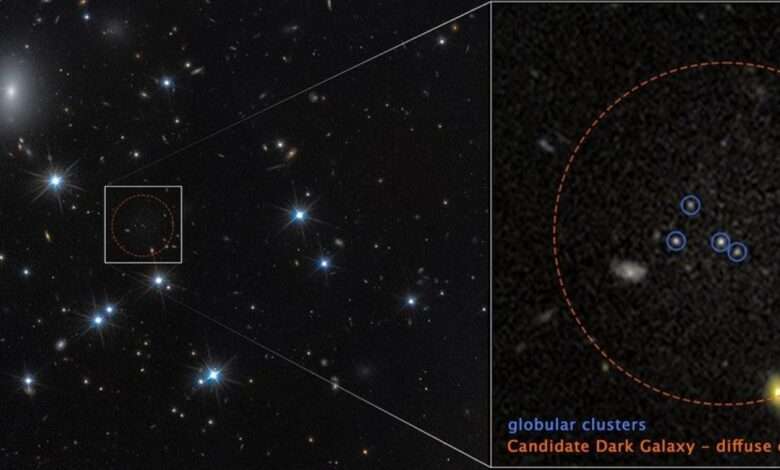
In the vast tapestry of the universe, most galaxies shine brightly across cosmic time and space. Yet a rare class of galaxies remains nearly invisible — low-surface-brightness galaxies dominated by dark matter and containing only a sparse scattering of faint stars. One such elusive object, dubbed CDG-2, may be among the most heavily dark matter-dominated galaxies ever discovered. (Dark matter…
Read More » -
NASA
Shimmering Light in Egg Nebula
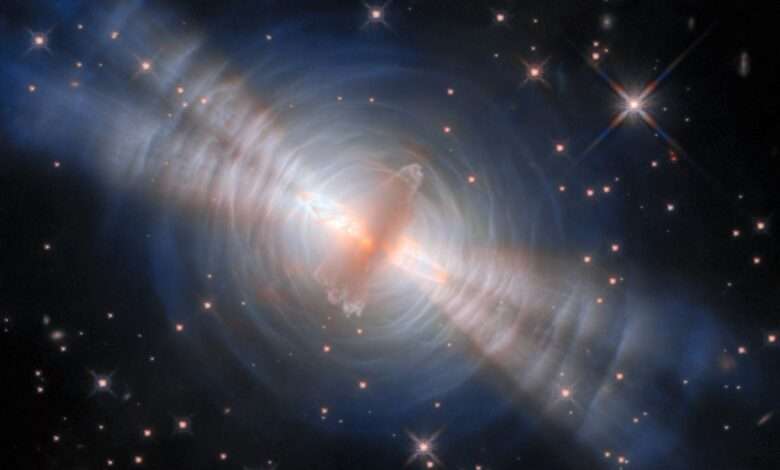
This image from NASA’s Hubble Space Telescope released on Feb. 10, 2026, reveals a dramatic interplay of light and shadow in the Egg Nebula, sculpted by freshly ejected stardust. Located approximately 1,000 light-years away in the constellation Cygnus, the Egg Nebula features a central star obscured by a dense cloud of dust — like a “yolk” nestled within a dark, opaque “egg…
Read More »