
Hubble Space Telescope
-
NASA
Massive Stars Make Their Mark in Hubble Image
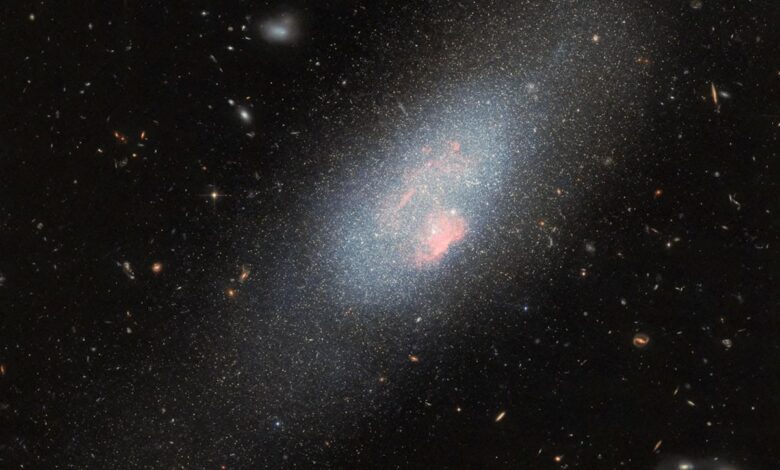
This NASA/ESA Hubble Space Telescope image features a glittering blue dwarf galaxy called Markarian 178 (Mrk 178). The galaxy, which is substantially smaller than our own Milky Way, lies 13 million light-years away in the constellation Ursa Major (the Great Bear). Mrk 178 is one of more than 1,500 Markarian galaxies. These galaxies get their name from the Armenian astrophysicist Benjamin Markarian,…
Read More » -
NASA
A Rare Gourd
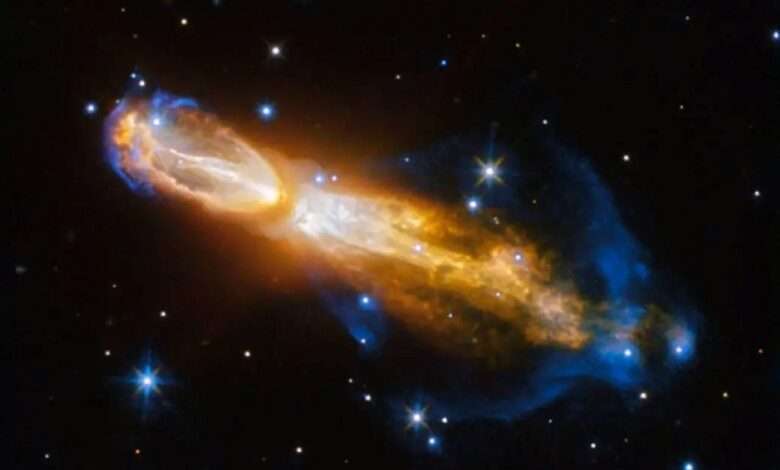
NASA’s Hubble Space Telescope captured an uncommon sight – the death of a low-mass star – in this image of the Calabash Nebula released on Feb. 3, 2017. Here, we can see the star going through a rapid transformation from a red giant to a planetary nebula, during which it blows its outer layers of gas and dust out into…
Read More » -
Press Releases
Massive Stars Make Their Mark in Hubble Image
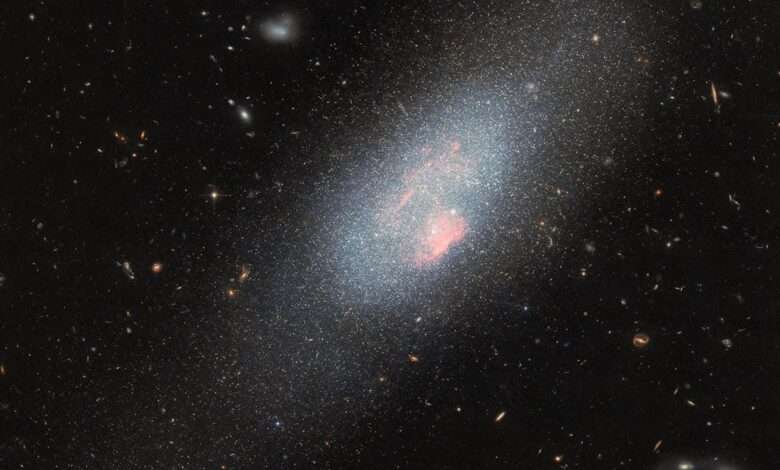
This NASA/ESA Hubble Space Telescope image features a glittering blue dwarf galaxy called Markarian 178 (Mrk 178). The galaxy, which is substantially smaller than our own Milky Way, lies 13 million light-years away in the constellation Ursa Major (the Great Bear). Mrk 178 is one of more than 1,500 Markarian galaxies. These galaxies get their name from the Armenian astrophysicist Benjamin Markarian,…
Read More » -
NASA
XRISM Finds Chlorine, Potassium in Cas A
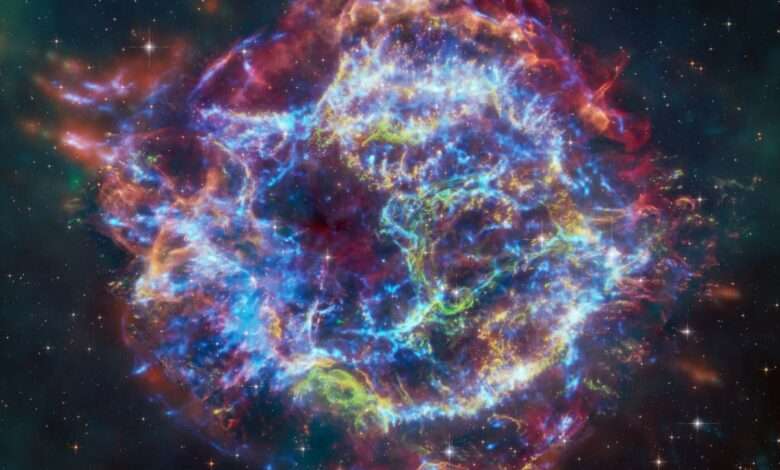
The Cassiopeia A supernova remnant glows in X-ray, visible, and infrared light in this Jan. 8, 2024, image that combines data from NASA’s Chandra X-ray Observatory and Hubble, Webb, and Spitzer space telescopes. A study by the XRISM (X-ray Imaging and Spectroscopy Mission) spacecraft has made the first-ever X-ray detections of chlorine and potassium from the wreckage; a paper about…
Read More » -
NASA
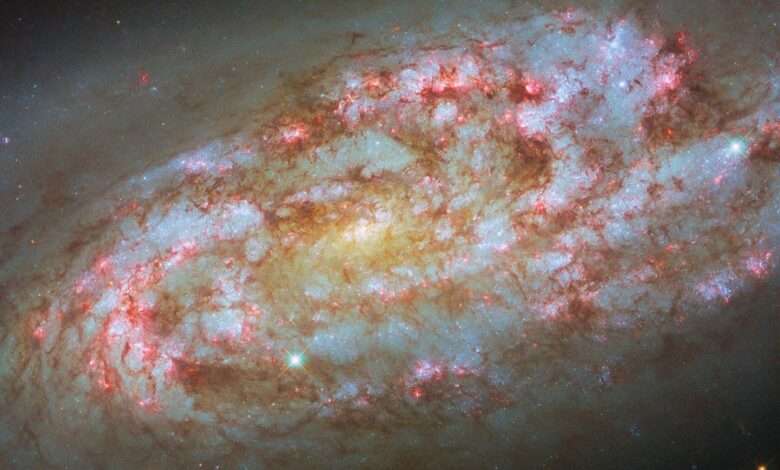
Hubble Spots a Storm of New Stars
This NASA/ESA Hubble Space Telescope image features a stormy and highly active spiral galaxy named NGC 1792. Located over 50 million light-years from Earth in the constellation Columba (the Dove), the bright glow of the galaxy’s center is offset by the flocculent and sparkling spiral arms swirling around it. NGC 1792 is just as fascinating to astronomers as its chaotic look might…
Read More » -
NASA
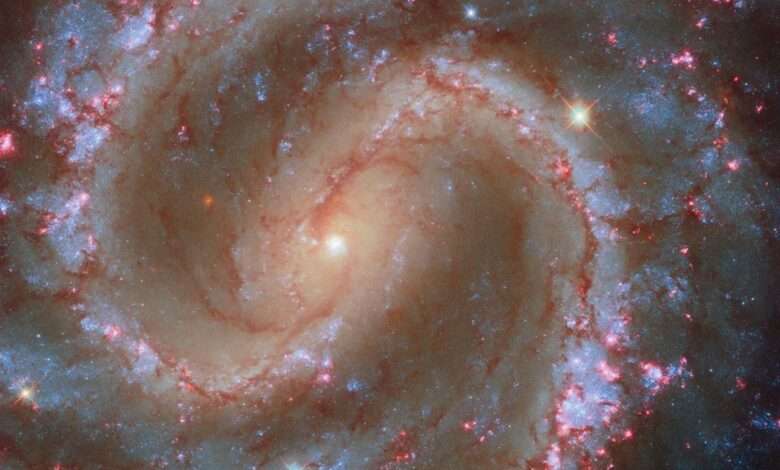
Hubble Seeks Clusters in ‘Lost Galaxy’
This NASA/ESA Hubble Space Telescope image features the spiral galaxy NGC 4535, which is situated about 50 million light-years away in the constellation Virgo (the Maiden). Through a small telescope, this galaxy appears extremely faint, giving it the nickname ‘Lost Galaxy’. With a mirror spanning nearly eight feet (2.4 meters) across and its location above Earth’s light-obscuring atmosphere, Hubble can easily observe…
Read More » -
NASA
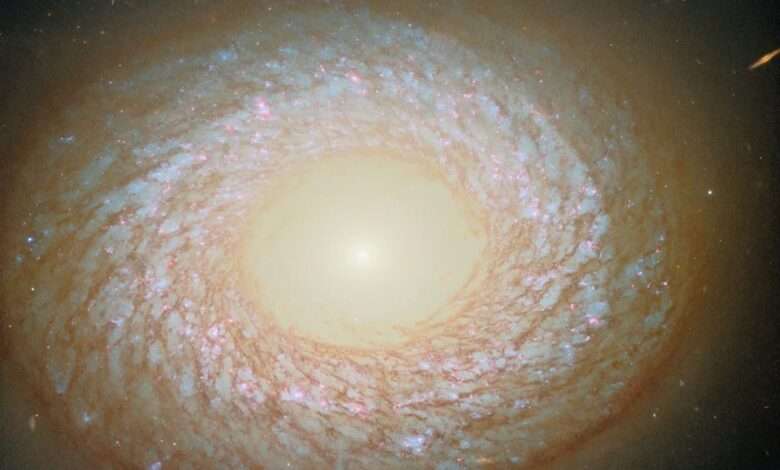
Hubble Captures Puzzling Galaxy
This NASA/ESA Hubble Space Telescope image features a galaxy that’s hard to categorize. The galaxy in question is NGC 2775, which lies 67 million light-years away in the constellation Cancer (the Crab). NGC 2775 sports a smooth, featureless center that is devoid of gas, resembling an elliptical galaxy. It also has a dusty ring with patchy star clusters, like a spiral galaxy.…
Read More » -
NASA
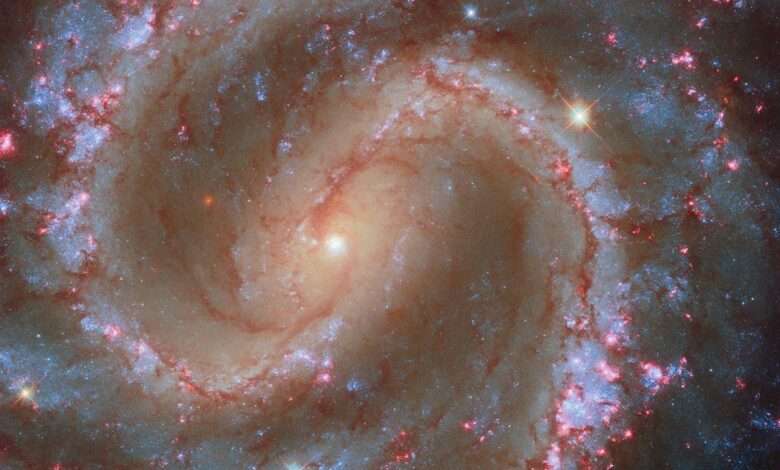
Hubble Seeks Clusters in ‘Lost Galaxy’
Today’s NASA/ESA Hubble Space Telescope image features the spiral galaxy NGC 4535, which is situated about 50 million light-years away in the constellation Virgo (the Maiden). Through a small telescope, this galaxy appears extremely faint, giving it the nickname ‘Lost Galaxy’. With a mirror spanning nearly eight feet (2.4 meters) across and its location above Earth’s light-obscuring atmosphere, Hubble can easily observe…
Read More » -
NASA
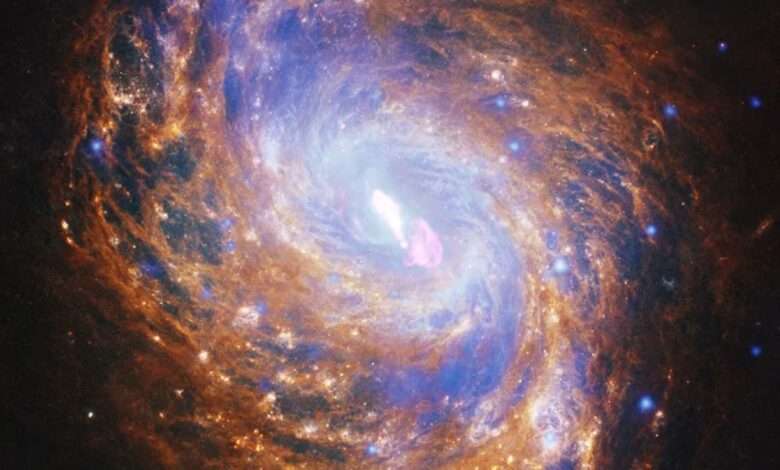
NASA Telescopes View Spiral Galaxy
NGC 1068, a relatively nearby spiral galaxy, appears in this image released on July 23, 2025. The galaxy contains a black hole at its center that is twice as massive as the Milky Way’s. NASA’s Chandra X-ray Observatory data shows a million-mile-per-hour wind is being driven from NGC 1068’s black hole and lighting up the center of the galaxy in X-rays. The image contains…
Read More » -
NASA

Hubble Studies Star Ages in Colorful Galaxy
Stars of all ages are on display in this NASA/ESA Hubble Space Telescope image of the sparkling spiral galaxy called NGC 6000, located 102 million light-years away in the constellation Scorpius. NGC 6000 has a glowing yellow center and glittering blue outskirts. These colors reflect differences in the average ages, masses, and temperatures of the galaxy’s stars. At the heart of the…
Read More »