
IXPE
-
NASA
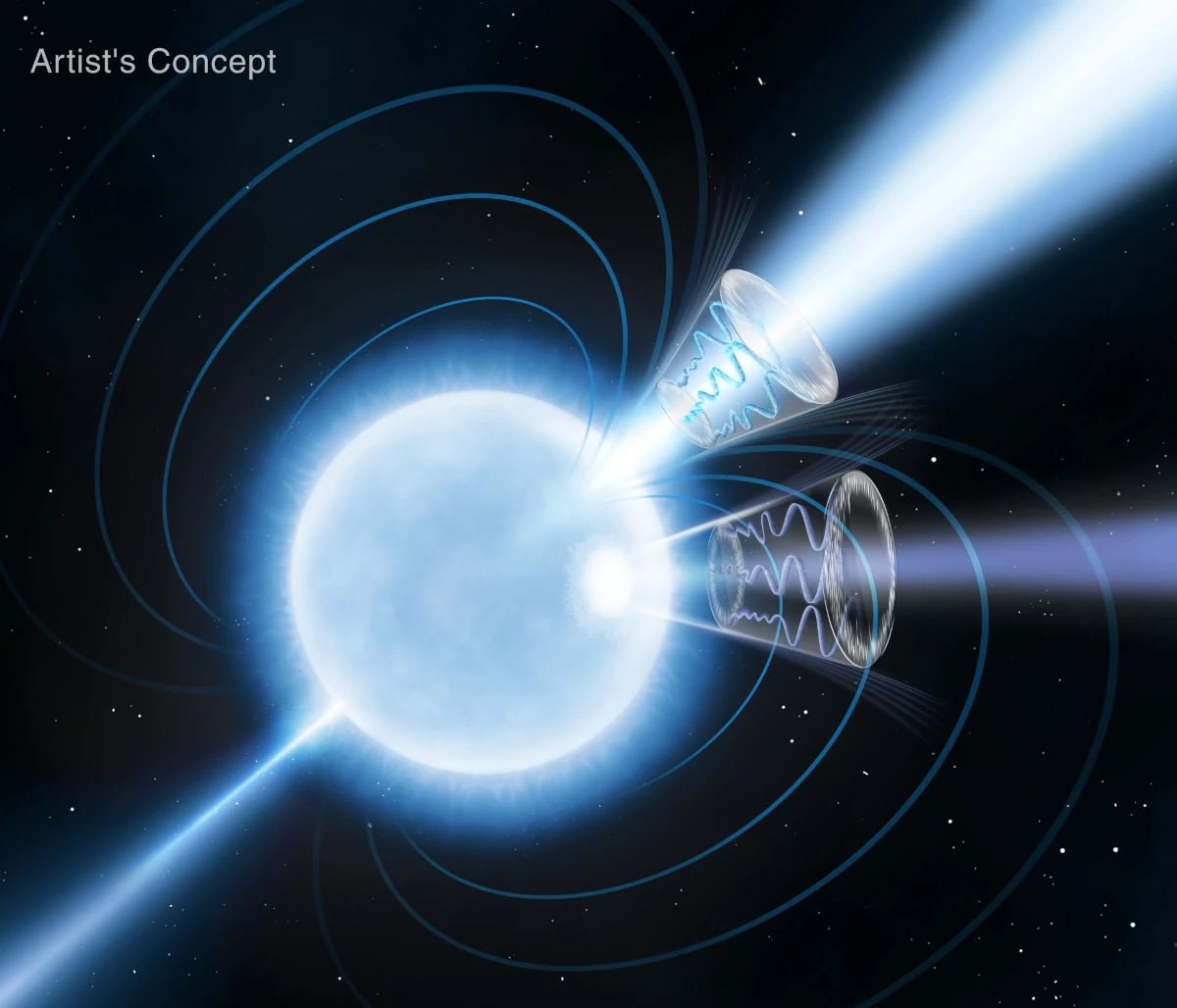
NASA’s IXPE Studies Magnetar
Scientists using NASA’s IXPE (Imaging X-ray Polarimetry Explorer) conducted more than 140 hours of observations of the magnetar 1E 1547-5408, shown in this Aug. 5, 2026, artist’s concept, between March and April 2025. In doing so, they may have captured empty space behaving in a way physicists have predicted for 90 years, but never directly observed. Magnetars are a special class of neutron…
Read More » -
NASA
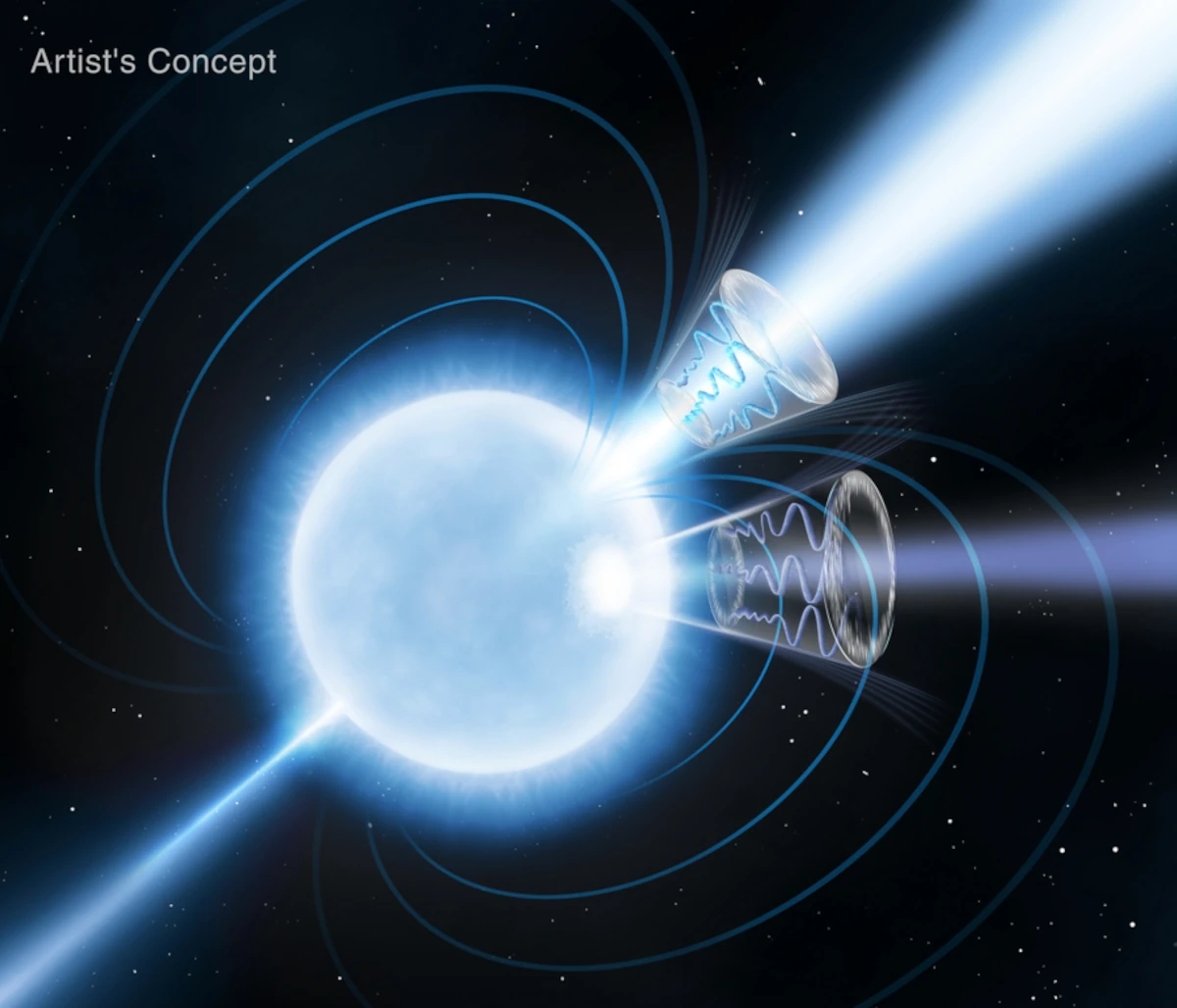
NASA’s IXPE May Have Proven 90-Year-Old Theory
A first-of-its-kind measurement of a magnetar may have captured empty space behaving in a way physicists have predicted for 90 years, but never directly observed. The results published Wednesday in Nature. This artist’s concept depicts magnetar 1E 1547.0-5408, a rapidly rotating neutron star with magnetic fields over a trillion times stronger than Earth’s. Blue curves emanating from the star’s two magnetic…
Read More » -
NASA
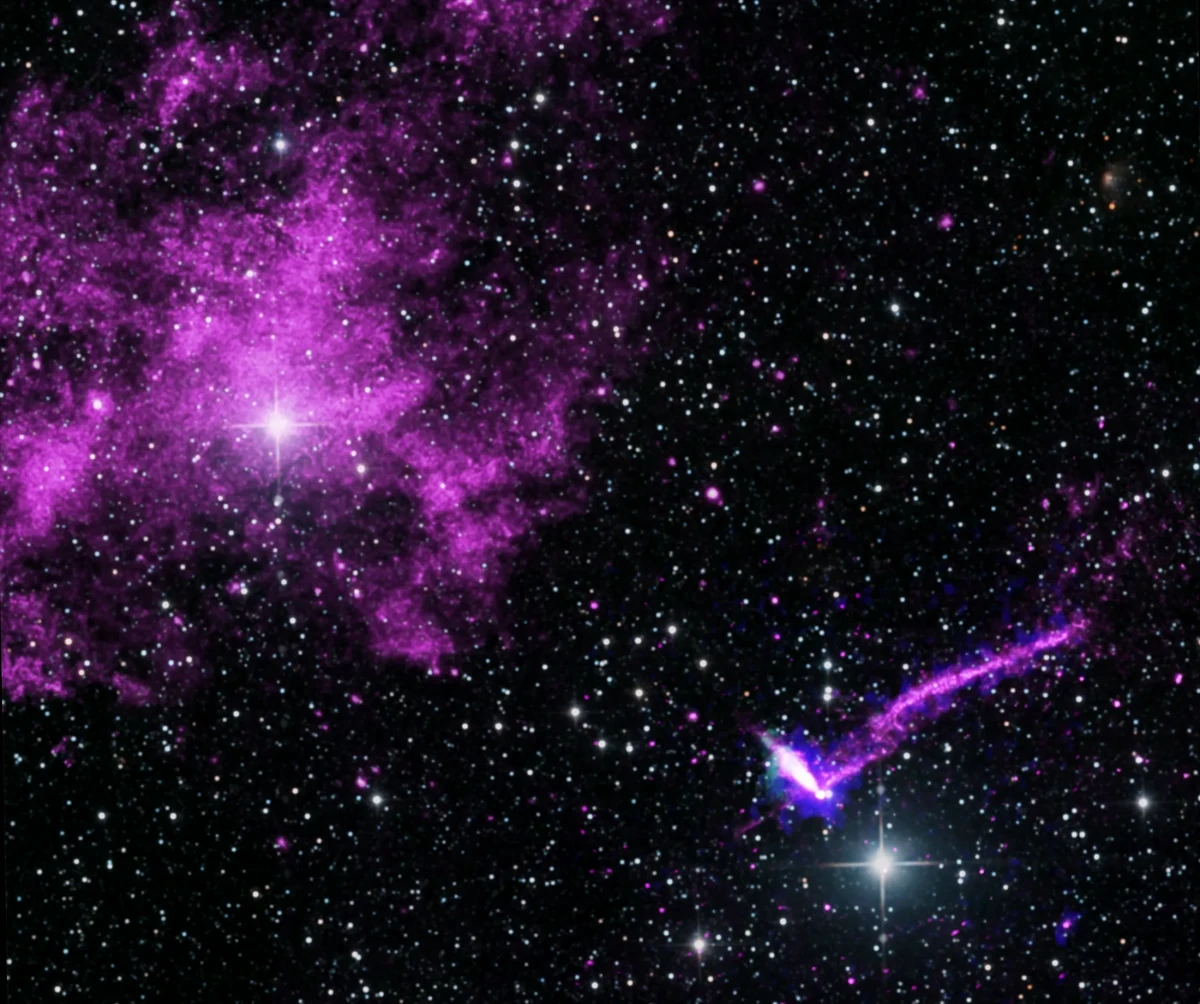
NASA’s Chandra and IXPE Study Pulsar in Lighthouse Nebula
This composite image, released on July 9, 2026, shows the region around a pulsar – a neutron star with a strong magnetic field that spins incredibly fast – within the Lighthouse nebula. The image contains X-ray data from NASA’s Chandra X-ray Observatory in purple, X-rays from NASA’s IXPE (Imaging X-ray Polarimetry Explorer) in blue, and radio emission captured by the Australia Compact Telescope Array in green.…
Read More » -
NASA
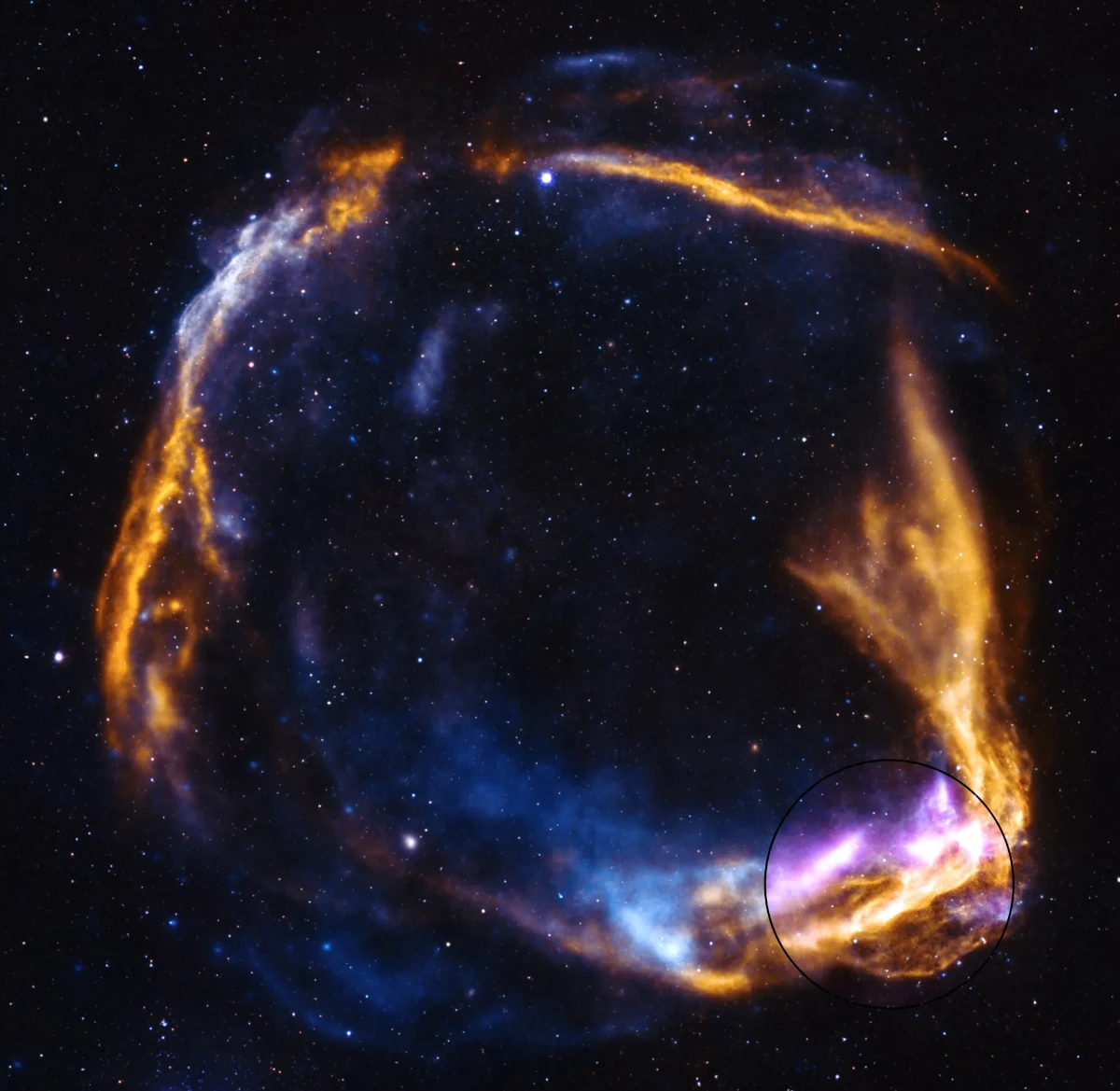
NASA’s IXPE Gets Fresh Look at Supernova
NASA’s IXPE (Imaging X-ray Polarimetry Explorer) mission has taken a new observation of a supernova, RCW 86, seen here in an image released on March 24, 2026. This observation helps fill in a fuller picture of what other telescopes have seen. The full image combines IXPE’s data with legacy observations from two other X-ray telescopes: NASA’s Chandra and the ESA (European…
Read More » -
NASA
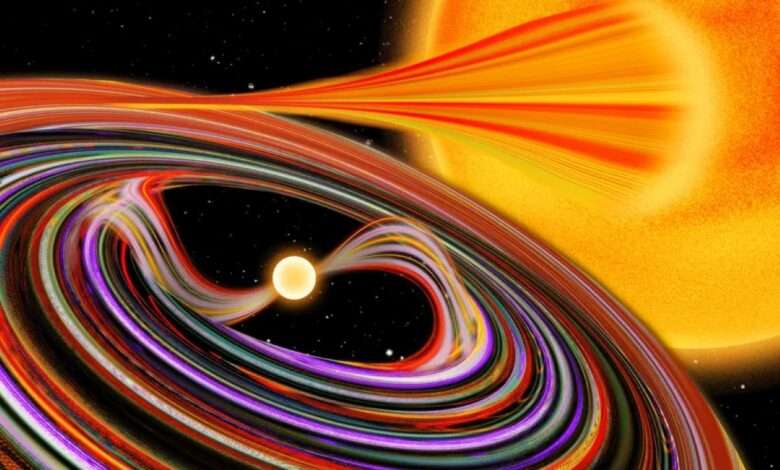
NASA’s IXPE Measures White Dwarf Star for First Time
By Michael Allen For the first time, scientists have used NASA’s IXPE (Imaging X-ray Polarization Explorer) to study a white dwarf star. Using IXPE’s unique X-ray polarization capability, astronomers examined a star called the intermediate polar EX Hydrae, unlocking the geometry of energetic binary systems. In 2024, IXPE spent nearly one week focused on EX Hydrae, a white dwarf star…
Read More » -
Press Releases
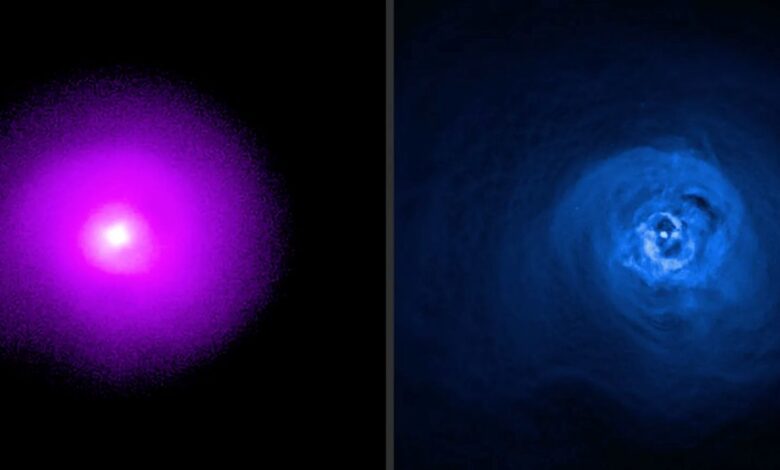
NASA IXPE’s Longest Observation Solves Black Hole Jets Mystery
Written by Michael Allen An international team of astronomers using NASA’s IXPE (Imaging X-ray Polarimetry Explorer) has identified the origin of X-rays in a supermassive black hole’s jet, answering a question that has been unresolved since the earliest days of X-ray astronomy. Their findings are described in a paper published in The Astrophysical Journal Letters, by the American Astronomical Society,…
Read More » -
Press Releases

NASA IXPE’s ‘Heartbeat Black Hole’ Measurements Challenge Current Theories
Written by Michael Allen An international team of astronomers using NASA’s IXPE (Imaging X-ray Polarimetry Explorer), has challenged our understanding of what happens to matter in the direct vicinity of a black hole. With IXPE, astronomers can study incoming X-rays and measure the polarization, a property of light that describes the direction of its electric field. The polarization degree is…
Read More » -
NASA
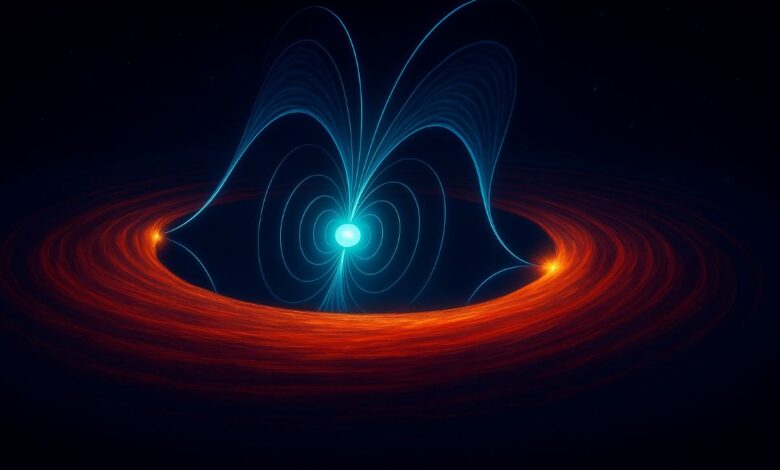
NASA’s IXPE Imager Reveals Mysteries of Rare Pulsar
An international team of astronomers has uncovered new evidence to explain how pulsing remnants of exploded stars interact with surrounding matter deep in the cosmos, using observations from NASA’s IXPE (Imaging X-ray Polarimetry Explorer) and other telescopes. Scientists based in the U.S., Italy, and Spain, set their sights on a mysterious cosmic duo called PSR J1023+0038, or J1023 for short. The J1023…
Read More » -
NASA

NASA’s IXPE Obtains First X-ray Polarization Measurement of Magnetar Outburst
What happens when the universe’s most magnetic object shines with the power of 1,000 Suns in a matter of seconds? Thanks to NASA’s IXPE (Imaging X-ray Polarimetry Explorer), a mission in collaboration with ASI (Italian Space Agency), scientists are one step closer to understanding this extreme event. Magnetars are a type of young neutron star — a stellar remnant formed…
Read More » -
NASA

NASA Telescopes Tune Into a Black Hole Prelude, Fugue
NASA released three new pieces of cosmic sound Thursday that are associated with the densest and darkest members of our universe: black holes. These scientific productions are sonifications — or translations into sound — of data collected by NASA telescopes in space including the Chandra X-ray Observatory, James Webb Space Telescope, and Imaging X-ray Polarimetry Explorer (IXPE). This trio of sonifications represents different…
Read More »