
James Webb Space Telescope
-
NASA
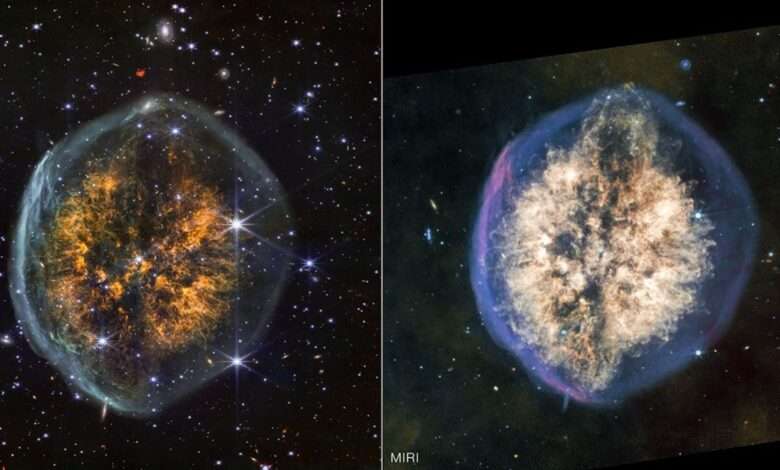
NASA’s Webb Examines Cranium Nebula
Two heads are better than one in the latest images from NASA’s James Webb Space Telescope, which reveal new detail in a mysterious, little-studied nebula surrounding a dying star. Nebula PMR 1 is a cloud of gas and dust that bears an uncanny resemblance to a brain in a transparent skull, inspiring its nickname, the “Exposed Cranium” nebula. Webb captured…
Read More » -
Press Releases

Webb Maps Uranus’ Upper Atmosphere
NASA’s James Webb Space Telescope provided the first vertical view of Uranus’s ionosphere in this image released on Feb. 19, 2026, revealing auroras shaped by its tilted magnetic field. Getting a look at the structure of the region where the atmosphere interacts strongly with the planet’s magnetic field is giving us the most detailed portrait yet of where its auroras…
Read More » -
NASA
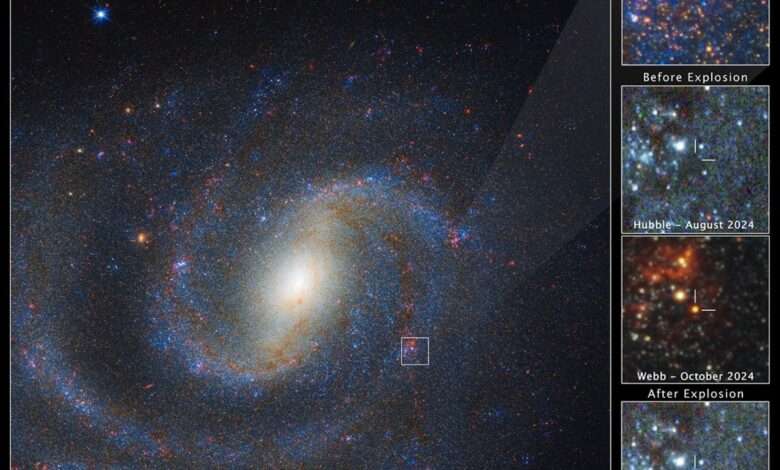
NASA’s Webb Telescope Locates Former Star That Exploded as Supernova
Forty million years ago, a star in a nearby galaxy exploded, spewing material across space and generating a brilliant beacon of light. That light traveled across the cosmos, reaching Earth June 29, 2025, where it was detected by the All-Sky Automated Survey for Supernovae. Astronomers immediately turned their resources to this new supernova, designated 2025pht, to learn more about it.…
Read More » -
NASA
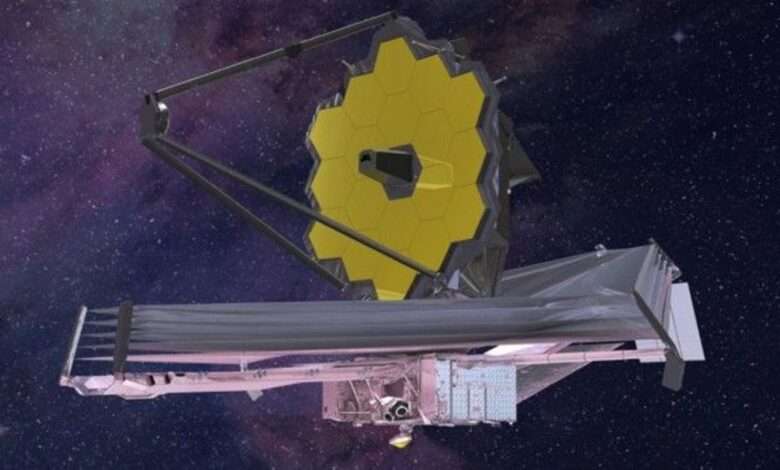
The Sky Belongs to All of Us
How did a little girl born in India soon after its independence from the British Empire, become a program scientist for NASA’s Hubble Space Telescope, and the first female program scientist for the James Webb Space Telescope, Stratospheric Observatory for Infrared Astronomy (SOFIA), Gravity Probe B, and other astrophysics flight missions? The story starts in October 1957, when I was…
Read More » -
NASA
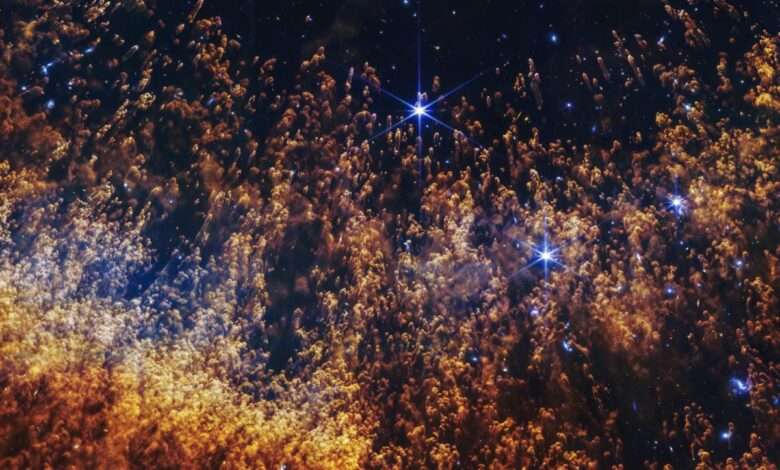
Webb Zooms into Helix Nebula
NASA’s James Webb Space Telescope has zoomed into the Helix Nebula to give an up-close view of the possible eventual fate of our own Sun and planetary system. In Webb’s high-resolution look, the structure of the gas being shed off by a dying star comes into full focus. The image reveals how stars recycle their material back into the cosmos,…
Read More » -
NASA

NASA Telescopes Spot Surprisingly Mature Cluster in Early Universe
A new discovery captures the cosmic moment when a galaxy cluster – among the largest structures in the universe – started to assemble only about a billion years after the big bang, one or two billion years earlier than previously thought. This result, made using NASA’s Chandra X-ray Observatory and James Webb Space Telescope, will lead astronomers to rethink when…
Read More » -
NASA
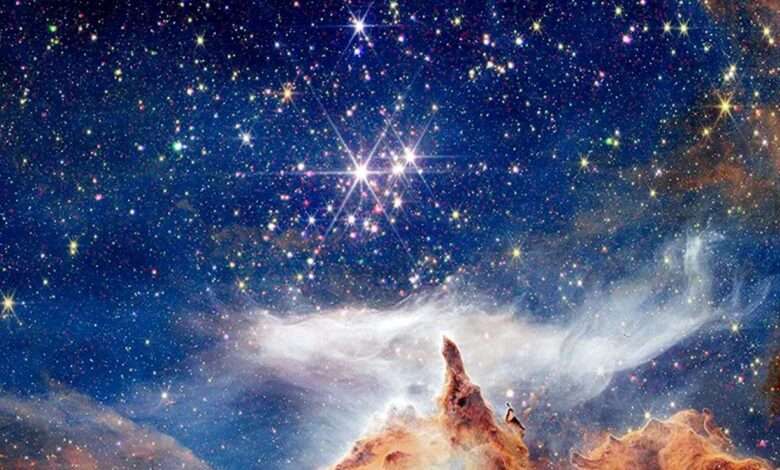
Chandra, Webb Catch Twinkling Lights
Data from Chandra adds red, green, and blue twinkling lights in this Dec. 22, 2025, image of Pismis 24 from NASA’s James Webb Space Telescope. Pismis 24 is a young cluster of stars in the core of the nearby Lobster Nebula, approximately 5,500 light-years from Earth in the constellation Scorpius. Home to a vibrant stellar nursery and one of the closest…
Read More » -
NASA
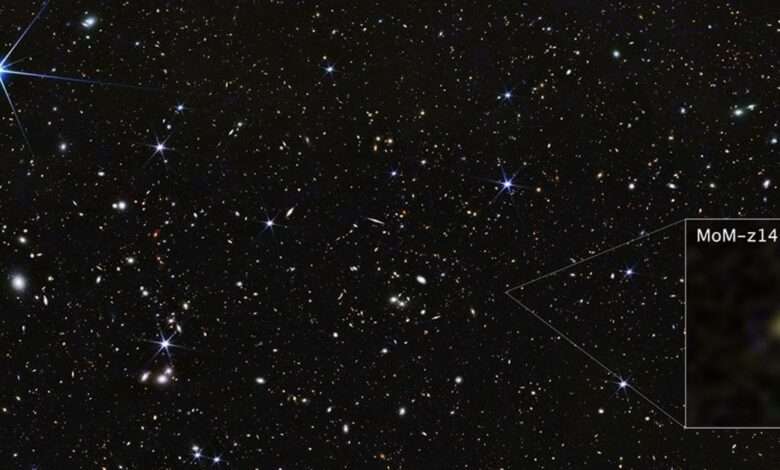
NASA Webb Pushes Boundaries of Observable Universe Closer to Big Bang
NASA’s James Webb Space Telescope has topped itself once again, delivering on its promise to push the boundaries of the observable universe closer to cosmic dawn with the confirmation of a bright galaxy that existed 280 million years after the big bang. By now Webb has established that it will eventually surpass virtually every benchmark it sets in these early years, but…
Read More » -
NASA
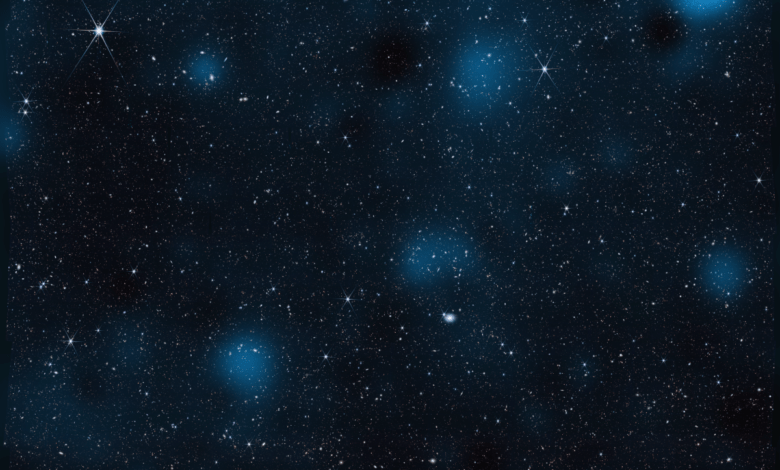
Webb Data Reveals Dark Matter
This image from NASA’s James Webb Space Telescope, containing nearly 800,000 galaxies, is overlaid with a map of dark matter, represented in blue. Brighter blue areas indicate a higher density of dark matter. Researchers used Webb data to find the dark matter — which is invisible — via its gravitational influence on regular matter. The area of sky shown here…
Read More » -
NASA
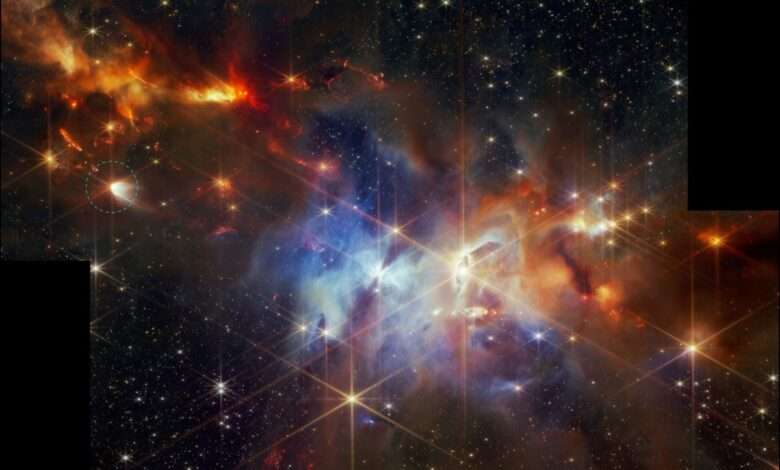
NASA’s James Webb Space Telescope Finds Crystal-Spewing Protostar
The NIRCam (Near-Infrared Camera) on NASA’s James Webb Space Telescope captured the actively forming protostar EC 53 (circled at left) in the Serpens Nebula in this image released on Jan. 21, 2026. Astronomers have long sought evidence to explain why comets at the outskirts of our own solar system contain crystalline silicates, since crystals require intense heat to form and these “dirty snowballs” spend…
Read More »