
James Webb Space Telescope
-
NASA

NASA Reveals New Details About Dark Matter’s Influence on Universe
With the Webb telescope’s unprecedented sensitivity, scientists are learning more about dark matter’s influence on stars, galaxies, and even planets like Earth. Scientists using data from NASA’s James Webb Space Telescope have made one of the most detailed, high-resolution maps of dark matter ever produced. It shows how the invisible, ghostly material overlaps and intertwines with “regular” matter, the stuff…
Read More » -
NASA
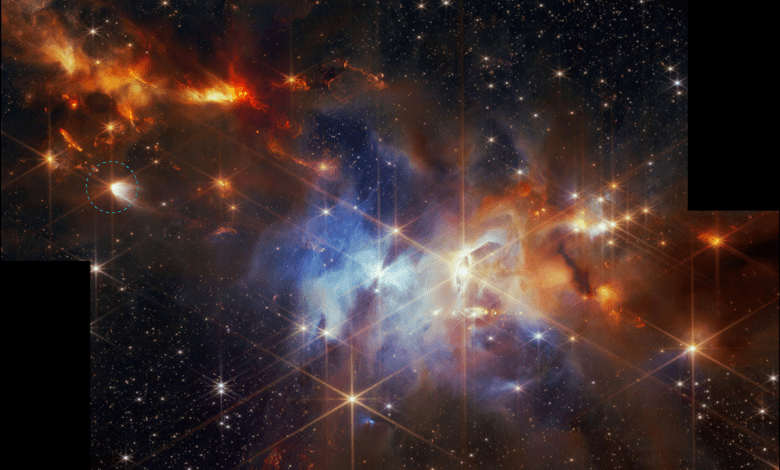
NASA Webb Finds Young Sun-Like Star Forging, Spewing Common Crystals
Astronomers have long sought evidence to explain why comets at the outskirts of our own solar system contain crystalline silicates, since crystals require intense heat to form and these “dirty snowballs” spend most of their time in the ultracold Kuiper Belt and Oort Cloud. Now, looking outside our solar system, NASA’s James Webb Space Telescope has returned the first conclusive evidence that links how those conditions are…
Read More » -
NASA
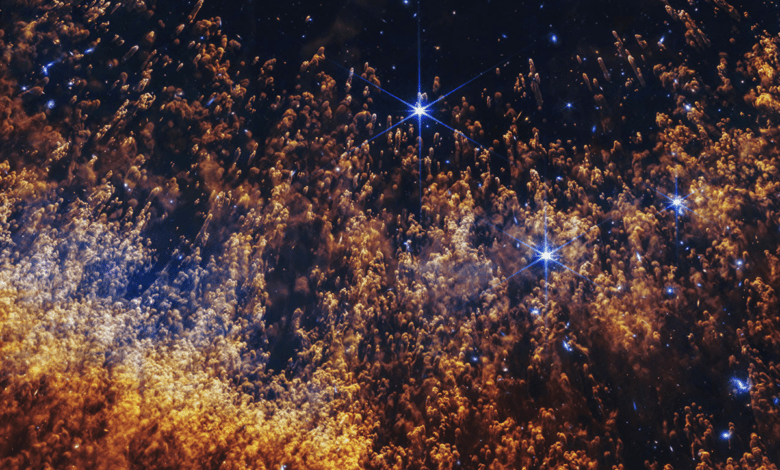
Intricacies of Helix Nebula Revealed With NASA’s Webb
NASA’s James Webb Space Telescope has zoomed into the Helix Nebula to give an up-close view of the possible eventual fate of our own Sun and planetary system. In Webb’s high-resolution look, the structure of the gas being shed off by a dying star comes into full focus. The image reveals how stars recycle their material back into the cosmos,…
Read More » -
NASA
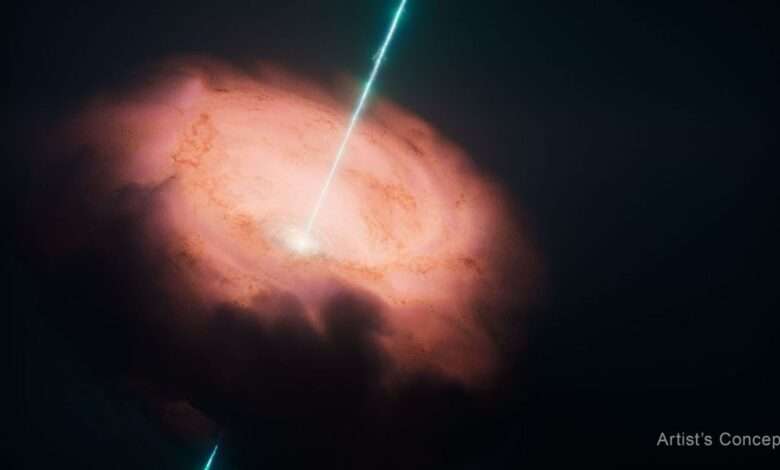
NASA’s Webb Delivers Unprecedented Look Into Heart of Circinus Galaxy
The Circinus Galaxy, a galaxy about 13 million light-years away, contains an active supermassive black hole that continues to influence its evolution. The largest source of infrared light from the region closest to the black hole itself was thought to be outflows, or streams of superheated matter that fire outward. Image: Circinus Galaxy (Hubble and Webb) This image from NASA’s…
Read More » -
NASA
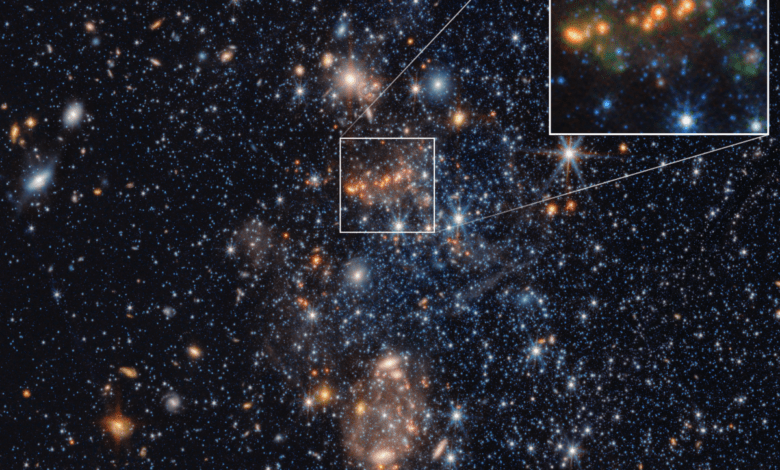
NASA Webb Finds Early-Universe Analog’s Unexpected Talent for Making Dust
Using NASA’s James Webb Space Telescope, astronomers have spotted two rare kinds of dust in the dwarf galaxy Sextans A, one of the most chemically primitive galaxies near the Milky Way. The finding of metallic iron dust and silicon carbide (SiC) produced by aging stars, along with tiny clumps of carbon-based molecules, shows that even when the universe had only…
Read More » -
NASA
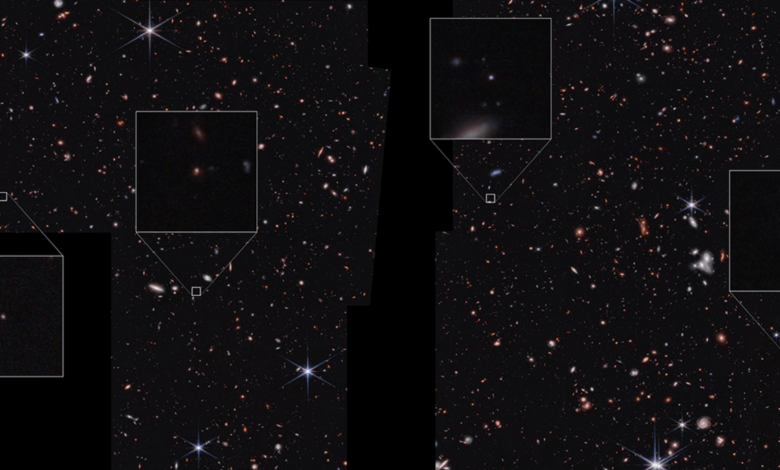
Scientists Identify ‘Astronomy’s Platypus’ with NASA’s Webb Telescope
After combing through NASA’s James Webb Space Telescope’s archive of sweeping extragalactic cosmic fields, a small team of astronomers at the University of Missouri says they have identified a sample of galaxies that have a previously unseen combination of features. Principal investigator Haojing Yan compares the discovery to an infamous oddball in another branch of science: biology’s taxonomy-defying platypus. “It seems…
Read More » -
NASA
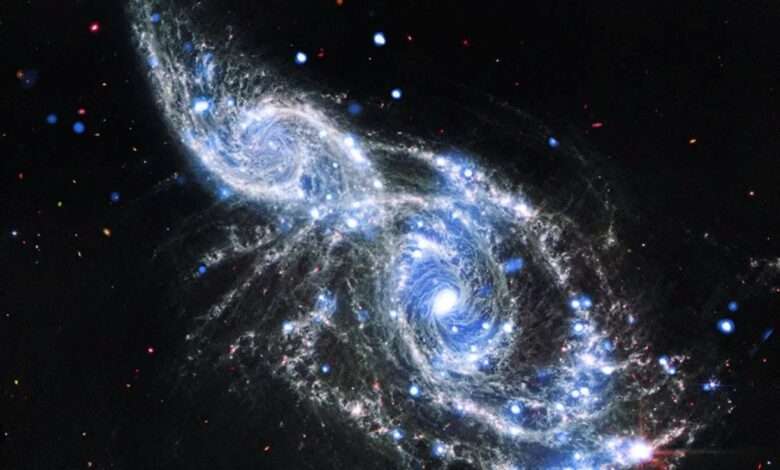
A Galactic Embrace
Mid-infrared data from NASA’s James Webb Space Telescope (in white, gray, and red) and X-ray data from NASA’s Chandra X-ray Observatory (in blue) come together in this photo of colliding spiral galaxies released on Dec. 1, 2025. The pair grazed one another millions of years ago; billions of years in the future, they will merge into a single galaxy. Image…
Read More » -
NASA
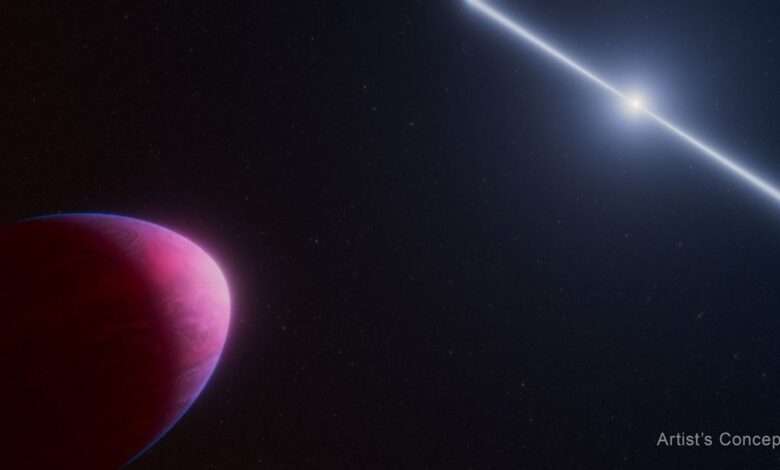
NASA’s Webb Observes Exoplanet Whose Composition Defies Explanation
Scientists using NASA’s James Webb Space Telescope have observed a rare type of exoplanet, or planet outside our solar system, whose atmospheric composition challenges our understanding of how it formed. Officially named PSR J2322-2650b, this Jupiter-mass object appears to have an exotic helium-and-carbon-dominated atmosphere unlike any ever seen before. Soot clouds likely float through the air, and deep within the planet,…
Read More » -
NASA
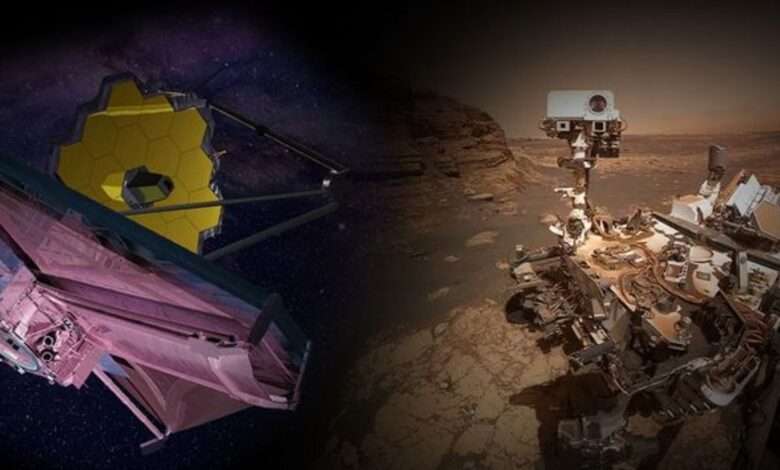
NASA’s Webb, Curiosity Named in TIME’s Best Inventions Hall of Fame
Two icons of discovery, NASA’s James Webb Space Telescope and NASA’s Curiosity rover, have earned places in TIME’s “Best Inventions Hall of Fame,” which recognizes the 25 groundbreaking inventions of the past quarter century that have had the most global impact, since TIME began its annual Best Inventions list in 2000. The inventions are celebrated in TIME’s December print issue.…
Read More » -
NASA
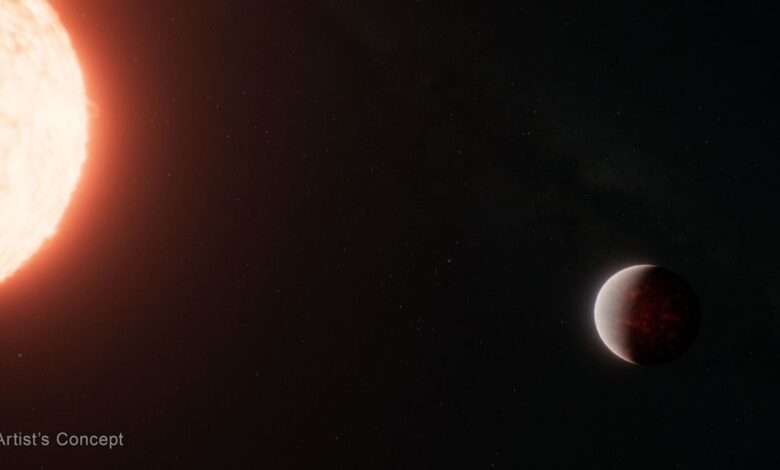
NASA’s Webb Detects Thick Atmosphere Around Broiling Lava World
Researchers using NASA’s James Webb Space Telescope have detected the strongest evidence yet for an atmosphere on a rocky planet outside our solar system, as NASA leads the world in exploring the universe from the Moon to Mars and beyond. Observations of the ultra-hot super-Earth TOI-561 b suggest that the exoplanet is surrounded by a thick blanket of gases above a global…
Read More »