
Juno Mission
-
NASA
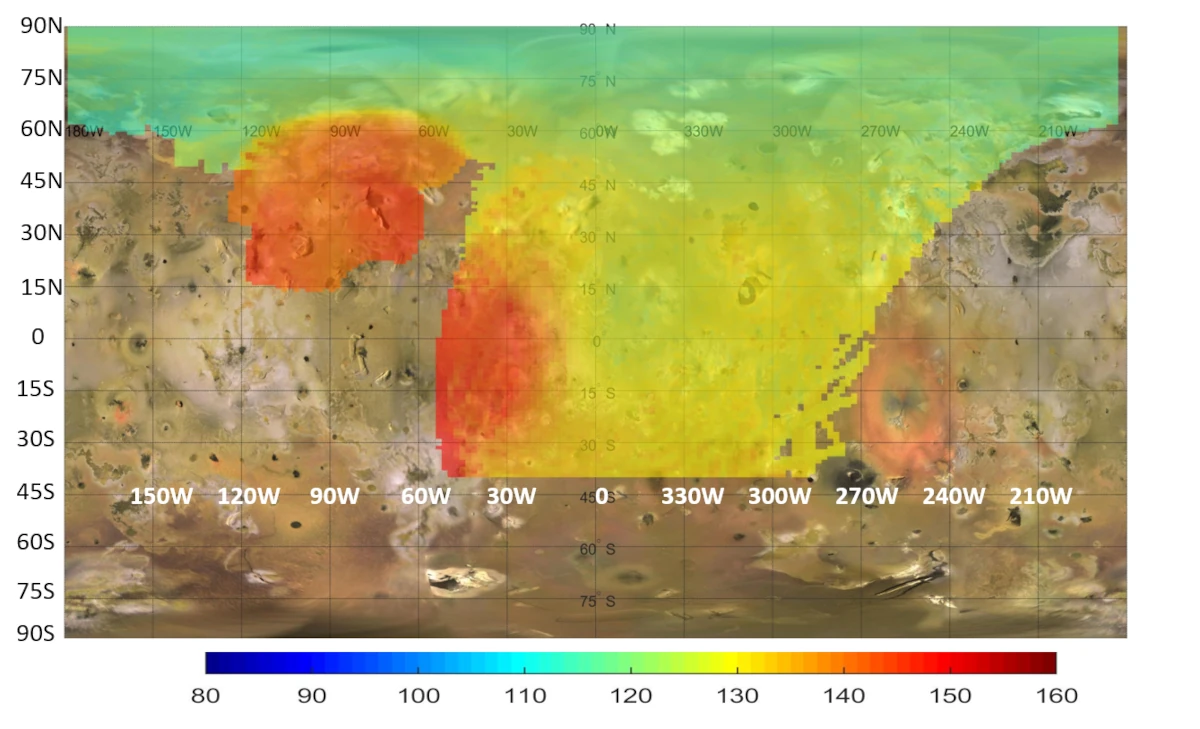
NASA’s Juno Peers Beneath Io’s Surface
Downloads NASA’s Juno Peers Beneath Io’s Surface PNG (2.07 MB) Description This map represents data captured by the Microwave Radiometer (MWR) aboard NASA’s Juno spacecraft, indicating heat rising from just beneath the surface of Jupiter’s moon Io. While infrared instruments measure the temperature of the moon’s surface, the lowest frequency microwave channels (0.6 and 1.25 gigahertz) on the MWR can…
Read More » -
NASA
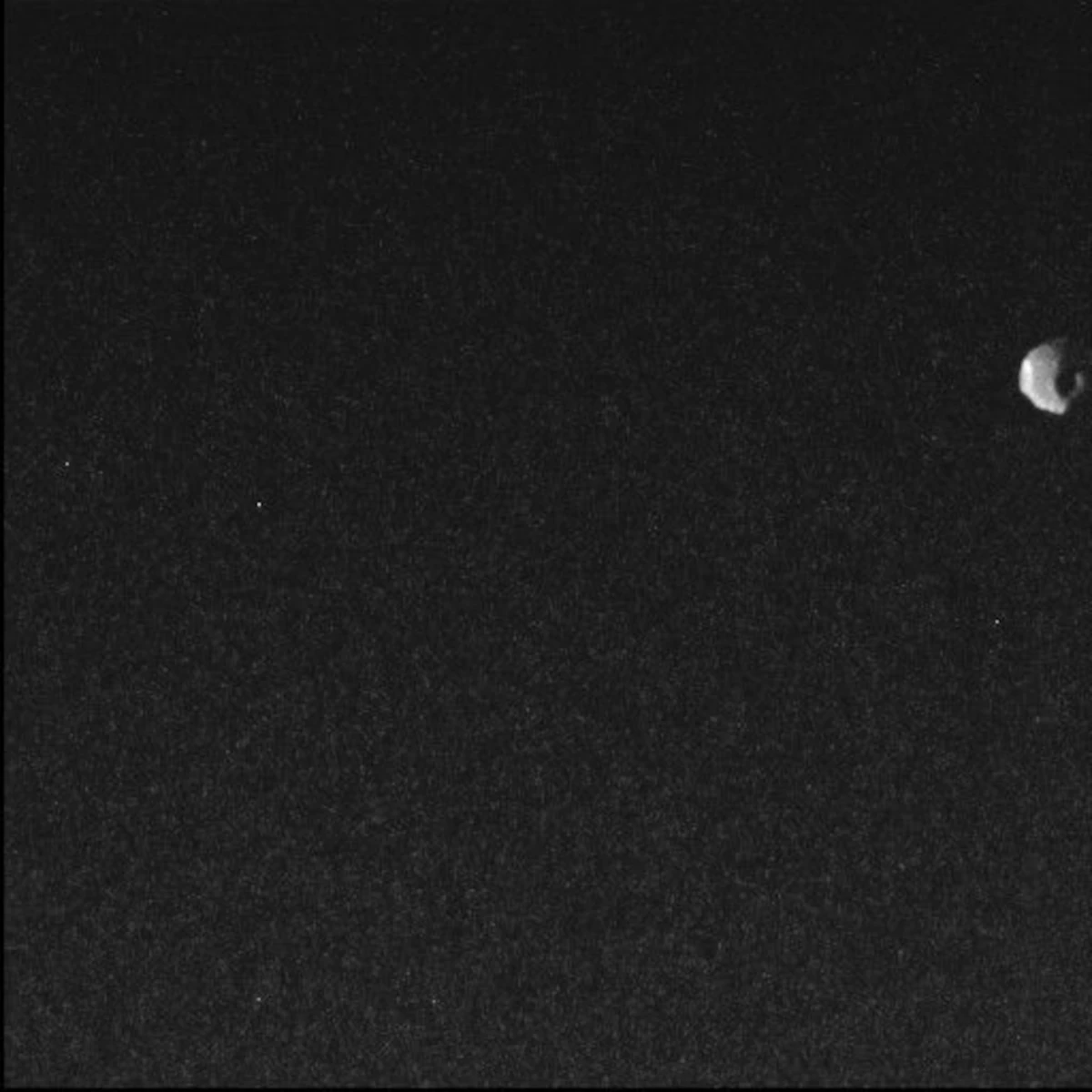
NASA’S Juno Misson Captures Jupiter Moon Thebe
Description NASA’s Juno spacecraft captured this view of Thebe, the second largest of Jupiter’s inner moons, during a close pass on May 1, 2026. The spacecraft’s Stellar Reference Unit (SRU) captured this image from a distance of approximately 3,100 miles (5,000 kilometers) at a resolution of about 1.9 miles (3 kilometers) per pixel. Thebe resides at the outer edge of…
Read More » -
NASA
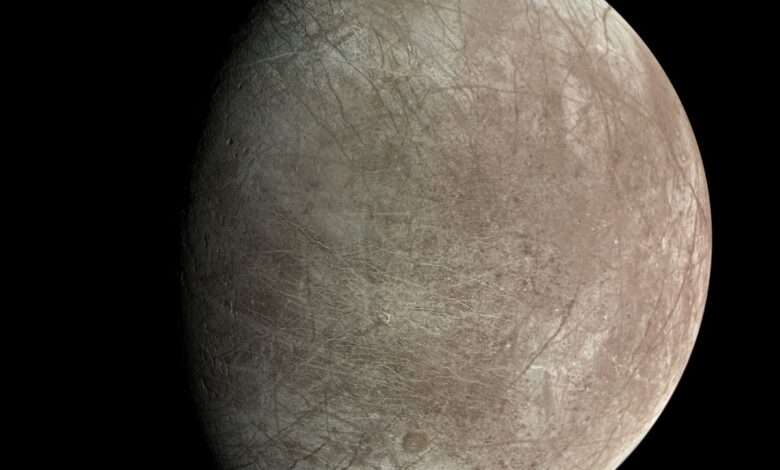
NASA’s Juno Measures Thickness of Europa’s Ice Shell
Results from the solar-powered spacecraft provide a new measurement of the thickness of the ice shell encasing the Jovian moon’s ocean. Data from NASA’s Juno mission has provided new insights into the thickness and subsurface structure of the icy shell encasing Jupiter’s moon Europa. Using the spacecraft’s Microwave Radiometer (MWR), mission scientists determined that the shell averages about 18 miles (29 kilometers) thick in the region observed during…
Read More » -
NASA
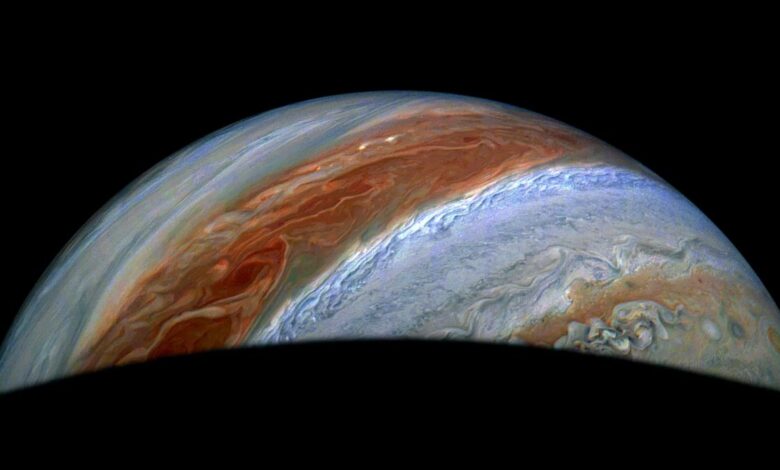
NASA’s Juno Mission Gets Under Jupiter’s and Io’s Surface
New data from the agency’s Jovian orbiter sheds light on the fierce winds and cyclones of the gas giant’s northern reaches and volcanic action on its fiery moon. NASA’s Juno mission has gathered new findings after peering below Jupiter’s cloud-covered atmosphere and the surface of its fiery moon, Io. Not only has the data helped develop a new model to…
Read More » -
NASA
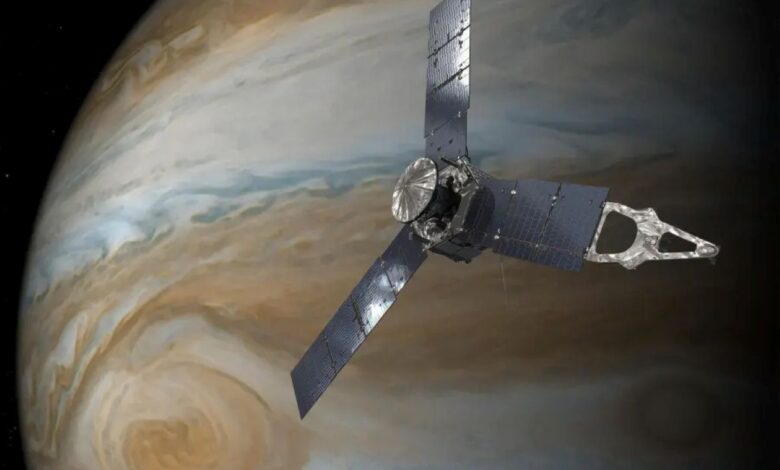
NASA’s Juno Back to Normal Operations After Entering Safe Mode
The spacecraft was making its 71st close approach to Jupiter when it unexpectedly entered into a precautionary status. Data received from NASA’s Juno mission indicates the solar-powered spacecraft went into safe mode twice on April 4 while the spacecraft was flying by Jupiter. Safe mode is a precautionary status that a spacecraft enters when it detects an anomaly. Nonessential functions…
Read More » -
NASA
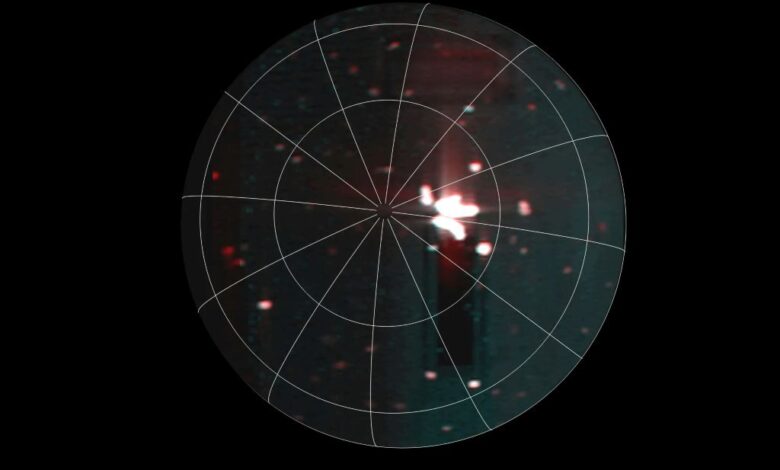
NASA Juno Mission Spots Most Powerful Volcanic Activity on Io to Date
Even by the standards of Io, the most volcanic celestial body in the solar system, recent events observed on the Jovian moon are extreme. Scientists with NASA’s Juno mission have discovered a volcanic hot spot in the southern hemisphere of Jupiter’s moon Io. The hot spot is not only larger than Earth’s Lake Superior, but it also belches out eruptions…
Read More » -
NASA
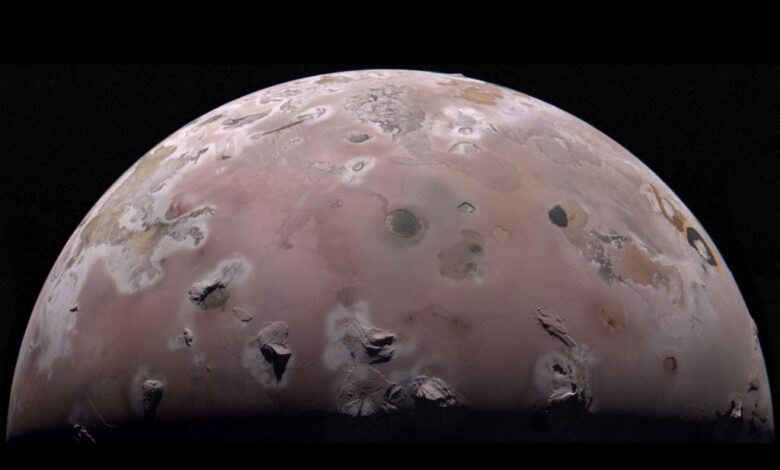
NASA’s Juno Mission Uncovers Heart of Jovian Moon’s Volcanic Rage
A new study points to why, and how, Io became the most volcanic body in the solar system. Scientists with NASA’s Juno mission to Jupiter have discovered that the volcanoes on Jupiter’s moon Io are each likely powered by their own chamber of roiling hot magma rather than an ocean of magma. The finding solves a 44-year-old mystery about the…
Read More » -
NASA
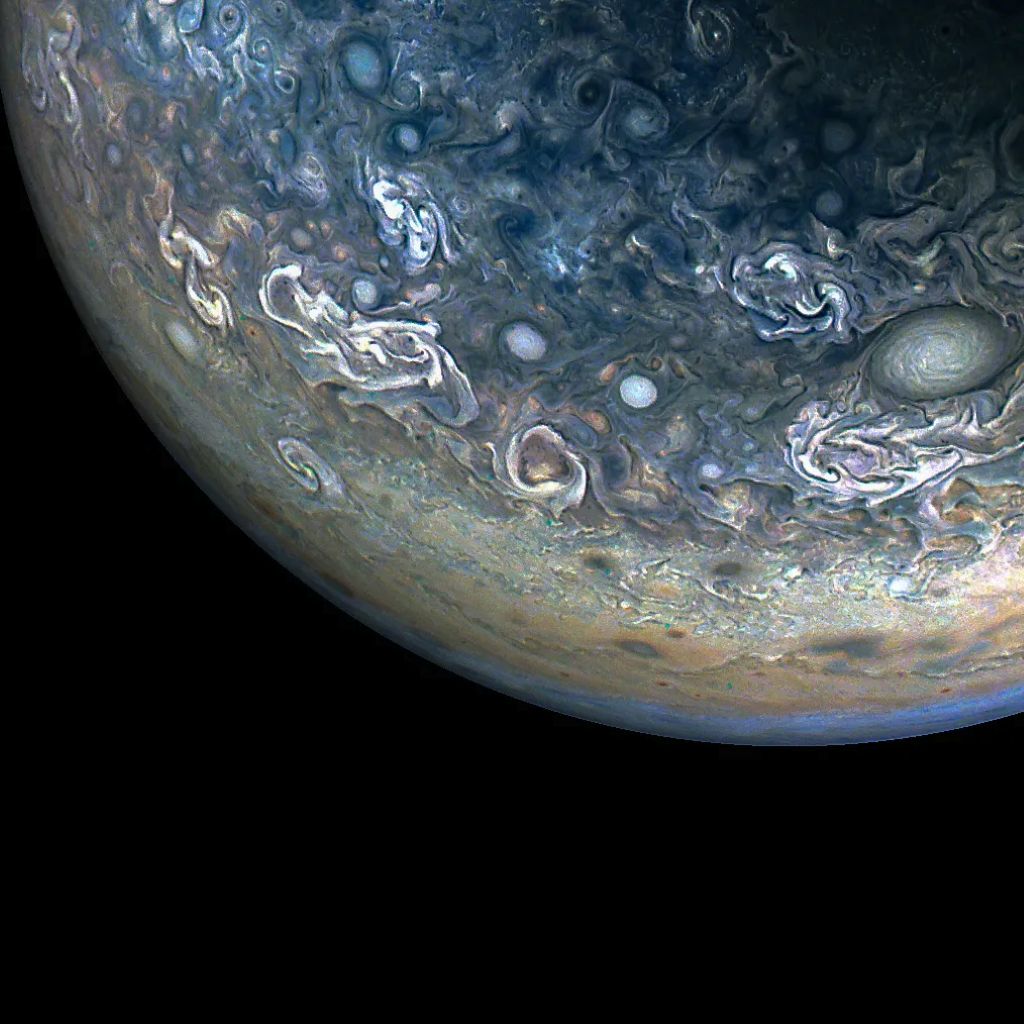
NASA’s Juno Mission Captures the Colorful and Chaotic Clouds of Jupiter
During its 61st close flyby of Jupiter on May 12, 2024, NASA’s Juno spacecraft captured this color-enhanced view of the giant planet’s northern hemisphere. It provides a detailed view of chaotic clouds and cyclonic storms in an area known to scientists as a folded filamentary region. In these regions, the zonal jets that create the familiar banded patterns in Jupiter’s…
Read More » -
NASA

NASA’s Juno Mission Spots Jupiter’s Tiny Moon Amalthea
NASA’s Juno mission captured these views of Jupiter during its 59th close flyby of the giant planet on March 7, 2024. They provide a good look at Jupiter’s colorful belts and swirling storms, including the Great Red Spot. Close examination reveals something more: two glimpses of the tiny moon Amalthea (see Figure B below). Figure B NASA’s Juno mission captured…
Read More » -
NASA
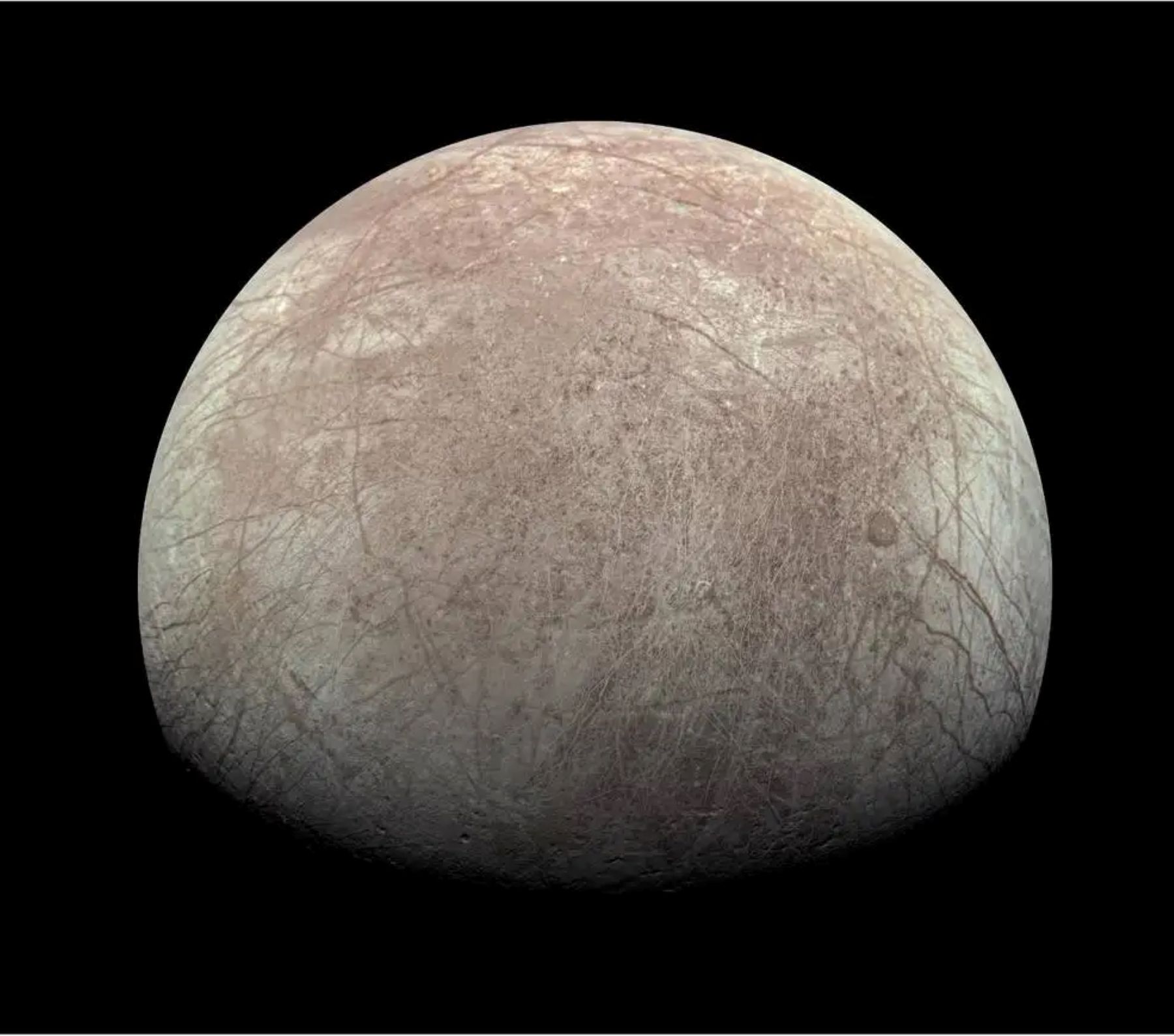
NASA’s Juno Mission Measures Oxygen Production at Europa
The ice-covered Jovian moon generates 1,000 tons of oxygen every 24 hours – enough to keep a million humans breathing for a day. Scientists with NASA’s Juno mission to Jupiter have calculated the rate of oxygen being produced at the Jovian moon Europa to be substantially less than most previous studies. Published on March 4 in Nature Astronomy, the findings were derived by…
Read More »