
Juno
-
NASA
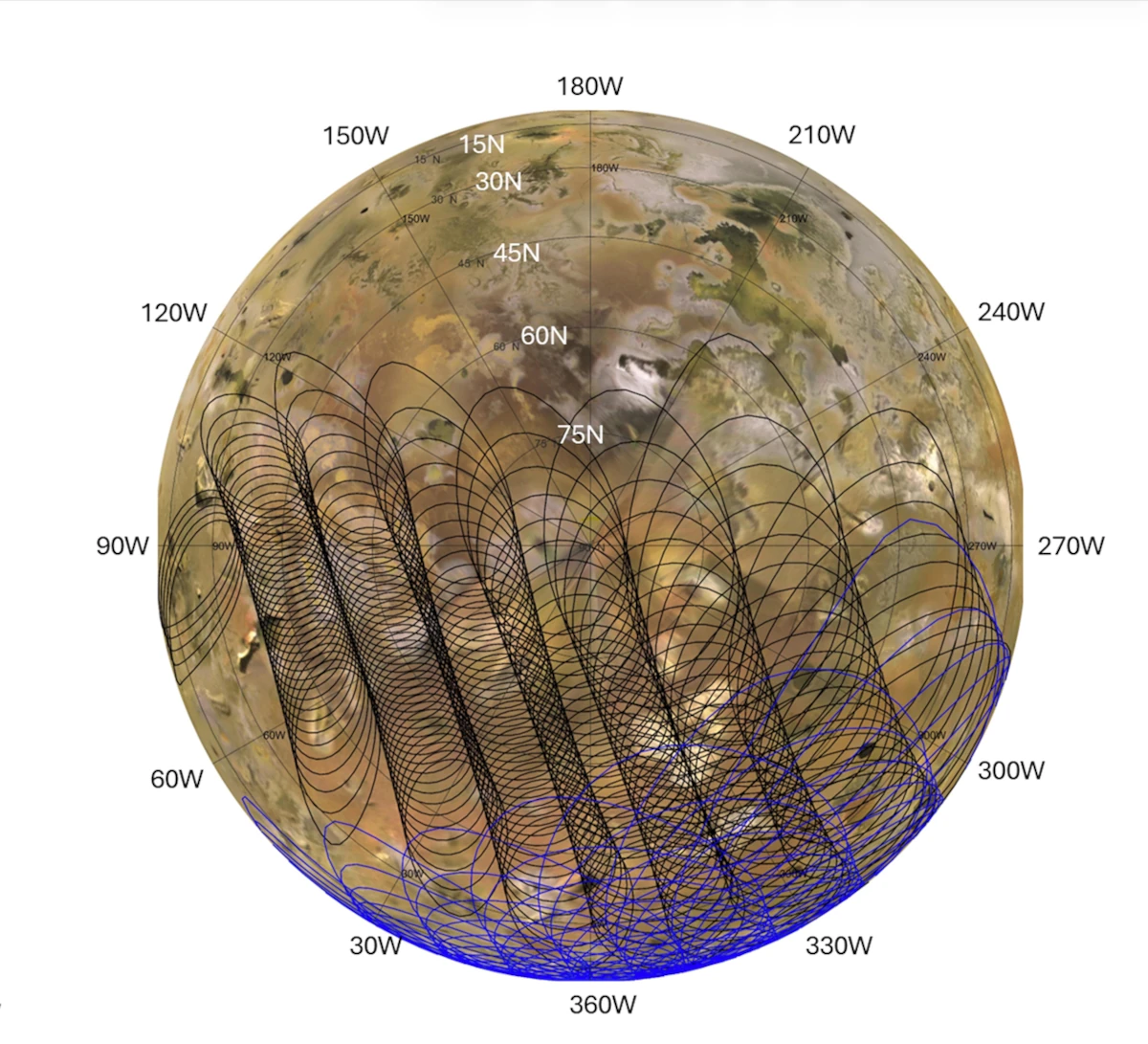
Mapping Io’s Hidden Heat With NASA’s Juno
Description This graphic illustrates the areas of Jupiter’s moon Io sampled by the Microwave Radiometer (MWR) instrument aboard NASA’s Juno spacecraft during two close flybys. The black overlapping lines show the instrument’s footprints during Perijove 57 on Dec. 30, 2023, when the spacecraft primarily mapped the northern hemisphere. The blue lines represent Perijove 58 on Feb. 3, 2024, which focused…
Read More » -
NASA
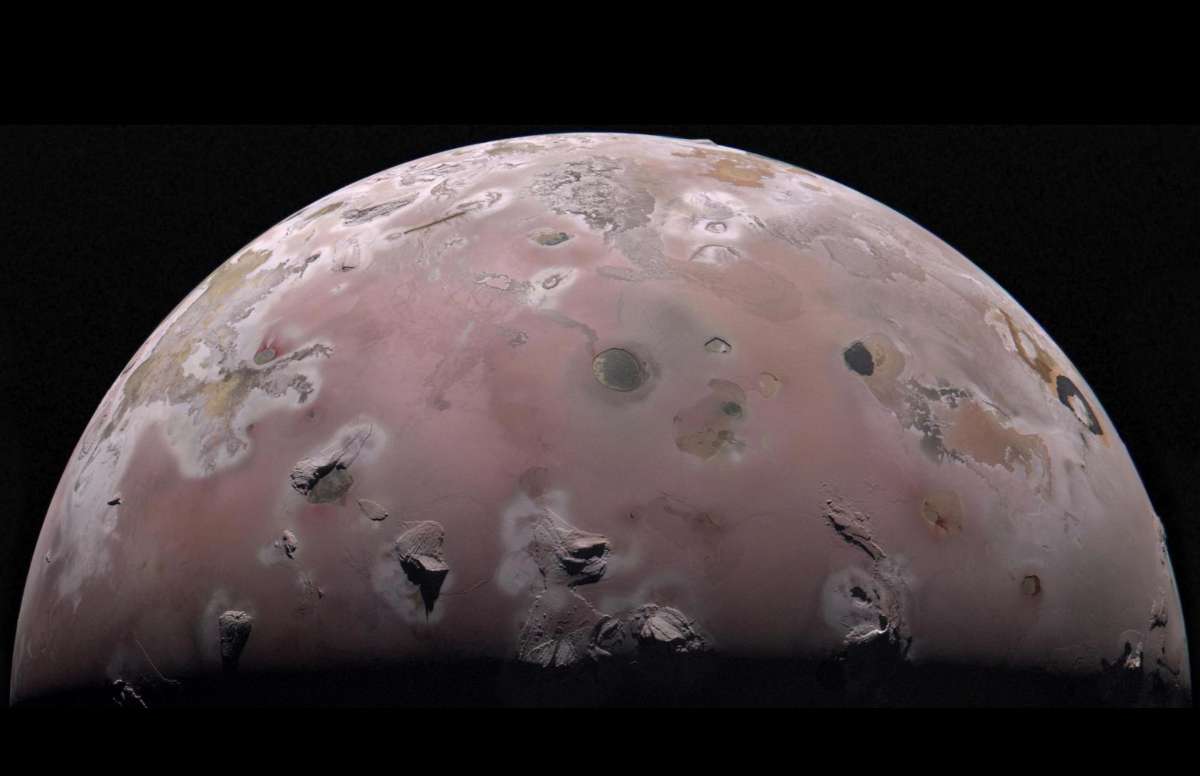
NASA’s Juno Takes Temperature of Jupiter’s Fiery Moon Io
Lee esta historia en español aquí. NASA’s Juno mission has provided the first measurements of the temperature below the surface of Jupiter’s moon Io, revealing significant heating within the shallow subsurface of the most volcanically active world in the solar system. Collected during two close flybys, the data also shows that most of Io’s surface is remarkably smooth and composed of…
Read More » -
NASA
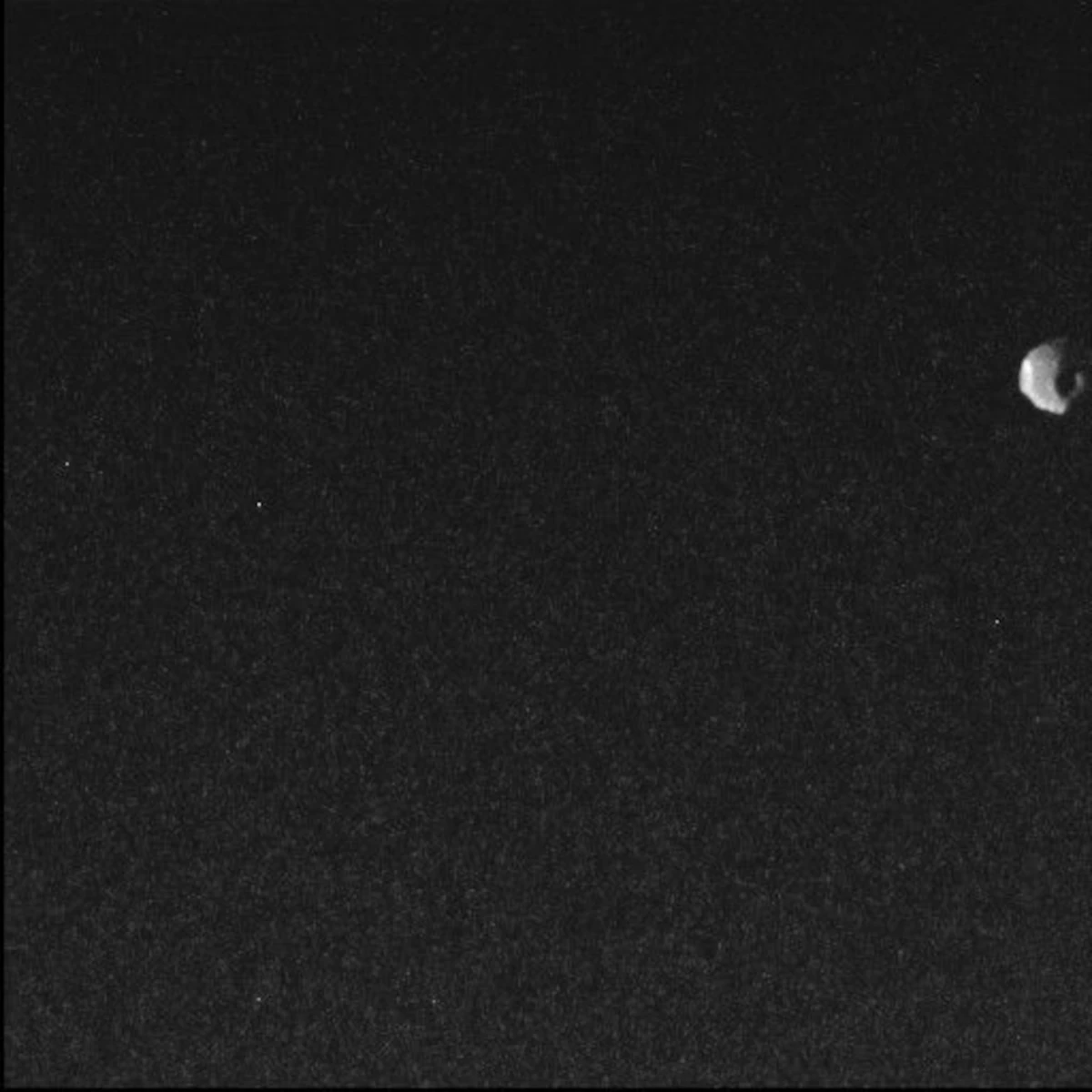
NASA’S Juno Misson Captures Jupiter Moon Thebe
Description NASA’s Juno spacecraft captured this view of Thebe, the second largest of Jupiter’s inner moons, during a close pass on May 1, 2026. The spacecraft’s Stellar Reference Unit (SRU) captured this image from a distance of approximately 3,100 miles (5,000 kilometers) at a resolution of about 1.9 miles (3 kilometers) per pixel. Thebe resides at the outer edge of…
Read More » -
NASA
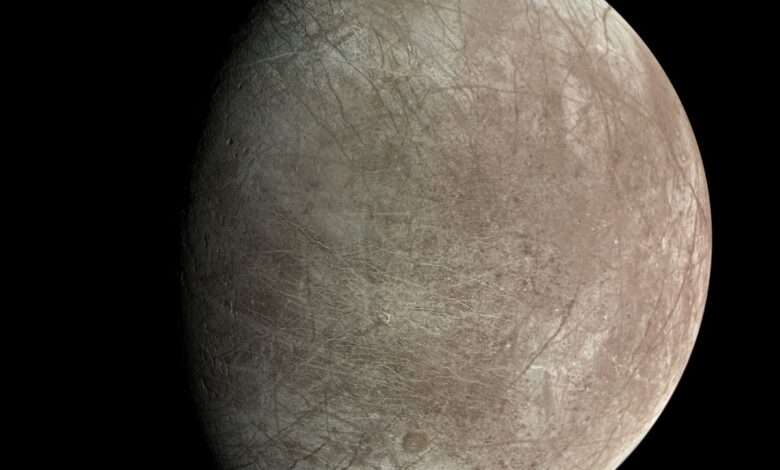
NASA’s Juno Measures Thickness of Europa’s Ice Shell
Results from the solar-powered spacecraft provide a new measurement of the thickness of the ice shell encasing the Jovian moon’s ocean. Data from NASA’s Juno mission has provided new insights into the thickness and subsurface structure of the icy shell encasing Jupiter’s moon Europa. Using the spacecraft’s Microwave Radiometer (MWR), mission scientists determined that the shell averages about 18 miles (29 kilometers) thick in the region observed during…
Read More » -
NASA
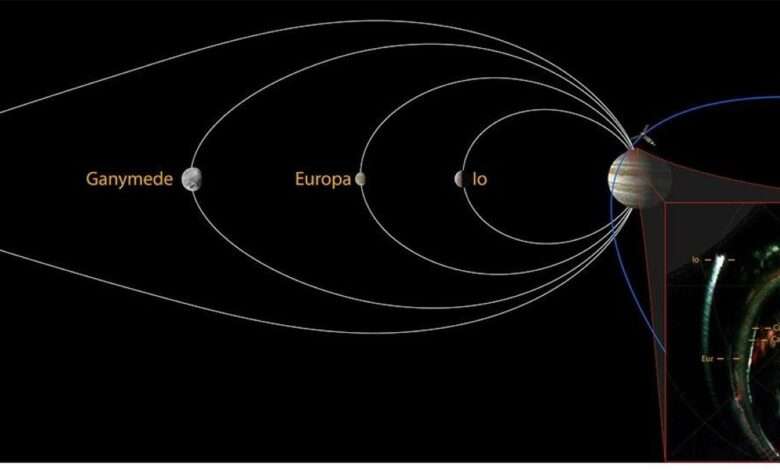
Juno Detected the Final Missing Auroral Signature from Jupiter’s Four Largest Moons
Jupiter hosts the brightest and most spectacular auroras in the Solar System. Near its poles, these shimmering lights offer a glimpse into how the planet interacts with the solar wind and moons swept by Jupiter’s magnetic field. Unlike Earth’s northern lights, the largest moons of Jupiter create their own auroral signatures in the planet’s atmosphere — a phenomenon that Earth’s…
Read More » -
NASA
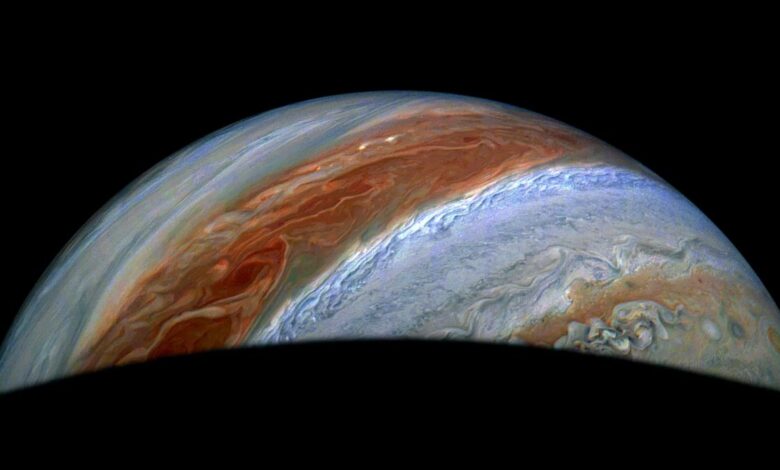
NASA’s Juno Mission Gets Under Jupiter’s and Io’s Surface
New data from the agency’s Jovian orbiter sheds light on the fierce winds and cyclones of the gas giant’s northern reaches and volcanic action on its fiery moon. NASA’s Juno mission has gathered new findings after peering below Jupiter’s cloud-covered atmosphere and the surface of its fiery moon, Io. Not only has the data helped develop a new model to…
Read More » -
NASA
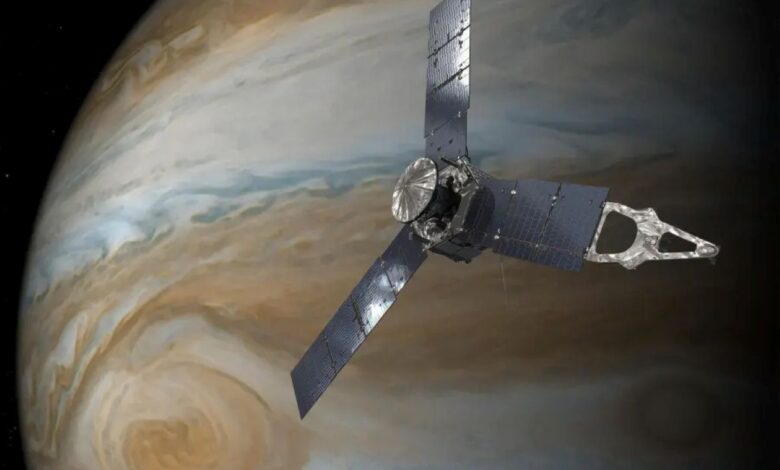
NASA’s Juno Back to Normal Operations After Entering Safe Mode
The spacecraft was making its 71st close approach to Jupiter when it unexpectedly entered into a precautionary status. Data received from NASA’s Juno mission indicates the solar-powered spacecraft went into safe mode twice on April 4 while the spacecraft was flying by Jupiter. Safe mode is a precautionary status that a spacecraft enters when it detects an anomaly. Nonessential functions…
Read More » -
NASA
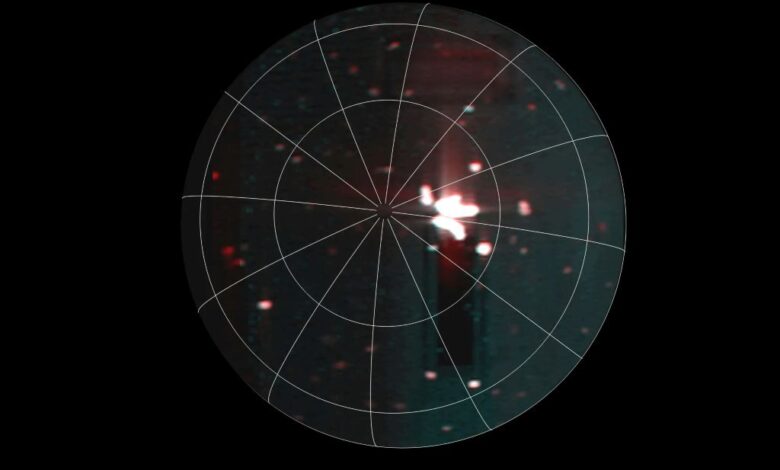
NASA Juno Mission Spots Most Powerful Volcanic Activity on Io to Date
Even by the standards of Io, the most volcanic celestial body in the solar system, recent events observed on the Jovian moon are extreme. Scientists with NASA’s Juno mission have discovered a volcanic hot spot in the southern hemisphere of Jupiter’s moon Io. The hot spot is not only larger than Earth’s Lake Superior, but it also belches out eruptions…
Read More » -
NASA
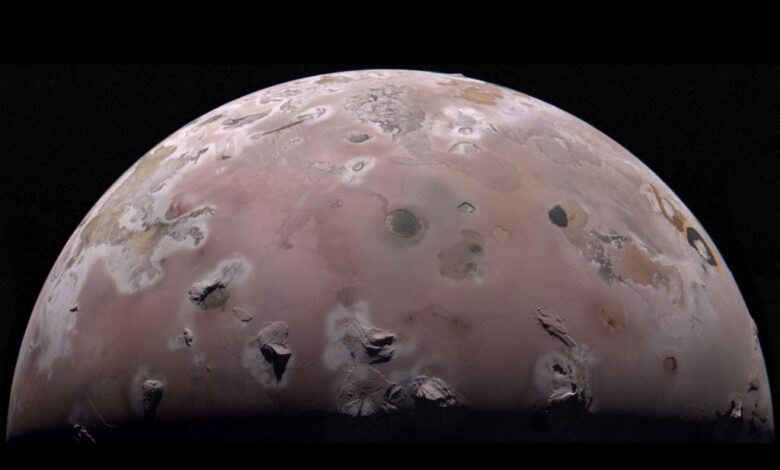
NASA’s Juno Mission Uncovers Heart of Jovian Moon’s Volcanic Rage
A new study points to why, and how, Io became the most volcanic body in the solar system. Scientists with NASA’s Juno mission to Jupiter have discovered that the volcanoes on Jupiter’s moon Io are each likely powered by their own chamber of roiling hot magma rather than an ocean of magma. The finding solves a 44-year-old mystery about the…
Read More » -
NASA
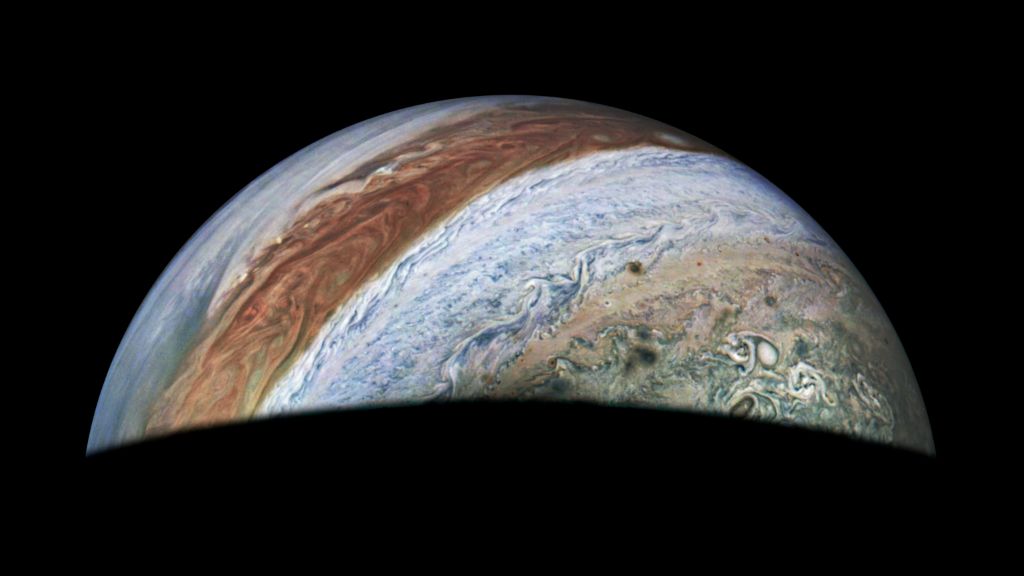
Danish Instrument Helps NASA’s Juno Spacecraft See Radiation
Using cameras designed for navigation, scientists count ‘fireflies’ to determine the amount of radiation the spacecraft receives during each orbit of Jupiter. Scientists with NASA’s Juno mission have developed the first complete 3D radiation map of the Jupiter system. Along with characterizing the intensity of the high-energy particles near the orbit of the icy moon Europa, the map shows how…
Read More »