Jupiter

  • NASA

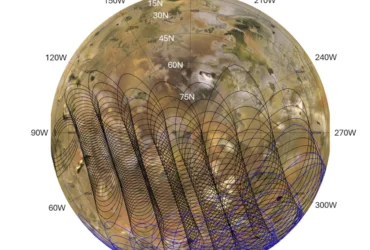
    Mapping Io’s Hidden Heat With NASA’s Juno

    Description This graphic illustrates the areas of Jupiter’s moon Io sampled by the Microwave Radiometer (MWR) instrument aboard NASA’s Juno spacecraft during two close flybys. The black overlapping lines show the instrument’s footprints during Perijove 57 on Dec. 30, 2023, when the spacecraft primarily mapped the northern hemisphere. The blue lines represent Perijove 58 on Feb. 3, 2024, which focused…

    Read More »
  • NASA

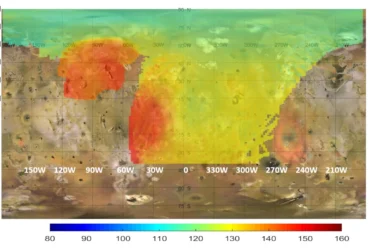
    NASA’s Juno Peers Beneath Io’s Surface

    Downloads NASA’s Juno Peers Beneath Io’s Surface PNG (2.07 MB) Description This map represents data captured by the Microwave Radiometer (MWR) aboard NASA’s Juno spacecraft, indicating heat rising from just beneath the surface of Jupiter’s moon Io. While infrared instruments measure the temperature of the moon’s surface, the lowest frequency microwave channels (0.6 and 1.25 gigahertz) on the MWR can…

    Read More »
  • NASA

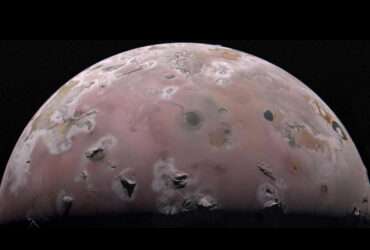
    NASA’s Juno Takes Temperature of Jupiter’s Fiery Moon Io

    Lee esta historia en español aquí.  NASA’s Juno mission has provided the first measurements of the temperature below the surface of Jupiter’s moon Io, revealing significant heating within the shallow subsurface of the most volcanically active world in the solar system. Collected during two close flybys, the data also shows that most of Io’s surface is remarkably smooth and composed of…

    Read More »
  • NASA

    Colorful, Chaotic Jupiter

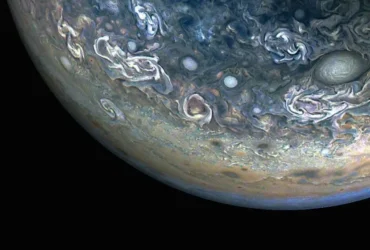
    NASA’s Juno spacecraft captured this color-enhanced view of Jupiter’s northern hemisphere during its 61st close flyby of the giant planet on May 12, 2024. Citizen scientist Gary Eason made this image using raw data from the JunoCam instrument, applying digital processing techniques to enhance color and clarity. It provides a detailed view of chaotic clouds and cyclonic storms in an area known…

    Read More »
  • NASA

    NASA’S Juno Misson Captures Jupiter Moon Thebe

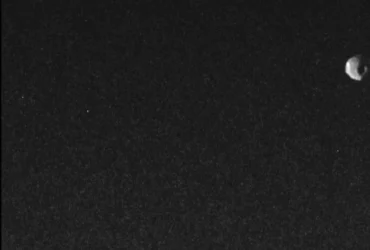
    Description NASA’s Juno spacecraft captured this view of Thebe, the second largest of Jupiter’s inner moons, during a close pass on May 1, 2026. The spacecraft’s Stellar Reference Unit (SRU) captured this image from a distance of approximately 3,100 miles (5,000 kilometers) at a resolution of about 1.9 miles (3 kilometers) per pixel. Thebe resides at the outer edge of…

    Read More »
  • NASA

    Developing Robust Electronics That Can Withstand Harsh Conditions on Cold Planetary Bodies

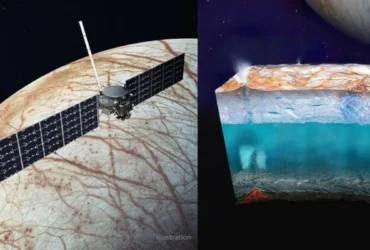
    A NASA-sponsored team has developed electronics that can operate reliably in the harsh radiation and temperature conditions found on distant planetary bodies like Europa, an ocean world orbiting Jupiter. Not only could this new technology enable autonomous sensors and robotic exploration of distant ocean worlds, it could also support NASA’s goal to establish human outposts on the Moon and Mars…

    Read More »
  • NASA

    Listen to This Month’s ‘Planetary Parade’ With NASA’s Chandra

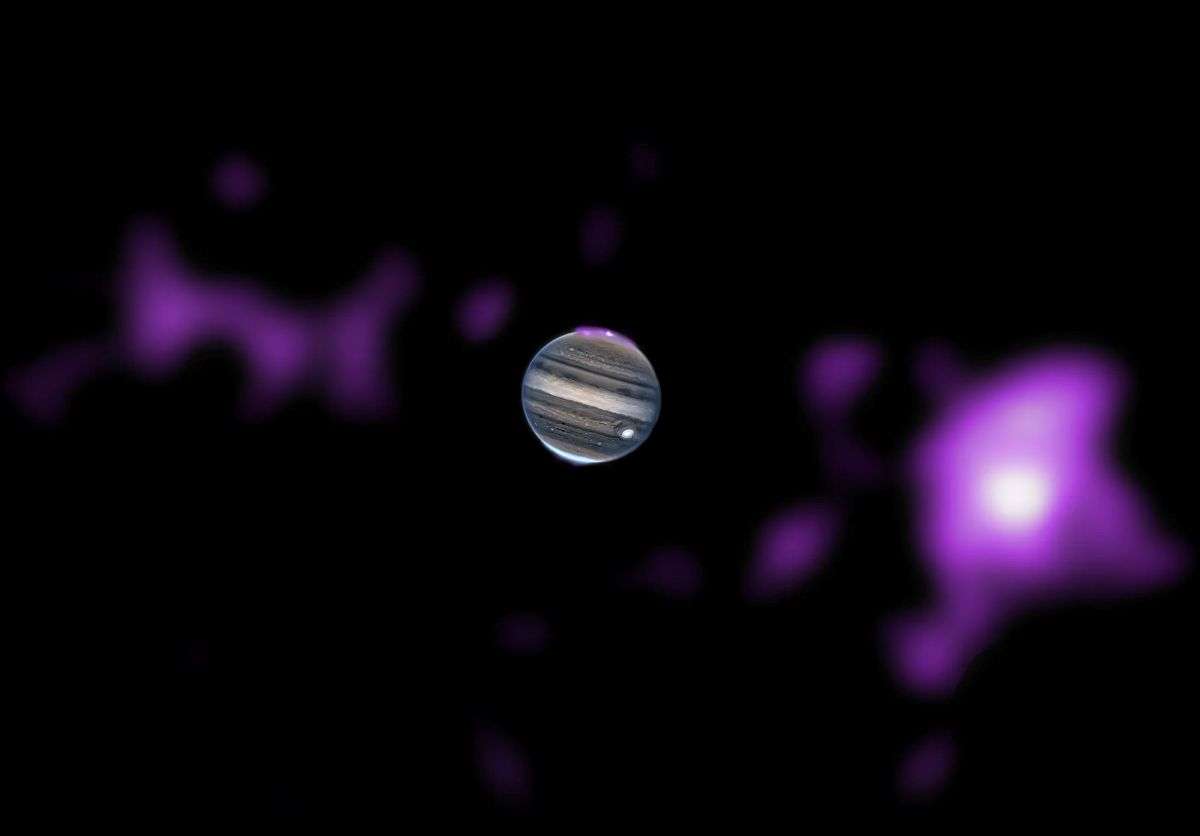
    In late February, people in the Northern Hemisphere can look up for a special sight: six planets will all be visible from clear and dark night skies. New sonifications from NASA’s Chandra X-ray Observatory released Feb. 25 will help commemorate this latest “planetary parade.” Because the planets in our solar system travel around the Sun in the same plane (known as…

    Read More »
  • NASA

    Ammonia-Bearing Compounds Discovered at Surface of Jupiter’s Moon Europa

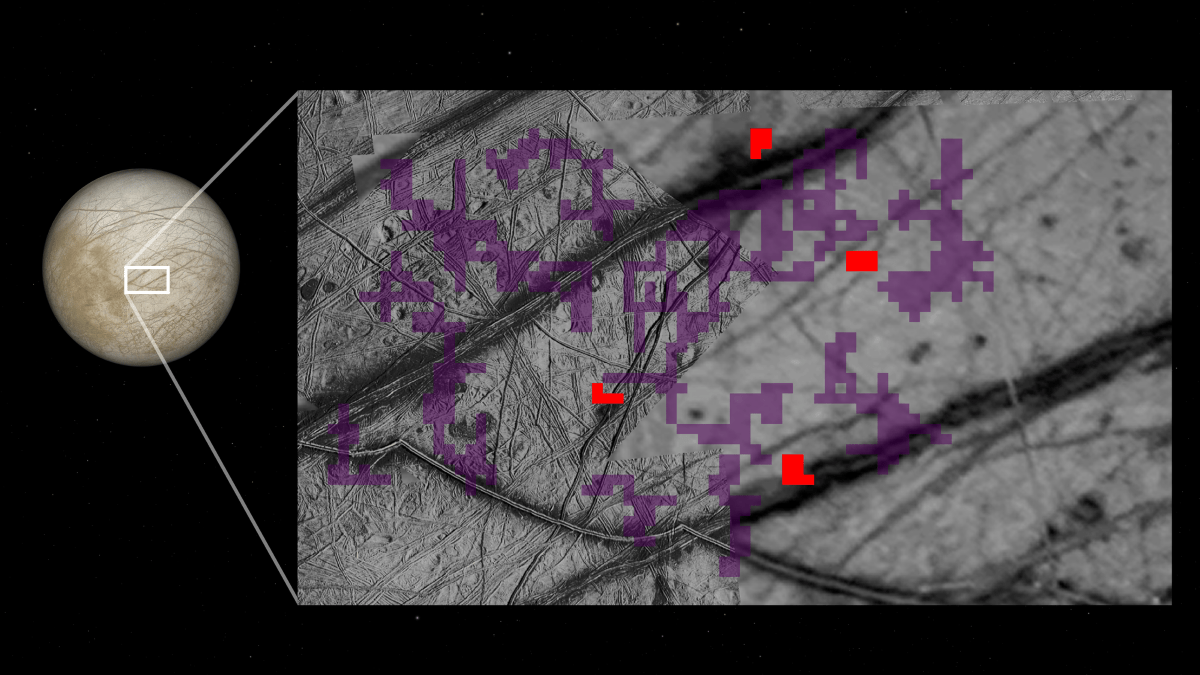
    Description Advanced analysis of decades-old data from NASA’s Galileo spacecraft identifies ammonia-bearing compounds discovered on the surface of Jupiter’s moon Europa, as shown in this composite image. Zooming in on an area about 250 miles (about 400 kilometers) wide, the black-and-white mosaic to the right is composed of multiple images from Galileo’s Solid-State Imaging camera. Overlaid are representations of data…

    Read More »
  • NASA

    Jupiter’s Volcanic Moon Io

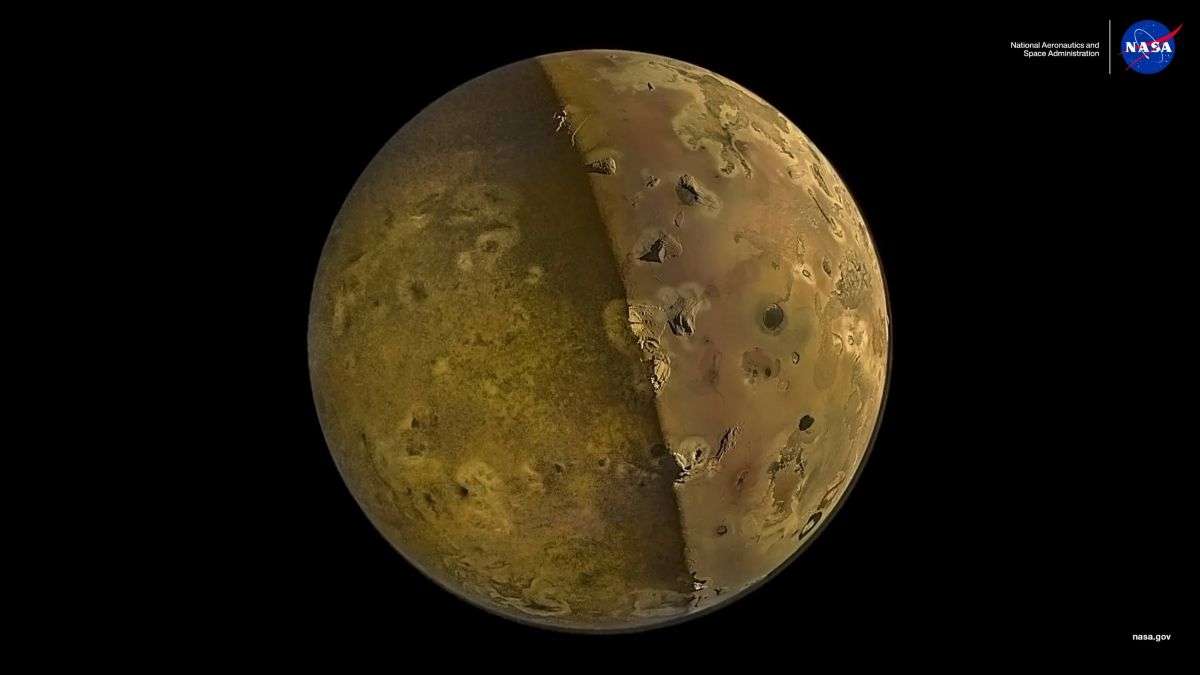
    During its close flyby of Jupiter’s moon Io on December 30, 2023, NASA’s Juno spacecraft captured some of the most detailed imagery ever of Io’s volcanic surface. In this image, taken by the JunoCam instrument from about 930 miles (1,500 kilometers) above the moon, Io’s night side [left lobe] is illuminated by “Jupitershine,” which is sunlight reflected from the planet’s surface. This…

    Read More »
  • NASA

    NASA Study: Celestial ‘Accident’ Sheds Light on Jupiter, Saturn Riddle

    An unusual cosmic object is helping scientists better understand the chemistry hidden deep in Jupiter and Saturn’s atmospheres — and potentially those of exoplanets. Why has silicon, one of the most common elements in the universe, gone largely undetected in the atmospheres of Jupiter, Saturn, and gas planets like them orbiting other stars? A new study using observations from NASA’s…

    Read More »
Back to top button