JL AUDIO ADDS STEALTHBOX® SUBWOOFER SYSTEMS FOR POPULAR CHEVROLET AND GMC TRUCKS AND SUVS

Miramar, FL—JL Audio—September 2017—JL Audio, an innovator in high-end audio solutions, has announced the introduction of three new Stealthbox® subwoofer systems for the complete lineup of full-size SUVs, and various trucks from Chevrolet and GMC. Compatible full-size SUVs models include the Tahoe, Suburban, and Yukon—model years 2015 and up. Truck models include the full-size Silverado and Sierra—model years 2014 and up, and crew-cab mid-size Colorado and Canyon—models 2015 and up.
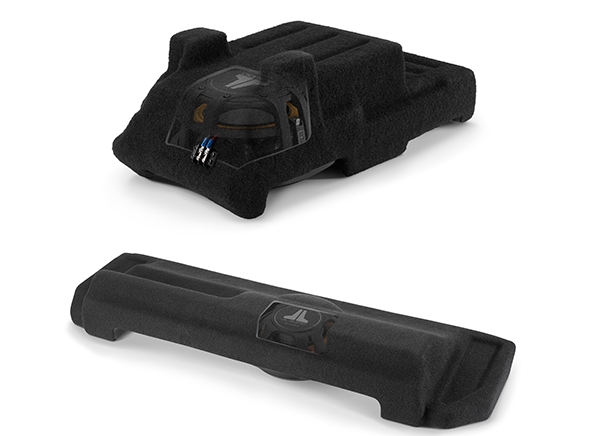
For Tahoe, Suburban, and Yukon, as well as Silverado and Sierra owners who desire more bass performance than what’s supplied in the factory system, JL Audio’s compact Stealthbox® subwoofer system is designed to fit inside the front center console, without affecting cup holders or storage space. Equipped with a single JL Audio, 10-inch, TW1 subwoofer, this subwoofer solution delivers extraordinary deep bass with zero compromise in vehicle comfort or function, and complete invisibility.
The Stealthbox® for the mid-size Colorado and Canyon crew-cab trucks features one JL Audio 10-inch, TW3, thin line subwoofer and is designed for placement under the rear bench seat, without affecting the ability to fold or recline the seat. The form-fitting design maximizes available air space to ensure excellent low-frequency extension and bass impact.
For two decades, JL Audio’s acclaimed Stealthbox® vehicle-specific enclosures have set a high standard for sound quality, as well as vehicle-specific fit and installation integrity. Using laser-scanning technology, JL Audio’s development team, precisely measures the nooks and tight spaces available within a vehicle. Solid modeling software is then used to design subwoofer solutions with precise fit and maximum enclosure volume, for strong, deep bass output.
Chevrolet Tahoe & Suburban/GMC Yukon, 2015 & Up
Fits Tahoe, Suburban and Yukon 2015-Up with front bucket seats and factory console.
Contains one 10TW1-2 in a sealed enclosure. 300 watt power handling. Wired for 2 ohm mono. Stealthbox® installs inside forward-most portion of front center console, without affecting storage space or cup holders. Replaces the OEM “subwoofer” system, if vehicle is so equipped.
Retail Price USD: $599.99
Availability: Now Shipping
Chevrolet Silverado/GMC Sierra, 2014 & Up
Fits Chevrolet Silverado and GMC Sierra 2014-Up with front bucket seats and factory console.
Contains one 10TW1-2 in a sealed enclosure. 300 watt power handling. Wired for 2 ohm mono. Stealthbox® installs inside forward-most portion of front center console without affecting storage space or cup holders. Replaces the OEM “subwoofer” system, if vehicle is so equipped.
Retail Price USD: $599.99
Availability: Now Shipping
Chevrolet Colorado/GMC Canyon, 2015 & Up
Fits Colorado and Canyon 2015-Up
Contains one 10TW3-D4 subwoofer in a sealed enclosure. 400 watt power handling. Wired for 2 ohm mono. Installs under the rear bench seat. Does not affect folding or reclining of seat. Requires removal of under seat storage tray.
Retail Price USD: $849.99
Availability: Now Shipping
About JL Audio
Guided by a philosophy that great audio has real value, JL Audio develops innovative products that improve the audio experience on the go, in the home, and in the studio. Committed to unique engineering and quality manufacturing, JL Audio operates three U.S. engineering facilities, and builds many of its home, car, and marine loudspeaker products at the company’s Miramar, Florida, USA factory, with components sourced from the company’s global supply network. For more information, visit jlaudio.com or follow @jlaudio on Facebook or Twitter.