
Large magellanic Cloud
-
NASA

Hubble Captures a Cosmic Cloudscape
The universe is a dusty place, as this NASA/ESA Hubble Space Telescope image featuring swirling clouds of gas and dust near the Tarantula Nebula reveals. Located in the Large Magellanic Cloud about 160,000 light-years away in the constellations Dorado and Mensa, the Tarantula Nebula is the most productive star-forming region in the nearby universe, home to the most massive stars known. The…
Read More » -
NASA
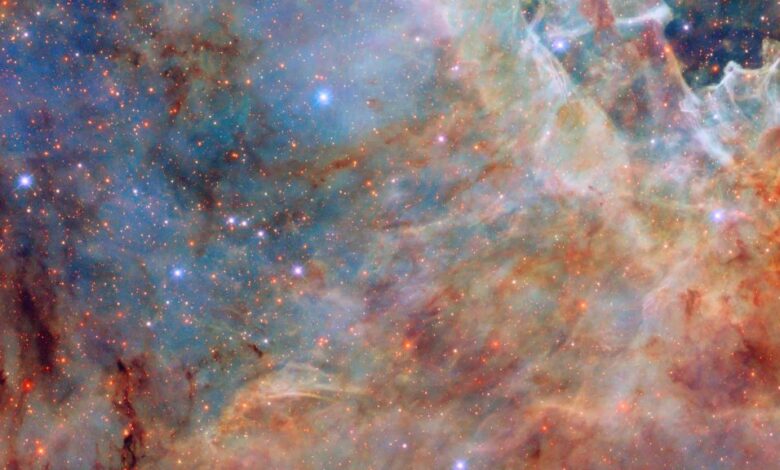
Hubble Studies the Tarantula Nebula’s Outskirts
This NASA/ESA Hubble Space Telescope image features a dusty yet sparkling scene from one of the Milky Way’s satellite galaxies, the Large Magellanic Cloud. The Large Magellanic Cloud is a dwarf galaxy situated about 160,000 light-years away in the constellations Dorado and Mensa. Despite being only 10–20% as massive as the Milky Way galaxy, the Large Magellanic Cloud contains some of the…
Read More » -
NASA
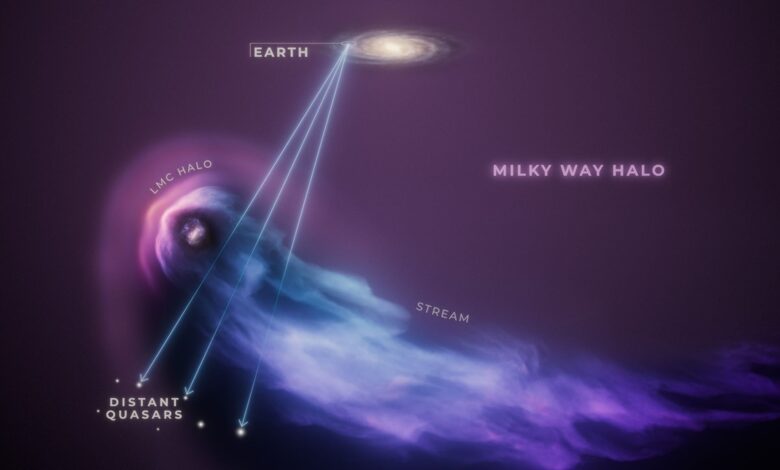
NASA’s Hubble Sees Aftermath of Galaxy’s Scrape with Milky Way
A story of survival is unfolding at the outer reaches of our galaxy, and NASA’s Hubble Space Telescope is witnessing the saga. The Large Magellanic Cloud, also called the LMC, is one of the Milky Way galaxy’s nearest neighbors. This dwarf galaxy looms large on the southern nighttime sky at 20 times the apparent diameter of the full Moon. Many researchers theorize…
Read More » -
NASA
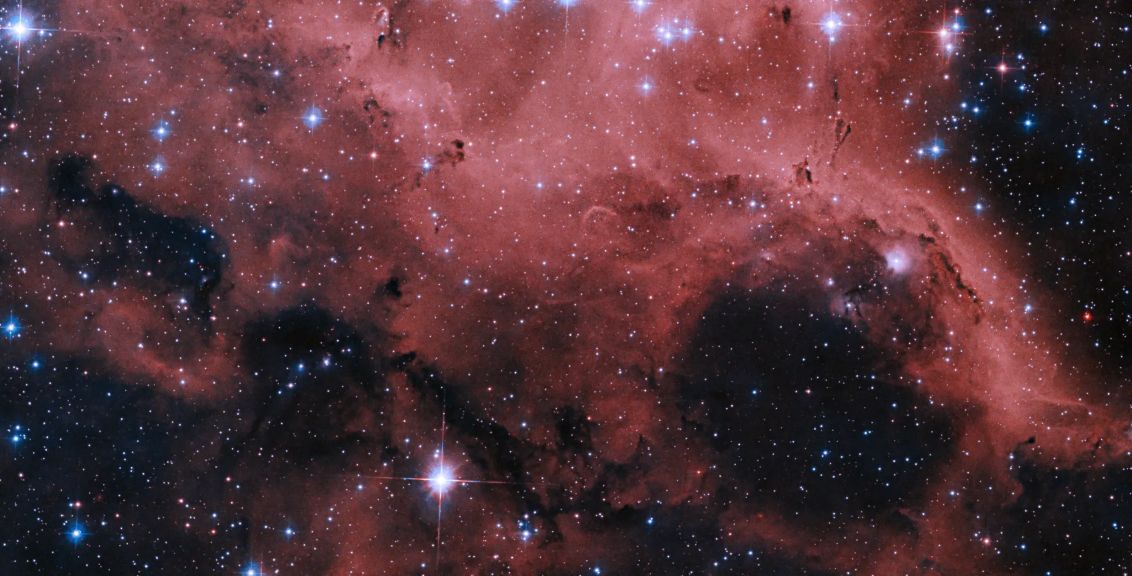
Hubble Spots Billowing Bubbles of Stellar Floss
A bubbling region of stars both old and new lies some 160,000 light-years away in the constellation Dorado. This complex cluster of emission nebulae is known as N11, and was discovered by American astronomer and NASA astronaut Karl Gordon Henize in 1956. NASA’s Hubble Space Telescope brings a new image of the cluster in the Large Magellanic Cloud (LMC), a nearby dwarf…
Read More »