
Lunar Regolith
-
NASA

NASA Finds Lunar Regolith Limits Meteorites as Source of Earth’s Water
A new NASA study of its Apollo lunar soils clarifies the Moon’s record of meteorite impacts and timing of water delivery. These findings place upper bounds on how much water meteorites could have supplied later in Earth’s history. Research has previously shown that meteorites may have been a significant source of Earth’s water as they bombarded our planet early in…
Read More » -
NASA
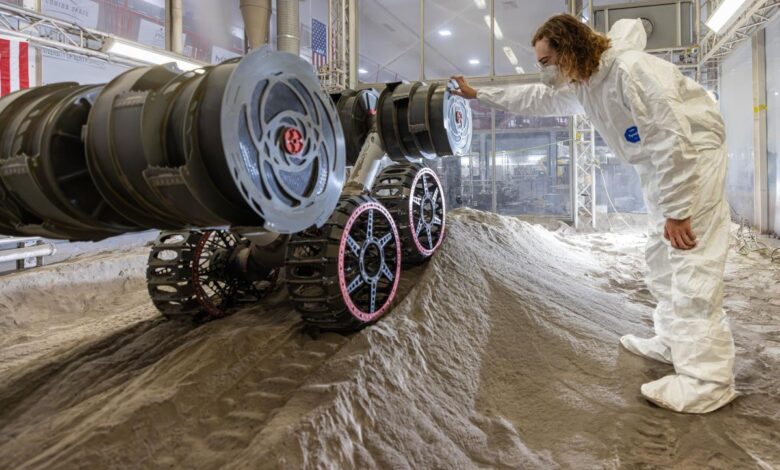
NASA Kennedy Digs Latest Robot Test
NASA’s RASSOR (Regolith Advanced Surface Systems Operations Robot) undergoes testing to extract simulated regolith, or the loose, fragmental material on the Moon’s surface, inside of the Granular Mechanics and Regolith Operations Lab at the agency’s Kennedy Space Center in Florida on May 27. Ben Burdess, mechanical engineer at NASA Kennedy, observes RASSOR’s counterrotating drums digging up the lunar dust and…
Read More » -
NASA
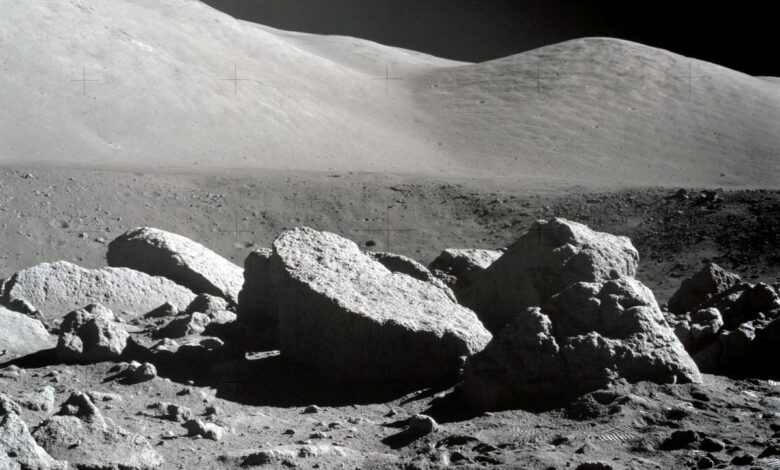
What is Lunar Regolith? (Grades 5-8)
This article is for students grades 5-8. The surface of the Moon is covered in a thick layer of boulders, rocks, and dust. This dusty, rocky layer is called lunar regolith. It was created a long time ago when meteorites crashed into the Moon and broke up the ground. NASA scientists study the regolith to learn more about the Moon’s history.…
Read More » -
NASA

NASA’s Dust Shield Successfully Repels Lunar Regolith on Moon
NASA’s Electrodynamic Dust Shield (EDS) successfully demonstrated its ability to remove regolith, or lunar dust and dirt, from its various surfaces on the Moon during Firefly Aerospace’s Blue Ghost Mission 1, which concluded on March 16. Lunar dust is extremely abrasive and electrostatic, which means it clings to anything that carries a charge. It can damage everything from spacesuits and…
Read More » -
Press Releases

Measuring Moon Dust to Fight Air Pollution
Moon dust, or regolith, isn’t like the particles on Earth that collect on bookshelves or tabletops – it’s abrasive and it clings to everything. Throughout NASA’s Apollo missions to the Moon, regolith posed a challenge to astronauts and valuable space hardware. During the Apollo 17 mission, astronaut Harrison Schmitt described his reaction to breathing in the dust as “lunar hay…
Read More » -
NASA
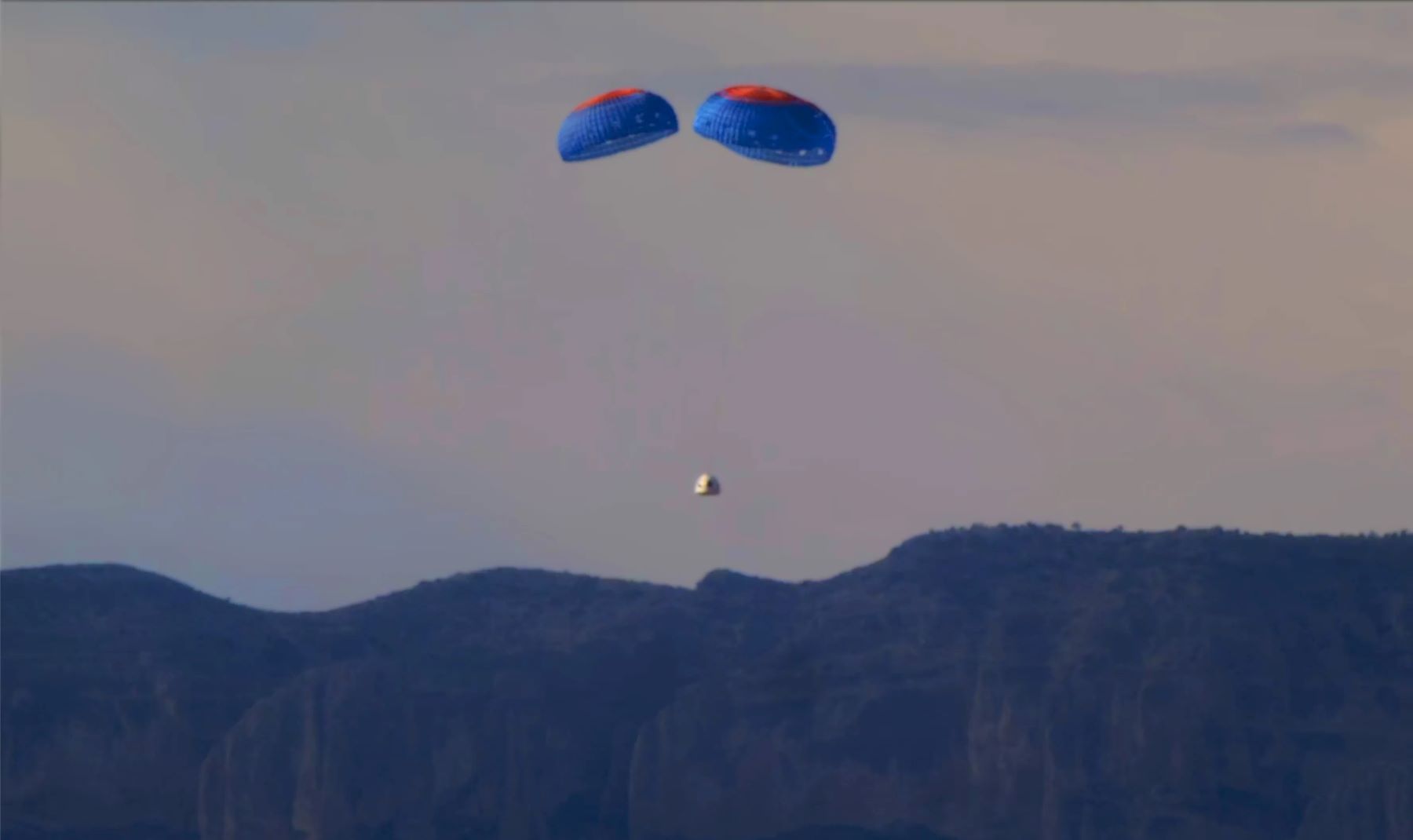
NASA Experiment Sheds Light on Highly Charged Moon Dust
Researchers are studying data from a recent suborbital flight test to better understand lunar regolith, or Moon dust, and its potentially damaging effects as NASA prepares to send astronauts back to the lunar surface under the Artemis campaign. The experiment, developed jointly by NASA and the University of Central Florida, sheds light on how these abrasive dust grains interact with astronauts, their…
Read More » -
Press Releases
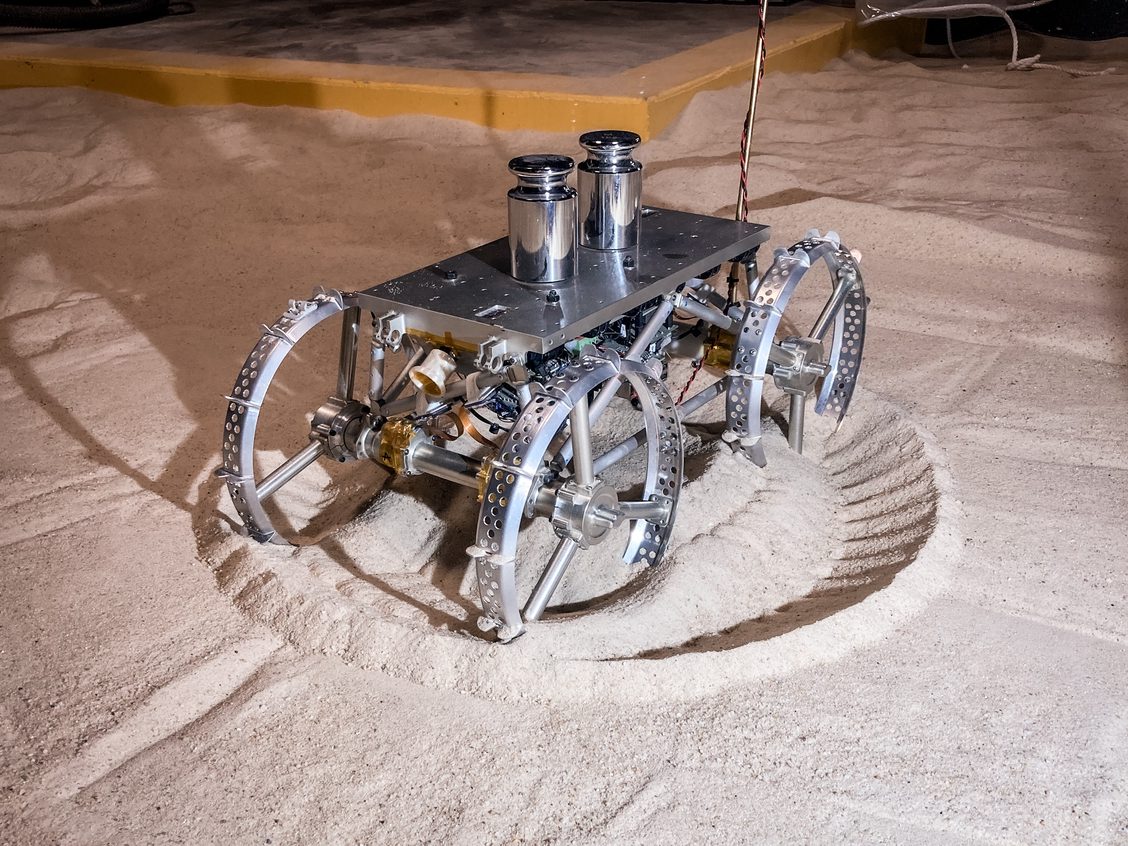
Astrobotic Reveals New Lunar Regolith Lab for Rover Testing
Astrobotic announced today a new Lunar Regolith Lab is open at its headquarters in Pittsburgh, Pennsylvania. This test facility is one of only a handful in the United States filled with industry-standard GRC-1 “regolith simulant”, or granules, designed to mimic the lunar surface. Filled with more than 42,000 pounds of this mechanical equivalent of lunar terrain, the lab is used…
Read More »