
Lunar Surface
-
NASA
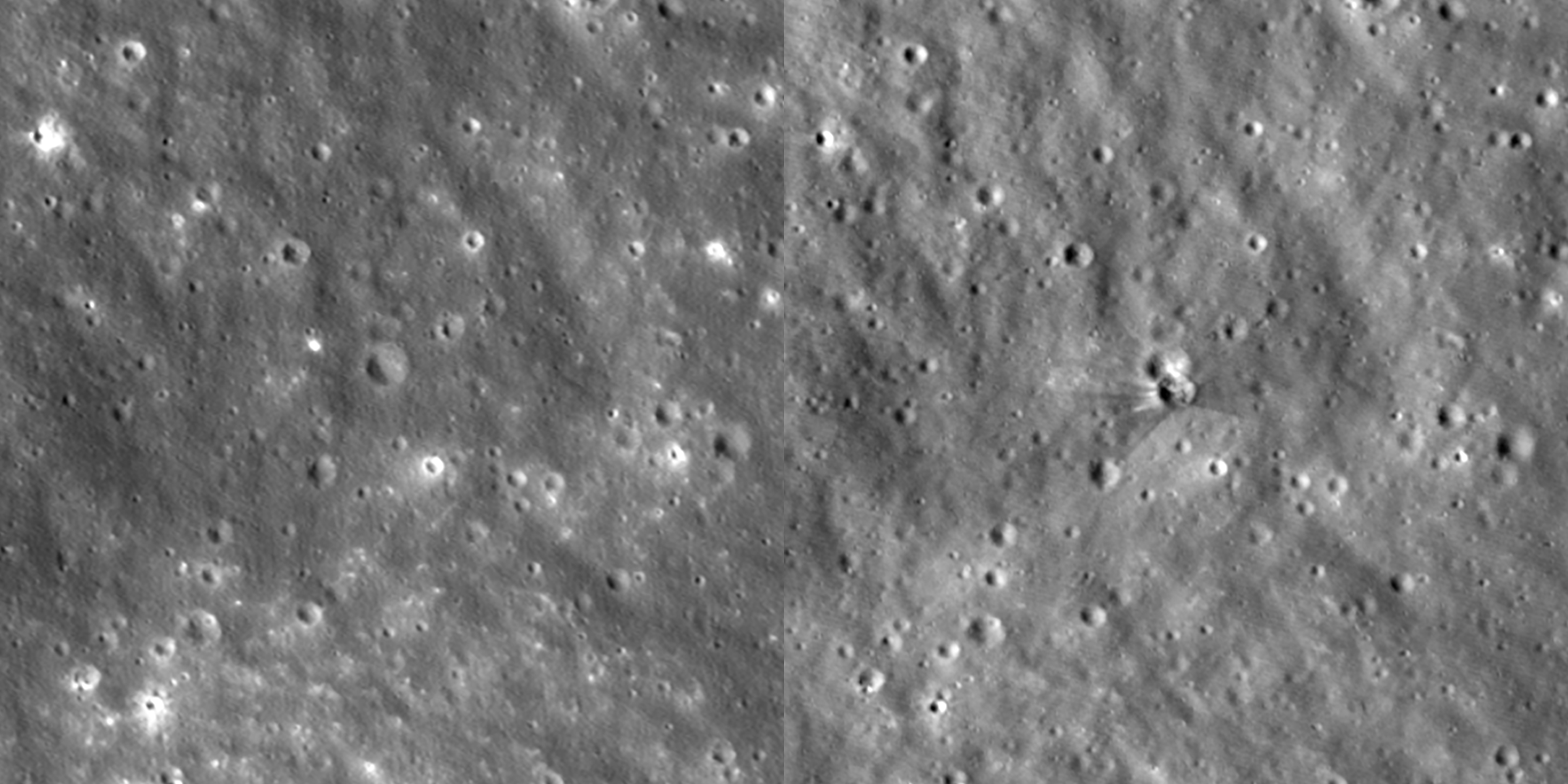
NASA’s LRO Images Falcon 9 Crater on Moon, Learns New Details
Between Aug. 11 and 12, NASA’s Lunar Reconnaissance Orbiter (LRO) captured a series of images of a new crater on the Moon. The crater formed on Aug. 5, when a SpaceX Falcon 9 upper stage impacted the surface following its January 2025 launch of the Firefly Blue Ghost 1 mission. To capture imagery of the impact, engineers tilted the spacecraft so its…
Read More » -
NASA
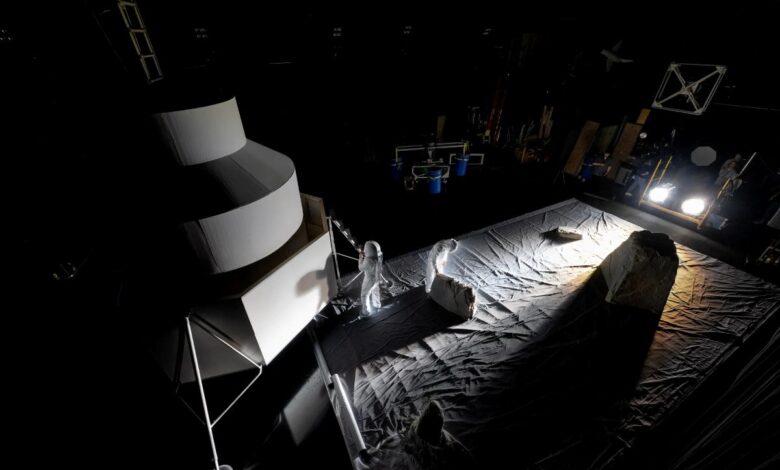
NASA Engineers Simulate Lunar Lighting for Artemis III Moon Landing
Better understanding the lunar lighting environment will help NASA prepare astronauts for the harsh environment Artemis III Moonwalkers will experience on their mission. NASA’s Artemis III mission will build on earlier test flights and add new capabilities with the human landing system and advanced spacesuits to send the first astronauts to explore the lunar South Pole and prepare humanity to go to…
Read More » -
NASA
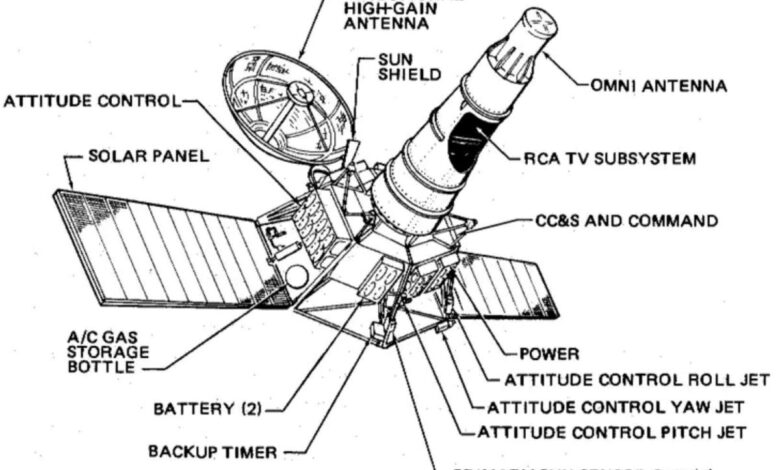
60 Years Ago: Ranger 8 Moon Photos Aid in Apollo Site Selection
Before Apollo astronauts set foot upon the Moon, much remained unknown about the lunar surface. While most scientists believed the Moon had a solid surface that would support astronauts and their landing craft, a few believed a deep layer of dust covered it that would swallow any visitors. Until 1964, no closeup photographs of the lunar surface existed, only those…
Read More » -
NASA
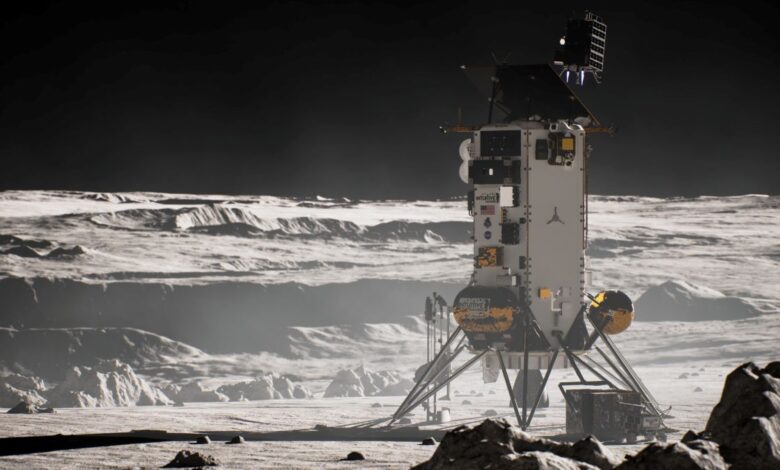
NASA’s Polar Ice Experiment Paves Way for Future Moon Missions
NASA’s Polar Resources Ice Mining Experiment-1 (PRIME-1) is preparing to explore the Moon’s subsurface and analyze where lunar resources may reside. The experiment’s two key instruments will demonstrate our ability to extract and analyze lunar soil to better understand the lunar environment and subsurface resources, paving the way for sustainable human exploration under the agency’s Artemis campaign for the benefit of all. …
Read More » -
NASA

NASA, Collaborators Announce a New Student Lunar Autonomy Challenge!
The new Lunar Autonomy Challenge invites teams of students from U.S. colleges and universities to test their software development skills. Working entirely in virtual simulations of the Moon’s surface, teams will develop an autonomous agent using software that can accomplish pre-defined tasks without help from humans This video shows NASA’s IPEx Excavator in a digital simulation environment. Credit: Embodied AI…
Read More » -
NASA
Six Finalists Named in NASA’s $3.5 Million Break the Ice Challenge
By Savannah Bullard The stage is set for the finale of NASA’s Break the Ice Lunar Challenge. Conceived in 2020, Break the Ice tasked innovators with creating robotic systems that can traverse the volatile terrain of the Lunar South Pole. These robots must be able to dig into the Moon’s regolith – the dusty, icy “dirt” that makes up the lunar surface…
Read More » -
NASA

University of Utah takes top honors in BIG Idea Lunar Forge Challenge
Through Artemis, NASA plans to conduct long-duration human and robotic missions on the lunar surface in preparation for future crewed exploration of Mars. Expanding exploration capabilities requires a robust lunar infrastructure, including practical and cost-effective ways to construct a lunar base. One method is employing in-situ resource utilization (ISRU) – or the ability to use naturally occurring resources – to produce…
Read More » -
NASA

Deploying and Demonstrating Navigation Aids on the Lunar Surface
PROJECT Lunar Node-1 (LN-1) SNAPSHOT NASA is developing lunar navigation beacons to be deployed on spacecraft or the lunar surface to aid in localization and help future space vehicles determine position, velocity, and time to high accuracy. The Lunar Node-1 payload in the test chamber at the Deep Space Network’s Development and Test Facility (DTF)-21 radio frequency (RF) compatibility testing…
Read More » -
NASA
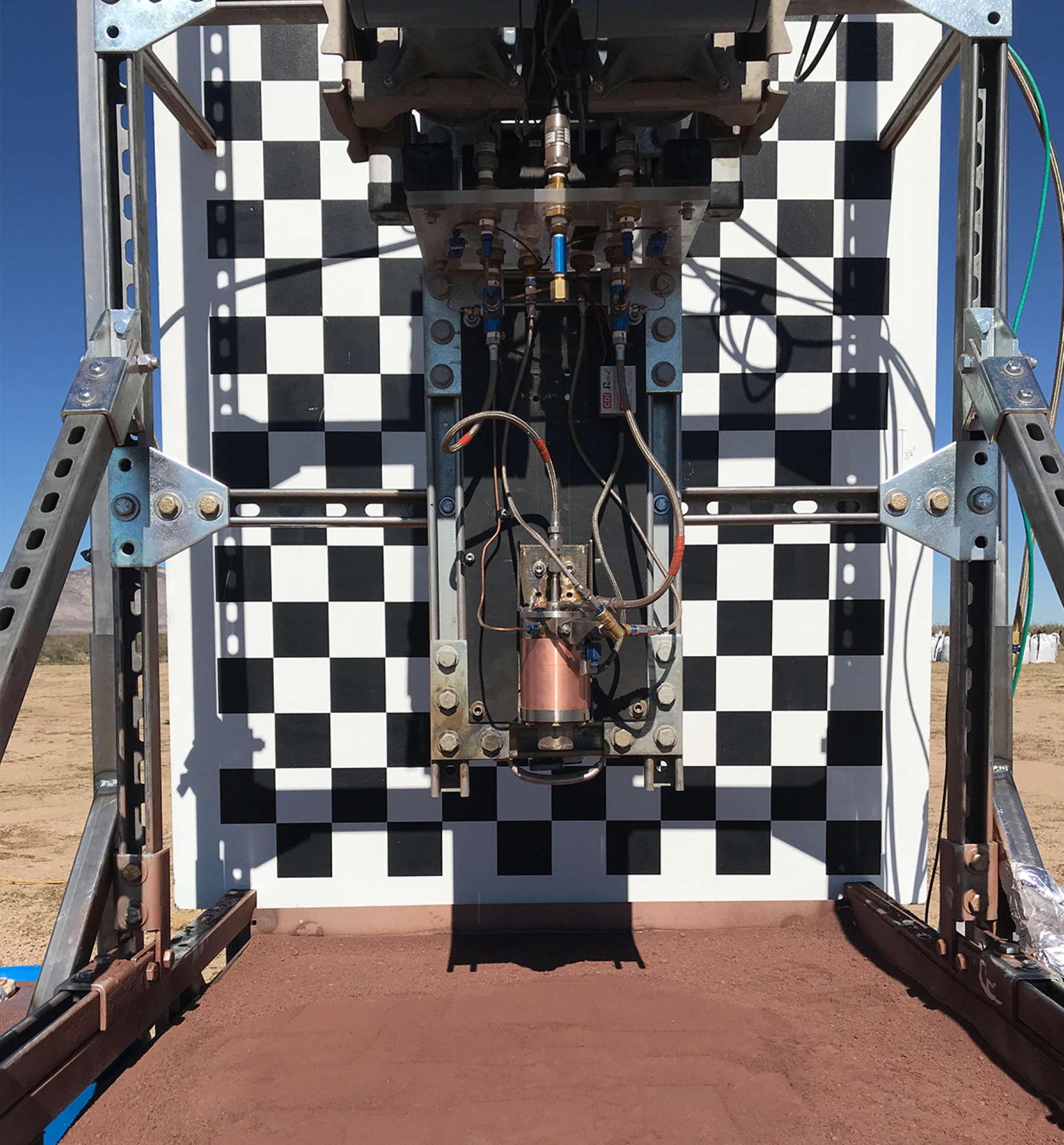
Astrobotic Commences Two NASA Contracts to Investigate Rocket Plumes and their interaction with the Lunar Surface
Astrobotic has begun work on two NASA Small Business Innovation Research contracts that will further research on lunar plume-surface interactions (PSI), a key area of risk and uncertainty for lunar landing. This testing will generate valuable new data about how lunar dust stirred up by a lander’s rocket plumes will affect landing systems, onboard payloads, landing sites, and nearby surface…
Read More » -
NASA
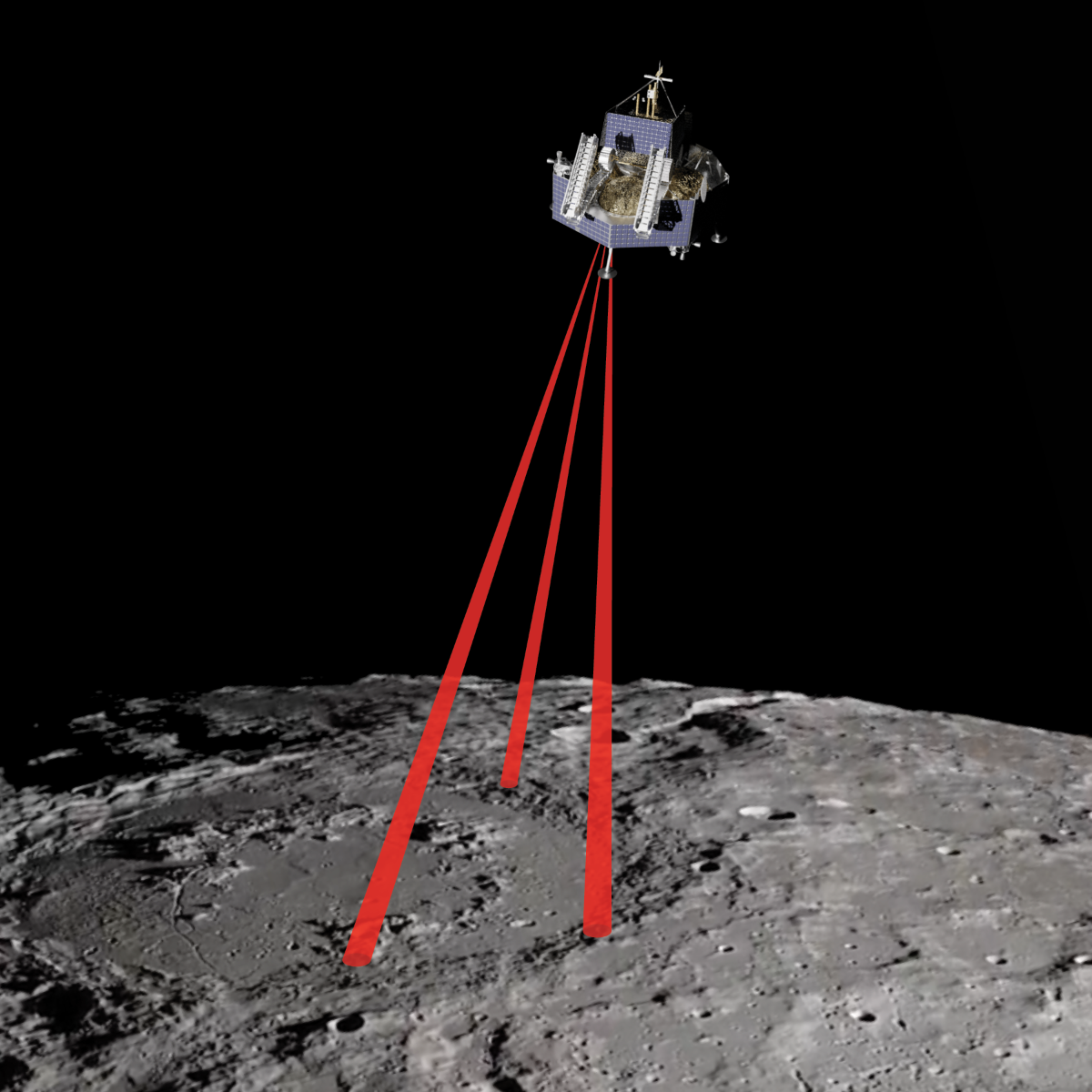
Astrobotic Selects Navigation Doppler Lidar from Psionic for Mission to Deliver VIPER to the Lunar Surface
Pittsburgh, PA and HAMPTON, VA, – FOR IMMEDIATE RELEASEAstrobotic today announced they have selected Navigation Doppler Lidar (NDL) from Psionic for their mission in late 2023 to deliver NASA’s Volatiles Investigating Polar Exploration Rover (VIPER) to the South Pole of the Moon. The NDL serves as a critical sensor element as part of the Griffin Lander’s Guidance, Navigation, and Control…
Read More »