Press Releases
Andøya Space & Astrobotic Partnering for Reusable Rocket Launches

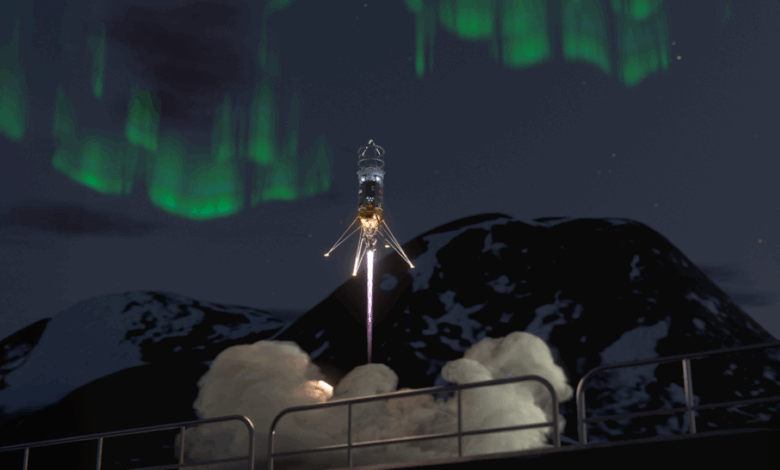
| Andøya Space and Astrobotic Technology, Inc. are pleased to announce the signing of a Term Sheet for a Launch Site Agreement. This agreement marks a significant step towards enhancing commercial space capabilities in Europe, with Astrobotic utilizing Andøya Space as a launch and landing site for its Xodiac reusable rocket campaigns. Xodiac simulates lunar and planetary landings, tests flight systems and hardware in the loop, retires risk, and advances technology readiness for terrestrial and space applications. Key Points of the Term Sheet:Prospective Partnership Scope:Astrobotic will perform their initial European Xodiac launch campaign operations from Andøya Space starting in 2026.Andøya Space will provide various services, including ground operations, flight preparation, and infrastructure support. Security and Compliance:A comprehensive security concept will be established to meet regulatory requirements.Both parties will ensure compliance with applicable laws, the U.S.–Norway Technology Safeguard Agreement, Andøya Space governing documents, and Astrobotic’s security management policies. Strategic Importance: This partnership is crucial for maintaining and enhancing the strategic space infrastructure in Europe. The collaboration aims to provide increased responsiveness and faster deployment of new capabilities, benefiting both commercial and governmental stakeholders. Conclusion: The Term Sheet between Andøya Space and Astrobotic marks a significant milestone in transforming Andøya Space into a state-of-the-art facility for commercial space operations. Both parties are committed to working together to offer these services to customers based on commercial conditions, ensuring the successful execution of launch campaigns. Editorial: First Reusable US Launcher to Continental Europe In a groundbreaking development for the European space industry, Andøya Space and Astrobotic Technology, Inc. have signed a landmark Term Sheet for a Launch Site Agreement. This collaboration marks a significant step towards enhancing commercial space capabilities in Europe, with Astrobotic utilizing Andøya Space as one of its launch and landing sites for its Xodiac reusable rocket campaigns starting in 2026. The Term Sheet, signed in August 2025, outlines the main terms of the Launch Site Agreement that the parties intend to enter. Andøya Space has developed a state-of-the-art launch site at Andøya, Norway, and Astrobotic is committed to becoming a key partner, using Andøya Space for several of its Xodiac campaigns from Continental Europe. Astrobotic plans to perform their initial European launch campaign operations from Andøya Space starting in 2026. This partnership is crucial for maintaining and enhancing the strategic space infrastructure in Europe. The collaboration aims to provide strategic autonomy, increased responsiveness, and faster deployment of new capabilities, benefiting both commercial and government stakeholders. Troels Sandreid, President of Andøya Spaceport, said, “Partnering with Astrobotic brings launch reusability to Andøya for the first time, through reusable rocket operations, further establishing our spaceport as a key European site for innovative commercial space operations.” “Xodiac’s presence at Andøya represents a meaningful step toward delivering reliable, rapid, and cost-effective testing and demonstration capabilities to the European space market,” said John Thornton, Astrobotic CEO. “By making a flight-proven, reusable rocket available to commercial and government partners, we’re enabling customers to accelerate the development of space systems in a dedicated environment built for innovation. We’re deploying the next generation of space systems that will take humanity further than ever before.” Security and compliance are paramount in this partnership. A comprehensive security concept will be established to meet regulatory requirements, and both parties will ensure compliance with applicable laws, the Technical Safeguard Agreement, and Andøya Space governing documents. This commitment to security and compliance underscores the importance of maintaining the highest standards in space operations. |
 |
| (Left to right) Steve Clarke, Vice President of Space Programs, and Troels Sandreid, President of Andøya Spaceport, shake hands after signing a term sheet agreement. |
 |
| Pictured left to right: Vincent Ciccarelli (Director of Business Development, Andøya Spaceport), Steve Clarke (Vice President of Space Programs, Astrobotic), Ketil Olsen (CEO, Andøya Space), Troels Sandreid (President, Andøya Spaceport), and Eirik Folkestad (Director of Staff, Andøya Spaceport). |
| About Astrobotic Astrobotic is at the forefront of advancing space exploration and technology development. Our expertise spans from lunar spacecraft, navigation, and delivery to lunar infrastructure and suborbital rockets. To date, the company has been contracted for two lunar missions, and has won more than 60 NASA, DoD, and commercial technology contracts worth more than $650 million. Astrobotic recently launched and operated the first American lunar lander mission since the Apollo Program. Beyond helping lead America back to the Moon, the company develops and operates reusable vertical takeoff, vertical landing (VTVL) rockets and advanced rocket engines. Established in 2007, Astrobotic is headquartered in Pittsburgh, PA, with a propulsion and test campus in Mojave, CA.www.astrobotic.com |