
Mars Habitat
-
NASA
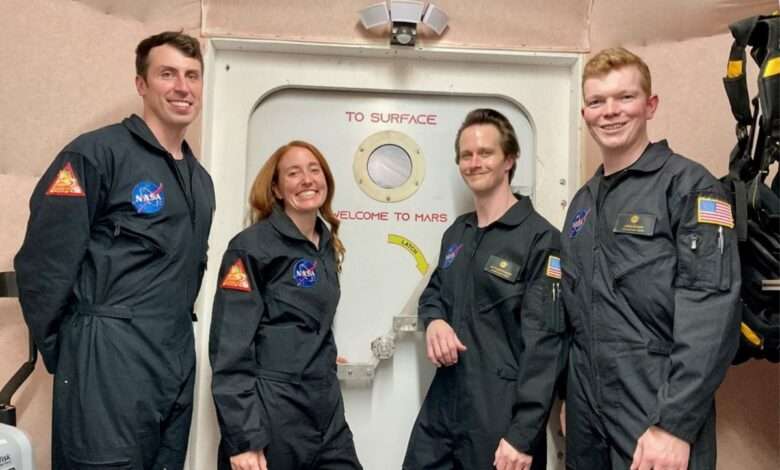
CHAPEA Crew Begins Stay Inside NASA’s Mars Habitat for Second Mission
A crew of four research volunteers stepped inside NASA’s CHAPEA (Crew Health and Performance Exploration Analog) habitat on Oct. 19, marking the start of the agency’s second 378-day simulated Mars mission. Ross Elder, Ellen Ellis, Matthew Montgomery, and James Spicer are living and working inside the roughly 1,700-square-foot 3D-printed habitat at the agency’s Johnson Space Center in Houston until Oct.…
Read More » -
NASA
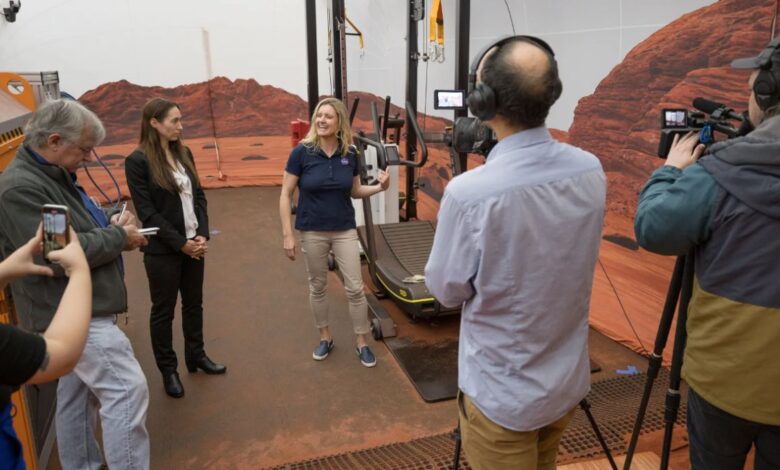
NASA Opens Simulated Mars Habitat to Media Ahead of Second Mission
As NASA prepares for its second year-long Mars simulated mission, media are invited to visit the ground-based habitat where the mission will take place, on Friday, Aug. 22, at the agency’s Johnson Space Center in Houston. Scheduled to begin in October, four volunteer crew members will enter the agency’s Crew Health and Performance Exploration Analog (CHAPEA) 3D-printed habitat to live…
Read More » -
NASA
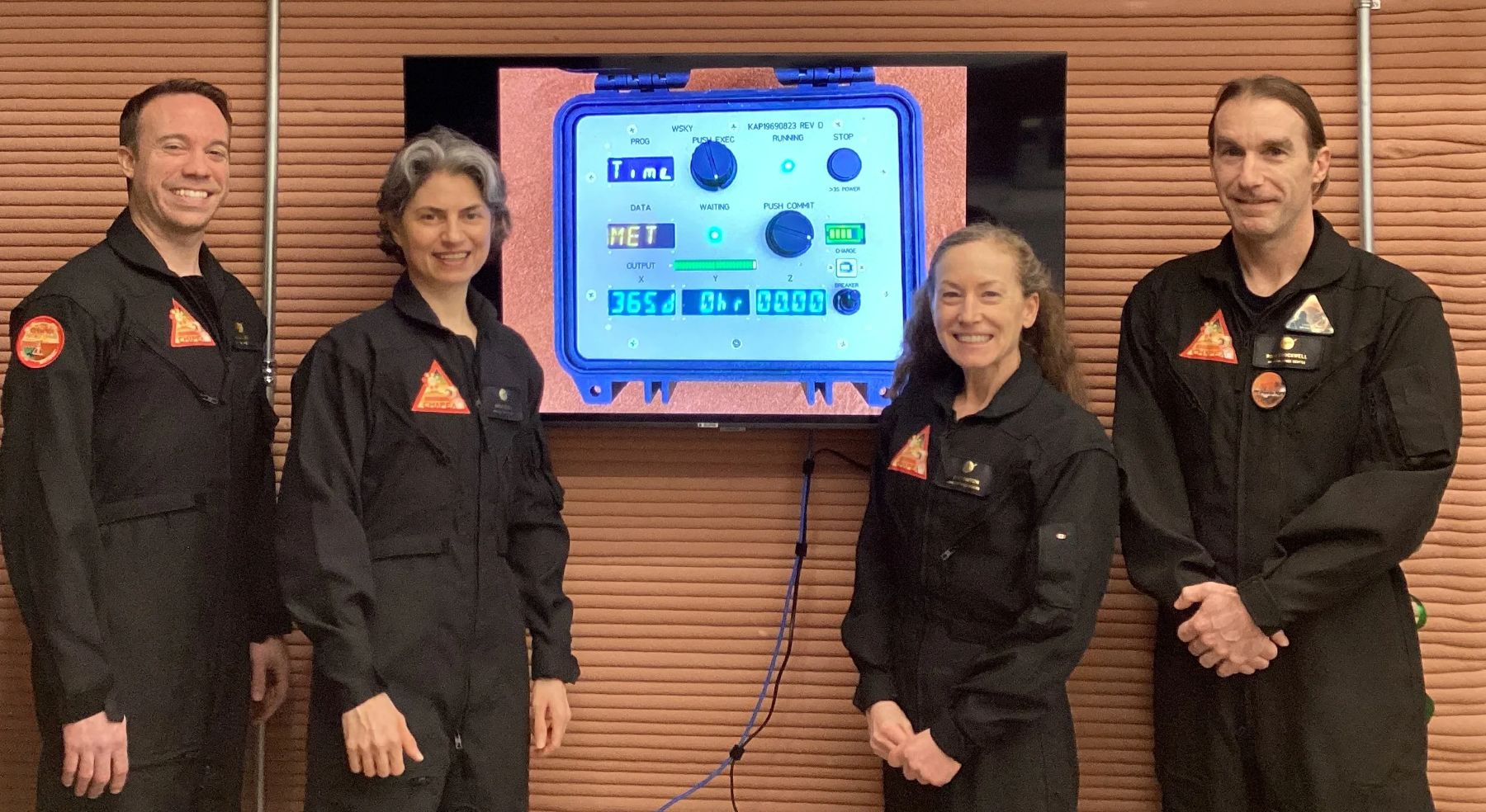
Volunteer Crew to Exit NASA’s Simulated Mars Habitat After 378 Days
The four volunteers who have been living and working inside NASA’s first simulated yearlong Mars habitat mission are set to exit their ground-based home on Saturday, July 6. NASA will provide live coverage of the crew’s exit from the habitat at NASA’s Johnson Space Center in Houston at 5 p.m. EDT. NASA will stream the activity, which will include a…
Read More » -
NASA
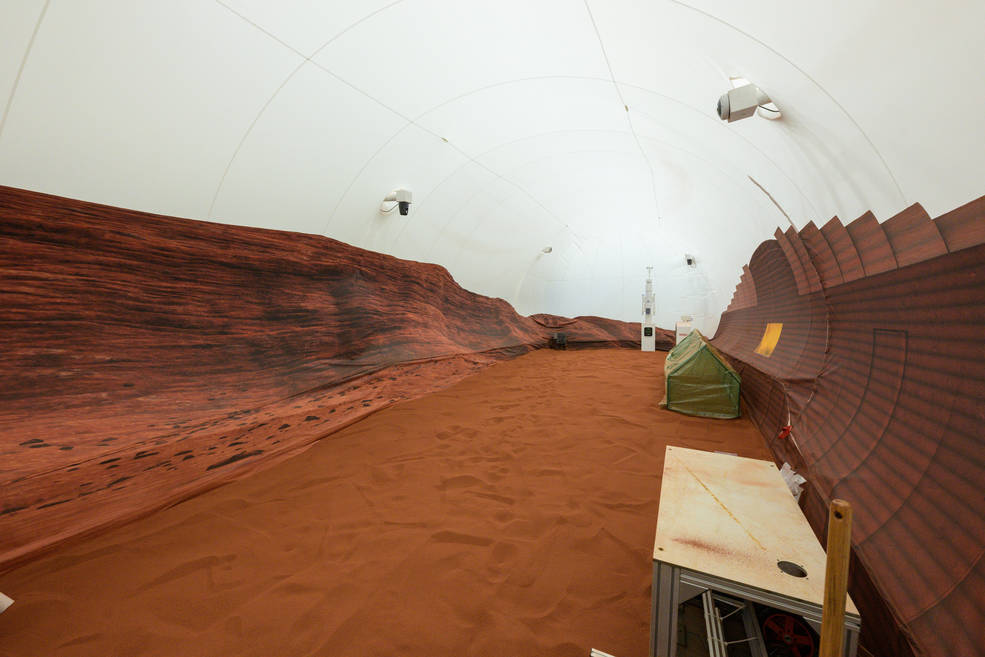
NASA Invites Media to See Mars Habitat Before Crew Enters for One Year
Media are invited to visit NASA’s simulated Mars habitat on Tuesday, April 11, at the agency’s Johnson Space Center in Houston. This summer, four volunteers will begin a yearlong Mars mission in the ground-based habitat, helping NASA prepare for human exploration of Mars for the benefit of humanity. The mission is the first of three planned in NASA’s CHAPEA habitat,…
Read More » -
NASA
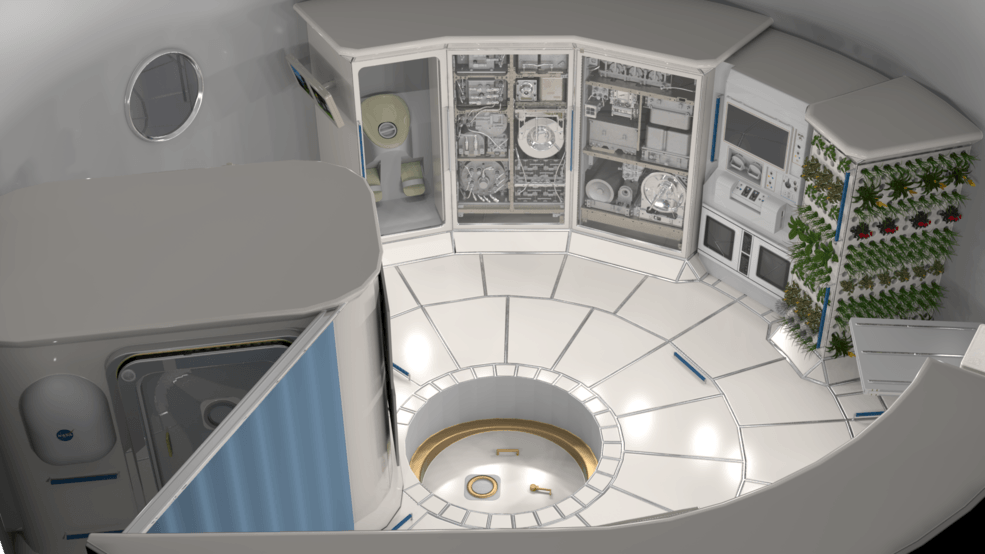
NASA Selects Two New Space Tech Research Institutes for Smart Habitats
As exploration missions venture beyond low-Earth orbit and to the Moon — and eventually Mars — NASA must consider automated technologies to keep habitats operational even when they are not occupied by astronauts. To help achieve this, NASA has selected two new Space Technology Research Institutes (STRIs) to advance space habitat designs using resilient and autonomous systems. The selected proposals…
Read More »