
Mars
-
NASA
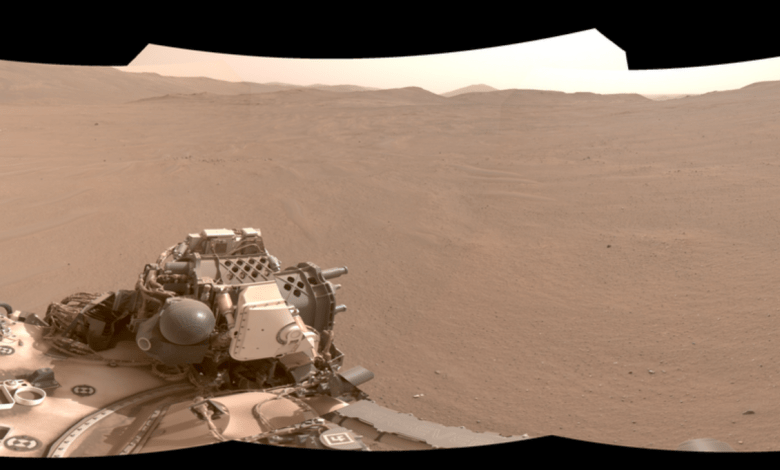
Perseverance Pinpoints Its Location at ‘Mala Mala’
Description Using its navigation cameras, NASA’s Perseverance Mars rover captured the five stereo pairs of images that make up this panorama on Feb. 2, 2026, the 1,762nd day, or sol, of the mission. A new technology called Mars Global Localization matched this 360-degree view to onboard orbital imagery from the agency’s Mars Reconnaissance Orbiter (MRO), enabling the rover to pinpoint…
Read More » -
NASA

Mars Global Localization Pinpoints Perseverance’s Location
Downloads Mars Global Localization Pinpoints Perseverance’s Location PNG (566.29 KB) PIA26705 animation MP4 (2.77 MB) Description These images were part of the first successful use of a new technology called Mars Global Localization, developed at NASA’s Jet Propulsion Laboratory. Using its navigation cameras, NASA’s Perseverance captured a 360-degree view of the surrounding terrain that was matched to orbital imagery, enabling the…
Read More » -
NASA

NASA’s Perseverance Now Autonomously Pinpoints Its Location on Mars
There is no GPS at the Red Planet, but a new technology called Mars Global Localization lets Perseverance determine precisely where it is — without human help. Imagine you’re all alone, driving along in a rocky, unforgiving desert with no roads, no map, no GPS, and no more than one phone call a day for someone to inform you exactly…
Read More » -
NASA
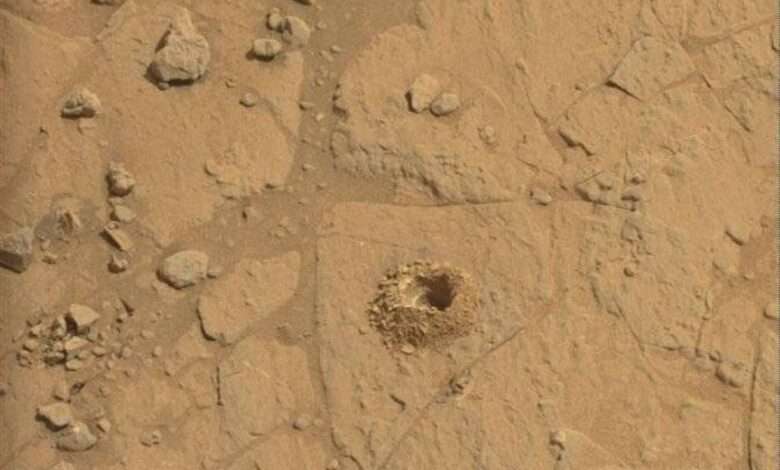
Curiosity Blog, Sols 4798-4803: Back for More Science
Written by Michelle Minitti, MAHLI Deputy Principal Investigator Earth planning date: Friday, Feb. 6, 2026 The results from our first visit to the “Nevado Sajama” drill location were intriguing enough to motivate our return to do a deeper dive into the minerals and compounds locked in this rock with SAM (the Sample Analysis at Mars instrument suite). As explained in the…
Read More » -
NASA

Visualizing Perseverance’s AI-Planned Drive on Mars
Description This animation of NASA’s Perseverance was created with the Caspian visualization tool using data acquired during an 807-foot (246-meter) drive on the rim of Jezero Crater made by the rover on Dec. 10, 2025, the 1,709th Martian day, or sol, of the mission. The mission’s “drivers,” or rover planners, use the information to understand the Perseverance’s autonomous decision-making process during its…
Read More » -
NASA
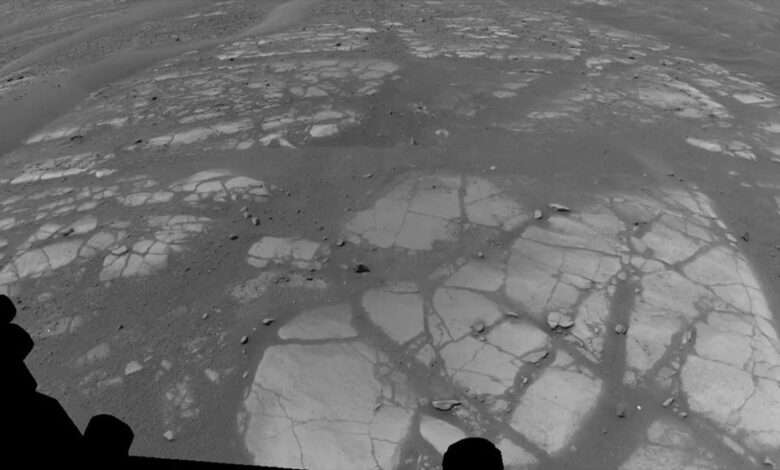
Video: Perseverance Rover’s View of Crater Rim Drive
Description This animation shows Perseverance’s point of view during drive of 807 feet (246 meters) along the rim of Jezero Crater on Dec. 10, 2025, the 1,709th Martian day, or sol, of the mission. Captured over two hours and 35 minutes, 53 Navigation Camera (Navcam) image pairs were combined with rover data on orientation, wheel speed, and steering angle, as well…
Read More » -
NASA
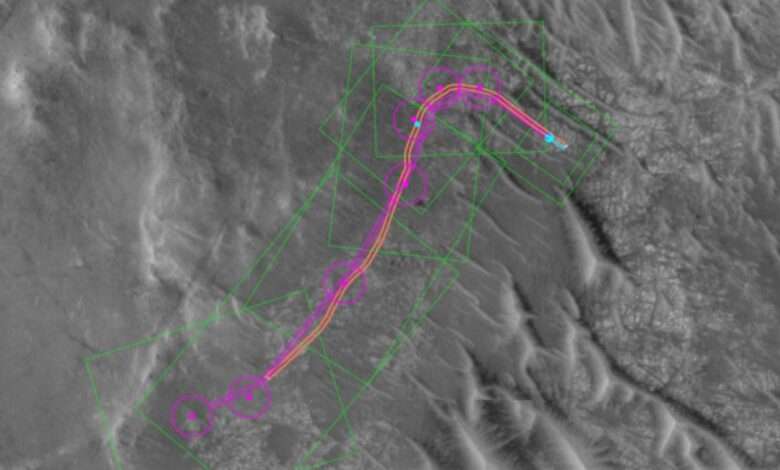
NASA’s Perseverance Rover Completes First AI-Planned Drive on Mars
The team for the six-wheeled scientist used a vision-capable AI to create a safe route over the Red Planet’s surface without the input of human route planners. NASA’s Perseverance Mars rover has completed the first drives on another world that were planned by artificial intelligence. Executed on Dec. 8 and 10, and led by the agency’s Jet Propulsion Laboratory in Southern California, the demonstration used generative AI to create waypoints for Perseverance, a complex decision-making task typically performed manually by the mission’s human rover planners. …
Read More » -
NASA

Discovery Alert: An Ice-Cold Earth?
The Discovery A candidate planet that might be remarkably similar to Earth, HD 137010 b, has one potentially big difference: It could be colder than perpetually frozen Mars. Key Facts Scientists continue to mine data gathered by NASA’s Kepler Space Telescope, retired in 2018, and continue to turn up surprises. A new paper reveals the latest: a possible rocky planet slightly…
Read More » -
NASA
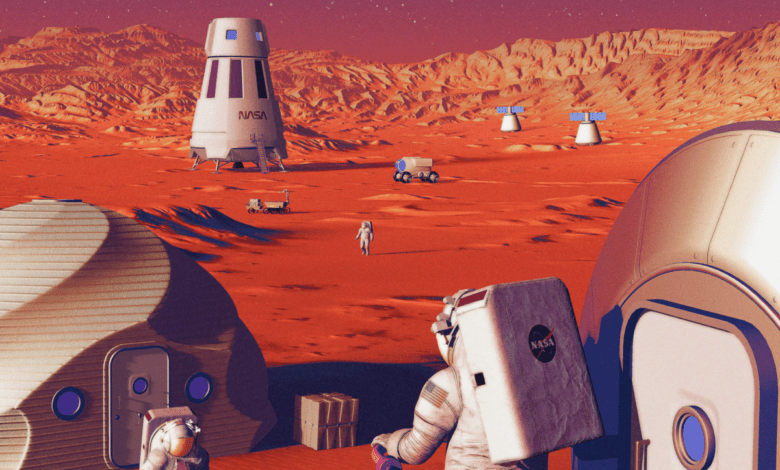
NASA Back for Seconds with New Food System Design Challenge
NASA is getting ready to send four astronauts around the Moon with Artemis II, laying the foundation for sustainable missions to the lunar surface and paving the way for human exploration on Mars. As the agency considers deep space endeavors that could last months or years, it must develop ways to feed astronauts beyond sending supplies from Earth. That is…
Read More » -
NASA

A Quarter Century in Orbit: Science Shaping Life on Earth and Beyond
For more than 25 years, humans have lived and worked continuously aboard the International Space Station, conducting research that is transforming life on Earth and shaping the future of exploration. From growing food and sequencing DNA to studying disease and simulating Mars missions, every experiment aboard the orbiting laboratory expands our understanding of how humans can thrive beyond Earth while…
Read More »