California Dreaming: Battista Hits The Open Road As It Makes Dynamic Debut In The US


The world’s first pure-electric hyper GT, the Automobili Pininfarina Battista, has made its dynamic debut in production form on the roads of California. As part of a packed programme of events around Monterey Car Week, the Battista’s first road outing marks the beginning of a new chapter in the story of Automobili Pininfarina.
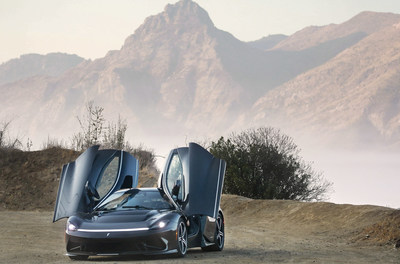
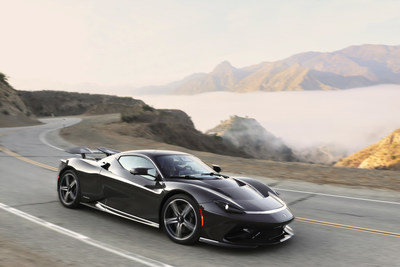
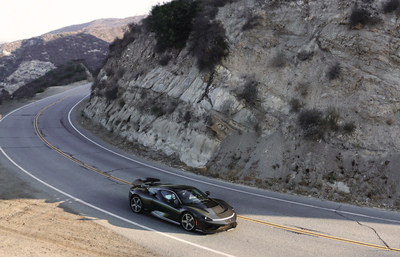
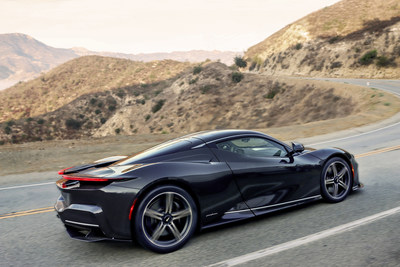
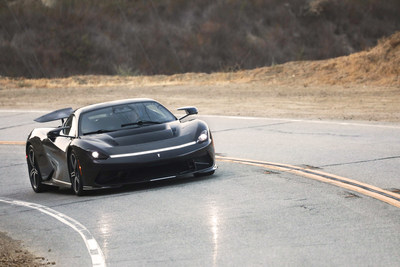
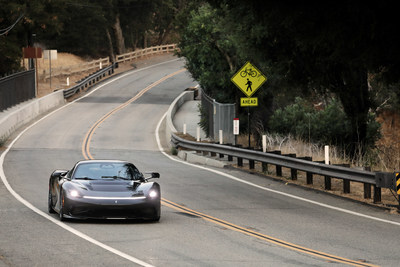
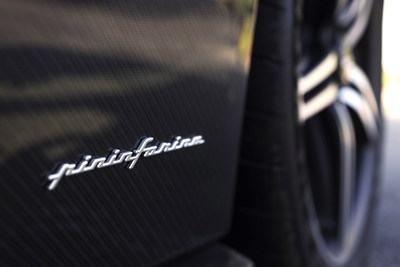

The debut of the production-spec Battista will give US clients a first chance to experience its 1,900 hp performance and to take in its striking Black Exposed Signature Carbon bodywork – exquisitely crafted at Automobili Pininfarina’s manufacturing facility in Cambiano, Italy, and created under the recently announced bespoke personalisation programme.
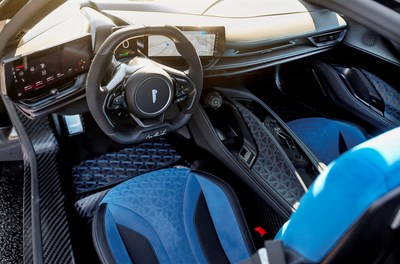
The exposed bodywork and precision polished Impulso forged aluminium alloy wheels are complemented by an exquisitely tailored interior featuring optional Pilota seats finished in sustainable black leather and quilted Iconica Blu Alcantara upholstery, with Iconica Blu contrast stitching, complemented by the Interior Jewellery Pack finished in brushed aluminium anodised in black.
Paolo Dellachà, Chief Product and Engineering Officer, Automobili Pininfarina, said: “The Battista will provide a thrilling all-round experience on road and track – in the city and on the open road. To see the first production-intent example of our pure-electric hyper GT on the highways of California signals the beginning of an exciting new chapter in its development. This is a significant landmark and hugely rewarding moment as we count down towards making the first client deliveries later this year.”
Monterey Car Week will also see the US premiere of the exclusive Battista Anniversario. Limited to just five vehicles worldwide, it represents the pinnacle of Pininfarina design with aerodynamic enhancements and tailored detailing providing a uniquely dynamic personality.
Both vehicles’ presence at Monterey Car Week signals the first opportunity for clients to experience the 1,900 hp Battista, both on the roads and on the lawn of The Quail. At the Pebble Beach Concours d’Elegance the pure-electric hyper GT will be displayed alongside an exclusively curated selection of classic Pininfarina designs from the company’s 91-year history.
FIRST PREVIEW OF THE SOUND OF BATTISTA
The arrival of the first production-specification vehicle also gives clients a chance to hear Battista for the first time, showcasing the unique soundscape that is currently in development for the world’s first pure-electric hyper GT. The individual sound is being tuned to create an emotional reaction for occupants and onlookers, ensuring Battista will deliver an intoxicating experience for all the senses.
Following Automobili Pininfarina’s ‘Pure Sound’ philosophy, the soundscape has a core frequency of 54 Hz, an organic frequency that is a multiple of 432 Hz – known as ‘Verdi’s A,’ conceived by famous Italian composer Giuseppe Verdi. The distinctive aural signature is tailored for the most powerful road-legal Italian sports car ever produced.
René Wollmann, Product Platform Director Sports Cars, Automobili Pininfarina, said: “Every driver has an emotional bond with a car and the sound of Battista will nurture this connection, not by replicating a familiar car sound, but with one that radiates the beauty of Battista’s design both inside and out. This way, the Battista will not only impress with its aesthetic appeal and performance, but also on a new emotional level enhanced through the sound. We look forward to the input we will receive from clients in the US as we fine-tune Battista’s sonic experience.”
According to music theory, 432 Hz is mathematically consistent with the universe. Music tuned to 432 Hz is said to be a pure sound – complementing the Battista’s pure design – while providing greater clarity, and is easier on the ears. As a multiple of 432 Hz, Automobili Pininfarina’s engineers have chosen 54 Hz as the core frequency for Battista, delivering a distinctive and recognisable aural signature that will generate the kind of emotional reaction clients expect from a 1,900 hp hyper GT.
From this starting point, the frequency will rise in multiples of 54Hz with new sound layers added as the speed of the vehicle increases. The seamlessly responsive acoustics will reflect the pure-electric performance of Battista combining rich bass tones to create a signature sound.
The Automobili Pininfarina Battista is named after Battista ‘Pinin’ Farina, the founder of the Carrozzeria Pininfarina coachbuilding company, which he established in 1930. The hyper GT is the realisation of Battista’s dream to see a car produced wearing the Pininfarina name with the first vehicles due to be delivered to customers later this year.
EDITOR’S NOTES
THE AUTOMOBILI PININFARINA BATTISTA
The Battista will be the most powerful car ever designed and built in Italy and it will deliver a level of performance that is unachievable today in any road-legal sports car featuring internal combustion engine technology. Faster than a current Formula 1 race car in its 0 -100 km/h sub-two second sprint, and with 1,900 hp and 2,300 Nm torque on tap, the Battista will combine extreme engineering and technology in a zero emissions package. The Battista’s 120 kWh battery provides power to four electric motors – one at each wheel – with a simulated WLTP range of over 500 km (310 miles) on a single charge. No more than 150 Battistas will be individually hand-crafted at the Pininfarina SpA atelier in Cambiano, Italy.
ABOUT AUTOMOBILI PININFARINA
Automobili Pininfarina is based in operational headquarters in Munich, Germany, with a team of experienced automotive executives from luxury and premium car brands. Designed, engineered and produced by hand in Italy, the Battista hyper GT and all future models will be sold and serviced in all major global markets under the brand name Pininfarina. The new company aims to be the most sustainable luxury car brand in the world.
The company is a 100 per cent Mahindra & Mahindra Ltd investment and has been named Automobili Pininfarina following the signing of a trademark licence agreement between Pininfarina S.p.A. and Mahindra & Mahindra Ltd. Pininfarina S.p.A. will take an influential role in supporting design and production capacities based on their unique 90-year experience of producing many of the world’s most iconic cars.
SOURCE Automobili Pininfarina