
Microgravity
-
NASA
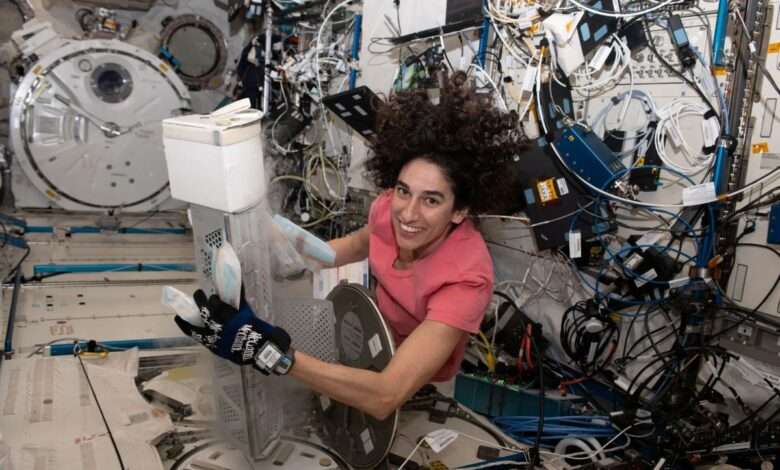
25 Years in Orbit: Science, Innovation, and the Future of Exploration
NASA and its partners have supported humans continuously living and working in space since November 2000. A truly global endeavor, the International Space Station has been visited by more than 290 people from 26 countries and a variety of international and commercial spacecraft. The unique microgravity laboratory has hosted more than 4,000 experiments from over 5,000 researchers from 110 countries.…
Read More » -
NASA
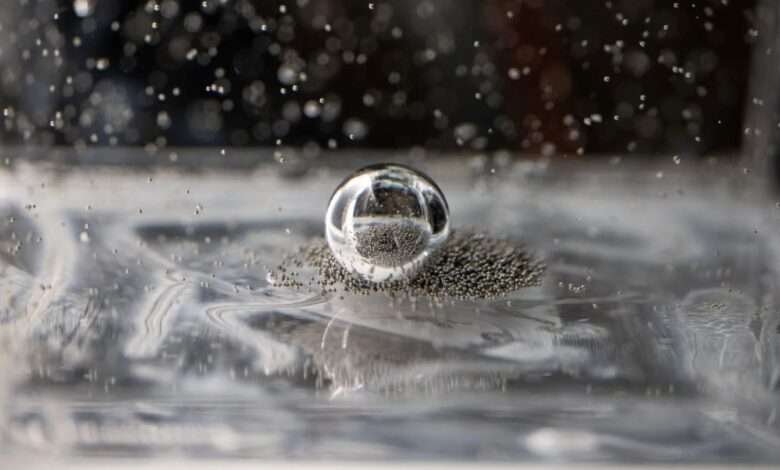
Studying Physics in Microgravity
In this Oct. 20, 2025, photo, tiny ball bearings surround a larger central bearing during the Fluid Particles experiment, conducted inside the Microgravity Science Glovebox (MSG) aboard the International Space Station’s Destiny laboratory module. A bulk container installed in the MSG, filled with viscous fluid and embedded particles, is subjected to oscillating frequencies to observe how the particles cluster and form larger structures…
Read More » -
NASA
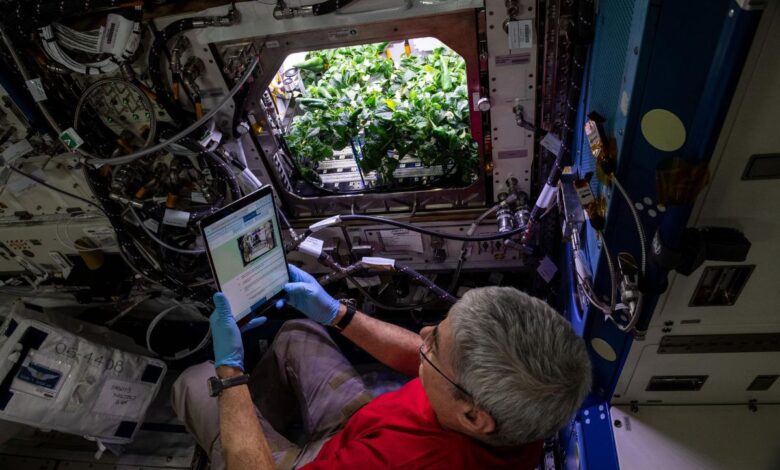
New Research Connects Plant Nutrition and Astronaut Gut Health
New research uncovers the connection between space agriculture and astronaut health. A study published in npj Microgravity shows how analyzing diverse datasets together can reveal insights that might otherwise be missed — in this case, linking space-grown food quality to astronaut nutrition and gut health. The paper reviewed previous studies of plants grown aboard the International Space Station. The authors found that…
Read More » -
NASA
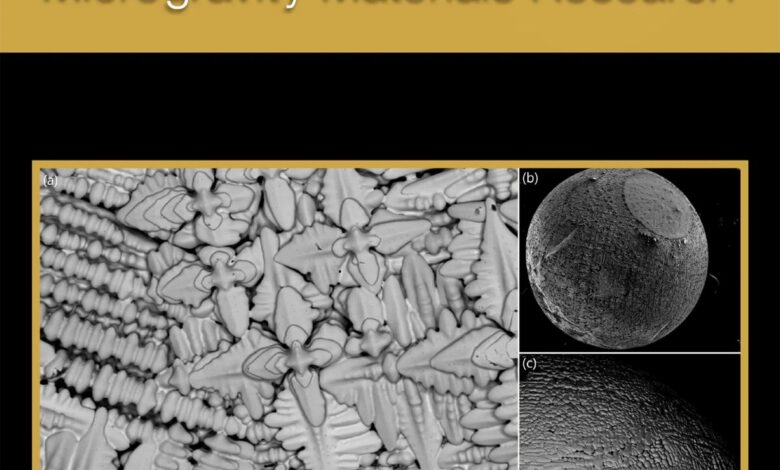
A Researcher’s Guide to: Microgravity Materials Research
June 2025 Edition Most materials are formed from a partially or totally fluid sample, and the transport of heat and mass from the fluid into the solid during solidification inherently influences the formation of the material and its resultant properties. The ISS provides a long-duration microgravity environment for conducting experiments that enables researchers to examine the effects of heat and…
Read More » -
NASA

NASA Interns Conduct Aerospace Research in Microgravity
The NASA Science Activation program’s STEM (Science, Technology, Engineering, and Mathematics) Enhancement in Earth Science (SEES) Summer Intern Program, hosted by the University of Texas Center for Space Research, continues to expand opportunities for high school students to engage in authentic spaceflight research. As part of the SEES Microgravity Research initiative, four interns were selected to fly with their experiments in…
Read More » -
NASA

Peak Performance in Microgravity
Science in Space January 2025 At the start of a new year, many people think about making positive changes in their lives, such as improving physical fitness or learning a particular skill. Astronauts on the International Space Station work all year to maintain a high level of performance while adapting to changes in their physical fitness, cognitive ability, sensory perception,…
Read More » -
NASA
NASA Plane Supported Innovative Microgravity Research in ‘90s
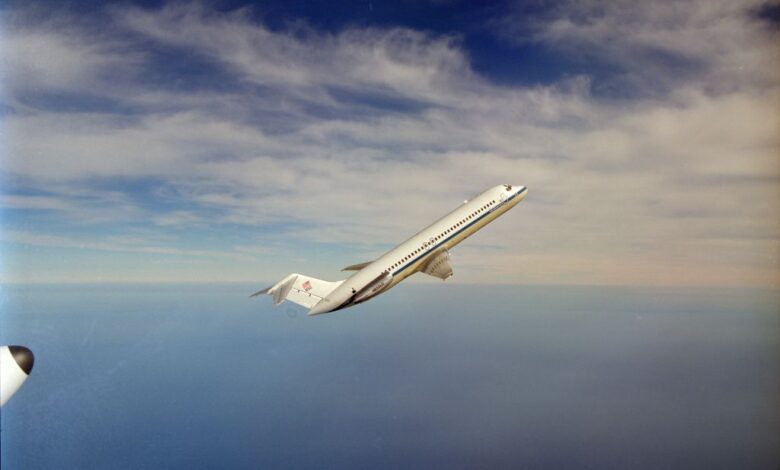
A bell rings and a strobe light flashes as a pilot pulls the nose of the DC-9 aircraft up sharply. The blood quickly drains from researchers’ heads as they are pulled to the cabin floor by a force twice that of normal gravity. Once the acceleration slows to the desired level, and the NASA aircraft crests over its arc, the…
Read More » -
NASA
Tissue Chips Accurately Model Organs in Space
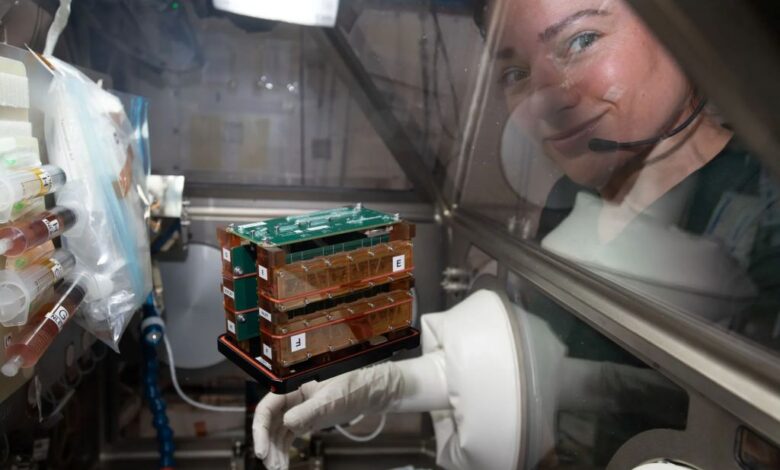
The International Space Station offers a unique microgravity environment where cells outside the human body behave similarly to how they do inside the human body. Tissue chips are small devices containing living cells that mimic complex functions of specific human tissues and organs. Researchers can run experiments using tissue chips aboard space station to understand disease progression and provide faster and safer…
Read More » -
NASA

NASA Hosts Two Workshops for Consultation on LEO Microgravity Strategy
As part of NASA’s effort to advance microgravity science, technology, and exploration in low Earth orbit (LEO), the agency conducted two stakeholder workshops in London and Washington to solicit feedback from the international community, including NASA’s international partners, American industry, and academia on Sept. 6 and Sept. 13, respectively. The agency released a draft set of 42 objectives in late…
Read More » -
NASA

Counteracting Bone and Muscle Loss in Microgravity
In microgravity, without the continuous load of Earth’s gravity, the tissues that make up bones reshape themselves. Bone cells readjust their behaviors—the cells that build new bone slow down, while the cells that break down old or damaged bone tissue keep operating at their normal pace so that breakdown outpaces growth, producing weaker and more brittle bones. For every month…
Read More »