
Milky Way
-
NASA
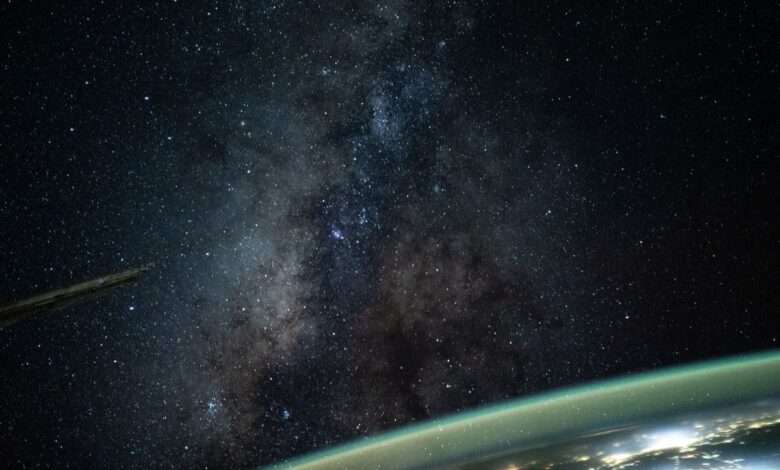
Milky Way Views
The Milky Way appears above Earth’s bright atmospheric glow in this Aug. 23, 2025, photograph from the International Space Station as it soared 261 miles above southern Iran at approximately 12:54 a.m. local time. The camera was configured for low light and long duration settings. Our home galaxy has hundreds of billions of stars, enough gas and dust to make billions more…
Read More » -
NASA

NASA’s Chandra Shares a New View of Our Galactic Neighbor
The Andromeda galaxy, also known as Messier 31 (M31), is the closest spiral galaxy to the Milky Way at a distance of about 2.5 million light-years. Astronomers use Andromeda to understand the structure and evolution of our own spiral, which is much harder to do since Earth is embedded inside the Milky Way. The galaxy M31 has played an important role in many aspects of…
Read More » -
NASA
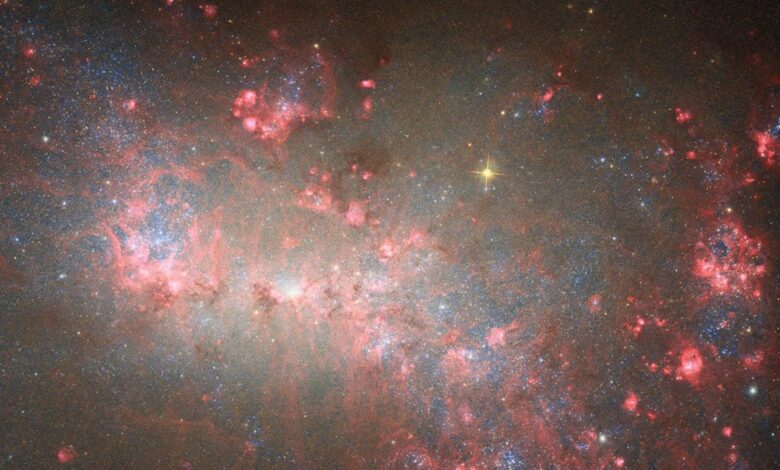
Hubble Studies Small but Mighty Galaxy
This portrait from the NASA/ESA Hubble Space Telescope puts the nearby galaxy NGC 4449 in the spotlight. The galaxy is situated just 12.5 million light-years away in the constellation Canes Venatici (the Hunting Dogs). It is a member of the M94 galaxy group, which is near the Local Group of galaxies that the Milky Way is part of. NGC 4449 is a…
Read More » -
NASA

NASA Webb Explores Effect of Strong Magnetic Fields on Star Formation
Follow-up research on a 2023 image of the Sagittarius C stellar nursery in the heart of our Milky Way galaxy, captured by NASA’s James Webb Space Telescope, has revealed ejections from still-forming protostars and insights into the impact of strong magnetic fields on interstellar gas and the life cycle of stars. “A big question in the Central Molecular Zone of our…
Read More » -
NASA

Hubble Captures a Neighbor’s Colorful Clouds
Download this image Say hello to one of the Milky Way’s neighbors! This NASA/ESA Hubble Space Telescope image features a scene from one of the closest galaxies to the Milky Way, the Small Magellanic Cloud (SMC). The SMC is a dwarf galaxy located about 200,000 light-years away. Most of the galaxy resides in the constellation Tucana, but a small section crosses over…
Read More » -
NASA
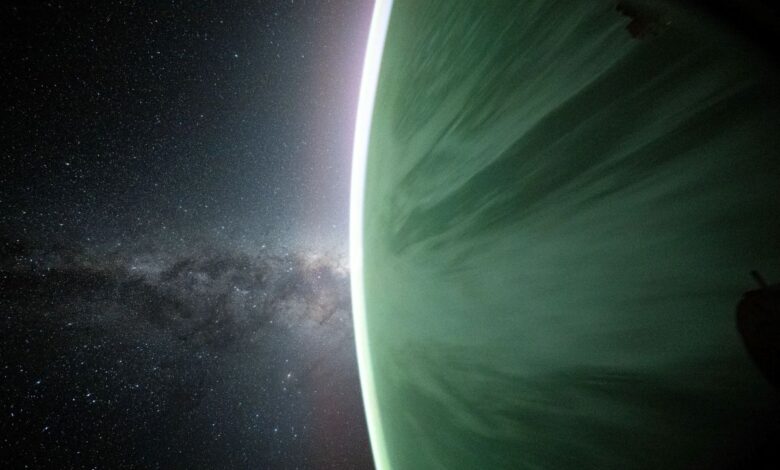
Milky Way on the Horizon
NASA astronaut Don Pettit used a camera with low light and long duration settings to capture this Jan. 29, 2025, image of the Milky Way appearing beyond Earth’s horizon. At the time, the International Space Station was orbiting 265 miles above the Pacific Ocean off the coast of Chile just before sunrise. Pettit is part of the Expedition 72 crew, along with…
Read More » -
NASA
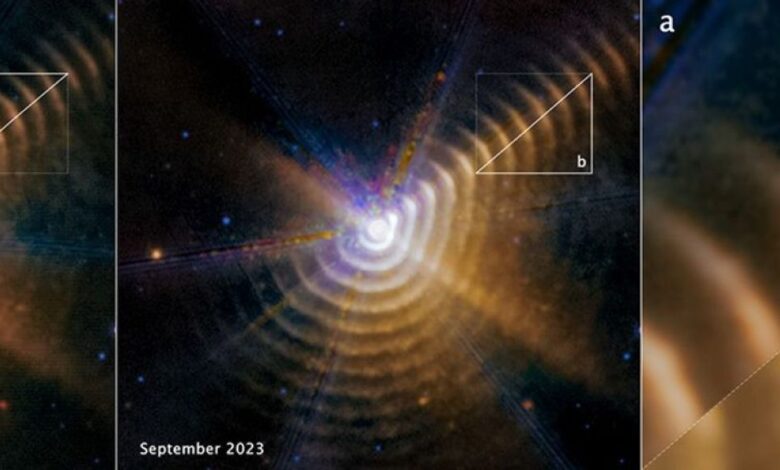
Webb Watches Carbon-Rich Dust Shells Form, Expand in Star System
Astronomers have long tried to track down how elements like carbon, which is essential for life, become widely distributed across the universe. Now, NASA’s James Webb Space Telescope has examined one ongoing source of carbon-rich dust in our own Milky Way galaxy in greater detail: Wolf-Rayet 140, a system of two massive stars that follow a tight, elongated orbit. As…
Read More » -
NASA
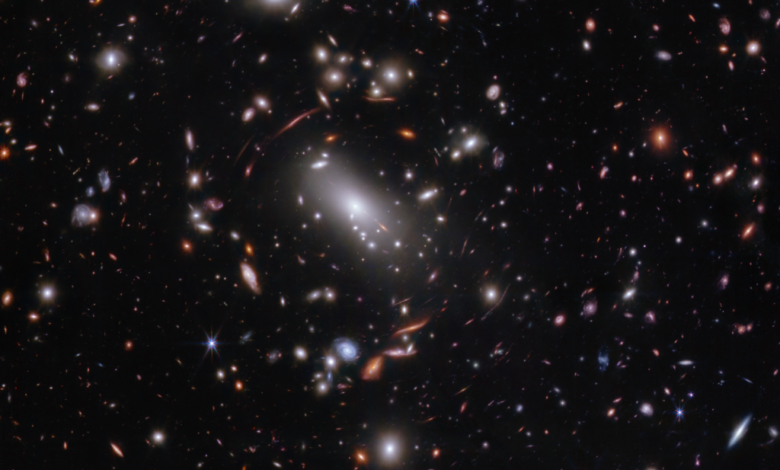
Found: First Actively Forming Galaxy as Lightweight as Young Milky Way
For the first time, NASA’s James Webb Space Telescope has detected and “weighed” a galaxy that not only existed around 600 million years after the big bang, but is also similar to what our Milky Way galaxy’s mass might have been at the same stage of development. Other galaxies Webb has detected at this time period are significantly more massive.…
Read More » -
NASA
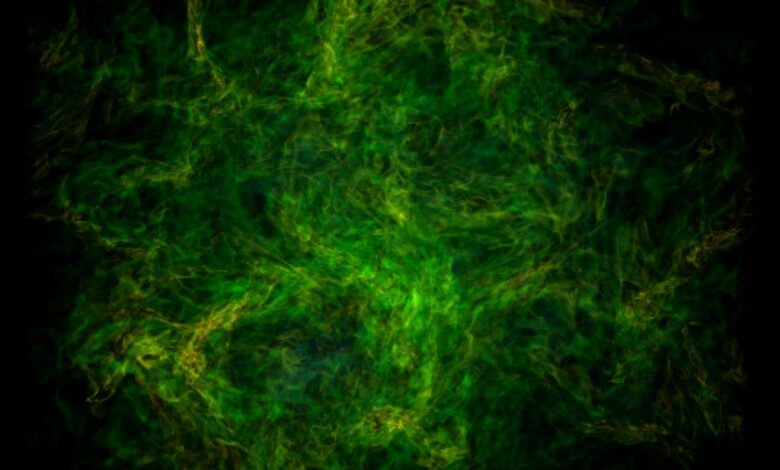
Buckle Up: NASA-Funded Study Explores Turbulence in Molecular Clouds
On an airplane, motions of the air on both small and large scales contribute to turbulence, which may result in a bumpy flight. Turbulence on a much larger scale is important to how stars form in giant molecular clouds that permeate the Milky Way. In a new NASA-funded study in the journal Science Advances, scientists created simulations to explore how turbulence…
Read More » -
NASA
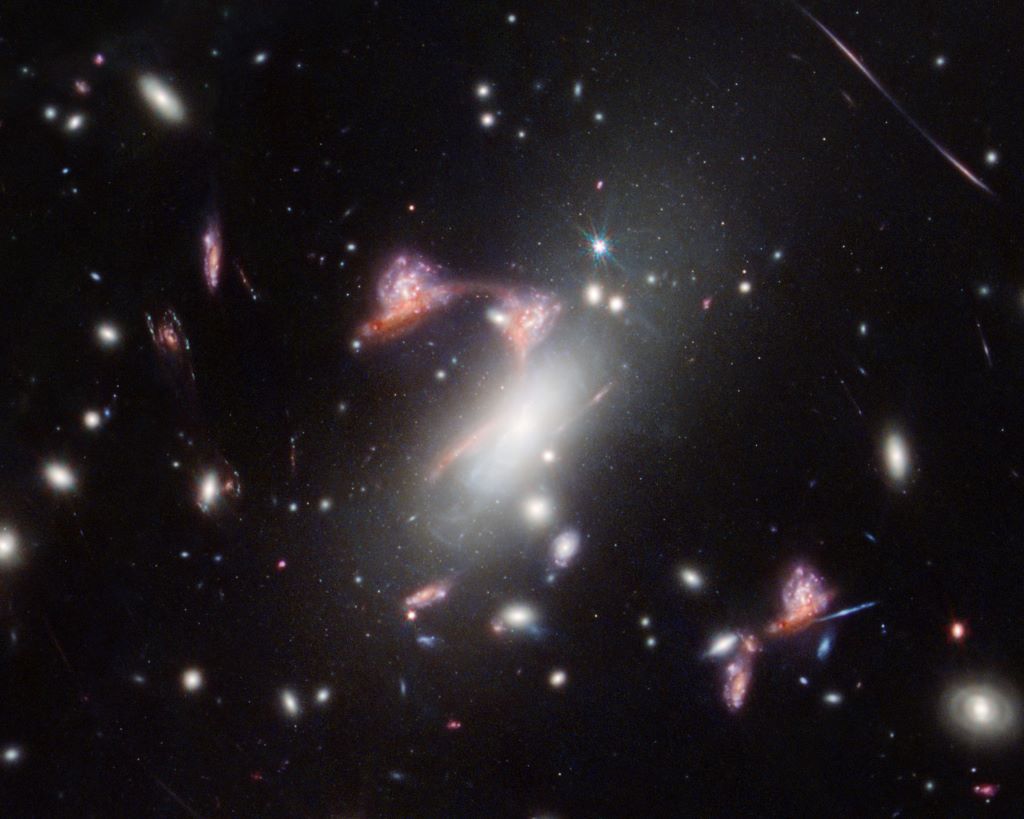
NASA’s Webb Reveals Distorted Galaxy Forming Cosmic Question Mark
It’s 7 billion years ago, and the universe’s heyday of star formation is beginning to slow. What might our Milky Way galaxy have looked like at that time? Astronomers using NASA’s James Webb Space Telescope have found clues in the form of a cosmic question mark, the result of a rare alignment across light-years of space. “We know of only…
Read More »