
NACA
-
NASA
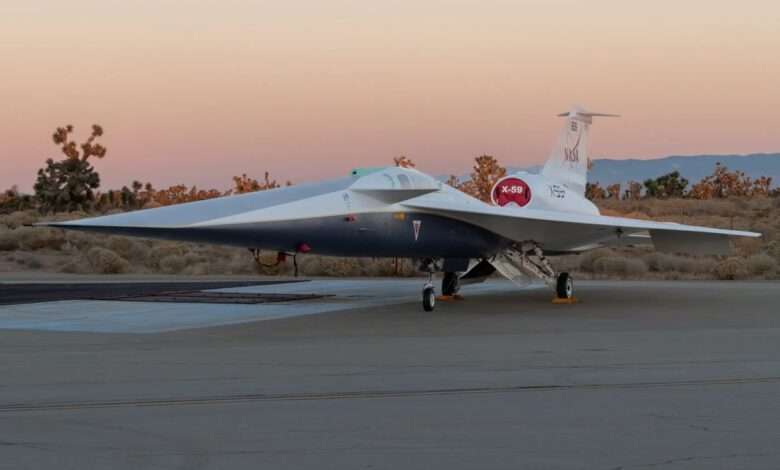
National Aviation Day: Celebrating NASA’s Heritage While Charting Our Future
As we observe National Aviation Day Tuesday – a tribute to Orville Wright’s birthday – let’s reflect on both America’s and NASA’s aviation heritage and share how we are pushing the boundaries of flight for the nation’s future. Modern NASA grew from the National Advisory Committee for Aeronautics (NACA), an agency created by Congress in 1915 to advance U.S. aviation.…
Read More » -
NASA

NACA Test Pilot Poses with Plane
In this 1957 photo, George Cooper, a test pilot for the National Advisory Committee for Aeronautics, or NACA, stands next to a North American F-100, a supersonic fighter tested by the NACA. Cooper served as a pilot in World War II before being hired at the NACA’s Ames Aeronautical Laboratory in 1945. Between 1945 and his retirement in 1973, Cooper tested over 135…
Read More » -
NASA
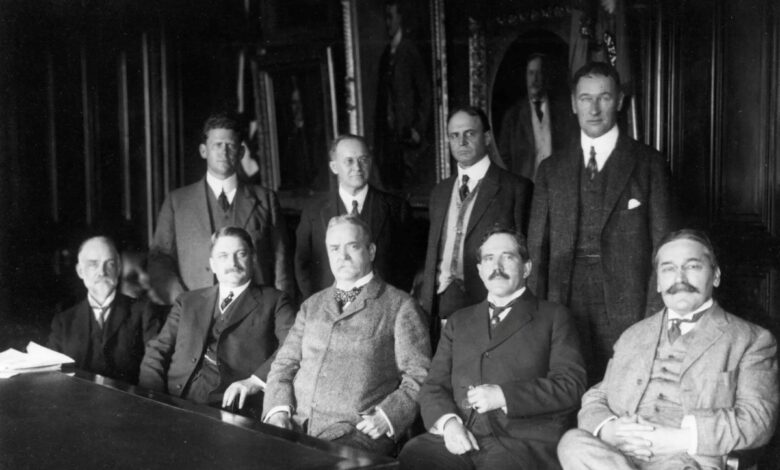
110 Years Ago: The National Advisory Committee for Aeronautics Founded
On March 3, 1915, the United States Congress created the National Advisory Committee for Aeronautics (NACA). Although the NACA’s founding took place just over 11 years after the Wright Brothers’ first powered flightfirst powered flight at Kitty Hawk, North Carolina, Congress took the action in response to America lagging behind other world powers’ advances in aviation and aeronautics. From its modest beginnings…
Read More » -
NASA

NASA Marks 110 Years Since Founding of Predecessor Organization
To celebrate the 110th anniversary of the organization that ultimately became NASA, the agency released a new collection of videos to highlight the history of the National Advisory Committee for Aeronautics (NACA) and the ways it transformed flight over four decades. Not long after the beginning of World War I, the United States Congress, concerned that America was lagging behind other…
Read More » -
NASA

NASA Remembers Long-Time Civil Servant John Boyd
John Boyd, known to many as Jack and whose career spanned more than seven decades in a multitude of roles across NASA as well as its predecessor, the National Advisory Committee for Aeronautics (NACA), died Feb. 20. He was 99. Born in 1925, and raised in Danville, Virginia, he was a long-time resident of Saratoga, California. Boyd is being remembered…
Read More » -
NASA

1942: Engine Roars to Life in First Test at Future NASA Glenn
In a crowded control room on May 8, 1942, National Advisory Committee for Aeronautics (NACA) leaders George Lewis and John Victory pushed a button and spun a crank that activated a massive piston engine in the adjacent test cell of the Engine Propeller Research Building (EPRB). This commenced the first test conducted at the NACA’s Aircraft Engine Research Laboratory (today, NASA’s Glenn…
Read More » -
NASA
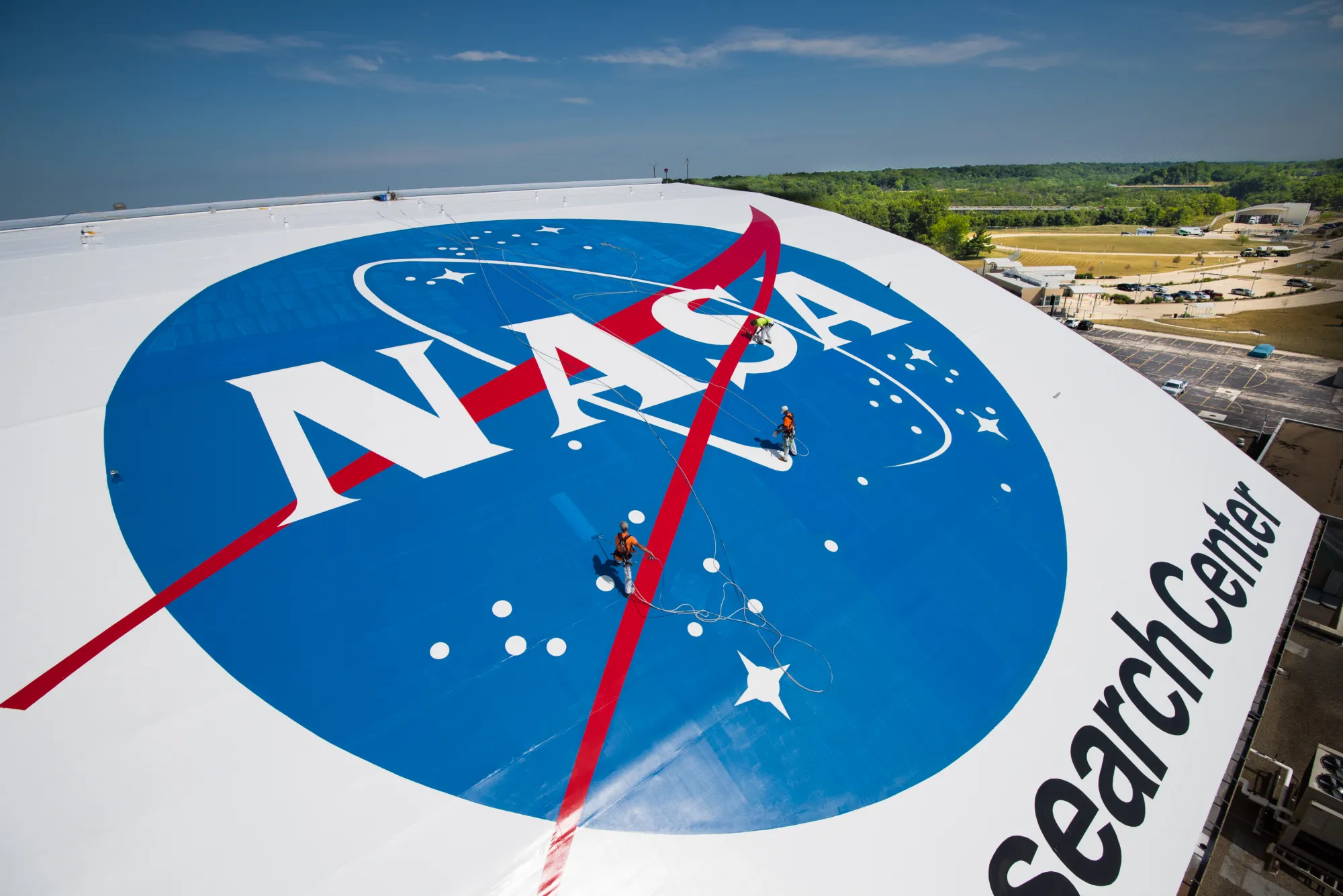
Glenn Hangar Has Long Been the Face of the Center
The Flight Research Building, or hangar, at NASA’s Glenn Research Center in Cleveland has not only housed the center’s aircraft and Flight Operations team for decades, but has also served as a visual representation of the center for the public. NASA has taken advantage of the hangar’s size and shape — along with its location near the center’s main entrance,…
Read More » -
NASA

65 Years Ago: First Factory Rollout of the X-15 Hypersonic Rocket Plane
On Oct. 15, 1958, the first X-15 hypersonic rocket-powered aircraft rolled out of its factory. A joint project among NASA, the U.S. Air Force, and the U.S. Navy, the X-15 greatly expanded our knowledge of flight at speeds exceeding Mach 6 and altitudes above 250,000 feet. Between 1959 and 1968, 12 pilots completed 199 missions, achieving ever-higher speeds and altitudes…
Read More » -
NASA
65 Years Ago: NASA Begins Operations
On Oct. 1, 1958, the National Aeronautics and Space Administration (NASA) officially began operations. President Dwight D. Eisenhower signed into law the National Aeronautics and Space Act the previous July, creating NASA to lead America’s civilian space program in response to Soviet advances in space exploration. T. Keith Glennan and Hugh L. Dryden were sworn in as NASA’s first administrator and deputy administrator, respectively.…
Read More »