
NASA Hubble
-
NASA
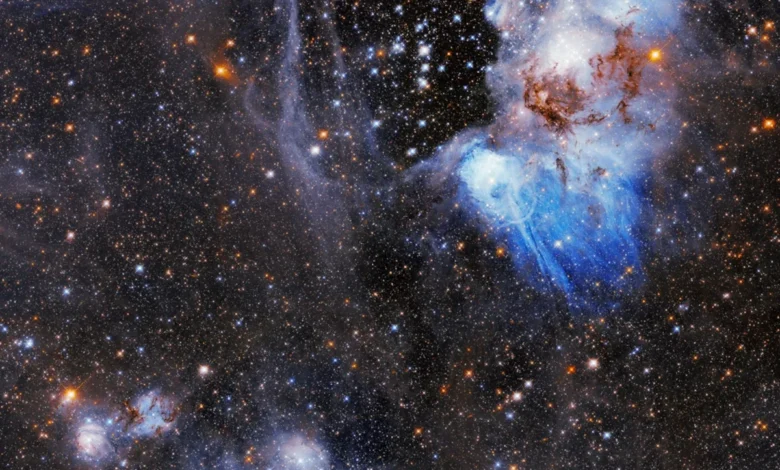
Superbubble in the Large Magellanic Cloud
NASA’s Hubble Space Telescope captures a photogenic nebula, N44, in the Large Magellanic Cloud in this Sept. 3, 2026, image. N44 is dominated by two features: a vast central void and a shell of dense, dusty gas. The central void is a ‘superbubble’ spanning roughly 210 by 140 light-years across. The glittering stars at the center of the void are…
Read More » -
NASA
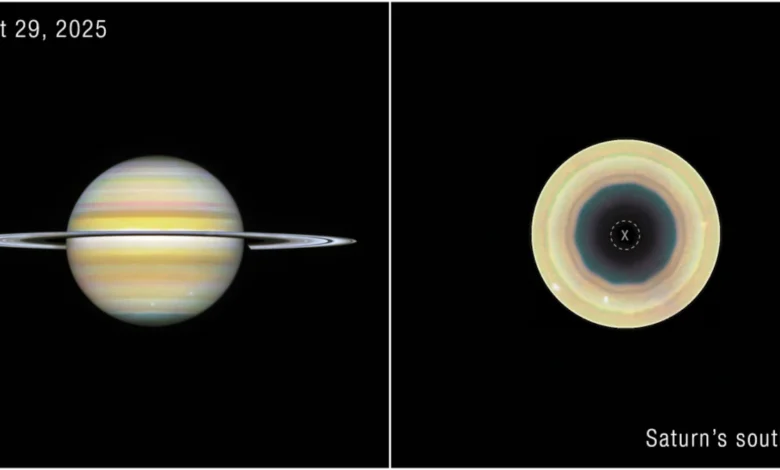
NASA’s Hubble Tracks New Decagon Encircling Saturn’s South Pole
Recent observations with NASA’s Hubble Space Telescope have revealed a giant, evolving, 10-sided atmospheric wave encircling Saturn’s south pole. This discovery marks the first time a large, regular-sided jet pattern has been observed in the planet’s southern hemisphere. The feature appears remarkably similar to Saturn’s famous hexagon at its northern pole, but is also distinctly different, suggesting scientists may be witnessing a new…
Read More » -
NASA
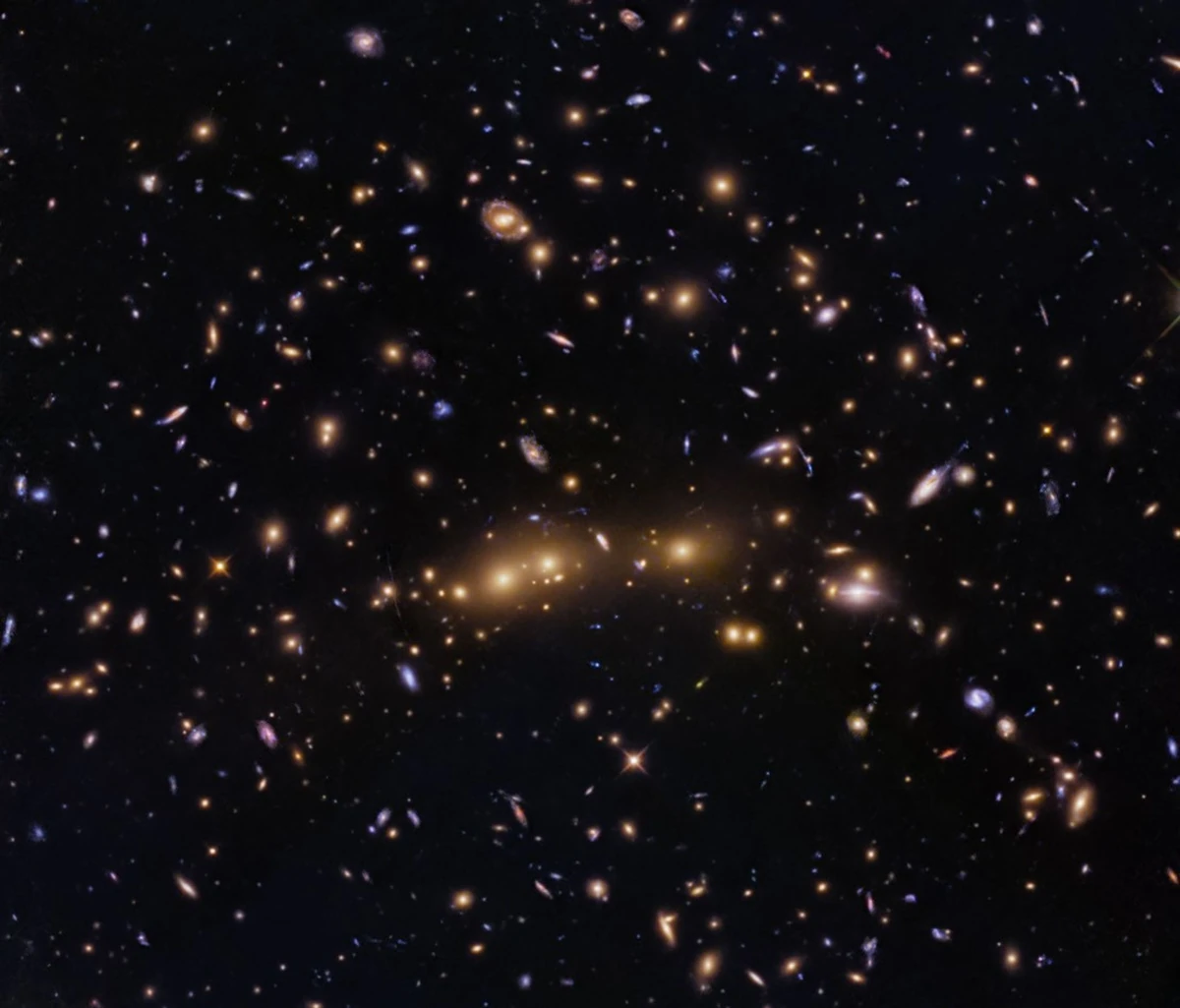
Hubble Glimpses Merging Galaxy Clusters
This NASA Hubble Space Telescope image features a galaxy cluster, called CL0016+1609 or MACS J0018.5+1626, that is very bright at X-ray wavelengths and is one of the most extensively studied clusters at X-ray and radio wavelengths. The X-ray observations of this cluster revealed that it is two clusters merging along our line of sight. Researchers requested time to observe CL0016+1609 with Hubble’s Advanced Camera for…
Read More » -
NASA
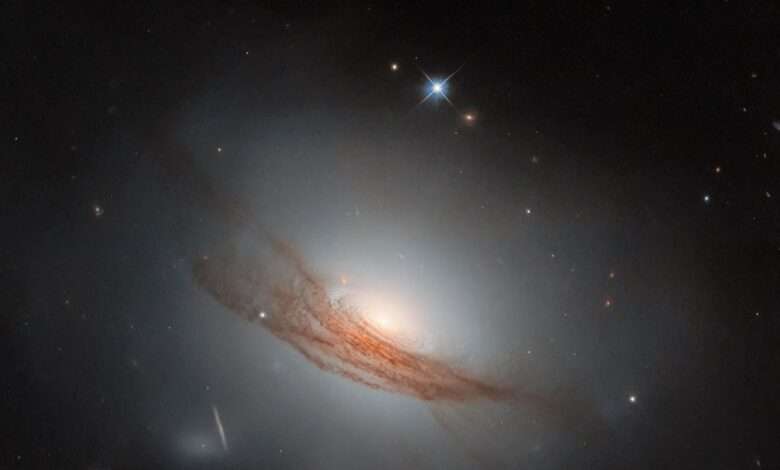
Hubble Spots Lens-Shaped Galaxy
This new Hubble image, released on Jan. 30, 2026, is the sharpest taken of NGC 7722, a lenticular galaxy located about 187 million light-years away in the constellation Pegasus. A lenticular, meaning “lens-shaped,” galaxy is a type whose classification sits between more familiar spiral galaxies and elliptical galaxies. It is also less common than spirals and ellipticals — partly because these galaxies have a…
Read More » -
NASA

Hubble Nets Menagerie of Young Stellar Objects
Download this image (58.3 MB) A disparate collection of young stellar objects bejewels a cosmic panorama in the star-forming region NGC 1333 in this new image from NASA’s Hubble Space Telescope. To the left, an actively forming star called a protostar casts its glow on the surrounding gas and dust, creating a reflection nebula. Two dark stripes on opposite sides of…
Read More » -
NASA
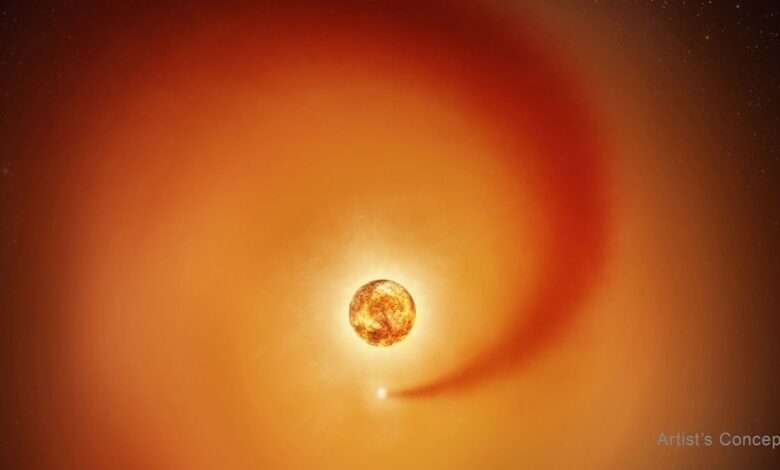
NASA Hubble Helps Detect ‘Wake’ of Betelgeuse’s Elusive Companion Star
Using new observations from NASA’s Hubble Space Telescope and ground-based observatories, astronomers tracked the influence of a recently discovered companion star, Siwarha, on the gas around Betelgeuse. The research, from scientists at the Center for Astrophysics | Harvard & Smithsonian (CfA), reveals a trail of dense gas swirling through Betelgeuse’s vast, extended atmosphere, shedding light on why the giant star’s brightness and…
Read More » -
NASA
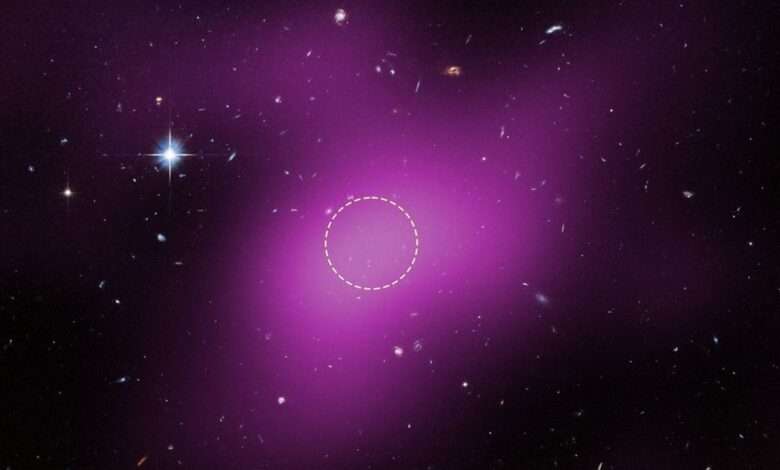
NASA’s Hubble Examines Cloud-9, First of New Type of Object
A team using NASA’s Hubble Space Telescope has uncovered a new type of astronomical object — a starless, gas-rich, dark-matter cloud considered a “relic” or remnant of early galaxy formation. Nicknamed “Cloud-9,” this is the first confirmed detection of such an object in the universe — a finding that furthers the understanding of galaxy formation, the early universe, and the nature of dark matter…
Read More » -
Press Releases
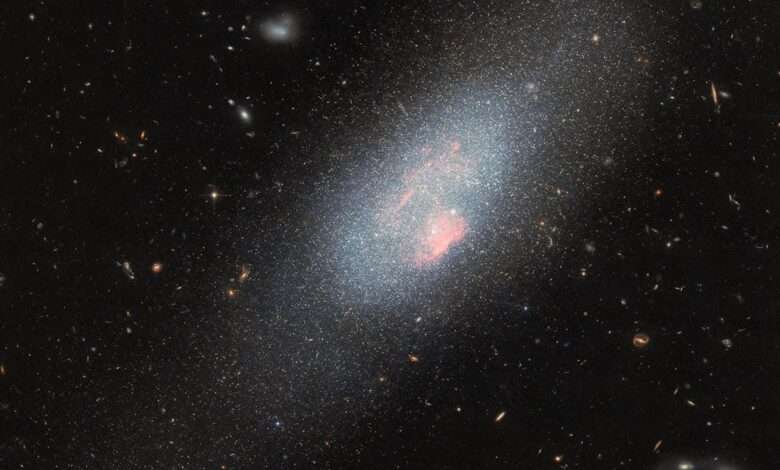
Massive Stars Make Their Mark in Hubble Image
This NASA/ESA Hubble Space Telescope image features a glittering blue dwarf galaxy called Markarian 178 (Mrk 178). The galaxy, which is substantially smaller than our own Milky Way, lies 13 million light-years away in the constellation Ursa Major (the Great Bear). Mrk 178 is one of more than 1,500 Markarian galaxies. These galaxies get their name from the Armenian astrophysicist Benjamin Markarian,…
Read More » -
Press Releases
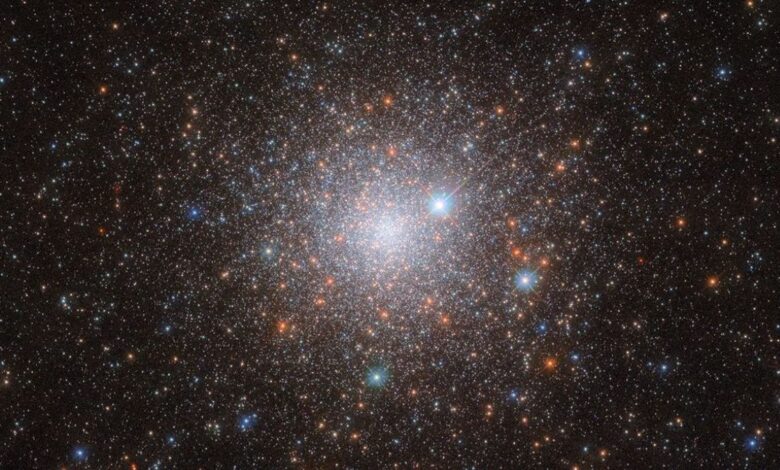
Hubble Digs Up Galactic Time Capsule
This NASA/ESA Hubble Space Telescope image features the field of stars that is NGC 1786. The globular cluster is located in the Large Magellanic Cloud (LMC), a small satellite galaxy of the Milky Way Galaxy that is approximately 160,000 light-years away from Earth. NGC 1786 itself is in the constellation Dorado. It was discovered in the year 1835 by Sir John Herschel. The data…
Read More » -
NASA
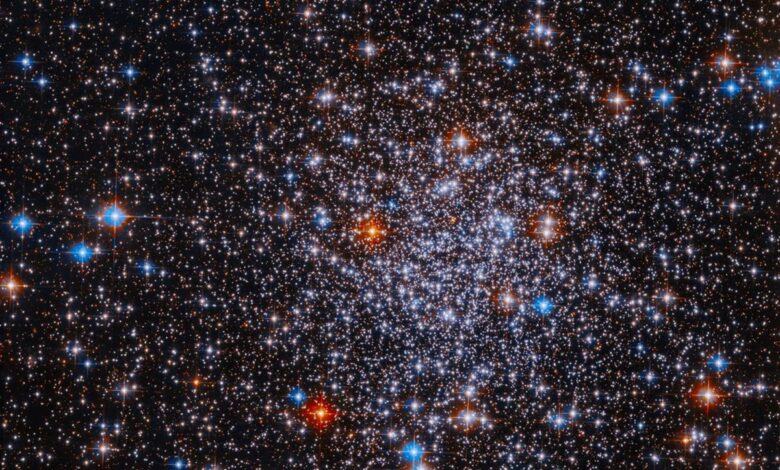
Hubble Observations Give “Missing” Globular Cluster Time to Shine
A previously unexplored globular cluster glitters with multicolored stars in this NASA Hubble Space Telescope image. Globular clusters like this one, called ESO 591-12 or Palomar 8, are spherical collections of tens of thousands to millions of stars tightly bound together by gravity. Globular clusters generally form early in the galaxies’ histories in regions rich in gas and dust. Since the stars…
Read More »