
NASA
-
NASA

NASA to Cover US Spacewalks 94, 95 at International Space Station
NASA astronauts will conduct two spacewalks Thursday, Jan. 8, and Thursday, Jan. 15, outside the International Space Station, and the agency will provide comprehensive coverage. The first spacewalk is scheduled to begin at 8 a.m. EST on Jan. 8 and last about six hours and 30 minutes. NASA will provide live coverage beginning at 6:30 a.m. on NASA+, Amazon Prime, and the…
Read More » -
NASA
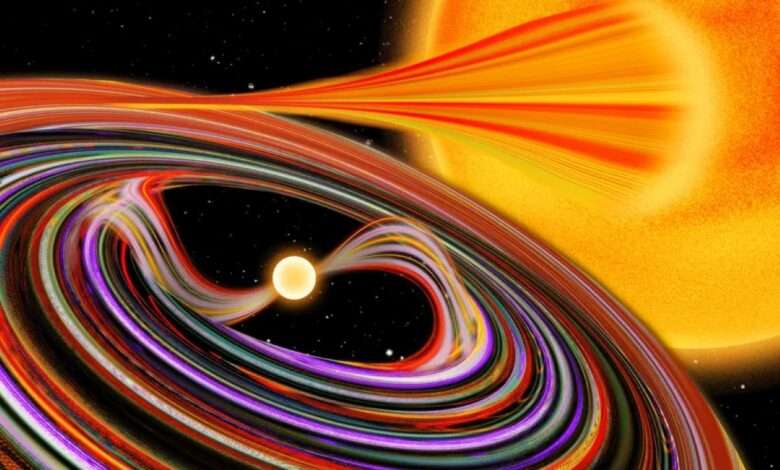
NASA’s IXPE Measures White Dwarf Star for First Time
By Michael Allen For the first time, scientists have used NASA’s IXPE (Imaging X-ray Polarization Explorer) to study a white dwarf star. Using IXPE’s unique X-ray polarization capability, astronomers examined a star called the intermediate polar EX Hydrae, unlocking the geometry of energetic binary systems. In 2024, IXPE spent nearly one week focused on EX Hydrae, a white dwarf star…
Read More » -
NASA
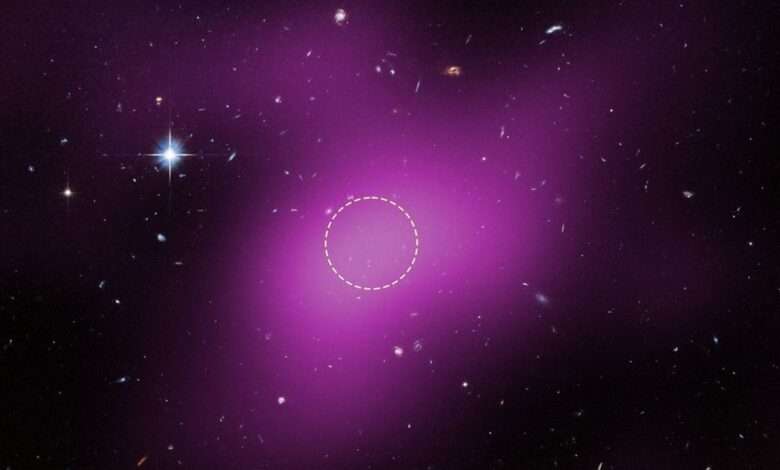
NASA’s Hubble Examines Cloud-9, First of New Type of Object
A team using NASA’s Hubble Space Telescope has uncovered a new type of astronomical object — a starless, gas-rich, dark-matter cloud considered a “relic” or remnant of early galaxy formation. Nicknamed “Cloud-9,” this is the first confirmed detection of such an object in the universe — a finding that furthers the understanding of galaxy formation, the early universe, and the nature of dark matter…
Read More » -
NASA
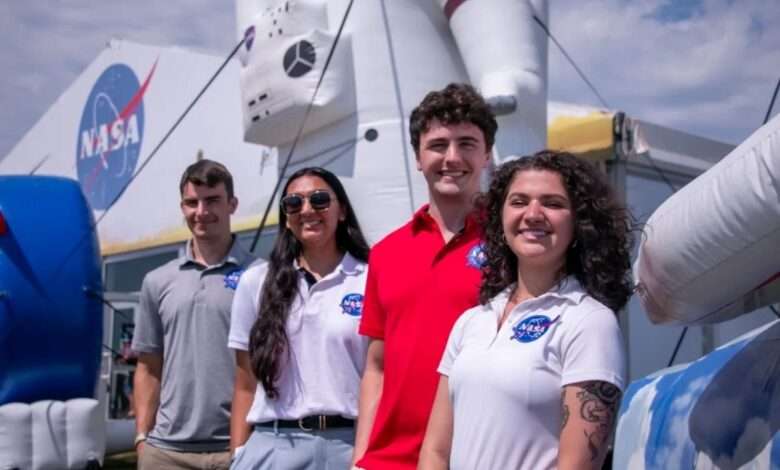
5 Tips to Craft a Standout NASA Internship Application
A NASA internship provides a stellar opportunity to launch your future as part of America’s aerospace workforce. NASA interns take on meaningful work and contribute to exciting agency projects with the guidance of a supportive mentor. The agency’s internship program regularly ranks as the nation’s most prestigious and competition is steep: in fiscal year 2025, NASA’s Office of STEM Engagement…
Read More » -
NASA

Scientific Balloon Begins Antarctic Ascent
A scientific balloon starts its ascent into the air as it prepares to launch carrying NASA’s Payload for Ultrahigh Energy Observations (PUEO) mission. The mission lifted off from Antarctica at 5:56 a.m. NZST, Saturday, Dec. 20 (11:56 a.m., Friday, Dec. 19 in U.S. Eastern Time). The PUEO mission is designed to detect radio signals created when highly energetic particles called…
Read More » -
NASA
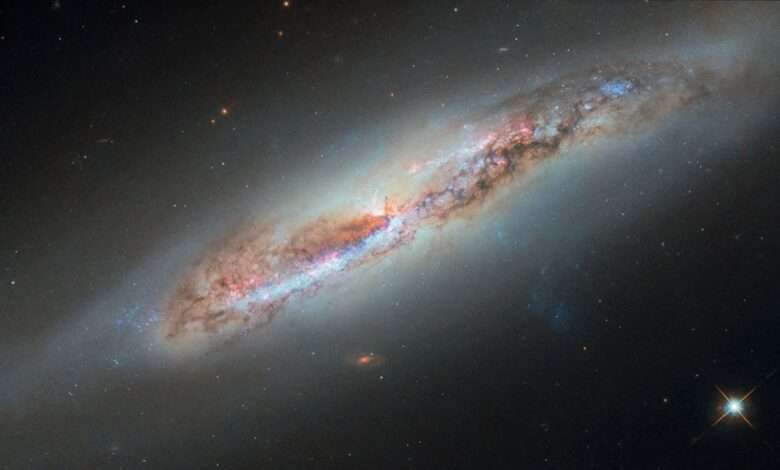
Hubble Glimpses Galactic Gas Making a Getaway
A sideways spiral galaxy shines in this NASA/ESA Hubble Space Telescope image. Located about 60 million light-years away in the constellation Virgo (the Maiden), NGC 4388 is a resident of the Virgo galaxy cluster. This enormous cluster of galaxies contains more than a thousand members and is the nearest large galaxy cluster to the Milky Way. NGC 4388 appears to tilt at…
Read More » -
NASA
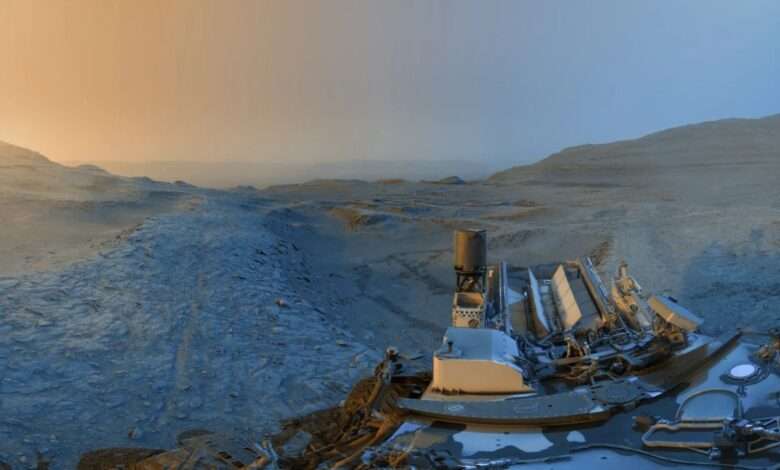
Curiosity Sends Holiday Postcard from Mars
Team members working with NASA’s Curiosity Mars rover created this “postcard” by commanding the rover to take images at two times of day on Nov. 18, 2025, spanning periods that occurred on both the 4,722nd and 4,723rd Martian days, or sols, of the mission. The panoramas were captured at 4:15 p.m. on Sol 4,722 and 8:20 a.m. on Sol 4,723…
Read More » -
NASA
Microbiology
Microorganisms and Spaceflight Spaceflight poses a risk of adverse health effects due to the interactions between microorganisms, their hosts, and their environment. The JSC Microbiology team addresses the benefits and risks related to microorganisms, including infectious disease, allergens, environmental and food contamination, and the impacts of changes in environmental and human microbial ecology aboard spacecraft. The team includes certified medical…
Read More » -
NASA
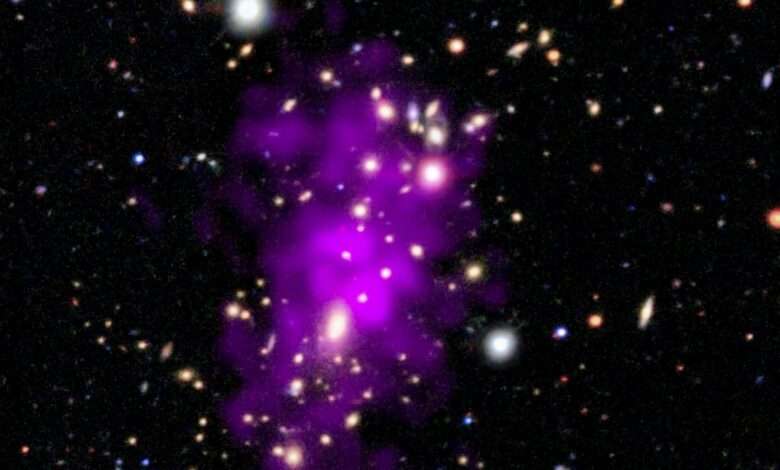
NASA’s Chandra Rings in New Year With Champagne Cluster
Celebrate the New Year with the “Champagne Cluster,” a galaxy cluster seen in this new image from NASA’s Chandra X-ray Observatory and optical telescopes. Astronomers discovered this galaxy cluster Dec. 31, 2020. The date, combined with the bubble-like appearance of the galaxies and the superheated gas seen with Chandra observations (represented in purple), inspired the scientists to nickname the galaxy…
Read More » -
NASA

The Earth Observer: Offering Perspectives from Space through Time
An Intertwined History: The Earth Observer and EOS The Earth Observer, a newsletter issued for more than 36 years, will release its last online content at the close of 2025. This newsletter evolved in parallel with NASA’s Earth Observing System (EOS). It is almost impossible to speak of this newsletter without mentioning EOS. As The Earth Observer prepares its final publication, NASA also plans…
Read More »