
NASA
-
NASA
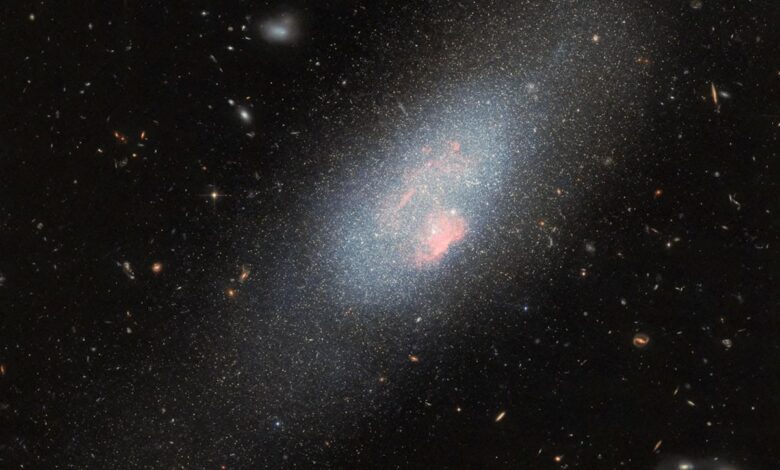
Massive Stars Make Their Mark in Hubble Image
This NASA/ESA Hubble Space Telescope image features a glittering blue dwarf galaxy called Markarian 178 (Mrk 178). The galaxy, which is substantially smaller than our own Milky Way, lies 13 million light-years away in the constellation Ursa Major (the Great Bear). Mrk 178 is one of more than 1,500 Markarian galaxies. These galaxies get their name from the Armenian astrophysicist Benjamin Markarian,…
Read More » -
NASA
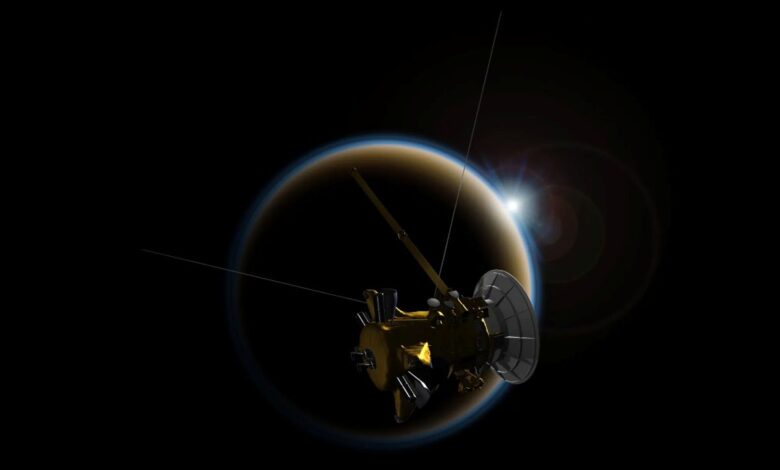
NASA Study Suggests Saturn’s Moon Titan May Not Have Global Ocean
A key discovery from NASA’s Cassini mission in 2008 was that Saturn’s largest moon Titan may have a vast water ocean below its hydrocarbon-rich surface. But reanalysis of mission data suggests a more complicated picture: Titan’s interior is more likely composed of ice, with layers of slush and small pockets of warm water that form near its rocky core. Led…
Read More » -
NASA
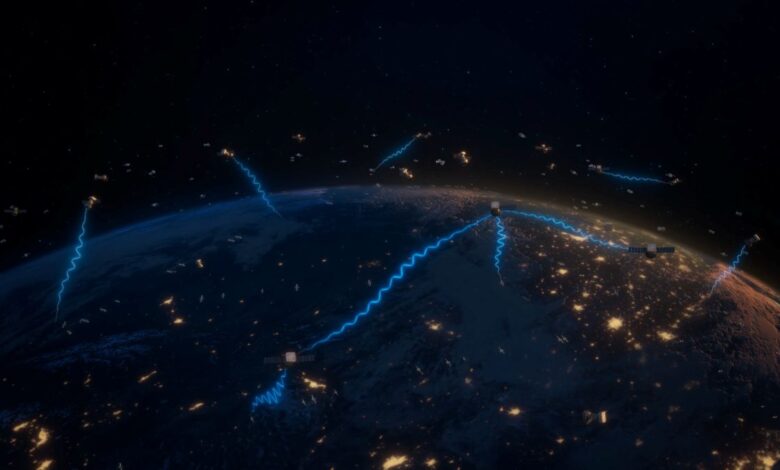
NASA’s Push Toward Commercial Space Communications Gains Momentum
Editor’s Note: This story was updated on Dec. 18, 2025, to change SES to SES Space and Defense. NASA’s commercial partners are actively demonstrating next-generation satellite relay capabilities for spaceflight missions, marking a significant step toward retiring the agency’s Tracking and Data Relay Satellite (TDRS) system and adopting commercial services. The demonstrations – ranging from real-time spacecraft tracking during launch to…
Read More » -
NASA

New Landsat Science Team Announced
By USGS Landsat Missions The U.S. Geological Survey, in cooperation with NASA, has named the new Landsat Science Team that will support the world’s longest-running Earth observation mission for a planned 2026-2030 term. The team brings together experts from universities, private industry, and federal and international agencies to help the U.S. Geological Survey (USGS) and NASA ensure Landsat continues delivering trusted,…
Read More » -
NASA
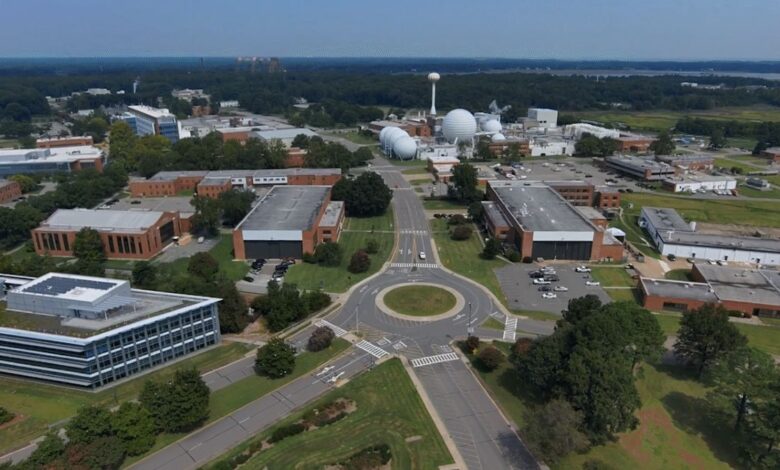
NASA Langley Research Center: 2025 Year in Review
The future of flight, space exploration, and science starts at NASA’s Langley Research Center in Hampton, Virginia, where we have been advancing innovation for more than 100 years. Join us as we look back at NASA Langley’s achievements in 2025 that continued our storied legacy of pushing the boundaries of what is possible. Langley Researchers Explore MARVL-ous Technology for Future…
Read More » -
NASA

A Siberian Snowman in Billings
Icons of winter are sometimes found in unexpected places. In one striking example, a series of oval lagoons in a remote part of Siberia forms the shape of a towering snowman when viewed from above. This image, centered on the remote village of Billings and nearby Cape Billings on Russia’s Chukchi Peninsula, was captured by the OLI (Operational Land Imager) aboard Landsat 8 on…
Read More » -
NASA

NASA Launches Research Program for Students to Explore Big Ideas
NASA is now accepting concepts for a new research challenge. The Opportunities in Research, Business, Innovation, and Technology (ORBIT) challenge is a multi-phase innovation competition designed to empower university and college students to develop next-generation solutions that benefit life on Earth and deep-space exploration. With up to $380,000 in total prize funding, NASA’s ORBIT challenges student teams to bring their…
Read More » -
Press Releases
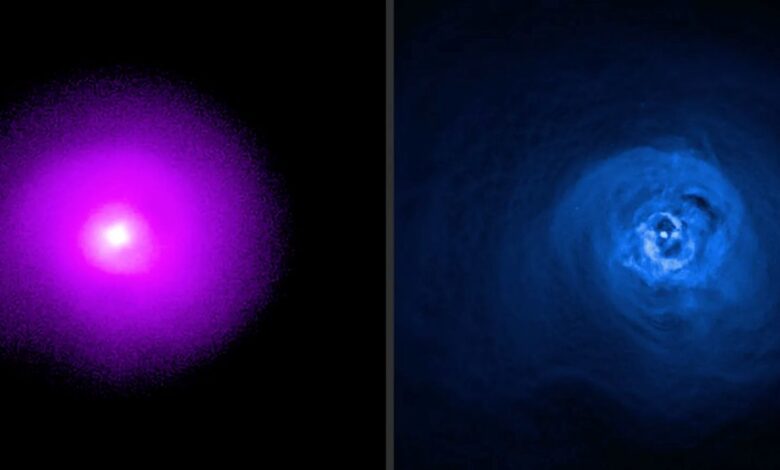
NASA IXPE’s Longest Observation Solves Black Hole Jets Mystery
Written by Michael Allen An international team of astronomers using NASA’s IXPE (Imaging X-ray Polarimetry Explorer) has identified the origin of X-rays in a supermassive black hole’s jet, answering a question that has been unresolved since the earliest days of X-ray astronomy. Their findings are described in a paper published in The Astrophysical Journal Letters, by the American Astronomical Society,…
Read More » -
NASA

How Small Is Too Small? Volunteers Help NASA Test Lake Monitoring From Space
Volunteers participating in the Lake Observations by Citizen Scientists and Satellites (LOCSS) project have been collecting water level data in lakes since 2017. Now, the LOCSS team has used these data to examine the accuracy of water level measurements made from space. The results, published in GIScience & Remote Sensing, showed that modern satellites with special instruments called nadir altimeters can capture…
Read More » -
NASA
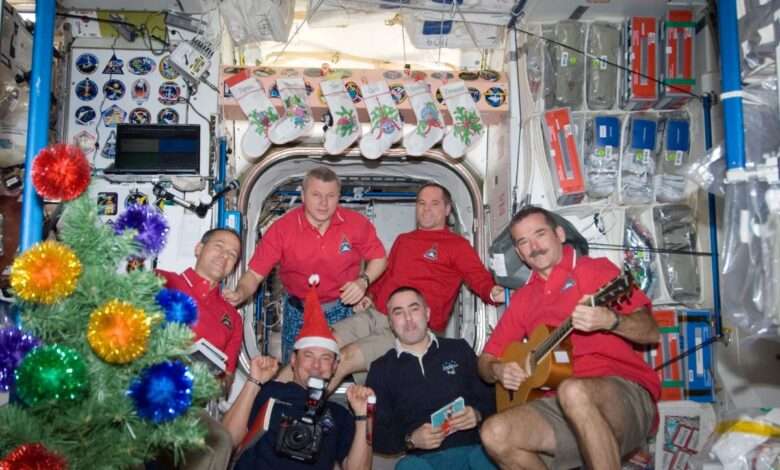
Through Astronaut Eyes: 25 Years of Life in Orbit
After 25 years of continuous human presence in space, the International Space Station remains a training and proving ground for deep space missions, enabling NASA to focus on Artemis missions to the Moon and Mars. The orbiting laboratory is also a living archive of human experience, culture, and connection. Creating community Expedition 34 crew members pictured in the Unity node of the…
Read More »