
NASA
-
NASA
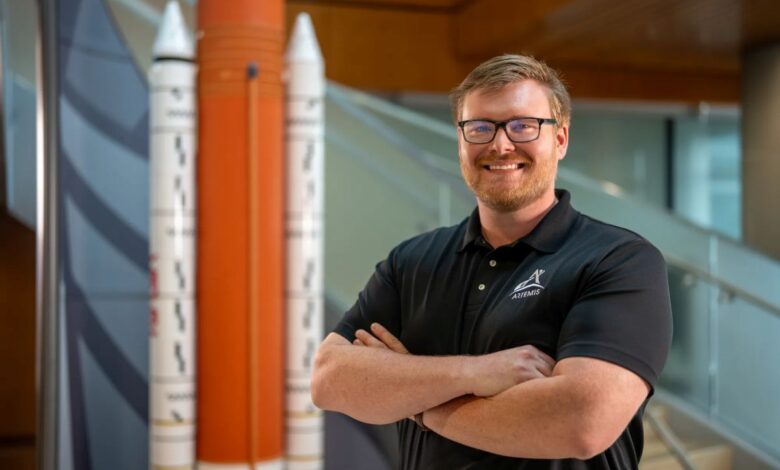
I Am Artemis: Patrick Junen
For some people, a passion for space is something that might develop over time, but for Patrick Junen, the desire was there from the beginning. With a father and grandfather who both worked for NASA, space exploration is not just a dream; it remains a family legacy. Now, as the stage assembly and structures subsystem manager at NASA’s Marshall Space…
Read More » -
NASA
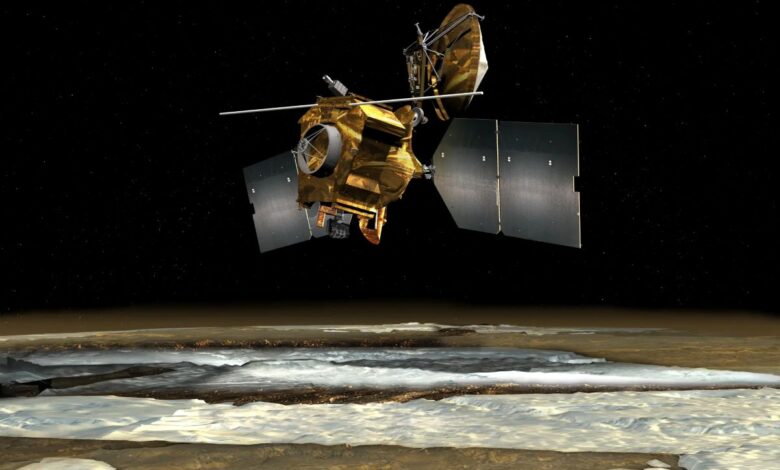
NASA Mars Orbiter Learns New Moves After Nearly 20 Years in Space
The Mars Reconnaissance Orbiter is testing a series of large spacecraft rolls that will help it hunt for water. After nearly 20 years of operations, NASA’s Mars Reconnaissance Orbiter (MRO) is on a roll, performing a new maneuver to squeeze even more science out of the busy spacecraft as it circles the Red Planet. Engineers have essentially taught the probe to roll…
Read More » -
NASA
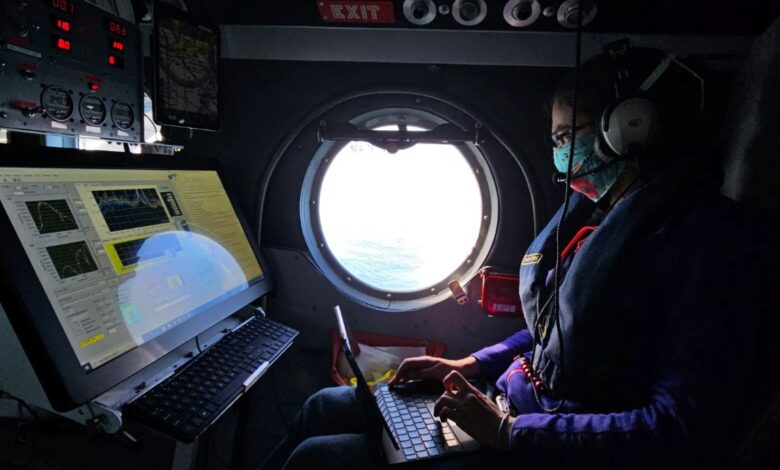
By Air and by Sea: Validating NASA’s PACE Ocean Color Instrument
In autumn 2024, California’s Monterey Bay experienced an outsized phytoplankton bloom that attracted fish, dolphins, whales, seabirds, and – for a few weeks in October – scientists. A team from NASA’s Ames Research Center in Silicon Valley, with partners at the University of California, Santa Cruz (UCSC), and the Naval Postgraduate School, spent two weeks on the California coast gathering…
Read More » -
NASA
Meet the Space Ops Team: Derrick Bailey
Since childhood, Derrick Bailey always had an early fascination with aeronautics. Military fighter jet pilots were his childhood heroes, and he dreamed of joining the aerospace industry. This passion was a springboard into his 17-year career at NASA, where Bailey plays an important role in enabling successful rocket launches. Bailey is the Launch Vehicle Certification Manager in the Launch Services Program…
Read More » -
NASA
NASA Citizen Scientists Find New Eclipsing Binary Stars
When two stars orbit one another in such a way that one blocks the other’s light each time it swings around, that’s an eclipsing binary. A new paper from NASA’s Eclipsing Binary Patrol citizen science project presents more than 10,000 of these rare pairs – 10,001 to be precise. These objects will help future researchers study the physics and formation of stars and…
Read More » -
NASA
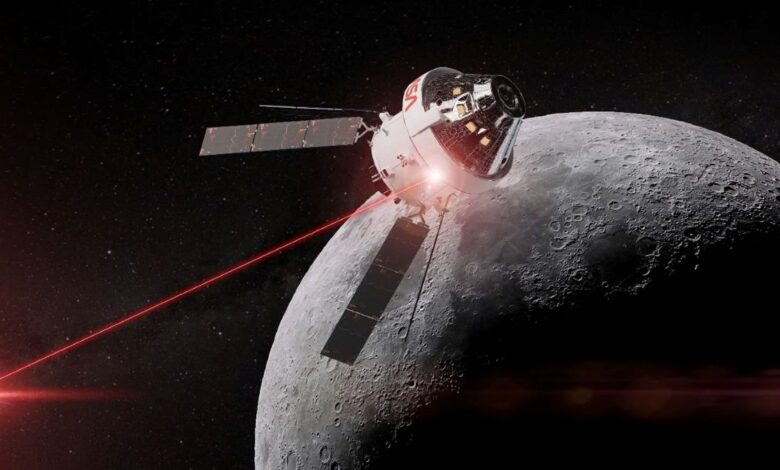
NASA, Australia Team Up for Artemis II Lunar Laser Communications Test
As NASA prepares for its Artemis II mission, researchers at the agency’s Glenn Research Center in Cleveland are collaborating with The Australian National University (ANU) to prove inventive, cost-saving laser communications technologies in the lunar environment. Communicating in space usually relies on radio waves, but NASA is exploring laser, or optical, communications, which can send data 10 to 100 times…
Read More » -
NASA

NASA’s Chandra Shares a New View of Our Galactic Neighbor
The Andromeda galaxy, also known as Messier 31 (M31), is the closest spiral galaxy to the Milky Way at a distance of about 2.5 million light-years. Astronomers use Andromeda to understand the structure and evolution of our own spiral, which is much harder to do since Earth is embedded inside the Milky Way. The galaxy M31 has played an important role in many aspects of…
Read More » -
NASA
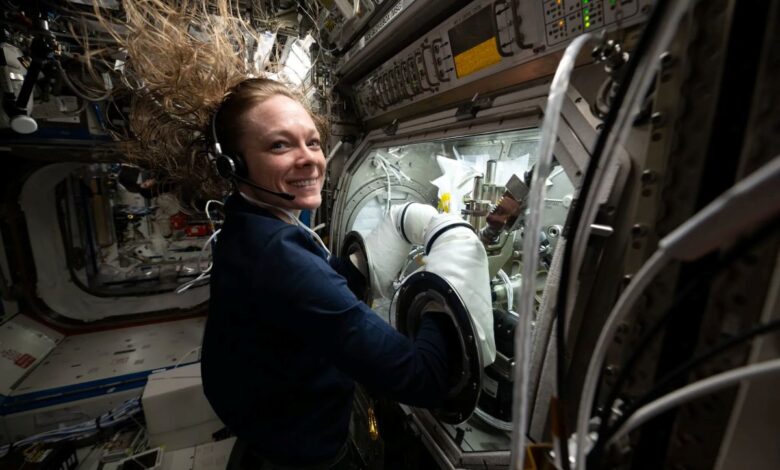
NASA Astronauts to Answer Questions from Alabama Students
Editor’s Note: This advisory was updated Thursday, June 26, to note that the time of the event has changed to 12:50 p.m. EDT. Students attending the U.S. Space and Rocket Center Space Camp in Huntsville, Alabama, will have the chance to hear NASA astronauts aboard the International Space Station answer their prerecorded questions. At 12:50 p.m. EDT on Tuesday, July 1,…
Read More » -
NASA

NASA-Assisted Scientists Get Bird’s-Eye View of Population Status
NASA satellite data and citizen science observations combine for new findings on bird populations. Through the eBird citizen scientist program, millions of birders have recorded their observations of different species and submitted checklists to the Cornell Lab of Ornithology. Through a partnership with NASA, the lab has now used this data to model and map bird population trends for nearly…
Read More » -
NASA
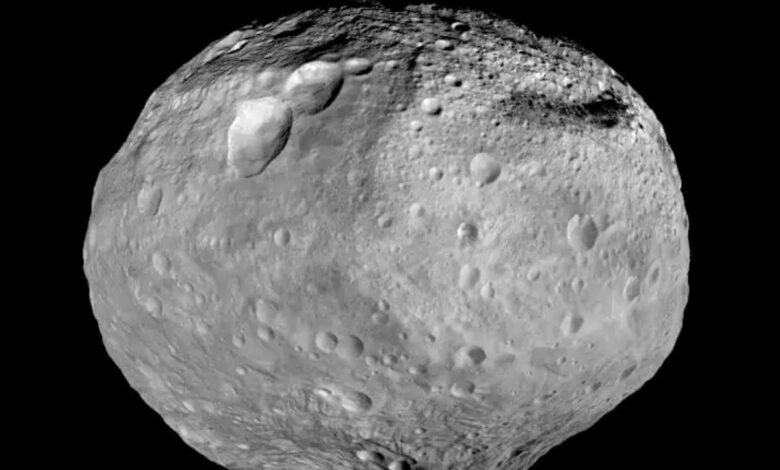
What Are Asteroids? (Ages 14-18)
What are asteroids? Asteroids are rocky objects that orbit the Sun just like planets do. In fact, sometimes asteroids are called “minor planets.” These space rocks were left behind after our solar system formed about 4.6 billion years ago. Asteroids are found in a wide range of sizes. For example, one small asteroid, 2015 TC25, has a diameter of about…
Read More »