
NASA
-
NASA

NASA Intern Took Career from Car Engines to Cockpits
Some career changes involve small shifts. But for one NASA engineering intern, the leap was much bigger –moving from under the hood of a car to helping air taxis take to the skies. Saré Culbertson spent more than a decade in the auto industry and had been working as a service manager in busy auto repair shops. Today, she supports…
Read More » -
NASA
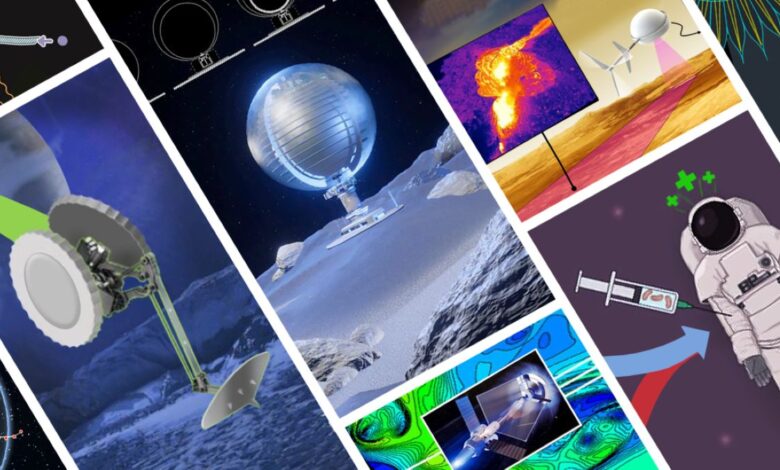
NASA Fosters Innovative, Far-Out Tech for the Future of Aerospace
Through the NASA Innovative Advanced Concepts (NIAC) program, NASA nurtures visionary yet credible concepts that could one day “change the possible” in aerospace, while engaging America’s innovators and entrepreneurs as partners in the journey. These concepts span various disciplines and aim to advance capabilities such as finding resources on distant planets, making space travel safer and more efficient, and even…
Read More » -
NASA
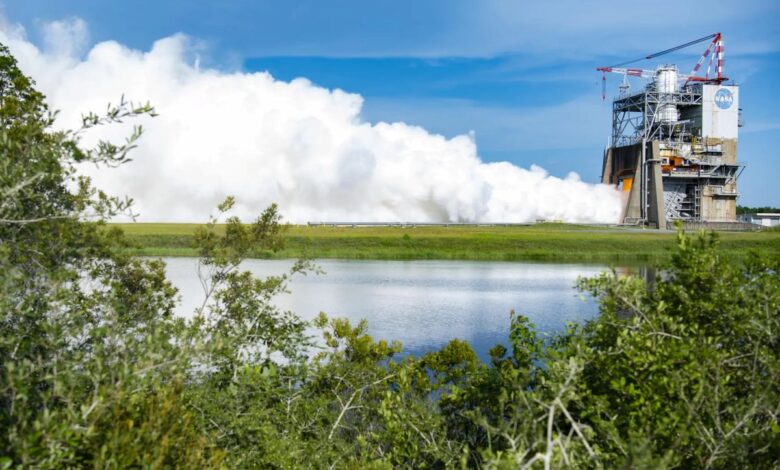
NASA Tests New RS-25 Engine
NASA tested RS-25 engine No. 20001 on June 20, at the Fred Haise Test Stand at NASA’s Stennis Space Center at Bay St. Louis, Mississippi. Test teams fired the engine for almost eight-and-a-half minutes (500 seconds), the same amount of time RS-25 engines fire during a launch of an SLS (Space Launch System) rocket on Artemis missions to the Moon. The Artemis campaign will explore the…
Read More » -
NASA
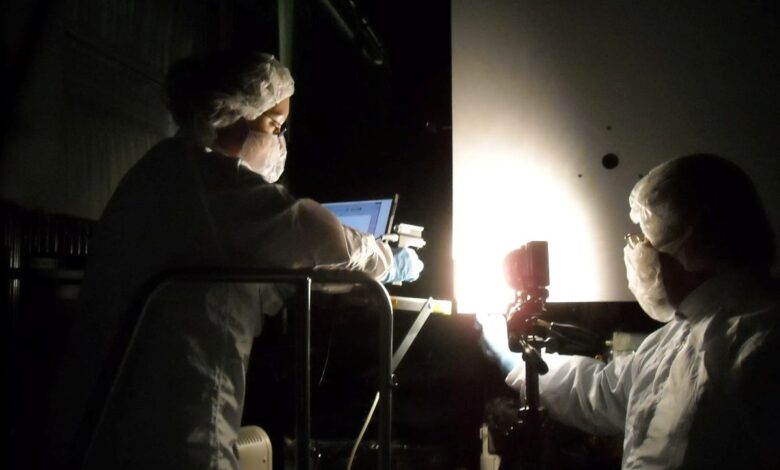
Heather Cowardin Safeguards the Future of Space Exploration
As branch chief of the Hypervelocity Impact and Orbital Debris Office at NASA’s Johnson Space Center in Houston, Dr. Heather Cowardin leads a team tasked with a critical mission: characterizing and mitigating orbital debris—space junk that poses a growing risk to satellites, spacecraft, and human spaceflight. Long before Cowardin was a scientist safeguarding NASA’s mission, she was a young girl…
Read More » -
NASA

Curiosity Blog, Sols 4577-4579: Watch the Skies
Written by Deborah Padgett, OPGS Task Lead at NASA’s Jet Propulsion Laboratory Earth planning date: Friday, June 20, 2025 During the plan covering Sols 4575-4576, Curiosity continued our investigation of mysterious boxwork structures on the shoulders of Mount Sharp. After a successful 56-meter drive (about 184 feet), Curiosity is now parked in a trough cutting through a highly fractured region…
Read More » -
NASA
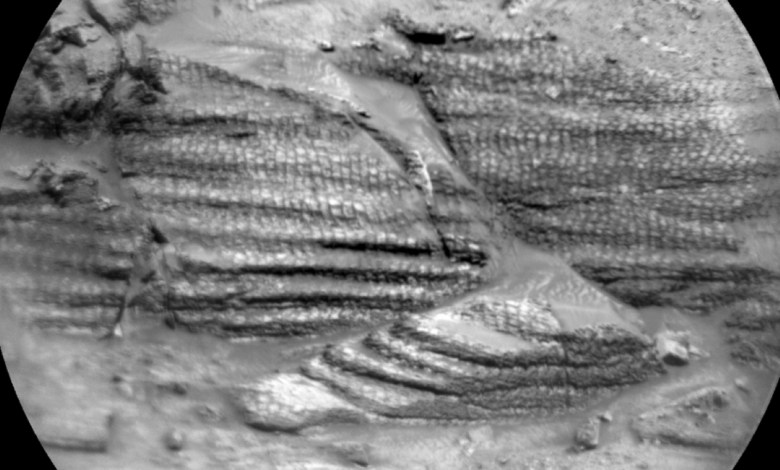
Curiosity Blog, Sols 4575-4576: Perfect Parking Spot
Written by Lucy Thompson, APXS Collaborator and Senior Research Scientist at the University of New Brunswick Earth planning date: Wednesday, June 18, 2025 Not only did our drive execute perfectly, Curiosity ended up in one of the safest, most stable parking spots of the whole mission. We often come into the start of planning hoping that all the wheels are…
Read More » -
NASA
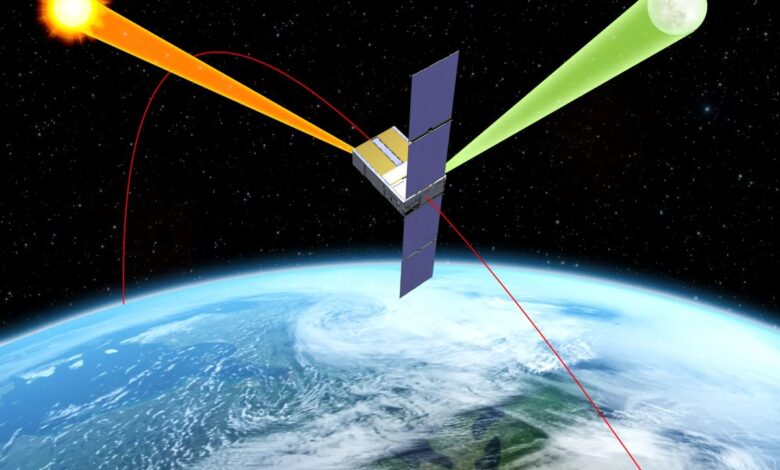
NASA Tech to Use Moonlight to Enhance Measurements from Space
NASA will soon launch a one-of-a-kind instrument, called Arcstone, to improve the quality of data from Earth-viewing sensors in orbit. In this technology demonstration, the mission will measure sunlight reflected from the Moon— a technique called lunar calibration. Such measurements of lunar spectral reflectance can ultimately be used to set a high-accuracy, universal standard for use across the international scientific…
Read More » -
NASA
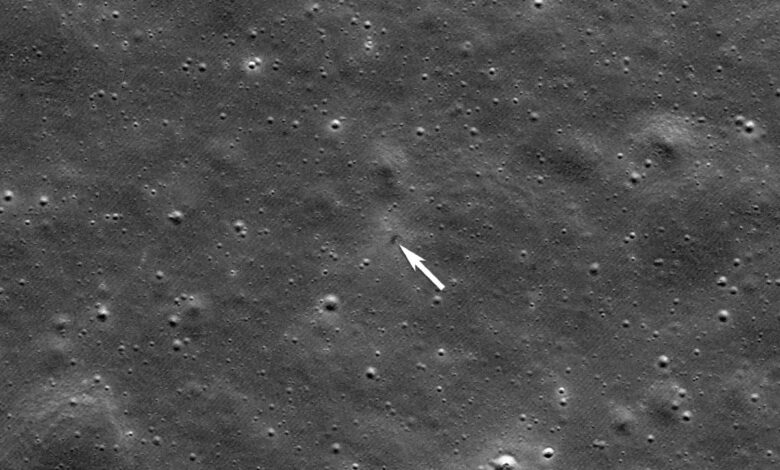
NASA’s LRO Views ispace HAKUTO-R Mission 2 Moon Lander Impact Site
On June 11, NASA’s LRO (Lunar Reconnaissance Orbiter) captured photos of the site where the ispace Mission 2 SMBC x HAKUTO-R Venture Moon (RESILIENCE) lunar lander experienced a hard landing on June 5, 2025, UTC. RESILIENCE lunar lander impact site, as seen by NASA’s Lunar Reconnaissance Orbiter Camera (LROC) on June 11, 2025. The lander created a dark smudge surrounded…
Read More » -
NASA
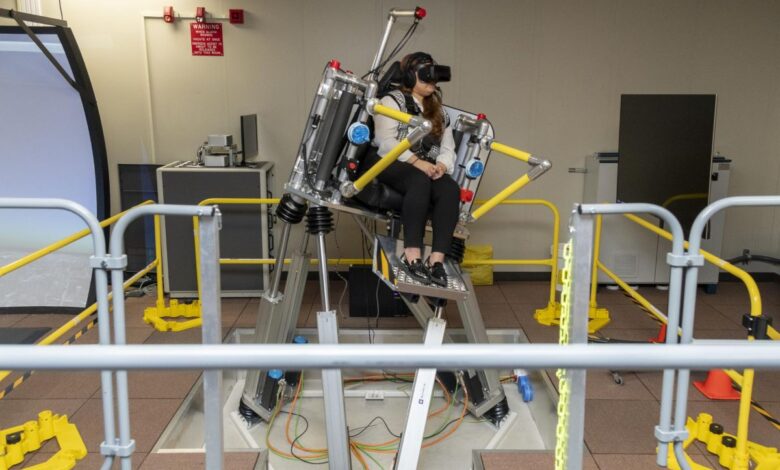
NASA Air Taxi Passenger Comfort Studies Move Forward
NASA’s Advanced Air Mobility vision involves the skies above the U.S. filled with new types of aircraft, including air taxis. But making that vision a reality involves ensuring that people will actually want to ride these aircraft – which is why NASA has been working to evaluate comfort, to see what passengers will and won’t tolerate. NASA is conducting a…
Read More » -
NASA
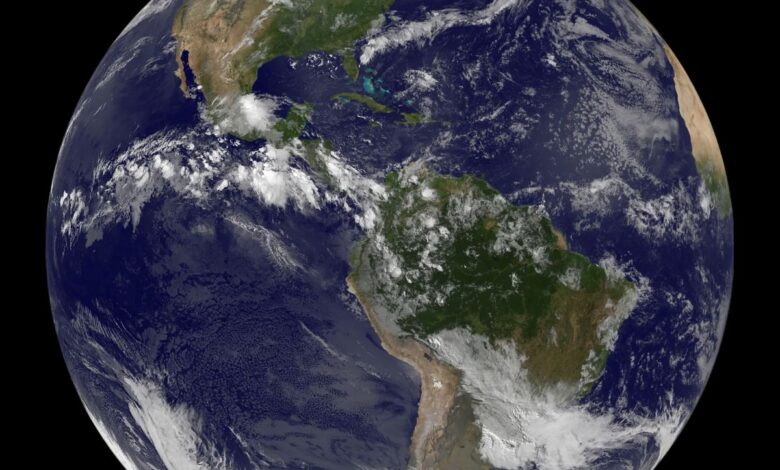
Summer Begins in Northern Hemisphere
This full-disk image from NOAA’s GOES-13 satellite was captured at 7:45 a.m. EDT (11:45 UTC) and shows the Americas on June 21, 2012, the start of astronomical summer – in the Northern Hemisphere – that year. The first day of summer in 2025 is June 20; it is also the longest day of the year. In the Southern Hemisphere, it’s…
Read More »