
NASA
-
NASA
NASA’s PACE Mission Reveals a Year of Terrestrial Data on Plant Health
A lot can change in a year for Earth’s forests and vegetation, as springtime and rainy seasons can bring new growth, while cooling temperatures and dry weather can bring a dieback of those green colors. And now, a novel type of NASA visualization illustrates those changes in a full complement of colors as seen from space. Researchers have now gathered…
Read More » -
NASA
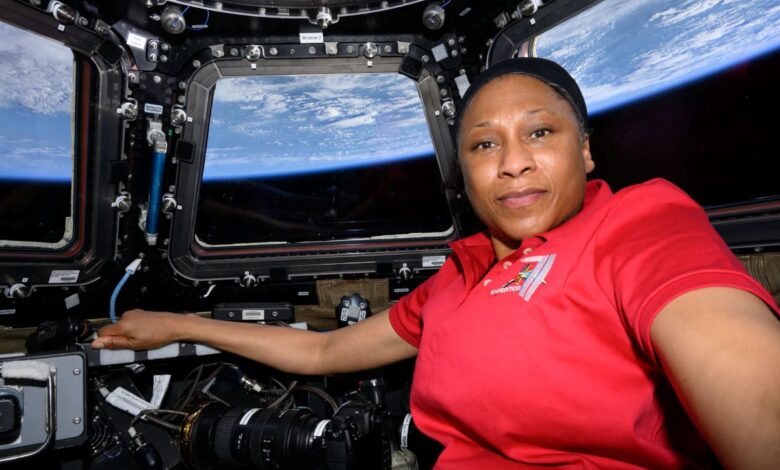
NASA Astronaut Jeanette Epps Retires
NASA astronaut Jeanette Epps retired May 30, after nearly 16 years of service with the agency. Epps most recently served as a mission specialist during NASA’s SpaceX Crew-8 mission, spending 235 days in space, including 232 days aboard the International Space Station, working on hundreds of scientific experiments during Expedition 71/72. “I have had the distinct pleasure of following Jeanette’s…
Read More » -
NASA
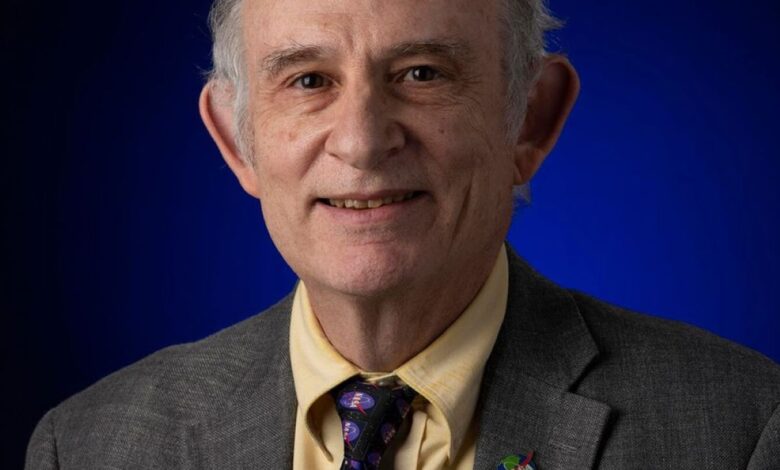
Jack Kaye Retires After a Storied Career at NASA
Jack Kaye [NASA HQ—Associate Director for Research, Earth Science Division (ESD)] has decided to retire on April 30, 2025, following 42 years of service to NASA – see Photo 1. Most recently, Kaye served as associate director for research of the Earth Science Division (ESD) within NASA’s Science Mission Directorate (SMD). In this position, he was responsible for the research and data…
Read More » -
NASA
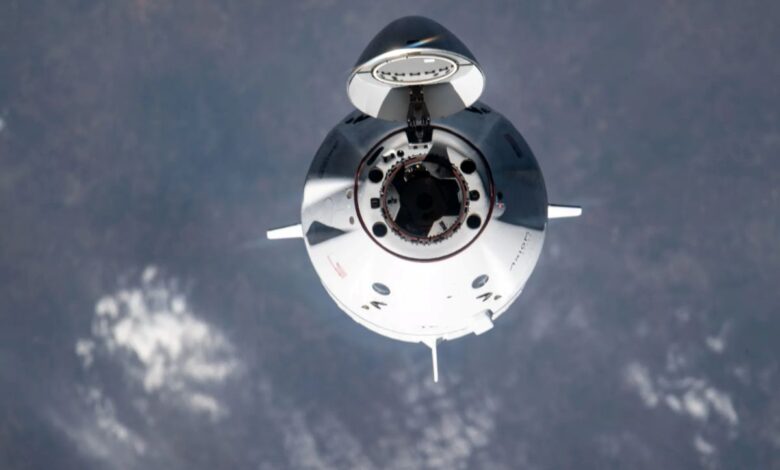
NASA Sets Coverage for Axiom Mission 4 Launch, Arrival at Station
NASA, Axiom Space, and SpaceX are targeting 8:22 a.m. EDT, Tuesday, June 10, for launch of the fourth private astronaut mission to the International Space Station, Axiom Mission 4. The mission will lift off from Launch Complex 39A at NASA’s Kennedy Space Center in Florida. The crew will travel to the orbiting laboratory on a new SpaceX Dragon spacecraft after…
Read More » -
NASA
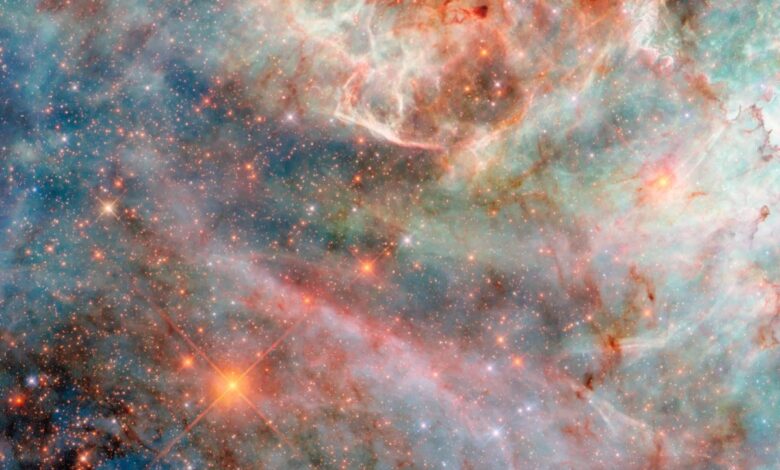
Hubble Captures Cotton Candy Clouds
This NASA/ESA Hubble Space Telescope image features a sparkling cloudscape from one of the Milky Way’s galactic neighbors, a dwarf galaxy called the Large Magellanic Cloud. Located 160,000 light-years away in the constellations Dorado and Mensa, the Large Magellanic Cloud is the largest of the Milky Way’s many small satellite galaxies. This view of dusty gas clouds in the Large Magellanic Cloud…
Read More » -
NASA

Sols 4559-4560: Drill Campaign — Searching for a Boxwork Bedrock Drill Site
Written by Lucy Lim, Planetary Scientist at NASA’s Goddard Space Flight Center Earth planning date: Monday, June 2, 2025 Now that Curiosity has spent a few sols collecting close-up measurements of the rocks in the outer edge of the boxwork-forming geologic unit, the team has decided that it’s time to collect a drill sample. The geochemical measurements by APXS and…
Read More » -
NASA
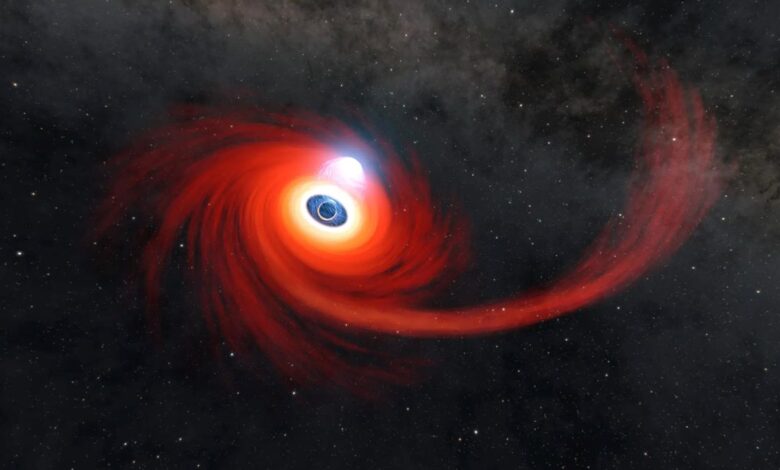
3 Black Holes Caught Eating Massive Stars in NASA Data
Black holes are invisible to us unless they interact with something else. Some continuously eat gas and dust, and appear to glow brightly over time as matter falls in. But other black holes secretly lie in wait for years until a star comes close enough to snack on. A new study using space and ground-based data from NASA, ESA (European…
Read More » -
NASA
NASA, ISRO Research Aboard Fourth Private Astronaut Mission to Station
NASA and ISRO (Indian Space Research Organisation) are collaborating to launch scientific investigations aboard Axiom Mission 4, the fourth private astronaut mission to the International Space Station. These studies include examining muscle regeneration, growth of sprouts and edible microalgae, survival of tiny aquatic organisms, and human interaction with electronic displays in microgravity. The mission is targeted to launch no earlier…
Read More » -
NASA

Galaxy Clusters on Course to Crash Again, NASA’s Chandra Finds
New observations from NASA’s Chandra X-ray Observatory and other telescopes have captured a rare cosmic event: two galaxy clusters have collided and are now poised to head back for another swipe at each other. Galaxy clusters are some of the largest structures in the Universe. Held together by gravity, they are monster-sized collections of hundreds or thousands of individual galaxies,…
Read More » -
NASA
Core Components for NASA’s Roman Space Telescope Pass Major Shake Test
The core portion of NASA’s Nancy Grace Roman Space Telescope has successfully completed vibration testing, ensuring it will withstand the extreme shaking experienced during launch. Passing this key milestone brings Roman one step closer to helping answer essential questions about the role of dark energy and other cosmic mysteries. “The test could be considered as powerful as a pretty severe…
Read More »