
NASA
-
NASA

35 Years Ago: STS-36 Flies a Dedicated Department of Defense Mission
On Feb. 28, 1990, space shuttle Atlantis took off from NASA’s Kennedy Space Center in Florida on STS-36, the sixth shuttle mission dedicated to the Department of Defense. As such, many of the details of the flight remain classified. The mission marked the 34th flight of the space shuttle, the sixth for Atlantis, and the fourth night launch of the program.…
Read More » -
NASA
Going With the Flow: Visualizing Ocean Currents with ECCO
Historically, the ocean has been difficult to model. Scientists struggled in years past to simulate ocean currents or accurately predict fluctuations in temperature, salinity, and other properties. As a result, models of ocean dynamics rapidly diverged from reality, which meant they could only provide useful information for brief periods. In 1999, a project called Estimating the Circulation and Climate of…
Read More » -
NASA

NASA Names Norman Knight as Acting Deputy Director of Johnson Space Center
NASA has selected Norman Knight as acting deputy director of Johnson Space Center. Knight currently serves as Director of Johnson’s Flight Operations Directorate (FOD), responsible for astronaut training and for overall planning, directing, managing, and implementing overall mission operations for NASA human spaceflight programs. This also includes management for all Johnson aircraft operations and aircrew training. Knight will serve in this dual…
Read More » -
NASA
NASA Marks 110 Years Since Founding of Predecessor Organization
To celebrate the 110th anniversary of the organization that ultimately became NASA, the agency released a new collection of videos to highlight the history of the National Advisory Committee for Aeronautics (NACA) and the ways it transformed flight over four decades. Not long after the beginning of World War I, the United States Congress, concerned that America was lagging behind other…
Read More » -
NASA
An Ocean in Motion: NASA’s Mesmerizing View of Earth’s Underwater Highways
This data visualization showing ocean currents around the world uses data from NASA’s Estimating the Circulation and Climate of the Ocean model. This data visualization showing ocean currents around the world uses data from NASA’s ECCO model, or Estimating the Circulation and Climate of the Ocean. The model pulls data from spacecraft, buoys, and other measurements. Original Video and Assets
Read More » -
NASA
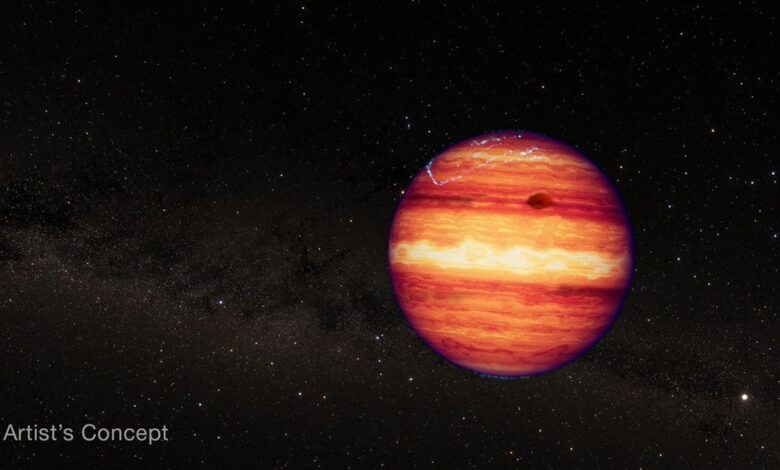
NASA’s Webb Exposes Complex Atmosphere of Starless Super-Jupiter
An international team of researchers has discovered that previously observed variations in brightness of a free-floating planetary-mass object known as SIMP 0136 must be the result of a complex combination of atmospheric factors, and cannot be explained by clouds alone. Using NASA’s James Webb Space Telescope to monitor a broad spectrum of infrared light emitted over two full rotation periods by SIMP…
Read More » -
NASA

Touchdown! Carrying NASA Science, Firefly’s Blue Ghost Lands on Moon
Carrying a suite of NASA science and technology, Firefly Aerospace’s Blue Ghost Mission 1 successfully landed at 3:34 a.m. EST on Sunday near a volcanic feature called Mons Latreille within Mare Crisium, a more than 300-mile-wide basin located in the northeast quadrant of the Moon’s near side. The Blue Ghost lander is in an upright and stable configuration, and the…
Read More » -
NASA
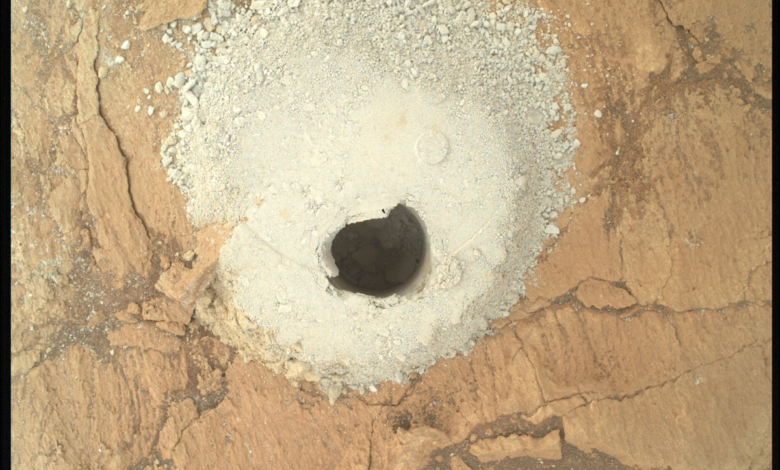
Smooshing for Science: A Flat-Out Success
Written by Henry Manelski, Ph.D. student at Purdue University The Perseverance team is always looking for creative ways to use the tools we have on Mars to maximize the science we do. On the arm of the rover sits the SHERLOC instrument, which specializes in detecting organic compounds and is crucial in our search for signs of past microbial life. But…
Read More » -
NASA
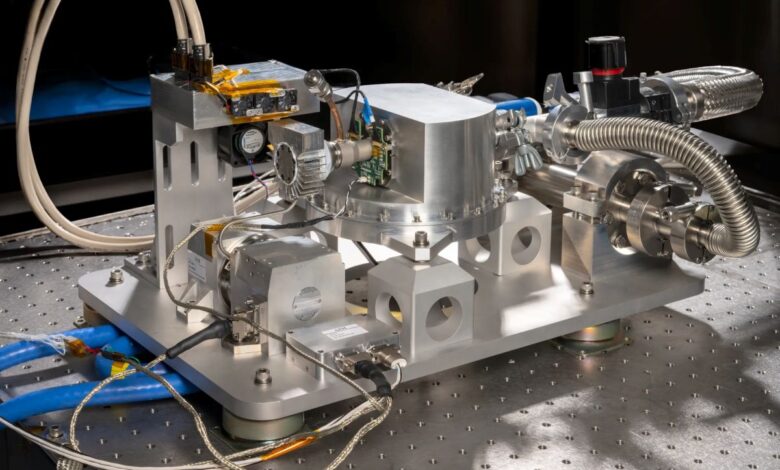
NASA Uses New Technology to Understand California Wildfires
The January wildfires in California devastated local habitats and communities. In an effort to better understand wildfire behavior, NASA scientists and engineers tried to learn from the events by testing new technology. The new instrument, the Compact Fire Infrared Radiance Spectral Tracker (c-FIRST), was tested when NASA’s B200 King Air aircraft flew over the wildfires in the Pacific Palisades and…
Read More » -
NASA

What’s Up: March 2025 Skywatching Tips from NASA
A Fast-Moving Planet and a Crimson Moon! Catch Mercury if you can, then stay up late for a total lunar eclipse, and learn the truth about the dark side of the Moon. Skywatching Highlights All Month – Planets Visibility: Mercury: Speedy Mercury is visible beneath Venus for the first week and a half of March, for about 30 minutes each evening,…
Read More »