
NASA
-
NASA

NASA Celebrates Edwin Hubble’s Discovery of a New Universe
For humans, the most important star in the universe is our Sun. The second-most important star is nestled inside the Andromeda galaxy. Don’t go looking for it — the flickering star is 2.2 million light-years away, and is 1/100,000th the brightness of the faintest star visible to the human eye. Yet, a century ago, its discovery by Edwin Hubble, then an…
Read More » -
NASA

50 Years Ago: Preparing the Final Saturn Rocket for Flight
With the historic first international space docking mission only six months away, preparations on the ground for the Apollo-Soyuz Test Project (ASTP) intensified. At NASA’s Kennedy Space Center (KSC) in Florida, workers in the Vehicle Assembly Building (VAB) stacked the rocket for the mission, the final Saturn rocket assembled for flight. In the nearby Manned Spacecraft Operations Building (MSOB), the…
Read More » -
NASA

Roman Space Telescope’s Coronagraph Instrument
NASA’s Roman Coronagraph Instrument will greatly advance our ability to directly image exoplanets, or planets and disks around other stars. The Roman Coronagraph Instrument, a technology demonstration designed and built by NASA’s Jet Propulsion Laboratory, will fly aboard NASA’s next flagship astrophysics observatory, the Nancy Grace Roman Space Telescope. Coronagraphs work by blocking light from a bright object, like a star,…
Read More » -
NASA
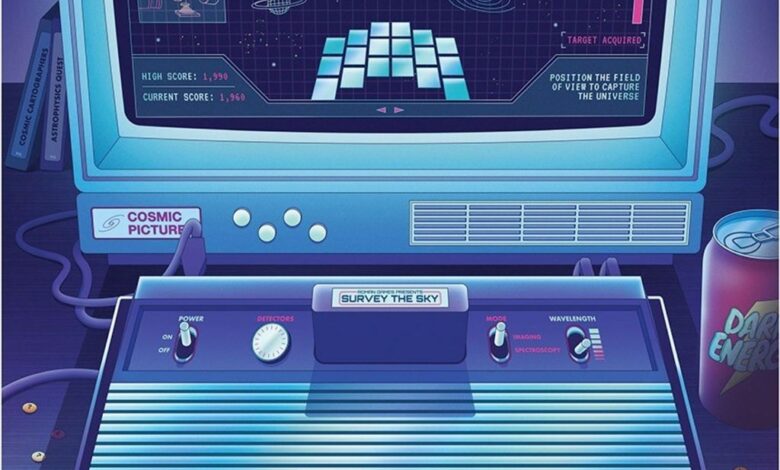
Roman Space Telescope’s Wide Field Instrument
The Wide-Field Instrument (WFI), the primary instrument aboard NASA’s Nancy Grace Roman Space Telescope, is a 300-megapixel visible and infrared camera that will allow scientists to perform revolutionary astrophysics surveys. This specialized camera detects faint light across the cosmos and will be used to study a wide range of astrophysics topics including the expansion and acceleration of our universe, planets orbiting…
Read More » -
NASA
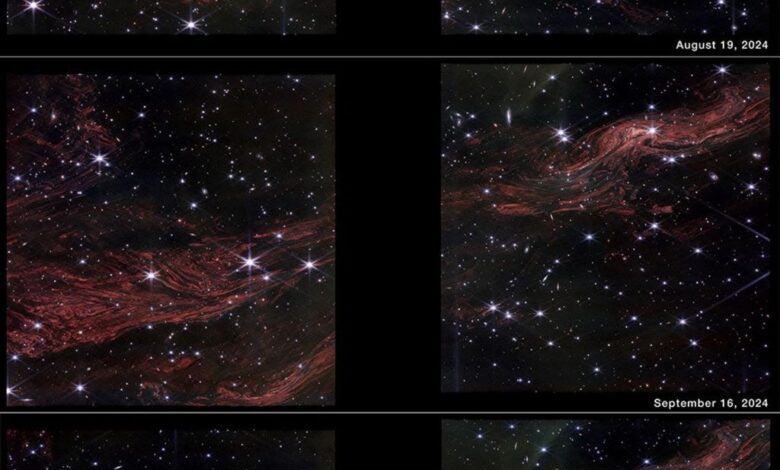
NASA’s Webb Reveals Intricate Layers of Interstellar Dust, Gas
Once upon a time, the core of a massive star collapsed, creating a shockwave that blasted outward, ripping the star apart as it went. When the shockwave reached the star’s surface, it punched through, generating a brief, intense pulse of X-rays and ultraviolet light that traveled outward into the surrounding space. About 350 years later, that pulse of light has…
Read More » -
NASA
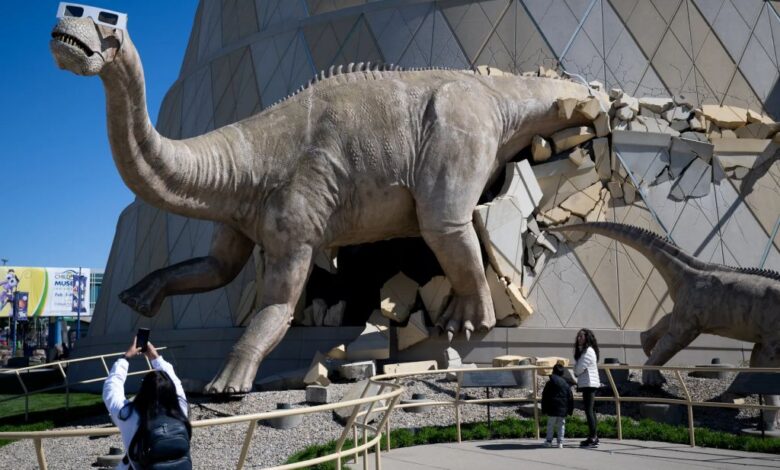
Best of 2024: Dinosaur Prepared to Safely Watch Solar Eclipse
An adult Alamosaurus sports eclipse glasses outside of The Children’s Museum of Indianapolis, on April 6, 2024. Two days later, the total solar eclipse swept across a narrow portion of the North American continent from Mexico’s Pacific coast to the Atlantic coast of Newfoundland, Canada. A partial solar eclipse was visible across the entire North American continent along with parts of Central…
Read More » -
NASA
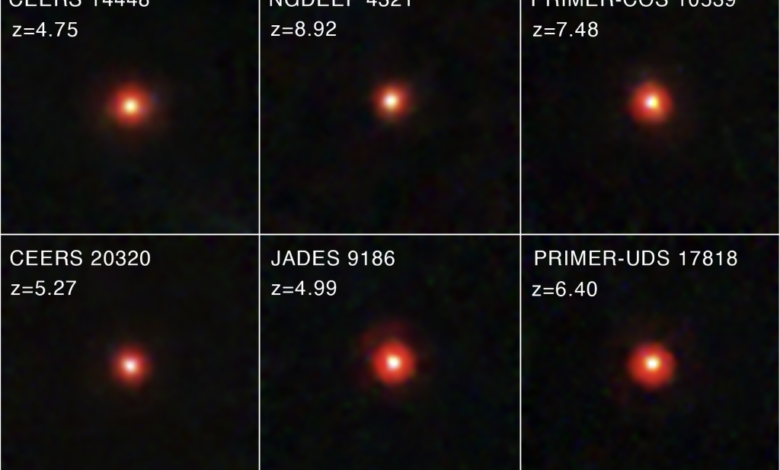
Newfound Galaxy Class May Indicate Early Black Hole Growth, Webb Finds
In December 2022, less than six months after commencing science operations, NASA’s James Webb Space Telescope revealed something never seen before: numerous red objects that appear small on the sky, which scientists soon called “little red dots” (LRDs). Though these dots are quite abundant, researchers are perplexed by their nature, the reason for their unique colors, and what they convey…
Read More » -
NASA
NASA Deputy Administrator to Receive 2025 National Space Award
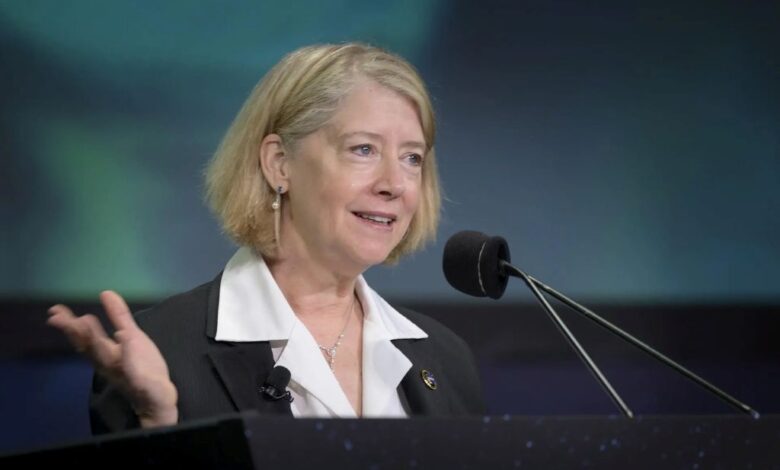
The Rotary National Award for Space Achievement Foundation has selected NASA Deputy Administrator Pam Melroy, a retired United States Air Force colonel and former NASA astronaut, to receive the 2025 National Space Trophy on April 25 in Houston. “This honor is not just a reflection of my journey but a testament to the incredible teams and visionaries I’ve been privileged to work…
Read More » -
NASA
Liftoff! NASA Sends Science, Tech to Moon on Firefly, SpaceX Flight
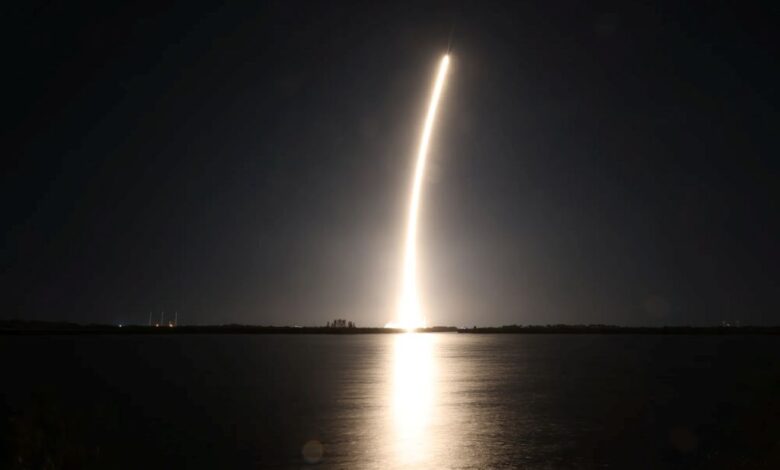
A suite of NASA scientific investigations and technology demonstrations is on its way to our nearest celestial neighbor aboard a commercial spacecraft, where they will provide insights into the Moon’s environment and test technologies to support future astronauts landing safely on the lunar surface under the agency’s Artemis campaign. Carrying science and tech on Firefly Aerospace’s first CLPS or Commercial…
Read More » -
NASA
New Simulated Universe Previews Panoramas From NASA’s Roman Telescope
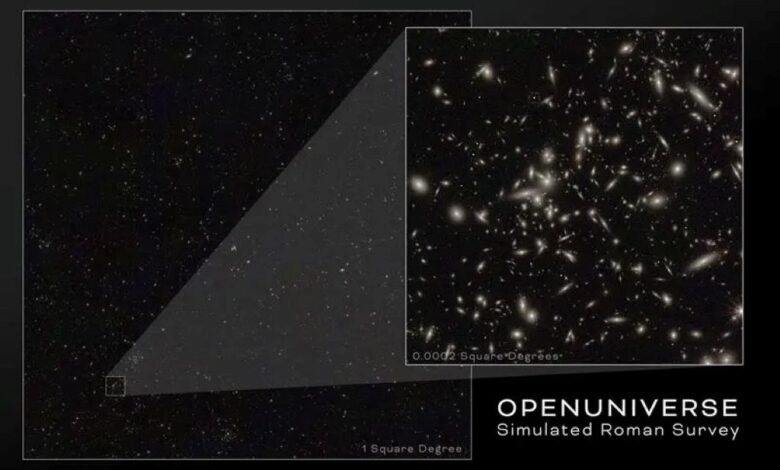
Astronomers have released a set of more than a million simulated images showcasing the cosmos as NASA’s upcoming Nancy Grace Roman Space Telescope will see it. This preview will help scientists explore a myriad of Roman’s science goals. “We used a supercomputer to create a synthetic universe and simulated billions of years of evolution, tracing every photon’s path all the…
Read More »