
NASA
-
NASA
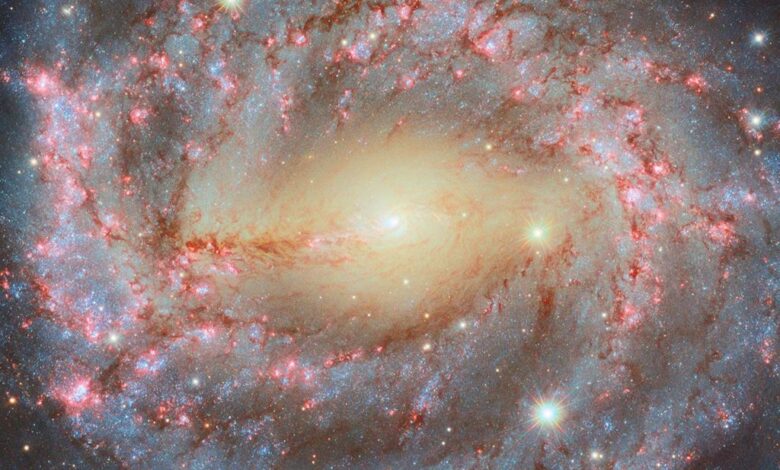
Hubble Images a Grand Spiral
This NASA/ESA Hubble Space Telescope image features the glorious spiral galaxy NGC 5643, which is located roughly 40 million light-years away in the constellation Lupus, the Wolf. NGC 5643 is a grand design spiral, which refers to the galaxy’s symmetrical form with two large, winding spiral arms that are clearly visible. Bright-blue stars define the galaxy’s spiral arms, along with lacy reddish-brown…
Read More » -
NASA
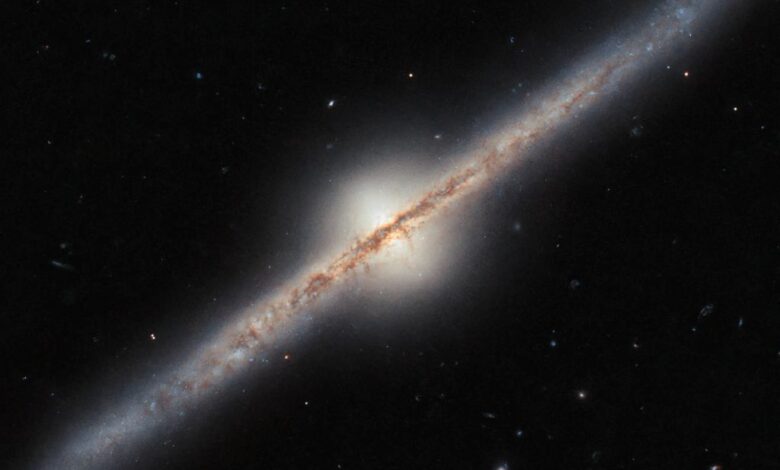
Hubble Captures an Edge-On Spiral with Curve Appeal
This NASA/ESA Hubble Space Telescope image features a spiral galaxy, named UGC 10043. We don’t see the galaxy’s spiral arms because we are seeing it from the side. Located roughly 150 million light-years from Earth in the constellation Serpens, UGC 10043 is one of the somewhat rare spiral galaxies that we see edge-on. This edge-on viewpoint makes the galaxy’s disk appear as…
Read More » -
NASA

NASA’s Perseverance Rover Reaches Top of Jezero Crater Rim
The road ahead will be even more scientifically intriguing, and probably somewhat easier-going, now that the six-wheeler has completed its long climb to the top. NASA’s Perseverance Mars rover has crested the top of Jezero Crater’s rim at a location the science team calls “Lookout Hill” and rolling toward its first science stop after the monthslong climb. The rover made…
Read More » -
NASA
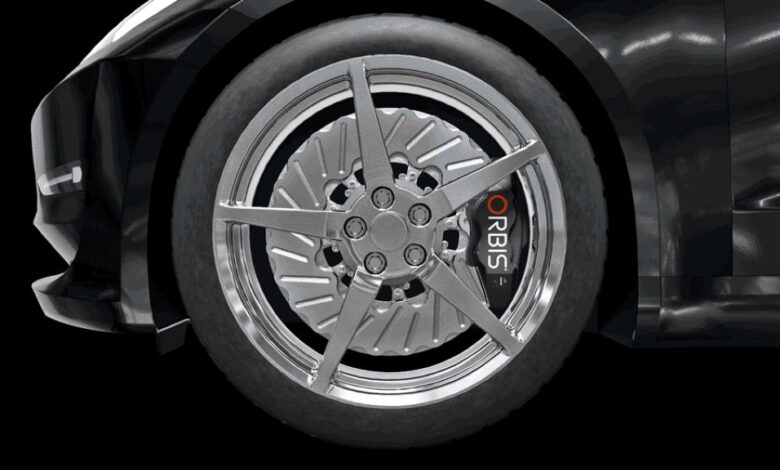
NASA Gives The World a Brake
Just as NASA needs to reduce mass on a spacecraft so it can escape Earth’s gravity, automotive manufacturers work to reduce weight to improve vehicle performance. In the case of brake rotors, lighter is better for a vehicle’s acceleration, reliable stopping, and even gas mileage. Orbis Brakes Inc. licensed a NASA-patented technology to accomplish that and more. This revolutionary brake…
Read More » -
NASA

Key Considerations When Developing Avionics for Safety-Critical Systems
This article is from the 2024 Technical Update. Multiple human spaceflight programs are underway at NASA including Orion, Space Launch System, Gateway, Human Landing System, and EVA and Lunar Surface Mobility programs. Achieving success in these programs requires NASA to collaborate with a variety of commercial partners, including both new spaceflight companies and robotic spaceflight companies pursuing crewed spaceflight for…
Read More » -
NASA
6DOF Check Cases
This article is from the 2024 Technical Update. In 2015, the NESC released benchmark Earth-based check-cases for well specified, rigid-body, six-degree-of-freedom (6DOF) aero/spacecraft models to promote consistent and accurate flight simulations across multiple Agency tools and facilities. Recently, the NESC expanded upon that effort to add Lunar-based check-cases to support new lunar exploration initiatives. This study produced a smaller, focused…
Read More » -
NASA

Sols 4391-4392: Rounding the Bend
Earth planning date: Wednesday, Dec. 11, 2024 For planning today, we have a beautiful view of the northern tip of Texoli, as seen in the image foreground. Unfortunately, the rocks that make the view so pretty also made it unsafe to unstow the arm for contact science. Instead we are doing a lot of imaging and a drive. Our primary…
Read More » -
NASA
Material Compatibility of Common Aerospace Metals in MMH/MON-3
This article is from the 2024 Technical Update. The NESC evaluated material compatibility of some common aerospace metals in monomethylhydrazine (MMH) and nitrogen tetroxide (MON-3). Previous work had identified a lack of quantitative compatibility data for nickel alloy 718, 300 series stainless steel, and titanium Ti-6Al-4V in MMH and MON-3 to support the use of zero-failure-tolerant, thin-walled pressure barriers in…
Read More » -
NASA
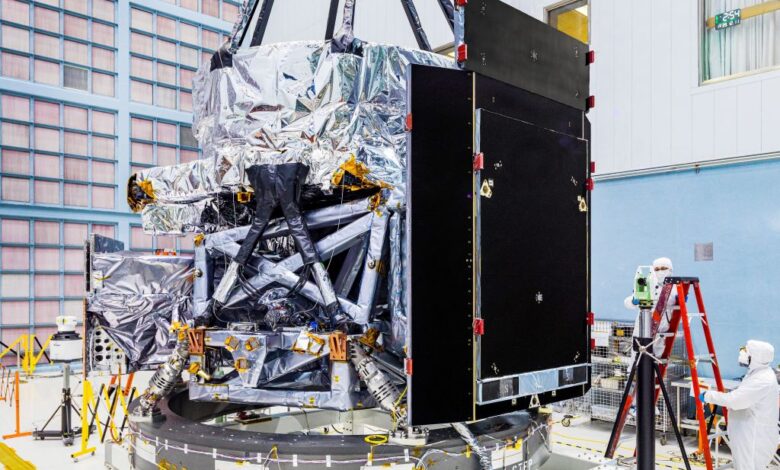
Considerations for Using Autonomous Flight Termination Software in Crewed Launch Vehicles
This article is from the 2024 Technical Update Autonomous flight termination systems (AFTS) are being progressively employed onboard launch vehicles to replace ground personnel and infrastructure needed to terminate flight or destruct the vehicle should an anomaly occur. This automation uses on-board real-time data and encoded logic to determine if the flight should be self-terminated. For uncrewed launch vehicles, FTS…
Read More » -
NASA
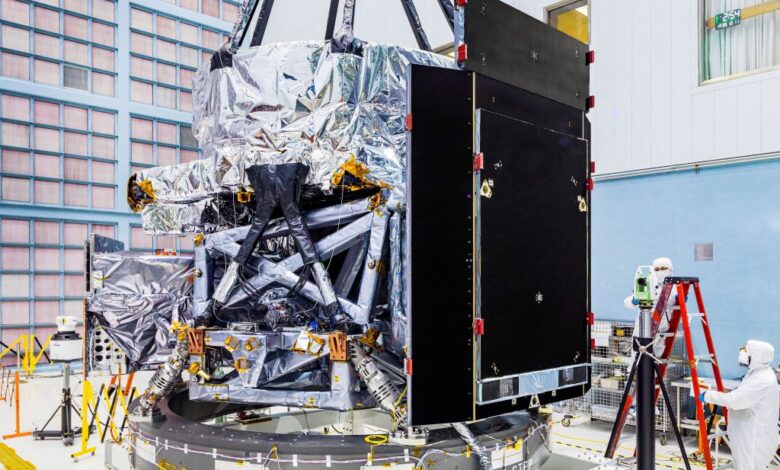
NASA Successfully Integrates Roman Mission’s Telescope, Instruments
NASA’s Nancy Grace Roman Space Telescope team has successfully integrated the mission’s telescope and two instruments onto the instrument carrier, marking the completion of the Roman payload. Now the team at NASA’s Goddard Space Flight Center in Greenbelt, Maryland, will begin joining the payload to the spacecraft. “We’re in the middle of an exciting stage of mission preparation,” said Jody…
Read More »