
NASA
-
NASA

Texas A&M Breaks Ground at NASA Johnson for Giant Leap in Space Innovation
The future of human space exploration took a bold step forward at NASA’s Johnson Space Center in Houston on Nov. 15, 2024, as Texas A&M University leaders’ broke ground for the Texas A&M University Space Institute. Texas state officials, NASA leaders, and distinguished guests participated in the ceremony, held near the future development site of Johnson’s new Exploration Park, marking…
Read More » -
NASA
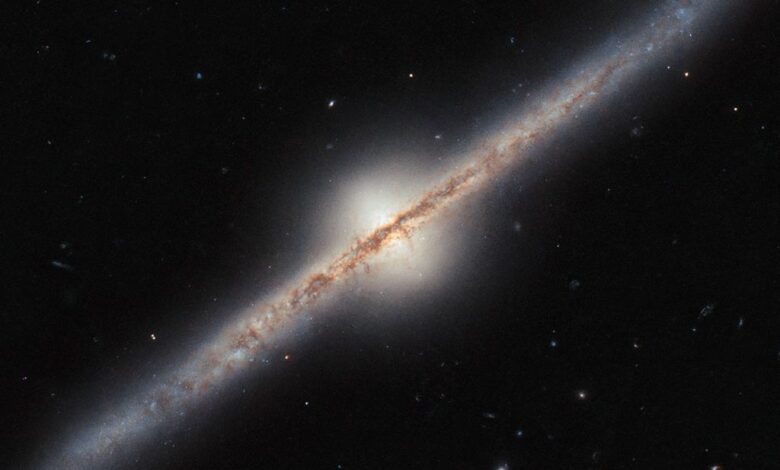
Hubble Captures an Edge-On Spiral with Curve Appeal
Download this image This NASA/ESA Hubble Space Telescope image features a spiral galaxy, named UGC 10043. We don’t see the galaxy’s spiral arms because we are seeing it from the side. Located roughly 150 million light-years from Earth in the constellation Serpens, UGC 10043 is one of the somewhat rare spiral galaxies that we see edge-on. This edge-on viewpoint makes the galaxy’s…
Read More » -
NASA
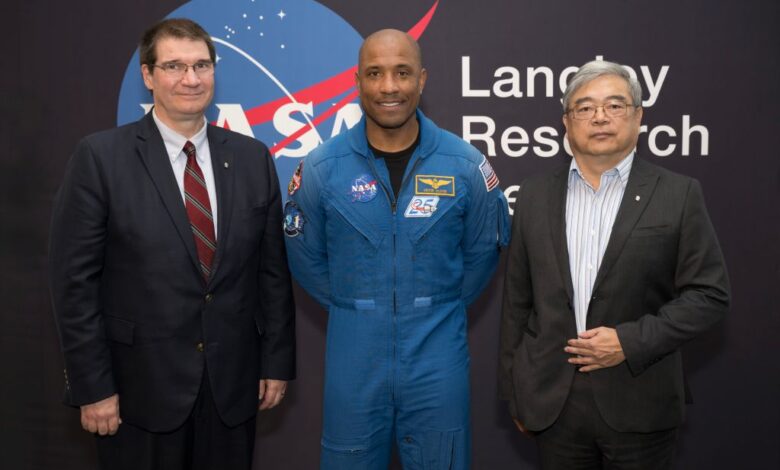
NASA Langley Employees Earn Silver Snoopy Awards
Two employees from NASA’s Langley Research Center in Hampton, Virginia recently earned the prestigious Silver Snoopy award, an honor given to NASA employees and contractors across the agency for outstanding achievements related to astronaut safety or mission success. Dr. Shih-Yung Lin and Dr. Peter Parker received the awards during a Space Flight Awareness (SFA) award ceremony at Langley on Nov.…
Read More » -
NASA

NASA Awards Test Operations Contract
NASA has selected Sierra Lobo, Inc. of Fremont, Ohio, to provide for test operations, test support, and technical system maintenance activities at NASA’s Stennis Space Center near Bay St. Louis, Mississippi. The NASA Stennis Test Operations Contract is fixed-price, level-of-effort contract that has a value of approximately $47 million. The performance period begins July 1, 2025, and extends three years,…
Read More » -
NASA
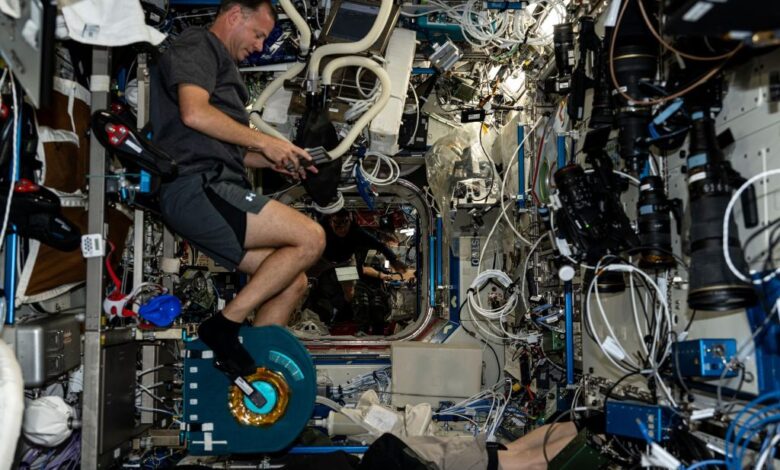
FAQ: The Real Story About Astronaut Health Care in Space
Lee esta historia en español aquí. The International Space Station is humanity’s home in space and a research station orbiting about 250 miles above the Earth. NASA and its international partners have maintained a continuous human presence aboard the space station for more than 24 years, conducting research that is not possible on Earth. The people living and working aboard the…
Read More » -
NASA
Ready, Set, Action! Our Sun is the Star in Dazzling Simulation
NASA supercomputers are shedding light on what causes some of the Sun’s most complex behaviors. Using data from the suite of active Sun-watching spacecraft currently observing the star at the heart of our solar system, researchers can explore solar dynamics like never before. The animation shows the strength of the turbulent motions of the Sun’s inner layers as materials twist into its…
Read More » -
NASA
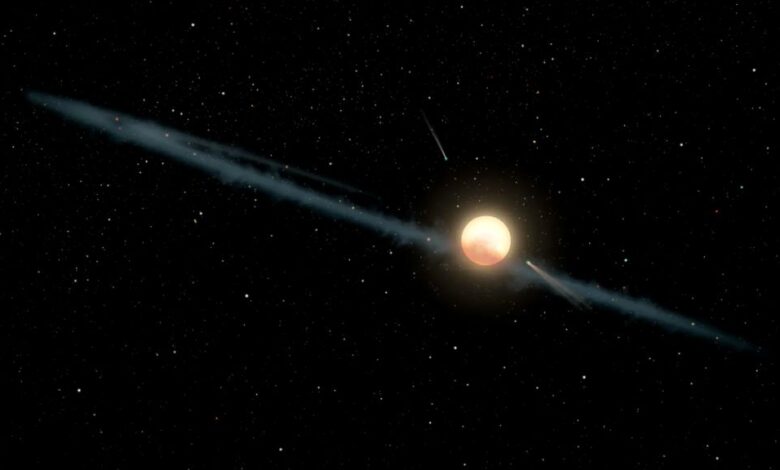
Ring Around Tabby’s Star
This Oct. 4, 2017, illustration shows a hypothetical uneven ring of dust orbiting KIC 8462852, also known as Boyajian’s Star or Tabby’s Star. The star has experienced unusual dips in brightness over a matter of days, as well as much subtler but longer-term dimming trends. Scientists proposed several explanations for this unexpected behavior, ranging from Tabby’s Star swallowing a planet…
Read More » -
NASA
Deformable Crumpled Nano-ball Coatings with Adaptable Adhesion and Mechanical Energy Absorption for Lunar Dust Mitigation
ESI24 Nam Quadchart SungWoo NamUniversity of California, Irvine Lunar dust may seem unimposing, but it presents a significant challenge for space missions. Its abrasive and jagged particles can damage equipment, clog devices, and even pose health risks to astronauts. This project addresses such issues by developing advanced coatings composed of crumpled nano-balls made from atomically thin 2D materials such as MoS₂,…
Read More » -
NASA
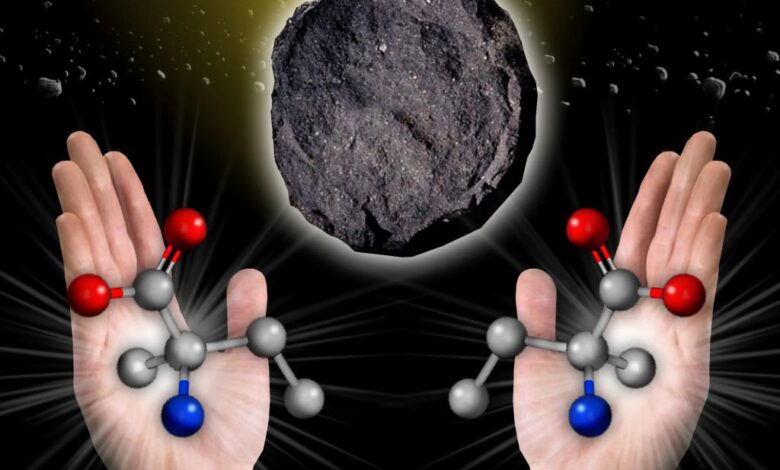
NASA: Mystery of Life’s Handedness Deepens
The mystery of why life uses molecules with specific orientations has deepened with a NASA-funded discovery that RNA — a key molecule thought to have potentially held the instructions for life before DNA emerged — can favor making the building blocks of proteins in either the left-hand or the right-hand orientation. Resolving this mystery could provide clues to the origin…
Read More » -
NASA
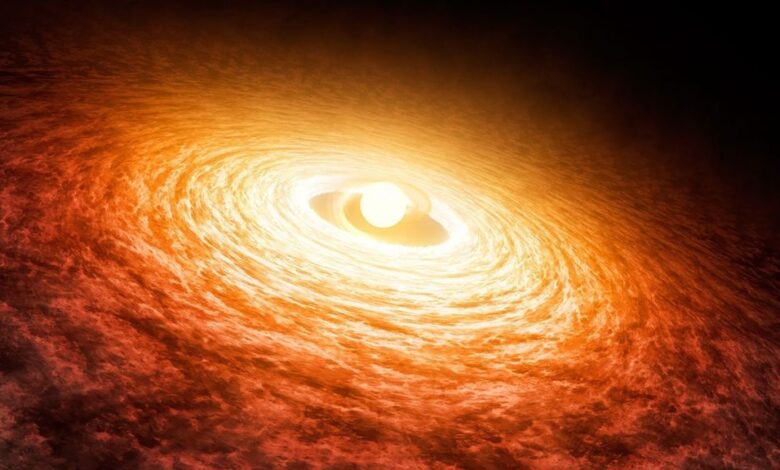
NASA’s Hubble Finds Sizzling Details About Young Star FU Orionis
In 1936, astronomers saw a puzzling event in the constellation Orion: the young star FU Orionis (FU Ori) became a hundred times brighter in a matter of months. At its peak, FU Ori was intrinsically 100 times brighter than our Sun. Unlike an exploding star though, it has declined in luminosity only languidly since then. Now, a team of astronomers…
Read More »