
NASA
-
NASA

Weld-ASSIST: Weldability Assessment for In-Space Conditions using a Digital Twin
ESI24 Haghighi Quadchart Azadeh HaghighiUniversity of Illinois, Chicago In-space manufacturing and assembly are vital to NASA’s long-term exploration goals, especially for the Moon and Mars missions. Deploying welding technology in space enables the assembly and repair of structures, reducing logistical burdens and supply needs from Earth. The unique challenges and extreme conditions of space–high thermal variations, microgravity, and vacuum–require advanced welding…
Read More » -
NASA
Engineering the Adhesion Mechanisms of Hierarchical Dust-Mitigating Nanostructures
ESI24 Chang Quadchart Chih-Hao ChangUniversity of Texas at Austin Establishing a permanent base on the moon is a critical step in the exploration of deep space. One significant challenge observed during the Apollo missions was the adhesion of lunar dust, which can build up on vehicle, equipment, and space suit. Highly fine and abrasive, the dust particles can have adverse mechanical,…
Read More » -
NASA
Integrated Computational Materials Modelling Framework for Investigating the Process-Structure-Property Linkage of the Lunar Metal Welding with Internal Defects
ESI24 Li Quadchart Wei LiUniversity of Texas at Dallas Internal defects are always formed in laser welding process due to the keyhole instability, molten pool collapse, and rapid solidification. The extreme lunar environment complicates the reliable implementation of welding, thereby enhancing the welding defects formation. The welding defects are critical material barriers preventing the metal components from Moon exploration. Professor Wei…
Read More » -
NASA
Studying Passive Dust Mitigation on Anisotropic Structured Surface
ESI24 Zhai Quadchart Lei ZhaiUniversity of Central Florida Lunar dust, with its chemical reactivity, electrostatic charge, and potential magnetism, poses a serious threat to astronauts and equipment on the Moon’s surface. To address this, the project proposes developing structured coatings with anisotropic surface features and electrostatic dissipative properties to passively mitigate lunar dust. By analyzing lunar dust-surface interactions at multiple scales,…
Read More » -
NASA
Developing High-Performance Bioinspired Surface Textures for Repelling Lunar Dust
ESI24 Zou Quadchart Min ZouUniversity of Arkansas, Fayetteville Lunar dust, with its highly abrasive and electrostatic properties, poses serious threats to the longevity and functionality of spacecraft, habitats, and equipment operating on the Moon. This project aims to develop advanced bioinspired surface textures that effectively repel lunar dust, targeting critical surfaces such as habitat exteriors, doors, and windows. By designing…
Read More » -
NASA

Sols 4368-4369: The Colors of Fall – and Mars
Earth planning date: Monday, Nov. 18, 2024 I am in the U.K., where we are approaching the time when trees are just branches and twigs. One tree that still has its full foliage is my little quince tree in my front garden. Its leaves have turned reddish-brown with a hint of orange, fairly dark by now, and when I passed…
Read More » -
NASA
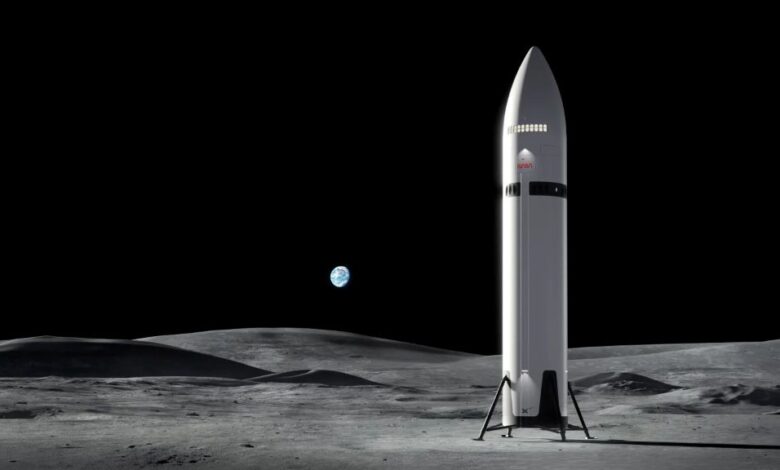
NASA, SpaceX Illustrate Key Moments of Artemis Lunar Lander Mission
NASA is working with U.S. industry to develop the human landing systems that will safely carry astronauts from lunar orbit to the surface of the Moon and back throughout the agency’s Artemis campaign. For Artemis III, the first crewed return to the lunar surface in over 50 years, NASA is working with SpaceX to develop the company’s Starship Human Landing System (HLS). Newly…
Read More » -
NASA
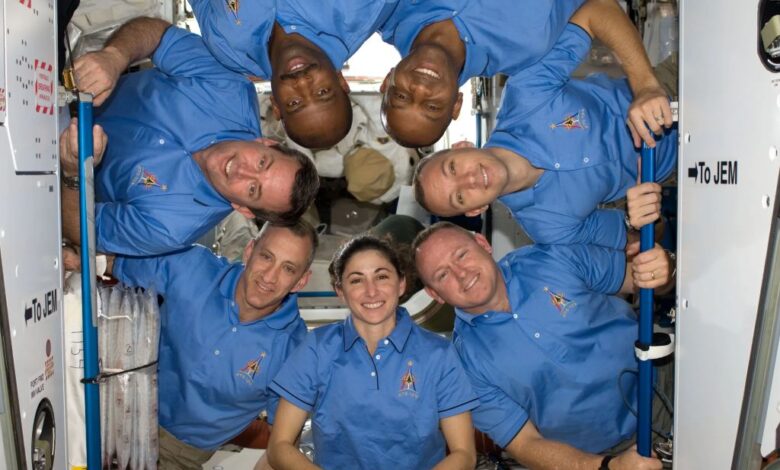
STS-129 Crew Aboard the Space Station
The STS-129 crew members pose for a portrait following a joint news conference with the Expedition 21 crew members on Nov. 24, 2009. Astronauts Charles O. Hobaugh, Mike Foreman, Leland Melvin, Robert L. Satcher Jr., Randy Bresnik, Butch Wilmore, and Nicole Stott launched from NASA’s Kennedy Space Center in Florida on Nov. 16, 2009, aboard the space shuttle Atlantis. Traveling with them…
Read More » -
NASA
Media Invited to Learn About NASA, GE Aerospace Contrails Flight Tests
Media are invited to learn about a unique series of flight tests happening in Virginia in partnership between NASA and GE Aerospace that aim to help the aviation industry better understand contrails and their impact on the Earth’s climate. Contrails are the lines of clouds that can be created by high-flying aircraft, but they may have an unseen effect on…
Read More » -
NASA
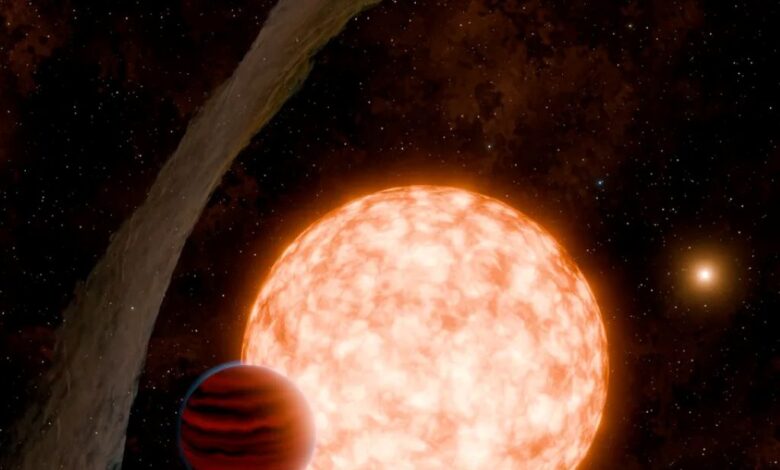
Discovery Alert: A Rare Glimpse of a Newborn Planet
The Discovery A huge planet with a long name – IRAS 04125+2902 b – is really just a baby: only 3 million years old. And because such infant worlds are usually hidden inside obscuring disks of debris, it is the youngest planet so far discovered using the dominant method of planet detection. Key Facts The massive planet, likely still glowing…
Read More »