
NASA
-
NASA
Six Ways Supercomputing Advances Our Understanding of the Universe
At NASA, high-end computing is essential for many agency missions. This technology helps us advance our understanding of the universe – from our planet to the farthest reaches of the cosmos. Supercomputers enable projects across diverse research, such as making discoveries about the Sun’s activity that affects technologies in space and life on Earth, building artificial intelligence-based models for innovative…
Read More » -
NASA
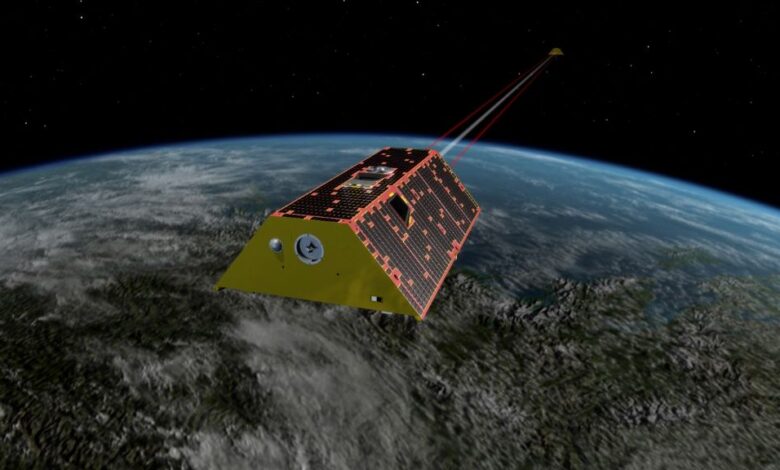
NASA Satellites Reveal Abrupt Drop in Global Freshwater Levels
An international team of scientists using observations from NASA-German satellites found evidence that Earth’s total amount of freshwater dropped abruptly starting in May 2014 and has remained low ever since. Reporting in Surveys in Geophysics, the researchers suggested the shift could indicate Earth’s continents have entered a persistently drier phase. From 2015 through 2023, satellite measurements showed that the average amount…
Read More » -
NASA
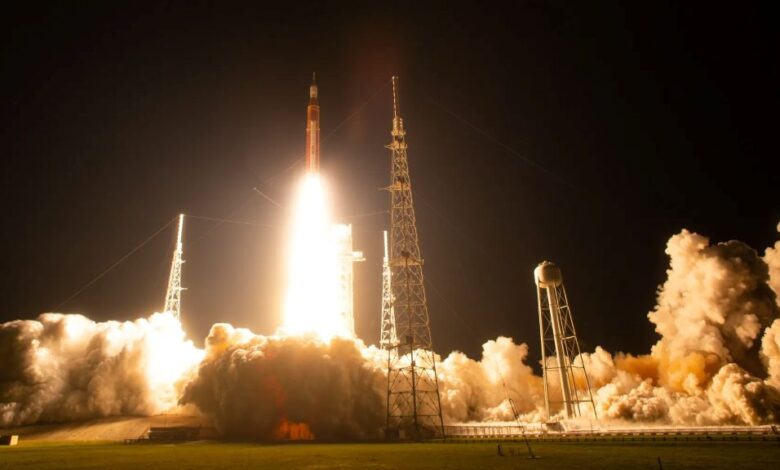
Two Years Ago: Artemis I Liftoff
In this photo, NASA’s SLS (Space Launch System) rocket, carrying the Orion spacecraft, lifts off the pad at Launch Complex 39B at the agency’s Kennedy Space Center in Florida at 1:47 a.m. EST on Nov. 16, 2022. Set on a path to the Moon, this officially began the Artemis I mission. Since the completion of Orion’s 25.5-day mission around the Moon…
Read More » -
NASA
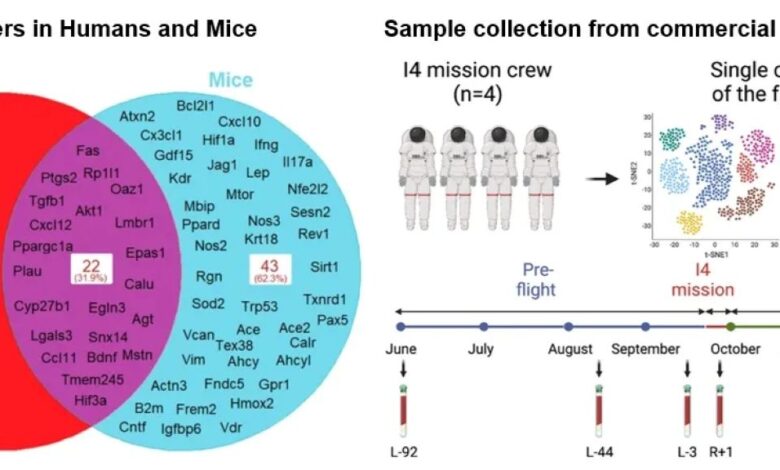
Aging and Fragility Biomarkers are Altered by Spaceflight
Spaceflight accelerates the symptoms of aging in astronaut bodies by inducing genomic instability, mitochondrial dysfunction, and increased inflammation. This is the first study to comprehensively examine biomarkers and pathways associated with spaceflight and terrestrial aging, frailty, and sarcopenia. Main Findings: Spaceflight induced notable changes in gene expression patterns related to frailty and muscle loss indicative of a frailty-like condition. Exposure…
Read More » -
NASA
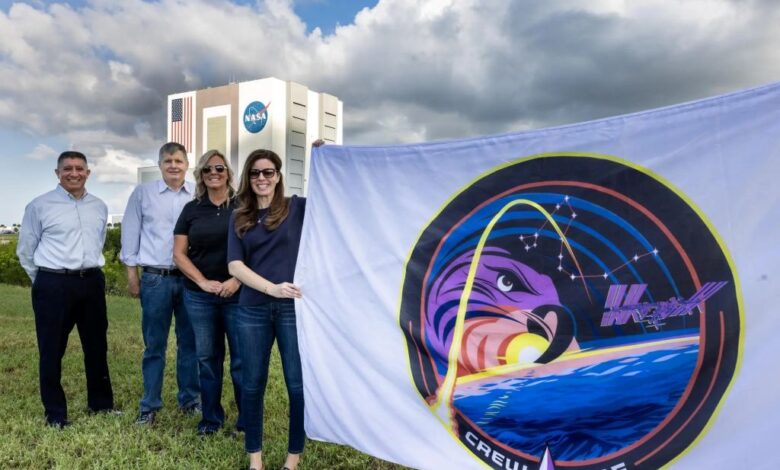
Meet the Space Ops Team: Diana Oglesby
Diana Oglesby’s love for NASA began long before she started working for the agency. A native of Decatur, Texas, Oglesby knew at the age of eight that she would make NASA her future destination. That dream became a reality when Oglesby joined the agency, first as an intern and later as a NASA full-time employee, marking the beginning of a…
Read More » -
NASA
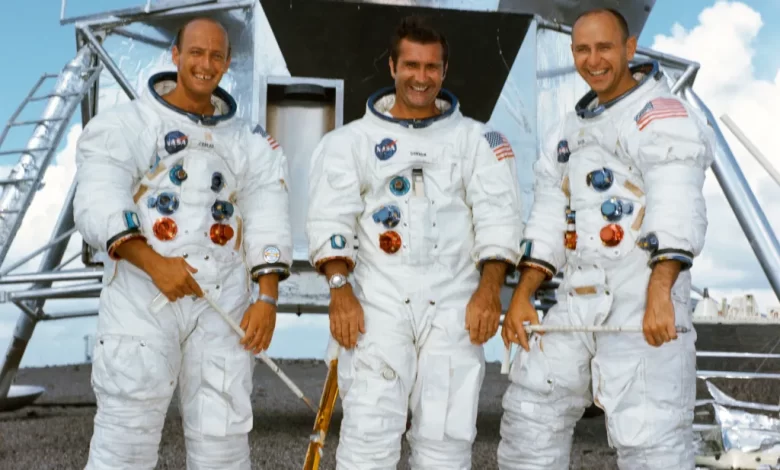
55 Years Ago: Apollo 12 Makes a Pinpoint Landing on the Moon
In November 1969, Apollo 12 astronauts Commander Charles “Pete” Conrad, Command Module Pilot (CMP) Richard F. Gordon, and Lunar Module Pilot (LMP) Alan L. Bean completed the second crewed lunar landing mission. Conrad and Bean achieved a pinpoint landing in the Ocean of Storms within walking distance of the Surveyor 3 spacecraft that landed there in April 1967. While Gordon conducted science from lunar…
Read More » -
NASA
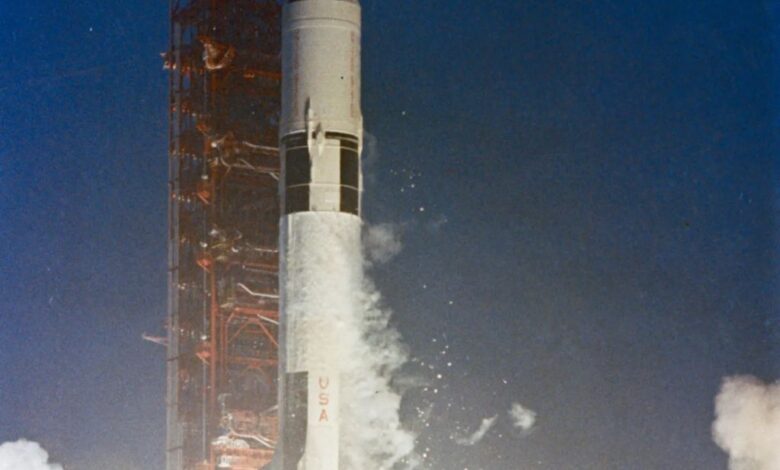
55 Years Ago: Apollo 12 Launches
The Apollo 12 spacecraft launches from NASA’s Kennedy Space Center in Florida in this image from Nov. 14, 1969, with astronauts Charles Conrad Jr., Richard F. Gordon Jr., and Alan L. Bean aboard. During liftoff, the Saturn V rocket which carried the Apollo capsule was struck twice by lightning. On Nov. 19, 1969, the lunar module landed on the Moon.…
Read More » -
NASA
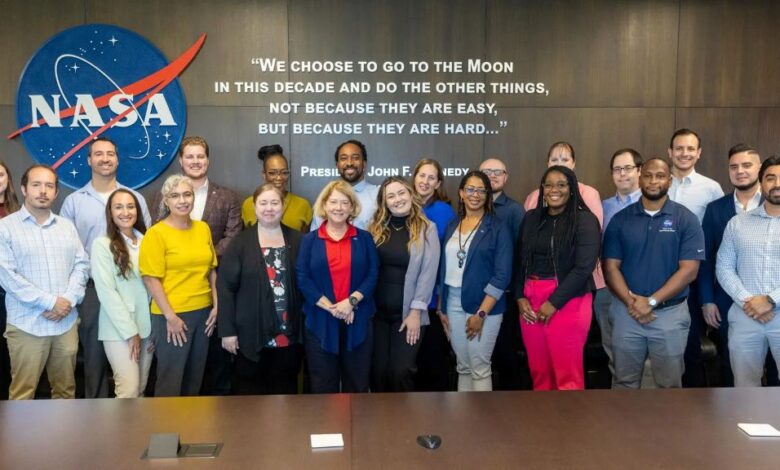
NASA Leadership Hosts Future-Focused Dialogues with Kennedy Employees
NASA Deputy Administrator Pam Melroy (front center left) discusses NASA 2040 on Wednesday, Nov. 13, 2024, the agency’s strategic initiative for aligning workforce, infrastructure, and technologies to meet the needs of the future with various groups of employees at the agency’s Kennedy Space Center in Florida. The initiative launched in June 2023 to implement meaningful changes to ensure the agency remains…
Read More » -
NASA
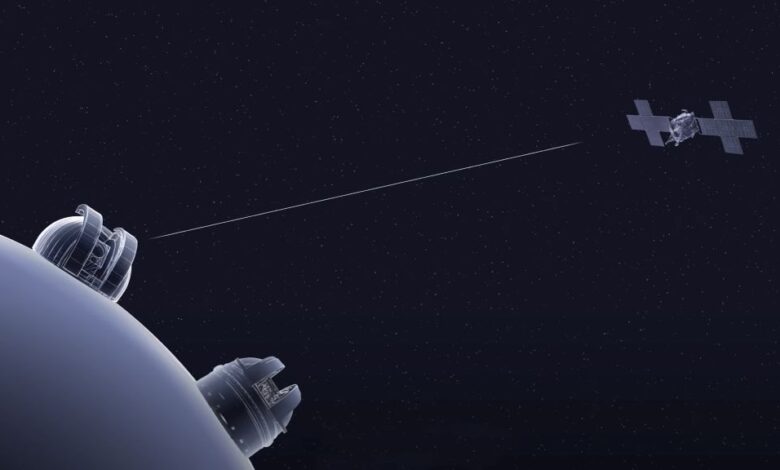
Precision Pointing Goes the Distance on NASA Experiment
One year ago today, the future of space communications arrived at Earth as a beam of light from a NASA spacecraft nearly 10 million miles away. That’s 40 times farther than our Moon. That’s like using a laser pointer to track a moving dime from a mile away. That’s pretty precise. That laser — transmitted from NASA’s DSOC (Deep Space Optical Communications)…
Read More » -
NASA
South Pole Safety: Designing the NASA Lunar Rescue System
In the unforgiving lunar environment, the possibility of an astronaut crewmember becoming incapacitated due to unforeseen circumstances (injury, medical emergency, or a mission-related accident) is a critical concern, starting with the upcoming Artemis III mission, where two astronaut crewmembers will explore the Lunar South Pole. The Moon’s surface is littered with rocks ranging from 0.15 to 20 meters in diameter…
Read More »