
NASA
-
NASA
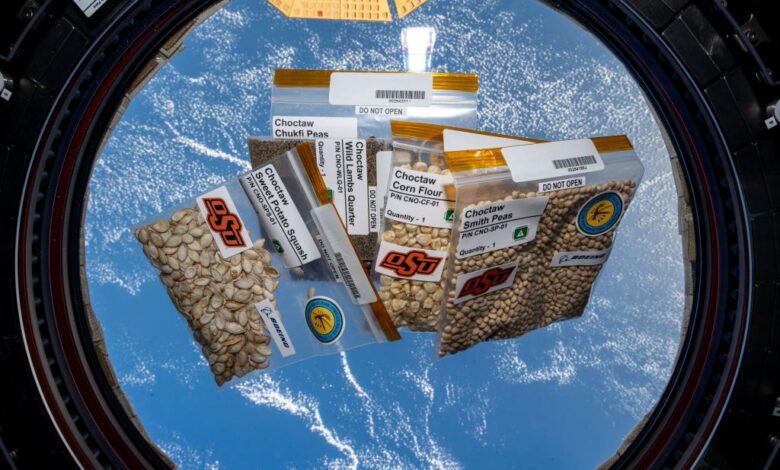
Native American Seeds Flown Aboard Space Station
The Choctaw Heirloom Seeds investigation flew five varieties of heirloom seeds from the Choctaw Nation of Oklahoma aboard the International Space Station in early November 2023. The seeds are Isito (Choctaw Sweet Potato Squash), Tobi (Smith Peas), Tanchi Tohbi (Flour Corn), Tvnishi (Lambsquarter), and Chukfi Peas. The seeds spent six months aboard station, returning to Earth in April 2024. Next spring, Jones…
Read More » -
NASA

NASA Funds New Studies Looking at Future of Sustainable Aircraft
Picture yourself at an airport a few decades from now. What does your airliner look like? It’s more efficient, with lower emissions than today’s aircraft – what kinds of designs or technology make that possible? NASA is working to answer those questions by commissioning five new design studies looking to push the boundaries of possibility for sustainable aircraft. Through NASA’s…
Read More » -
NASA
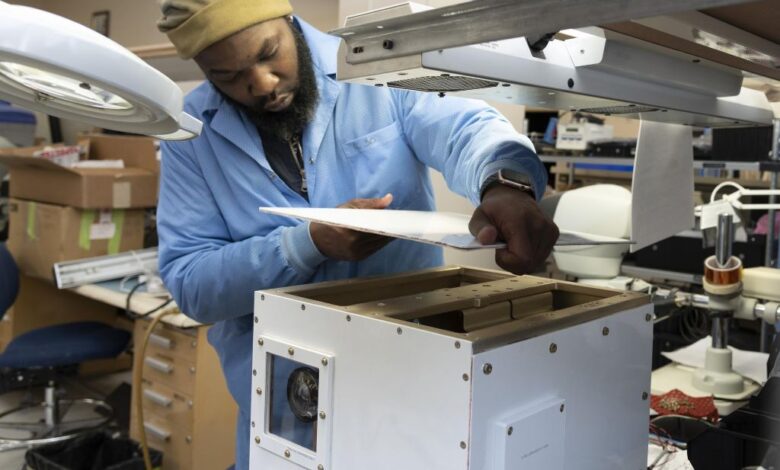
NASA Armstrong Builds Sensor Pod for Autonomous Flight
The design and build of a unique NASA pod, produced to advance computer vision for autonomous aviation, was recently completed in-house at NASA’s Armstrong Flight Research Center in Edwards, California, by using the center’s unique fabrication capabilities. The pod is called the NASA Airborne Instrumentation for Real-world Video of Urban Environments (AIRVUE). NASA Armstrong can take an idea from a drawing to flight…
Read More » -
NASA

NASA Johnson Director to Speak at Space Institute Groundbreaking
Nov. 12, 2024 Director Vanessa Wyche of NASA’s Johnson Space Center in Houston will join Texas A&M University leaders and guests Friday, Nov. 15, to break ground for the new Texas A&M University Space Institute. U.S. media interested in participating in person must contact the NASA Johnson newsroom no later than 5 p.m. Wednesday, Nov. 13, by calling 281-483-5111 or…
Read More » -
NASA
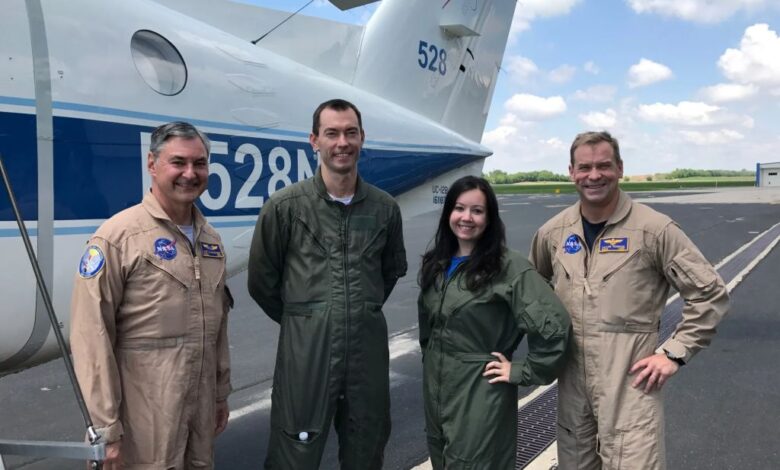
Matthew Kowalewski: Aerospace Engineer and Curious About Everything
Matthew Kowalewski describes himself as “curious about too many things,” but that curiosity comes in handy when engineering instrumentation scheduled to soar through the atmosphere of a moon of Saturn. Name: Matthew KowalewskiTitle: Dragonfly Mass Spectrometer (DraMS) Lead Instrument Systems EngineerFormal Job Classification: Aerospace EngineerOrganization: Instrument and Payload Systems Engineering Branch (Code 592) Matthew Kowalewski (second from left) is the…
Read More » -
NASA

Inia Soto Ramos, From the Mountains of Puerto Rico to Mountains of NASA Earth Data
Dr. Inia Soto Ramos became fascinated by the mysteries of the ocean while growing up in Puerto Rico’s mountains. Today, she works at NASA as an oceanographer and data manager, where she can uncover these enigmas from space. Name: Dr. Inia Soto RamosTitle and Formal Job Classification: Associate Research ScientistOrganization: Ocean Ecology Laboratory (Code 616) via Morgan State University and GESTAR…
Read More » -
NASA
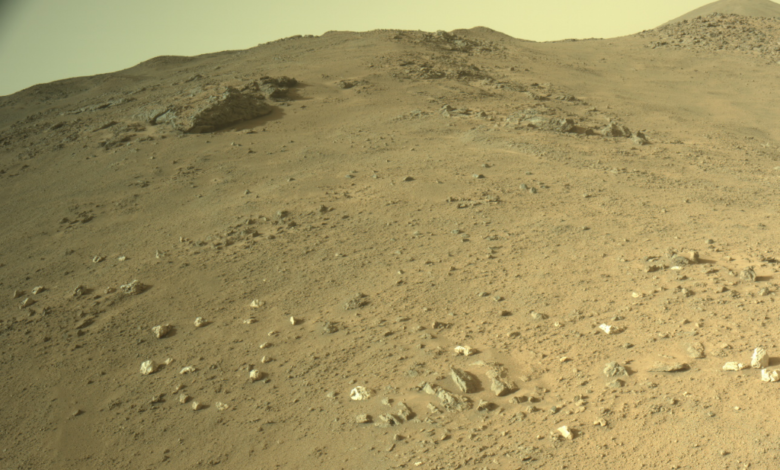
Peculiar Pale Pebbles
During its recent exploration of the crater rim, Perseverance diverted to explore a strange, scattered field of bright white rocks which sparked the interest of the team scientists. Perseverance has been climbing up the steep slopes of the Jezero crater rim for over two months now, and ever since approaching the edge of the crater has been spying increasingly diverse and strange-looking…
Read More » -
NASA
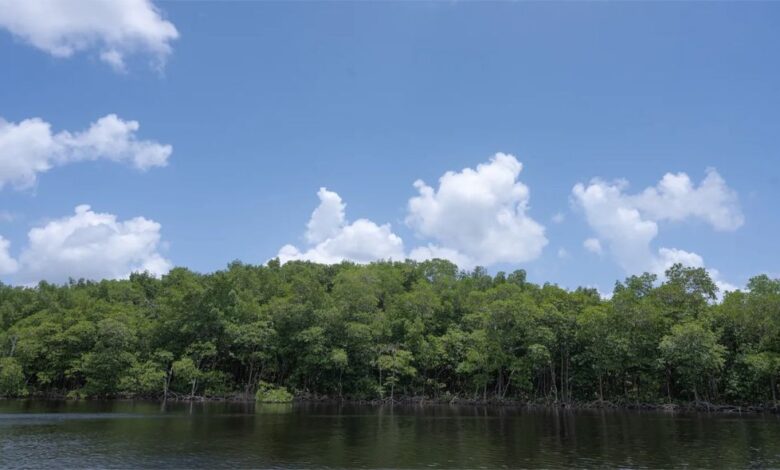
NASA’s BlueFlux Campaign Supports Blue Carbon Management in South Florida
Introduction Along the southernmost rim of the Florida Peninsula, the arching prop roots or “knees” of red mangroves (Rhizophora mangle) line the coast – see Photo 1. Where they dip below the water’s surface, fish lay their eggs, enjoying the protection from predators that the trees provide. Among their branches, wading birds, such as the great blue heron and the roseate spoonbill…
Read More » -
NASA
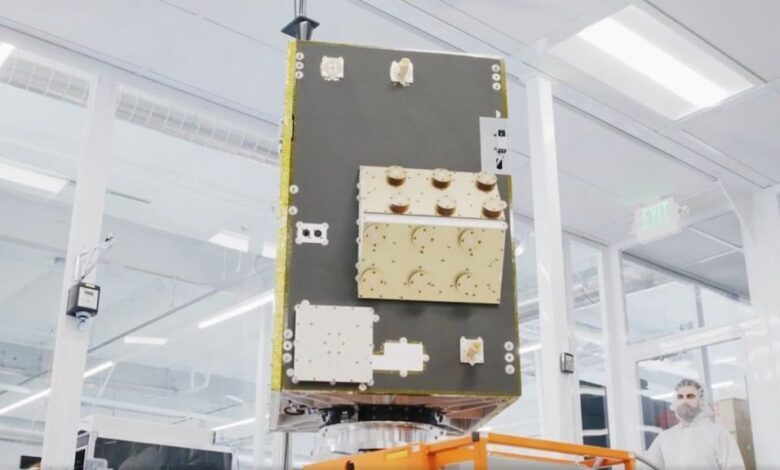
NASA-developed Technology Supports Ocean Wind Speed Measurements from Commercial Satellite
A science antenna developed with support from NASA’s Earth Science Technology Office (ESTO) is now in low-Earth orbit aboard MuSat2, a commercial remote-sensing satellite flown by the aerospace company Muon Space. The dual-frequency science antenna was originally developed as part of the Next Generation GNSS Bistatic Radar Instrument (NGRx). Aboard MuSat2, it will help measure ocean surface wind speed—an essential…
Read More » -
NASA
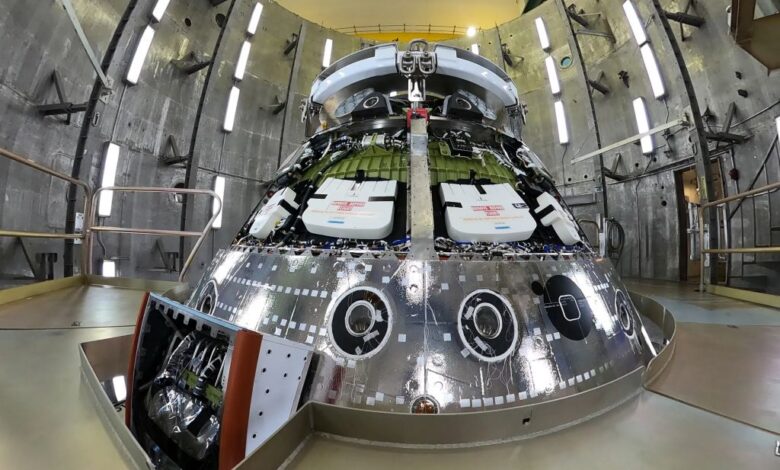
Artemis II Orion Spacecraft Undergoes Testing
Teams lifted NASA’s Orion spacecraft for the Artemis II test flight out of the Final Assembly and System Testing cell and moved it to the altitude chamber to complete further testing on Nov. 6 inside the Neil A. Armstrong Operations and Checkout building at NASA’s Kennedy Space Center in Florida. Engineers returned the spacecraft to the altitude chamber, which simulates…
Read More »