
NASA
-
NASA

Dust Storm Sweeps Over Mali
As summer winds down in West Africa, so does much of the region’s dust activity. Dust storms can still occur, though, as one did in early September 2026, when a plume covered parts of Mali and neighboring countries. The MODIS (Moderate Resolution Imaging Spectroradiometer) on NASA’s Terra satellite captured this image on September 5, 2026. According to Tianle Yuan, an atmospheric scientist…
Read More » -
NASA

NASA Adds Relativity Space’s Terran R to Launch Services Contract
A NASA Launch Services (NLS) II contract has been awarded by the agency to Relativity Space Inc., and its Terran R launch service in accordance with the contract’s on-ramp provision. The Terran R launch service will be available to NASA’s launch services to use for future missions. The NLS II contracts are multiple-award, indefinite-delivery/indefinite-quantity contracts with an ordering period through…
Read More » -
NASA

NASA’s Chandra Unveils Mysterious X-Ray Objects
Using NASA’s Chandra X-ray Observatory, scientists have discovered a new class of objects behaving unlike any they have seen before. Astronomers suggest these newly spotted objects in other galaxies may help solve not one, but two long-standing questions in astrophysics. These mysterious objects give off unusually low-energy X-rays but intense levels of ultraviolet radiation. This discovery is featured in a…
Read More » -
NASA

How 2 US, European Satellites Are Studying Hurricanes During El Niño
Last November, NASA and its European partners launched the Sentinel-6B satellite to improve hurricane forecasts, help protect infrastructure, and benefit commercial industries, including shipping. The satellite now is flying 30 seconds behind its predecessor, Sentinel-6 Michael Freilich. Both satellites are providing precise sea level height measurements during what oceanographers expect to be a historic El Niño, a naturally occurring oceanic…
Read More » -
NASA

Inversion Selected by NASA to Advance Aerocapture Technology for Future Interplanetary Missions
Inversion today announced it has received a contract from NASA to study the use of the company’s Arc spacecraft for an aerocapture demonstration, expanding the potential of Inversion’s advanced reentry technologies beyond Earth. Arc is a highly maneuverable reentry spacecraft being developed for the rapid delivery of cargo from space, hypersonic testing, and national security missions that require precise, controlled…
Read More » -
NASA
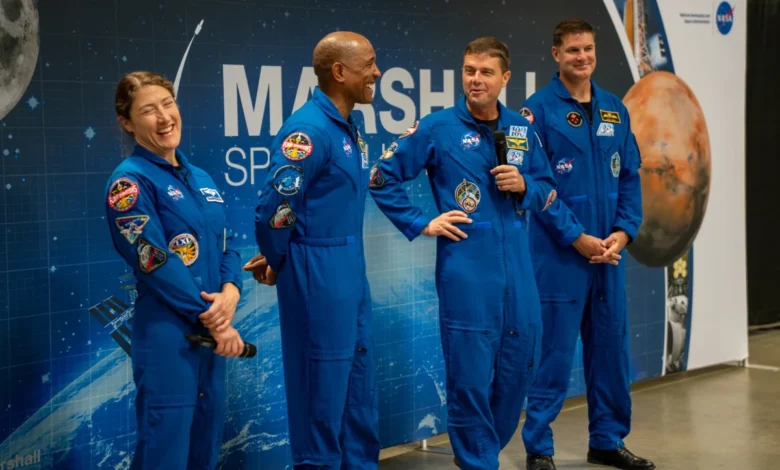
Artemis II Crew at NASA Marshall
The crew of NASA’s Artemis II mission – NASA astronauts Christina Koch, Victor Glover, and Reid Wiseman and CSA (Canadian Space Agency) astronaut Jeremy Hansen – visited Huntsville, Alabama, Sept. 1, 2026, where they met with the NASA workforce at NASA’s Marshall Space Flight Center. The event gave the crew an opportunity to share firsthand experiences from their mission, reflect…
Read More » -
NASA
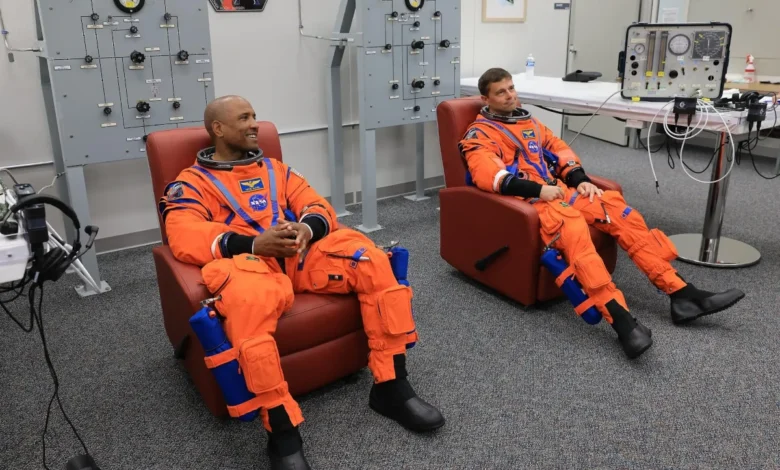
NASA Names Two Artemis II Astronauts to Emeritus Program
Following their landmark Artemis II mission earlier this year, distinguished NASA astronauts Victor Glover and Reid Wiseman are transitioning in September to emeritus status at the agency’s Johnson Space Center in Houston. In an emeritus role, individuals with a high degree of technical and professional knowledge can continue to support the agency by donating their time to train and mentor the current workforce. This…
Read More » -
NASA
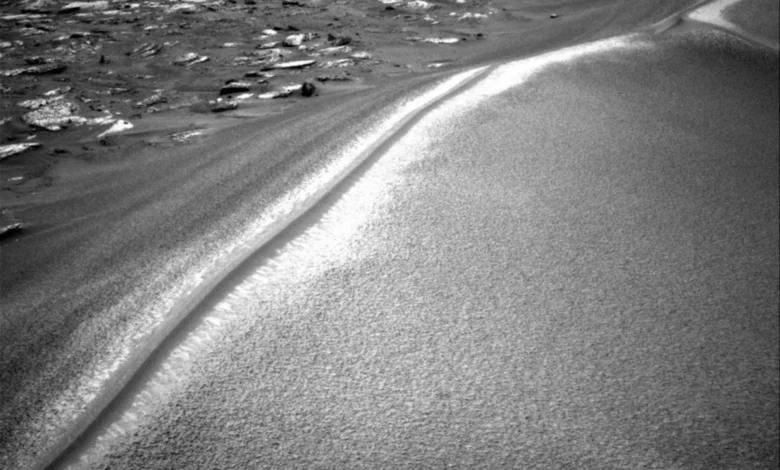
Curiosity Blog, Sols 4995-5001: 5,000 (Martian) Days on Mars
Written by William Farrand, Senior Research Scientist, Space Science Institute Earth planning date: Friday, Aug. 28, 2026 The span of sols spanned by this blog post is noteworthy in several ways. First, Curiosity became a world-class (for Mars at least) mountaineer by passing the 1 kilometer mark of elevation from its landing site on the floor of Gale crater. This writer was on…
Read More » -
NASA
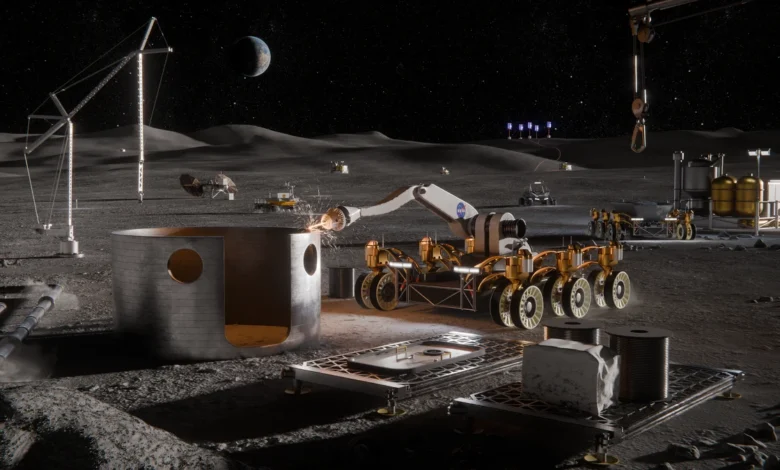
NASA Calls for Proposals to Accelerate Lunar Surface Technologies
NASA is seeking proposals to advance the technology and infrastructure needed to explore the Moon and establish a Moon Base in the lunar South Pole region. Announced on Tuesday, Sept. 8, the solicitation targets capability gaps, including power generation, oxygen extraction, and producing materials on the Moon required for construction and operations. These technologies are essential to making humanity’s next…
Read More » -
NASA
From the Corps to the Cosmos, featuring Jaden Caradine
Jaden Caradine knew he wanted to be an engineer at eight years old. He just took a winding road to get there. Before he enrolled at Embry-Riddle Aeronautical University, before he discovered the field that would become his focus, and before he landed a Pathways internship at NASA’s Langley Research Center in Hampton, Virginia, Caradine spent five years as a mechanic in…
Read More »