
Night Sky
-
NASA

Summer Triangle Corner: Vega
If you live in the Northern Hemisphere and look up during July evenings, you’ll see the brilliant star Vega shining overhead. Did you know that Vega is one of the most studied stars in our skies? As one of the brightest summer stars, Vega has fascinated astronomers for thousands of years.Vega is the brightest star in the small Greek constellation of Lyra,…
Read More » -
NASA
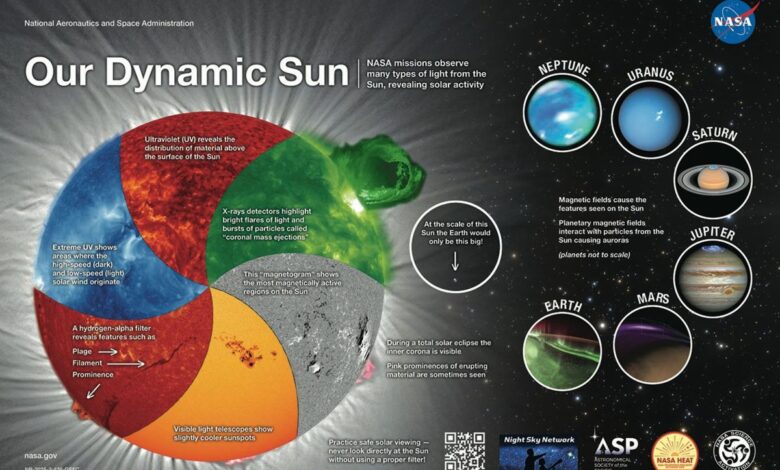
Explore Our Dynamic Sun!
from NASA’s Heliophysics Education Activation Team (NASA HEAT) and the Astronomical Society of the Pacific/Night Sky Network Have you ever wondered about what the Sun is made of? Or why do you get sunburned on even cloudy days? NASA’s new Explore the Sun toolkit brings the wonders of solar science to you, offering answers to these questions and more! Solar…
Read More » -
NASA

March’s Night Sky Notes: Messier Madness
What Are Messier Objects? During the 18th century, astronomer and comet hunter Charles Messier wanted to distinguish the ‘faint fuzzies’ he observed from any potential new comets. As a result, Messier cataloged 110 objects in the night sky, ranging from star clusters to galaxies to nebulae. These items are designated by the letter ‘M’ and a number. For example, the Orion Nebula is Messier 42 or M42,…
Read More » -
NASA

February’s Night Sky Notes: How Can You Help Curb Light Pollution?
Light pollution has long troubled astronomers, who generally shy away from deep sky observing under full Moon skies. The natural light from a bright Moon floods the sky and hides views of the Milky Way, dim galaxies and nebula, and shooting stars. In recent years, human-made light pollution has dramatically surpassed the interference of even a bright full Moon, and…
Read More » -
NASA
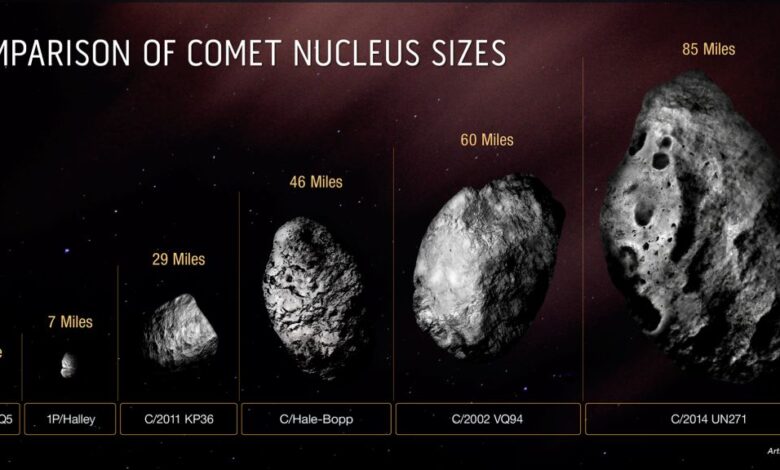
November’s Night Sky Notes: Snowballs from Space
by Kat Troche of the Astronomical Society of the Pacific If you spotted comet C/2023 A3 (Tsuchinshan-ATLAS) in person, or seen photos online this October, you might have been inspired to learn more about these visitors from the outer Solar System. Get ready for the next comet and find out how comets are connected to some of our favorite annual…
Read More » -
NASA
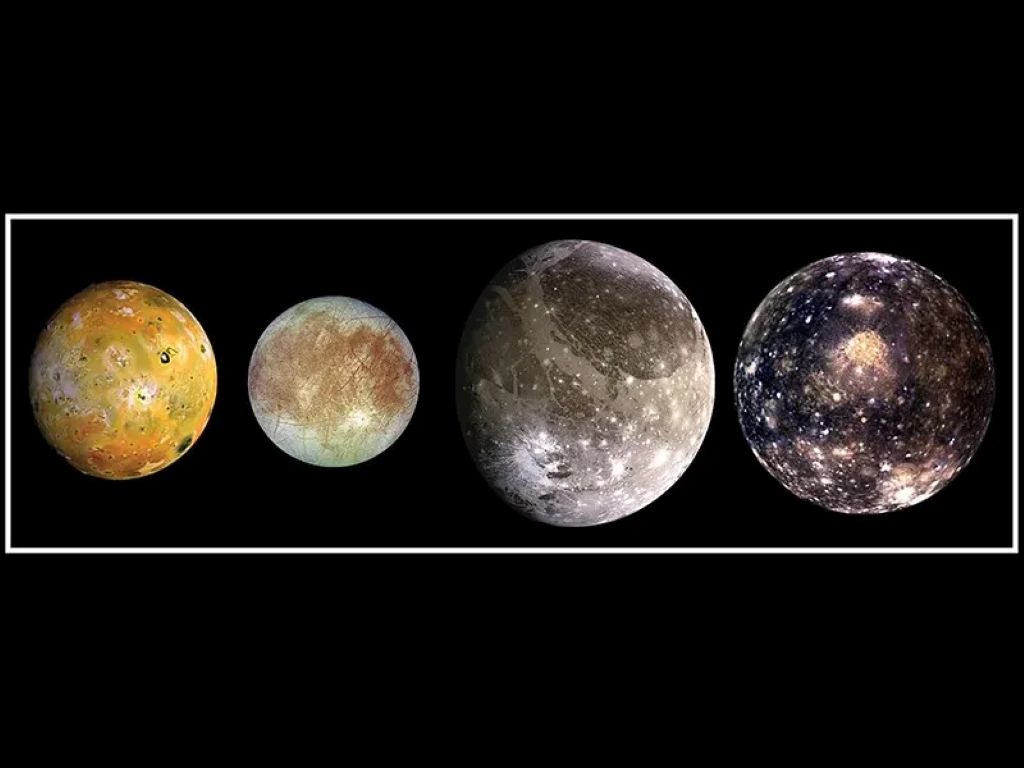
September’s Night Sky Notes: Marvelous Moons
by Kat Troche of the Astronomical Society of the Pacific September brings the gas giants Jupiter and Saturn back into view, along with their satellites. And while we organize celebrations to observe our own Moon this month, be sure to grab a telescope or binoculars to see other moons within our Solar System! We recommend observing these moons (and planets!)…
Read More » -
NASA
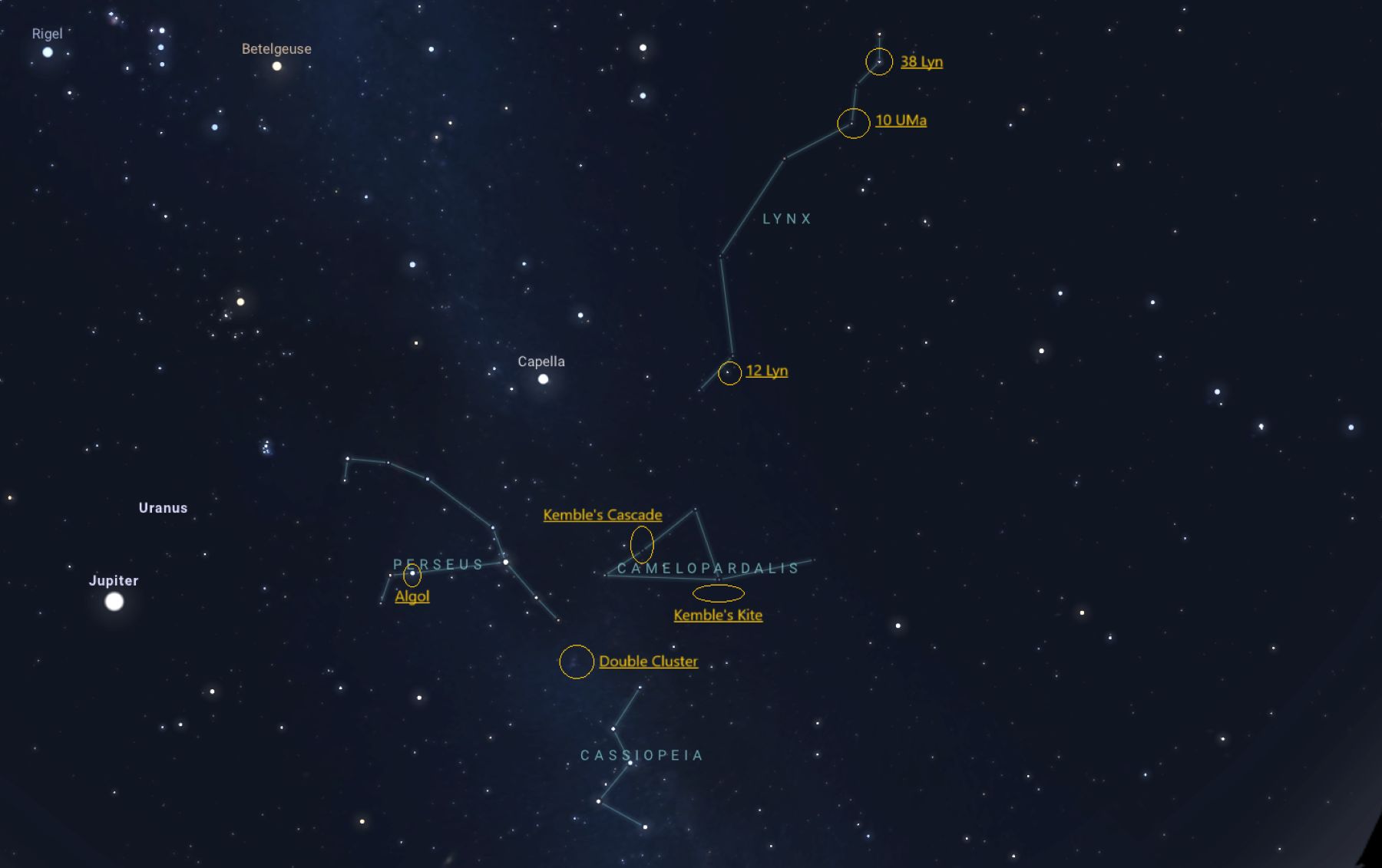
March’s Night Sky Notes: Constant Companions: Circumpolar Constellations, Part II
As the seasons shift from Winter to Spring, heralding in the promise of warmer weather here in the northern hemisphere, our circumpolar constellations remain the same. Depending on your latitude, you will be able to see up to nine circumpolar constellations. This month, we’ll focus on: Lynx, Camelopardalis, and Perseus. The objects within these constellations can all be spotted with a…
Read More » -
NASA
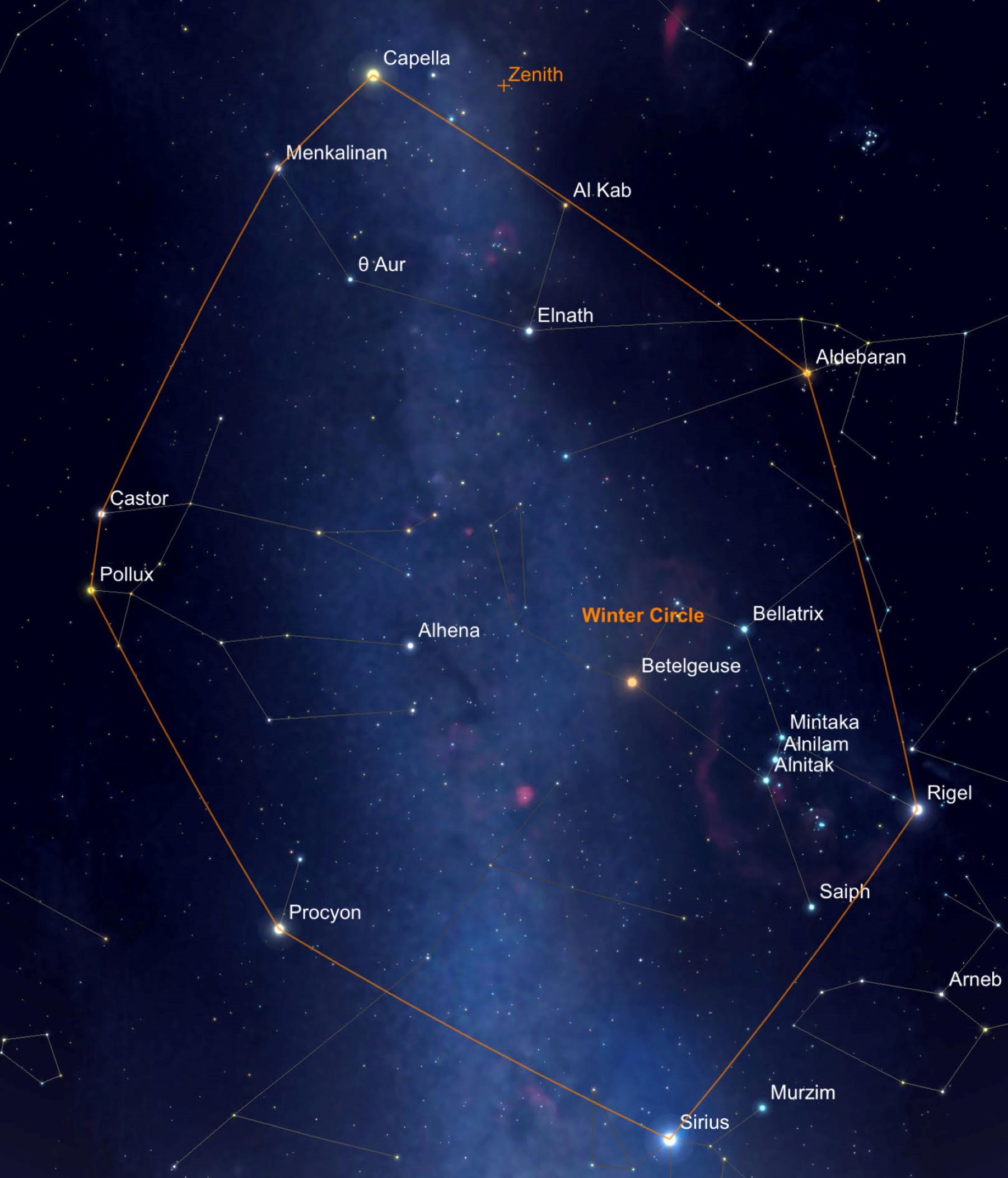
January’s Night Sky Notes: Connecting the ‘Dots’ with Asterisms
by Kat Troche of the Astronomical Society of the Pacific In our December Night Sky Notes, we mentioned that the Orion constellation has a distinct hourglass shape that makes it easy to spot in the night sky. But what if we told you that this is not the complete constellation, but rather, an asterism? An asterism is a pattern of stars in…
Read More » -
NASA

December’s Night Sky Notes: A Flame in the Sky – the Orion Nebula
by Kat Troche of the Astronomical Society of the Pacific It’s that time of year again: Winter! Here in the Northern Hemisphere, the clear, crisp sky offers spectacular views of various objects, the most famous of all being Orion the Hunter. As we’ve previously mentioned, Orion is a great way to test your sky darkness. With the naked eye, you can easily…
Read More »