
NIRCam
-
NASA
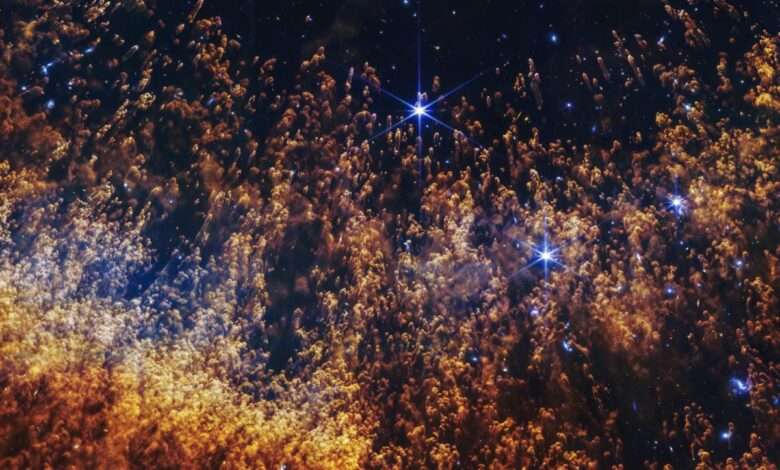
Webb Zooms into Helix Nebula
NASA’s James Webb Space Telescope has zoomed into the Helix Nebula to give an up-close view of the possible eventual fate of our own Sun and planetary system. In Webb’s high-resolution look, the structure of the gas being shed off by a dying star comes into full focus. The image reveals how stars recycle their material back into the cosmos,…
Read More » -
NASA
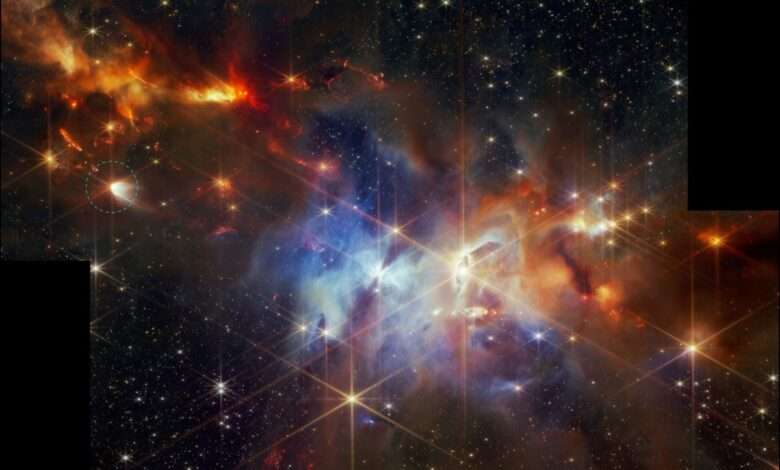
NASA’s James Webb Space Telescope Finds Crystal-Spewing Protostar
The NIRCam (Near-Infrared Camera) on NASA’s James Webb Space Telescope captured the actively forming protostar EC 53 (circled at left) in the Serpens Nebula in this image released on Jan. 21, 2026. Astronomers have long sought evidence to explain why comets at the outskirts of our own solar system contain crystalline silicates, since crystals require intense heat to form and these “dirty snowballs” spend…
Read More » -
NASA
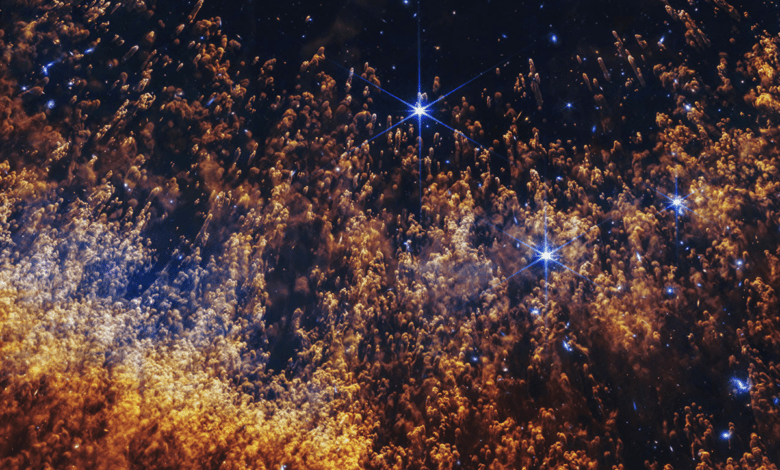
Intricacies of Helix Nebula Revealed With NASA’s Webb
NASA’s James Webb Space Telescope has zoomed into the Helix Nebula to give an up-close view of the possible eventual fate of our own Sun and planetary system. In Webb’s high-resolution look, the structure of the gas being shed off by a dying star comes into full focus. The image reveals how stars recycle their material back into the cosmos,…
Read More » -
NASA
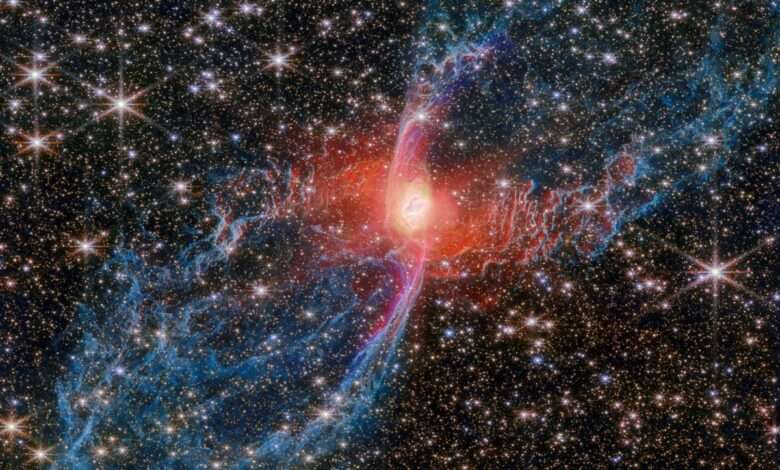
Red Spider Nebula
Using its Near-InfraRed Camera (NIRCam), NASA’s James Webb Space Telescope captured never-before-seen details of the Red Spider Nebula, a planetary nebula, in this image released on Oct. 26, 2025. NIRCam is Webb’s primary near-infrared imager, providing high-resolution imaging and spectroscopy for a wide variety of investigations. Webb’s new view of the Red Spider Nebula reveals for the first time the full extent of…
Read More » -
NASA
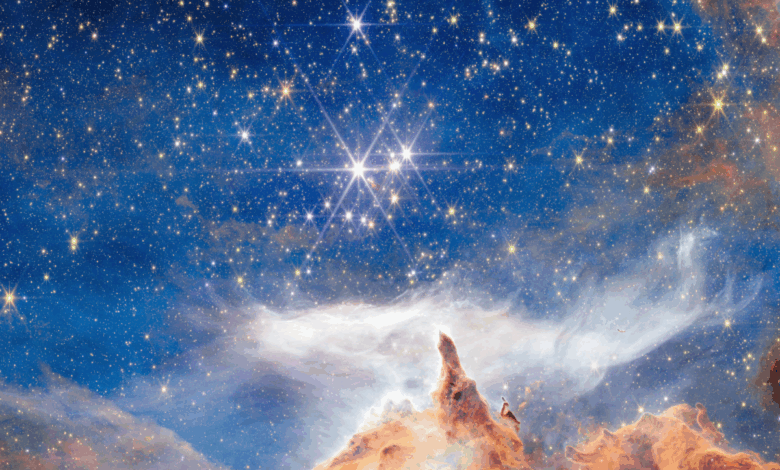
Shining Pismis 24
NASA’s James Webb Space Telescope captured this sparkling scene of star birth in an image released on Sept. 4, 2025. Called Pismis 24, this young star cluster resides in the core of the nearby Lobster Nebula, approximately 5,500 light-years from Earth in the constellation Scorpius. Home to a vibrant stellar nursery and one of the closest sites of massive star birth,…
Read More » -
NASA
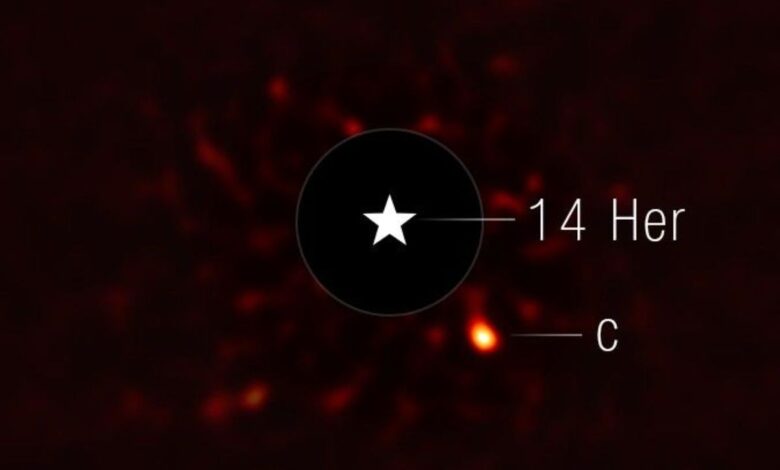
Frigid Exoplanet in Strange Orbit Imaged by NASA’s Webb
A planetary system described as abnormal, chaotic, and strange by researchers has come into clearer view with NASA’s James Webb Space Telescope. Using Webb’s NIRCam (Near-Infrared Camera), researchers have successfully imaged one of two known planets surrounding the star 14 Herculis, located 60 light-years away from Earth in our own Milky Way galaxy. The exoplanet, 14 Herculis c, is one…
Read More » -
NASA

Webb Sees Sombrero Galaxy in Near-Infrared
NASA’s James Webb Space Telescope recently imaged the Sombrero Galaxy with its NIRCam (Near-Infrared Camera), which shows dust from the galaxy’s outer ring blocking stellar light from stars within the galaxy. In the central region of the galaxy, the roughly 2,000 globular clusters, or collections of hundreds of thousands of old stars held together by gravity, glow in the near-infrared.…
Read More » -
NASA

NASA’s Webb Sees Galaxy Mysteriously Clearing Fog of Early Universe
Using the unique infrared sensitivity of NASA’s James Webb Space Telescope, researchers can examine ancient galaxies to probe secrets of the early universe. Now, an international team of astronomers has identified bright hydrogen emission from a galaxy in an unexpectedly early time in the universe’s history. The surprise finding is challenging researchers to explain how this light could have pierced…
Read More » -
NASA
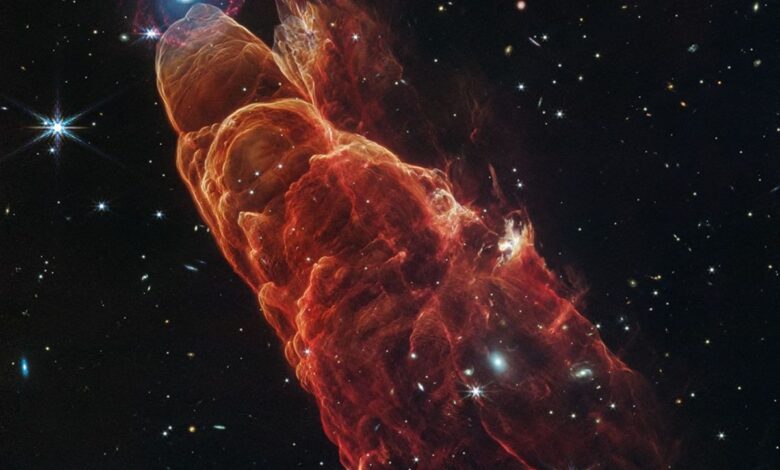
NASA’s Webb Telescope Unmasks True Nature of the Cosmic Tornado
Craving an ice cream sundae with a cherry on top? This random alignment of Herbig-Haro 49/50 — a frothy-looking outflow from a nearby protostar — with a multi-hued spiral galaxy may do the trick. This new composite image combining observations from NASA’s James Webb Space Telescope’s NIRCam (Near-Infrared Camera) and MIRI (Mid-Infrared Instrument) provides a high-resolution view to explore the…
Read More » -
NASA

NASA Webb Wows With Incredible Detail in Actively Forming Star System
High-resolution near-infrared light captured by NASA’s James Webb Space Telescope shows extraordinary new detail and structure in Lynds 483 (L483). Two actively forming stars are responsible for the shimmering ejections of gas and dust that gleam in orange, blue, and purple in this representative color image. Over tens of thousands of years, the central protostars have periodically ejected some of the gas…
Read More »