
Perseus Cluster
-
NASA
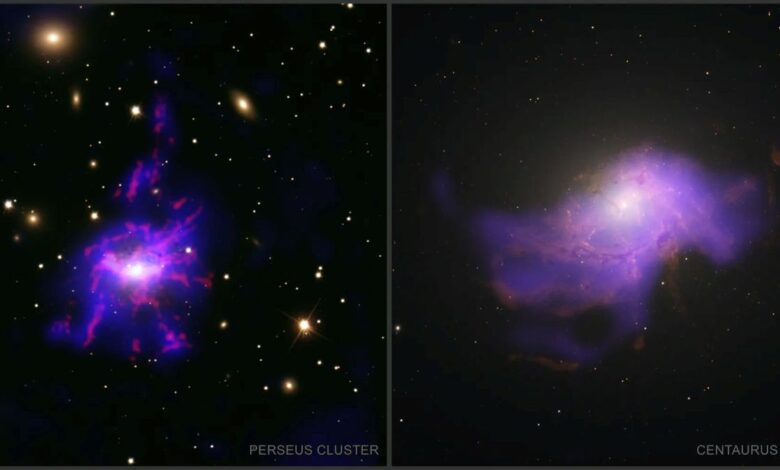
Black Holes Can Cook for Themselves, Chandra Study Shows
Astronomers have taken a crucial step in showing that the most massive black holes in the universe can create their own meals. Data from NASA’s Chandra X-ray Observatory and the Very Large Telescope (VLT) provide new evidence that outbursts from black holes can help cool down gas to feed themselves. This study was based on observations of seven clusters of galaxies. The centers of galaxy…
Read More » -
NASA
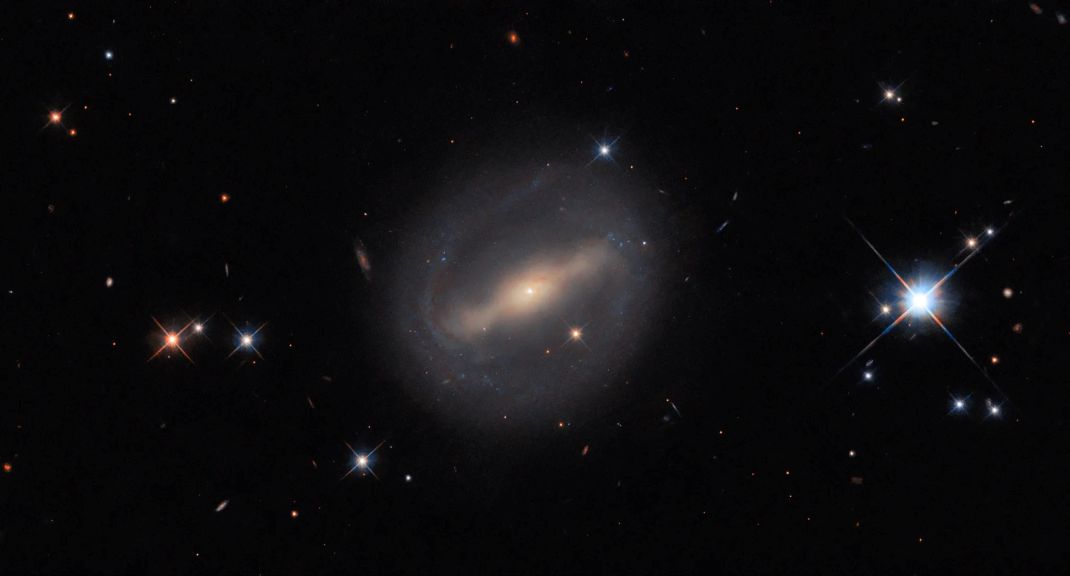
Hubble Rings in a New Galactic View
The subject of this NASA/ESA Hubble Space Telescope image is situated in the Perseus Cluster, also known as Abell 426, 320 million light-years from Earth. It’s a barred spiral galaxy known as MCG+07-07-072, seen here among a number of photobombing stars that are much closer to Earth than it is. MCG+07-07-072 has quite an unusual shape for a spiral galaxy, with thin arms emerging from…
Read More »