
Planet
-
NASA
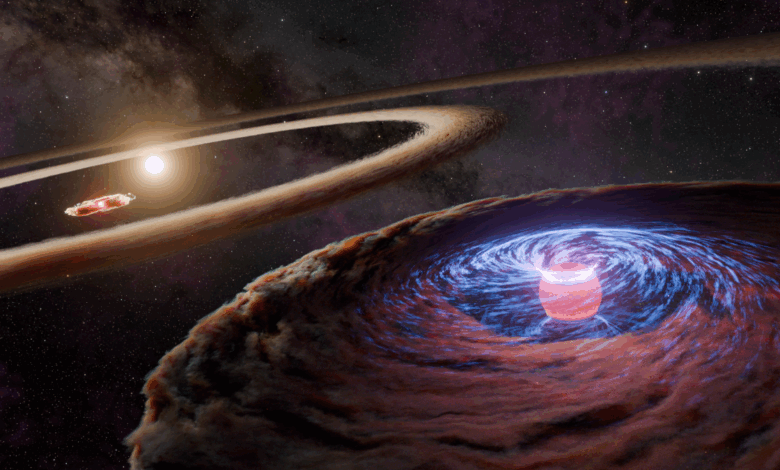
Discovery Alert: ‘Baby’ Planet Photographed in a Ring around a Star for the First Time!
The (Proto) Planet: WISPIT 2b The Discovery: Researchers have discovered a young protoplanet called WISPIT 2b embedded in a ring-shaped gap in a disk encircling a young star. While theorists have thought that planets likely exist in these gaps (and possibly even create them), this is the first time that it has actually been observed. This image of the WISPIT…
Read More » -
NASA
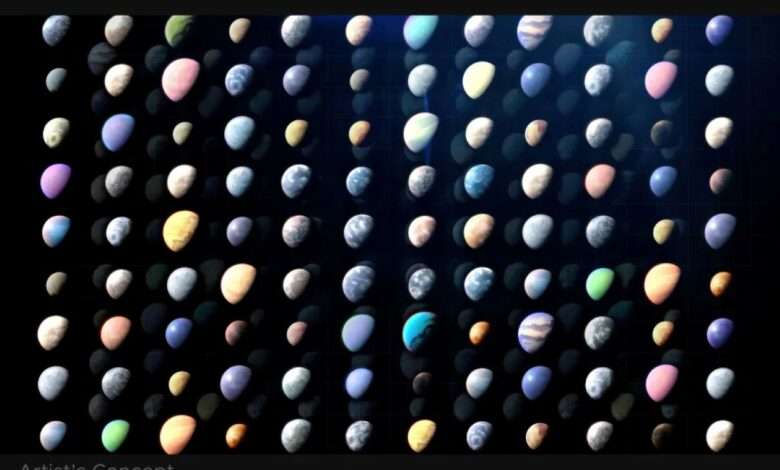
NASA’s Tally of Planets Outside Our Solar System Reaches 6,000
The milestone highlights the accelerating rate of discoveries, just over three decades since the first exoplanets were found. The official number of exoplanets — planets outside our solar system — tracked by NASA has reached 6,000. Confirmed planets are added to the count on a rolling basis by scientists from around the world, so no single planet is considered the…
Read More » -
NASA
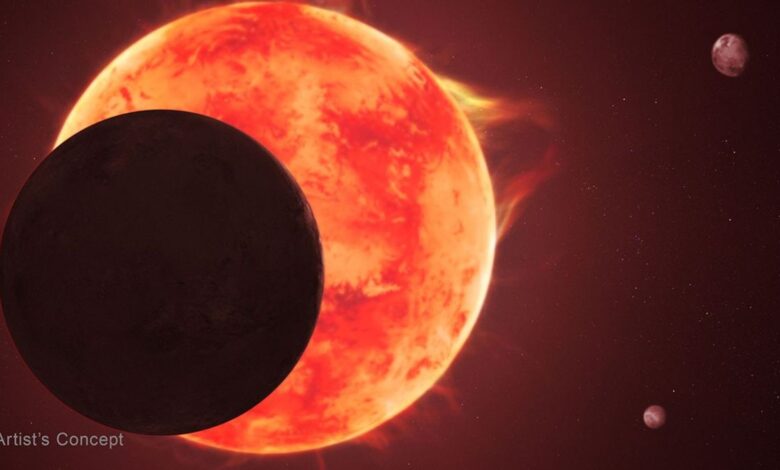
Webb Narrows Atmospheric Possibilities for Earth-sized Exoplanet TRAPPIST-1 d
The exoplanet TRAPPIST-1 d intrigues astronomers looking for possibly habitable worlds beyond our solar system because it is similar in size to Earth, rocky, and resides in an area around its star where liquid water on its surface is theoretically possible. But according to a new study using data from NASA’s James Webb Space Telescope, it does not have an Earth-like atmosphere.…
Read More » -
NASA
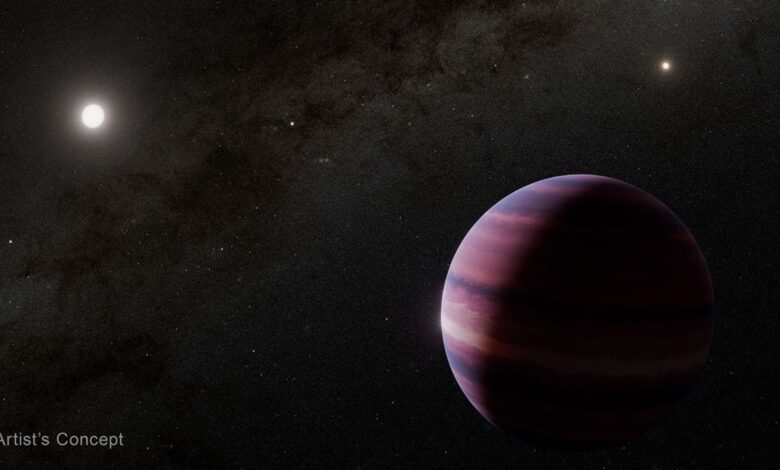
NASA’s Webb Finds New Evidence for Planet Around Closest Solar Twin
Astronomers using NASA’s James Webb Space Telescope have found strong evidence of a giant planet orbiting a star in the stellar system closest to our own Sun. At just 4 light-years away from Earth, the Alpha Centauri triple star system has long been a compelling target in the search for worlds beyond our solar system. Alpha Centauri, located in the far southern…
Read More » -
NASA
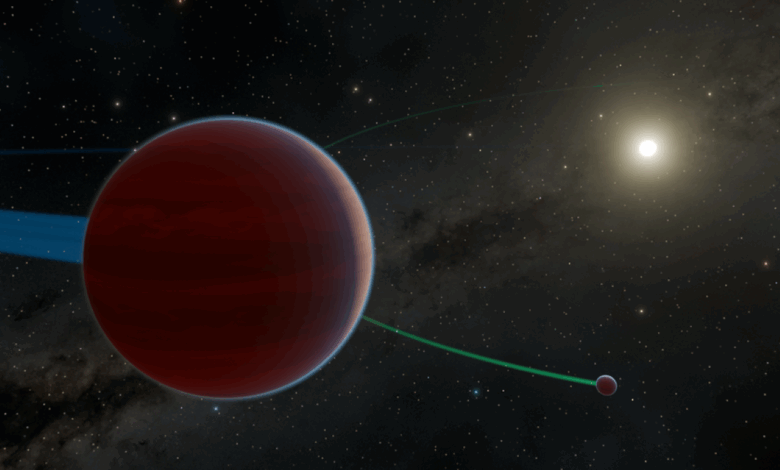
Discovery Alert: Scientists Spot a Planetary Carousel
The Planets KOI-134 b and KOI-134 c This artist’s concept shows the KOI-134 system which, in 2025, a paper revealed to have two planets: KOI-134 b and KOI-134 c. NASA/JPL-Caltech/K. Miller (Caltech/IPAC) The Discovery A new investigation into old Kepler data has revealed that a planetary system once thought to house zero planets actually has two planets which orbit their…
Read More » -
NASA
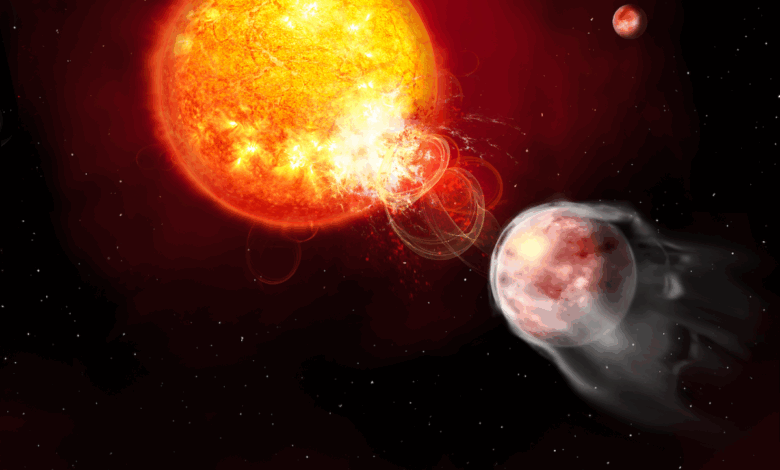
Discovery Alert: Flaring Star, Toasted Planet
The Discovery A giant planet some 400 light-years away, HIP 67522 b, orbits its parent star so tightly that it appears to cause frequent flares from the star’s surface, heating and inflating the planet’s atmosphere. Key Facts On planet Earth, “space weather” caused by solar flares might disrupt radio communications, or even damage satellites. But Earth’s atmosphere protects us from…
Read More » -
Press Releases
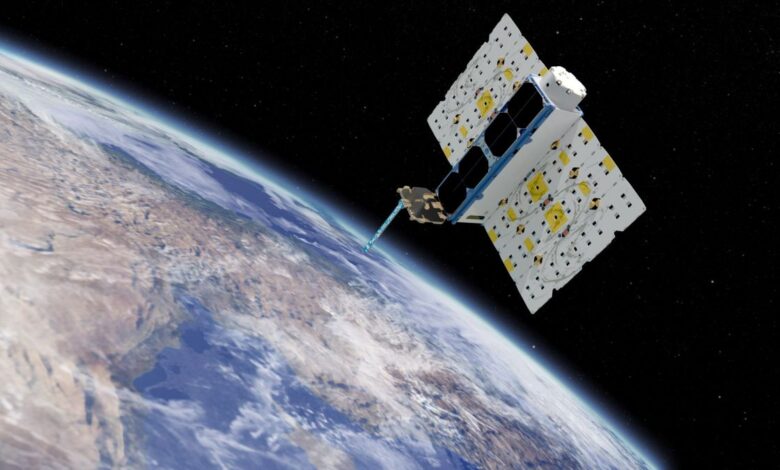
NATO Selects Planet for Landmark Seven-Figure Contract for Advanced Daily Monitoring and Early Warning Capabilities
Planet Labs PBC (NYSE: PL), a leading provider of daily data and insights about change on Earth, today announced it was selected for a new seven-figure contract with NATO to deliver advanced daily monitoring and intelligence capabilities across the Alliance’s strategic areas of interest. This landmark partnership comes at a time of significant global change, where nations, particularly in Europe, are…
Read More » -
NASA
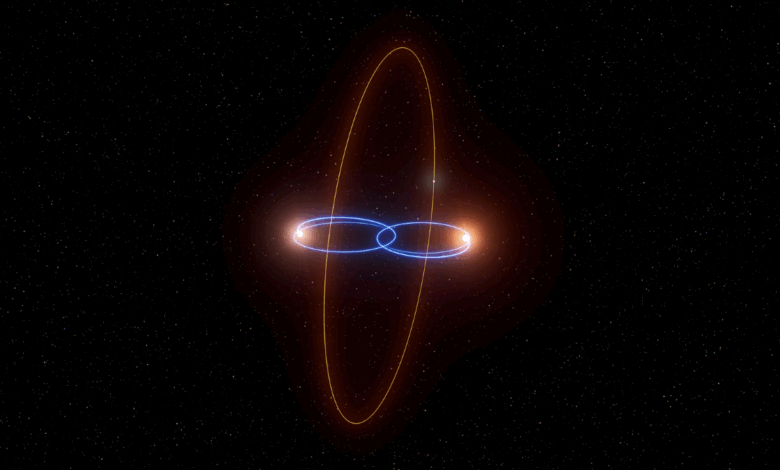
Discovery Alert: A Possible Perpendicular Planet
The Discovery A newly discovered planetary system, informally known as 2M1510, is among the strangest ever found. An apparent planet traces out an orbit that carries it far over the poles of two brown dwarfs. This pair of mysterious objects – too massive to be planets, not massive enough to be stars – also orbit each other. Yet a third…
Read More » -
NASA

Planet Sizes and Locations in Our Solar System
Our solar system has eight planets, and five officially recognized dwarf planets. Which planet is biggest? Which is smallest? What is the order of the planets as we move out from the Sun? This is a simple guide to the sizes of planets based on the equatorial diameter – or width – at the equator of each planet. Each planet’s width…
Read More » -
NASA
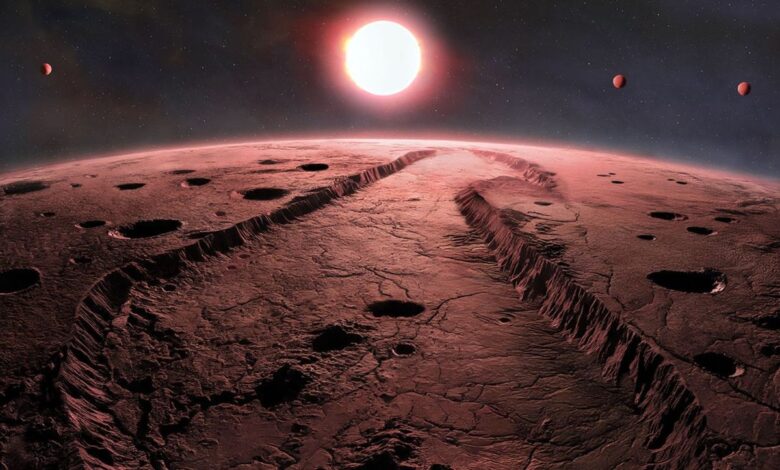
Discovery Alert: Four Little Planets, One Big Step
The Discovery Four rocky planets much smaller than Earth orbit Barnard’s Star, the next closest to ours after the three-star Alpha Centauri system. Barnard’s is the nearest single star. Key Facts Barnard’s Star, six light-years away, is notorious among astronomers for a history of false planet detections. But with the help of high-precision technology, the latest discovery — a family…
Read More »