
Planet
-
NASA

What’s Up: March 2025 Skywatching Tips from NASA
A Fast-Moving Planet and a Crimson Moon! Catch Mercury if you can, then stay up late for a total lunar eclipse, and learn the truth about the dark side of the Moon. Skywatching Highlights All Month – Planets Visibility: Mercury: Speedy Mercury is visible beneath Venus for the first week and a half of March, for about 30 minutes each evening,…
Read More » -
NASA
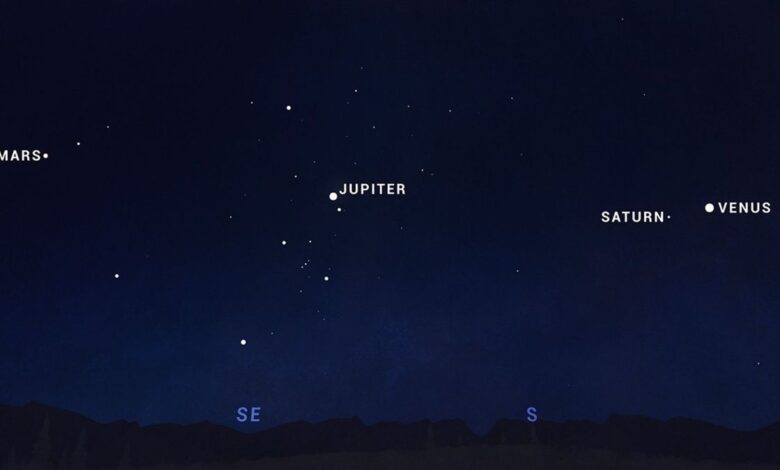
Planetary Alignments and Planet Parades
On most nights, weather permitting, you can spot at least one bright planet in the night sky. While two or three planets are commonly visible in the hours around sunset, occasionally four or five bright planets can be seen simultaneously with the naked eye. These events, often called “planet parades” or “planetary alignments,” can generate significant public interest. Though not…
Read More » -
Press Releases

Planet Signs $230 Million Commercial Agreement for Pelican Satellites
-Planet Labs PBC (NYSE: PL), a leading provider of daily data and insights about Earth, today announced the signing of a multi-year $230 million agreement to expand its partnership with a long-standing, Asia-Pacific commercial partner. Pursuant to the agreement, Planet will build and deliver a constellation of new Pelican high resolution satellites, securing certain capacity on the satellites for the…
Read More » -
Press Releases

Planet Launches High-Resolution Pelican-2 Satellite & 36 SuperDoves
Planet Labs PBC (NYSE:PL), a leading provider of daily Earth data and insights, announced today that its high-resolution Pelican-2 satellite and 36 SuperDoves of Flock 4G were successfully launched to orbit on SpaceX’s Transporter-12 Rideshare mission from Vandenberg Space Force Base in California. The Planet team has successfully made contact with Pelican-2 and started its commissioning process. Pelican-2 joins Pelican-1 (a smallsat…
Read More » -
NASA
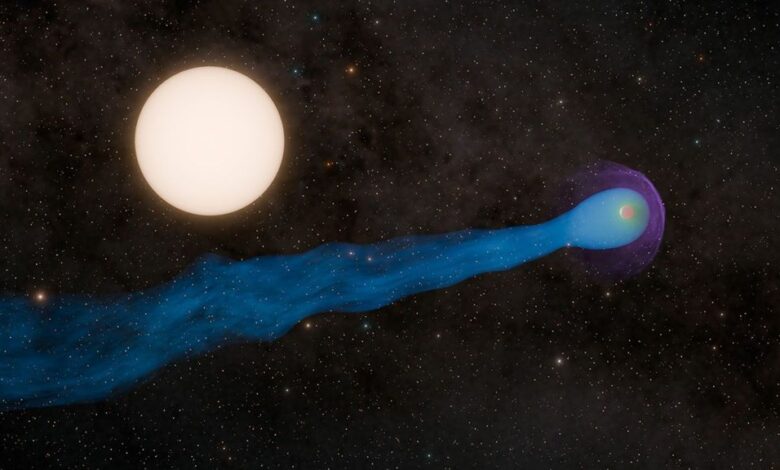
Discovery Alert: A Planet with a ‘Tail’
The Planet WASP-69 b The Discovery The exoplanet WASP-69 b has a “tail,” leaving a trail of gas in its wake. Key Takeaway WASP-69 b is slowly losing its atmosphere as light hydrogen and helium particles in the planet’s outer atmosphere escape the planet over time. But those gas particles don’t escape evenly around the planet, instead they are swept…
Read More » -
NASA
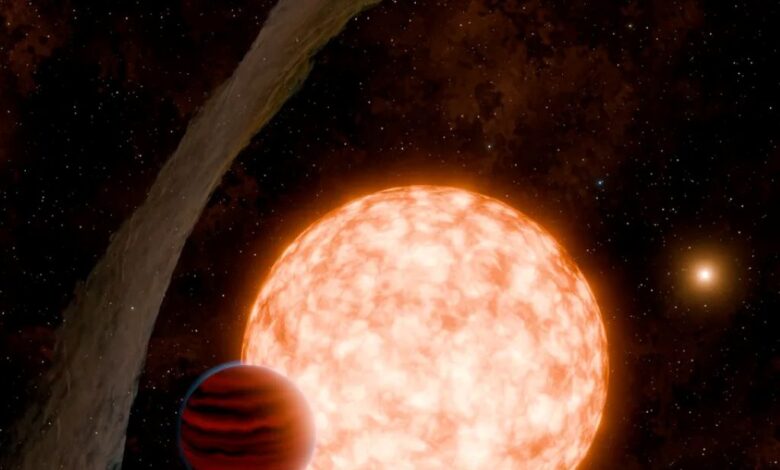
Discovery Alert: A Rare Glimpse of a Newborn Planet
The Discovery A huge planet with a long name – IRAS 04125+2902 b – is really just a baby: only 3 million years old. And because such infant worlds are usually hidden inside obscuring disks of debris, it is the youngest planet so far discovered using the dominant method of planet detection. Key Facts The massive planet, likely still glowing…
Read More » -
NASA

Planet Sizes and Locations in Our Solar System
Our solar system has eight planets, and five officially recognized dwarf planets. Which planet is biggest? Which is smallest? What is the order of the planets as we move out from the Sun? This is a simple guide to the sizes of planets based on the equatorial diameter – or width – at the equator of each planet. Each planet’s width…
Read More » -
NASA

Spot the King of Planets: Observe Jupiter
Jupiter is our solar system’s undisputed king of the planets! Jupiter is bright and easy to spot from our vantage point on Earth, helped by its massive size and banded, reflective cloud tops. Jupiter even possesses moons the size of planets: Ganymede, its largest, is bigger than the planet Mercury. What’s more, you can easily observe Jupiter and its moons…
Read More » -
NASA
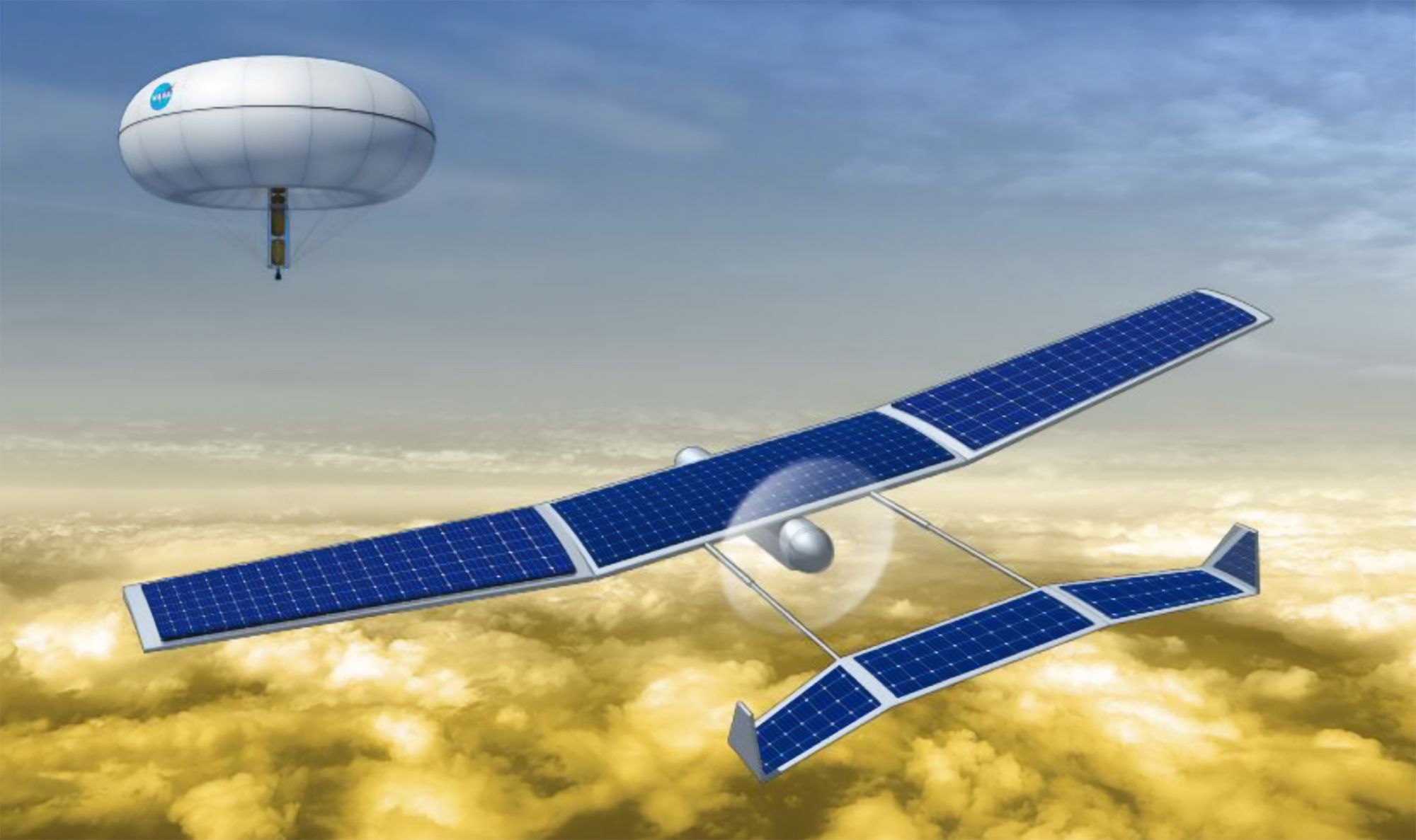
Sample Return from the Surface of Venus
Geoffrey LandisNASA Glenn Research Center At 450°C and 92 atmosphere pressure, the surface of Venus is the most hostile environment to explore in the solar system. This project will pioneer a new approach to return a sample from the surface of Venus. The approach will merge an innovative carbon monoxide rocket technology to make propellant from the Venus atmosphere with innovations…
Read More » -
NASA

Discovery Alert: Watch the Synchronized Dance of a 6-Planet System
The discovery: Six planets orbit their central star in a rhythmic beat, a rare case of an “in sync” gravitational lockstep that could offer deep insight into planet formation and evolution Key facts: A star smaller and cooler than our Sun hosts a truly strange family of planets: six “sub-Neptunes” – possibly smaller versions of our own Neptune – moving in a…
Read More »