Saturn
-
NASA
What’s Up: November 2025 Skywatching Tips from NASA
Mars and Mercury cozy up, the Leonids sparkle, and Saturn’s rings are…disappearing? Mars and Mercury get close for a conjunction, the Leonid meteor shower delights, and Saturn’s rings are…disappearing? Skywatching Highlights Nov. 12: A conjunction between Mars and Mercury Nov. 16-18: Leonid meteor shower peak viewing Nov. 23: Saturn’s rings disappear Transcript Mars and Mercury have a cozy conjunction, the…
Read More » -
NASA
NASA Cassini Study Finds Organics ‘Fresh’ From Ocean of Enceladus
Researchers dove deep into information gathered from the ice grains that were collected during a close and super-fast flyby through a plume of Saturn’s icy moon. A new analysis of data from NASA’s Cassini mission found evidence of previously undetected organic compounds in a plume of ice particles ejected from the ocean that lies under the frozen shell of Saturn’s…
Read More » -
NASA
NASA Study: Celestial ‘Accident’ Sheds Light on Jupiter, Saturn Riddle
An unusual cosmic object is helping scientists better understand the chemistry hidden deep in Jupiter and Saturn’s atmospheres — and potentially those of exoplanets. Why has silicon, one of the most common elements in the universe, gone largely undetected in the atmospheres of Jupiter, Saturn, and gas planets like them orbiting other stars? A new study using observations from NASA’s…
Read More » -
NASA
The Day Earth Smiled
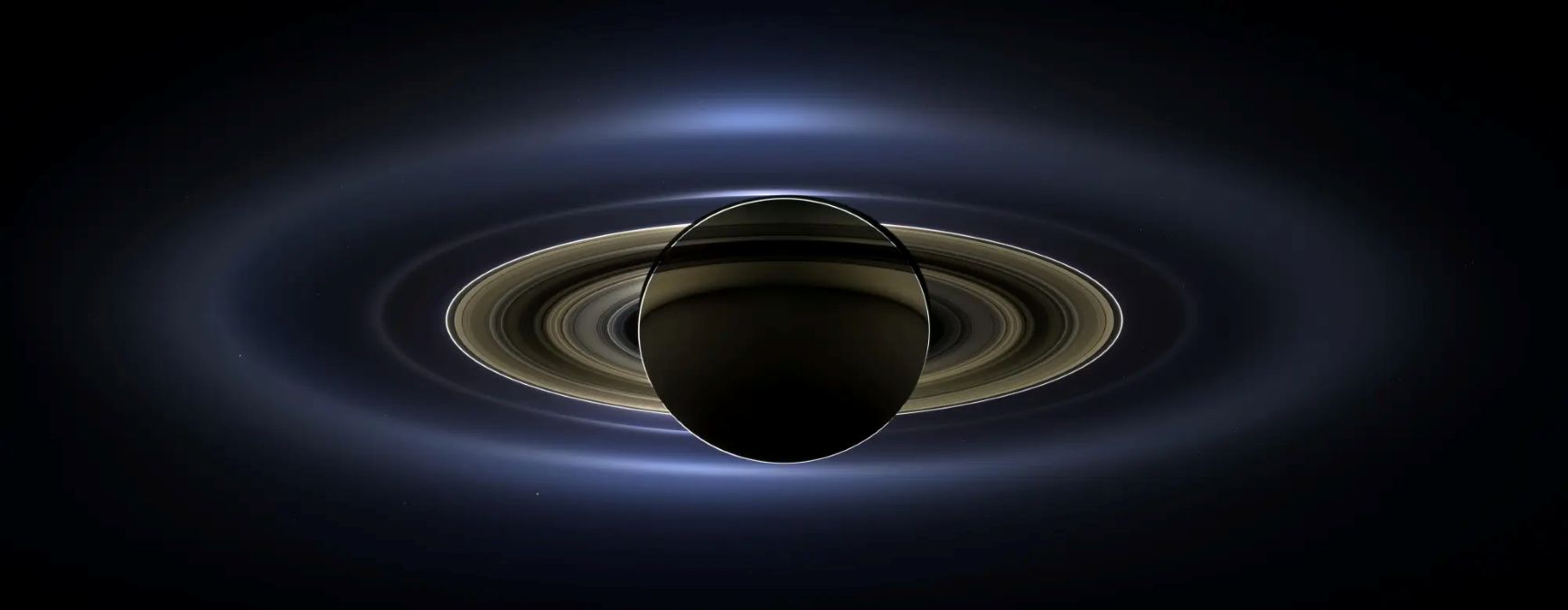
On July 19, 2013, NASA’s Cassini spacecraft had a rare opportunity to image Saturn and, far in the background, Earth. This image spans about 404,880 miles (651,591 kilometers) across. With the Sun’s powerful and potentially damaging rays eclipsed by Saturn itself, Cassini’s onboard cameras were able to take advantage of this unique viewing geometry. They acquired a panoramic mosaic of the Saturn…
Read More » -
NASA
NASA Research Shows Path Toward Protocells on Titan
NASA research has shown that cell-like compartments called vesicles could form naturally in the lakes of Saturn’s moon Titan. Titan is the only world apart from Earth that is known to have liquid on its surface. However, Titan’s lakes and seas are not filled with water. Instead, they contain liquid hydrocarbons like ethane and methane. On Earth, liquid water is…
Read More » -
NASA
June’s Night Sky Notes: Seasons of the Solar System
by Kat Troche of the Astronomical Society of the Pacific Here on Earth, we undergo a changing of seasons every three months. But what about the rest of the Solar System? What does a sunny day on Mars look like? How long would a winter on Neptune be? Let’s take a tour of some other planets and ask ourselves what…
Read More » -
NASA
NASA’s Dragonfly Mission Sets Sights on Titan’s Mysteries
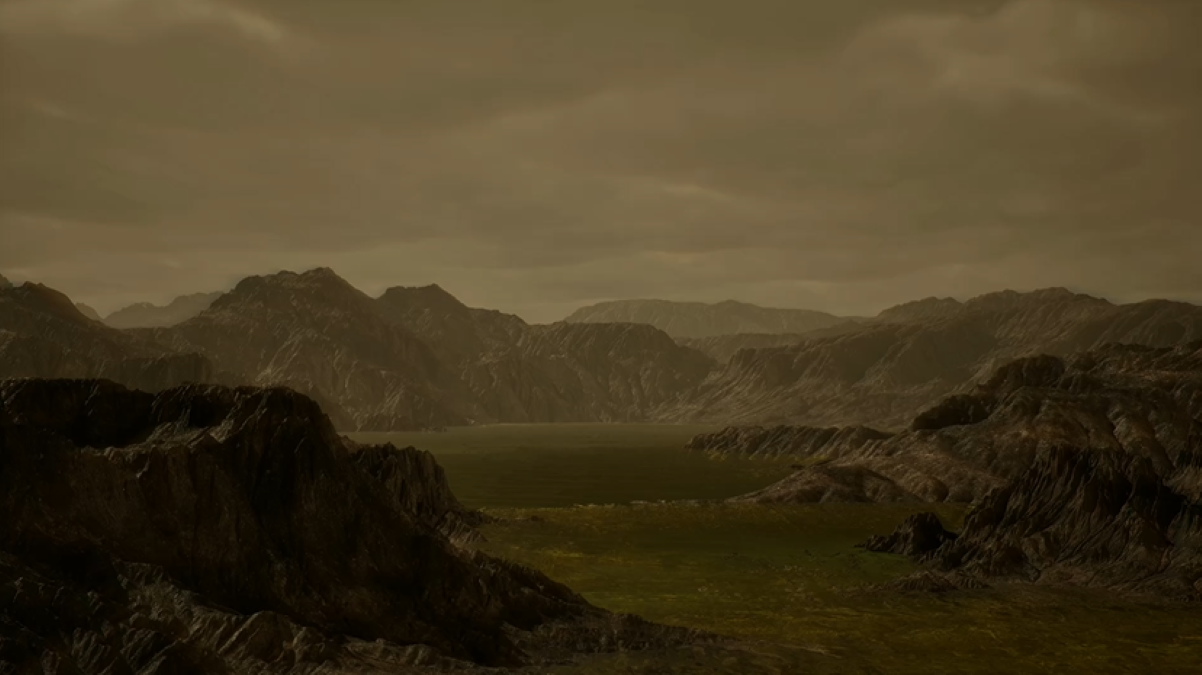
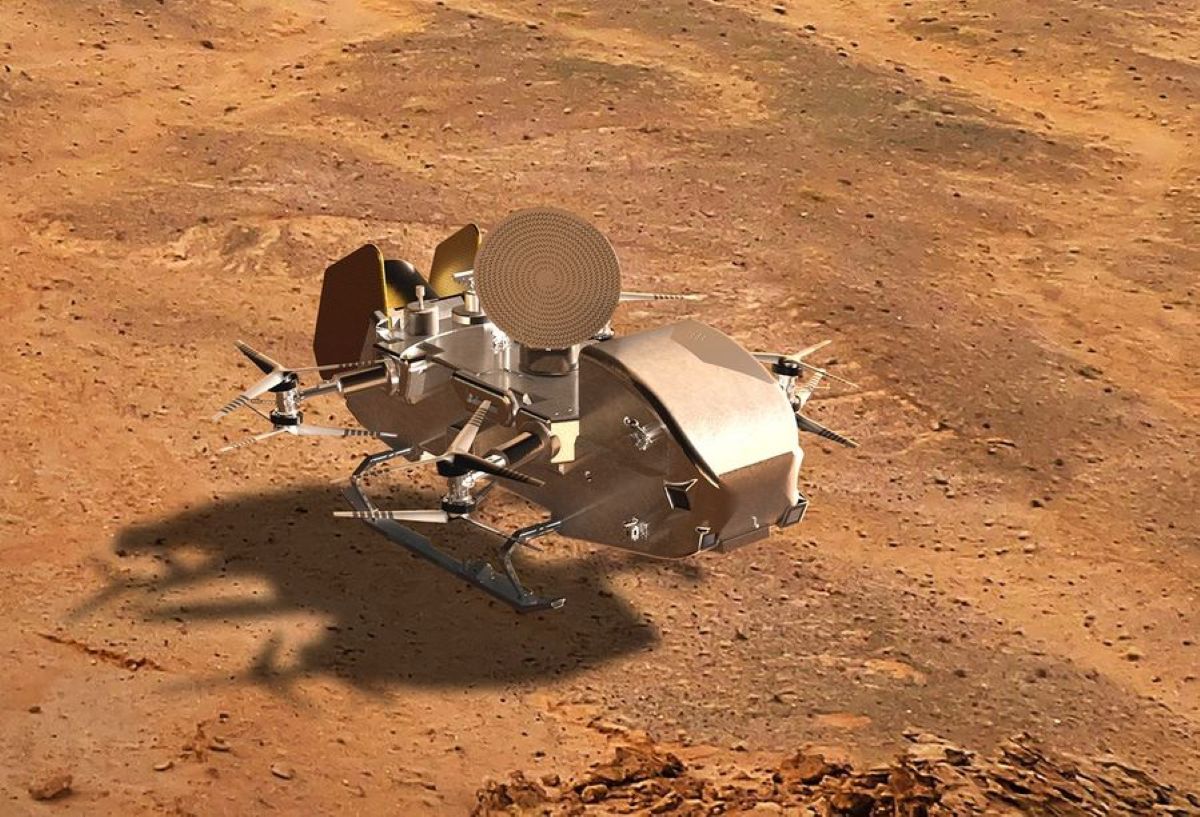
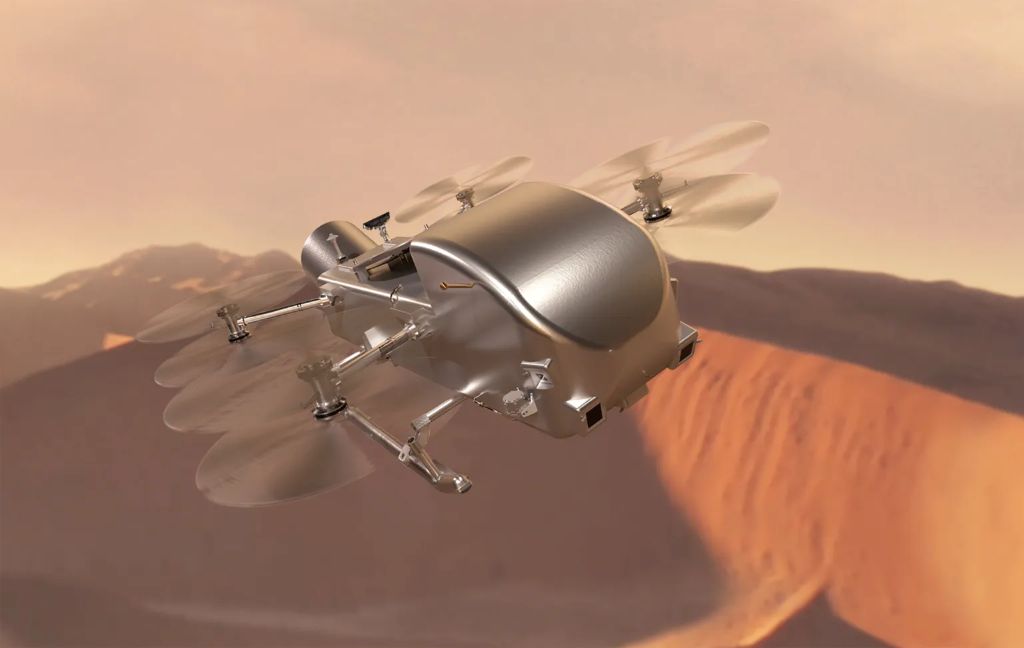
When it descends through the thick golden haze on Saturn’s moon Titan, NASA’s Dragonfly rotorcraft will find eerily familiar terrain. Dunes wrap around Titan’s equator. Clouds drift across its skies. Rain drizzles. Rivers flow, forming canyons, lakes and seas. Artist’s concept of NASA’s Dragonfly on the surface of Saturn’s moon Titan. The car-sized rotorcraft will be equipped to characterize the…
Read More » -
NASA
Webb’s Titan Forecast: Partly Cloudy With Occasional Methane Showers
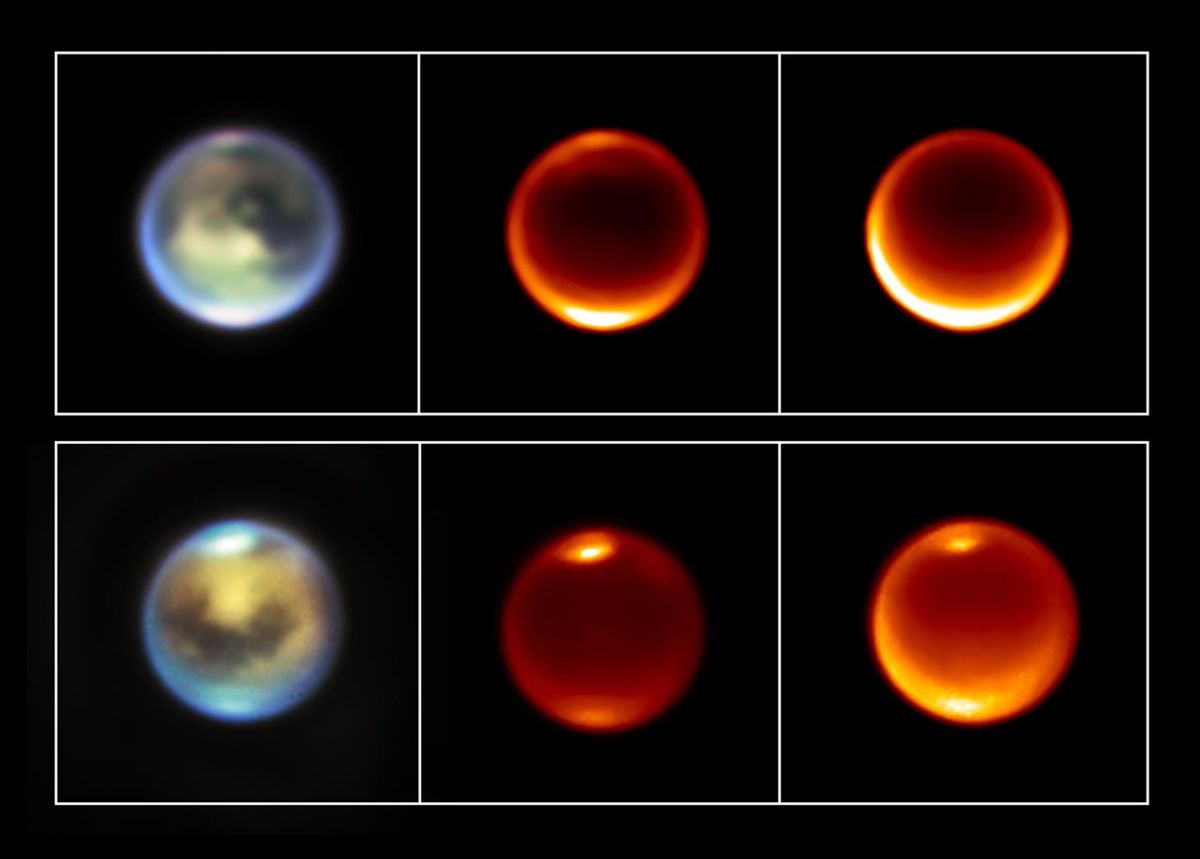
Saturn’s moon Titan is an intriguing world cloaked in a yellowish, smoggy haze. Similar to Earth, the atmosphere is mostly nitrogen and has weather, including clouds and rain. Unlike Earth, whose weather is driven by evaporating and condensing water, frigid Titan has a methane cycle. NASA’s James Webb Space Telescope, supplemented with images from the Keck II telescope, has for…
Read More » -
NASA
50 Years Ago: Final Saturn Rocket Rolls Out to Launch Pad 39
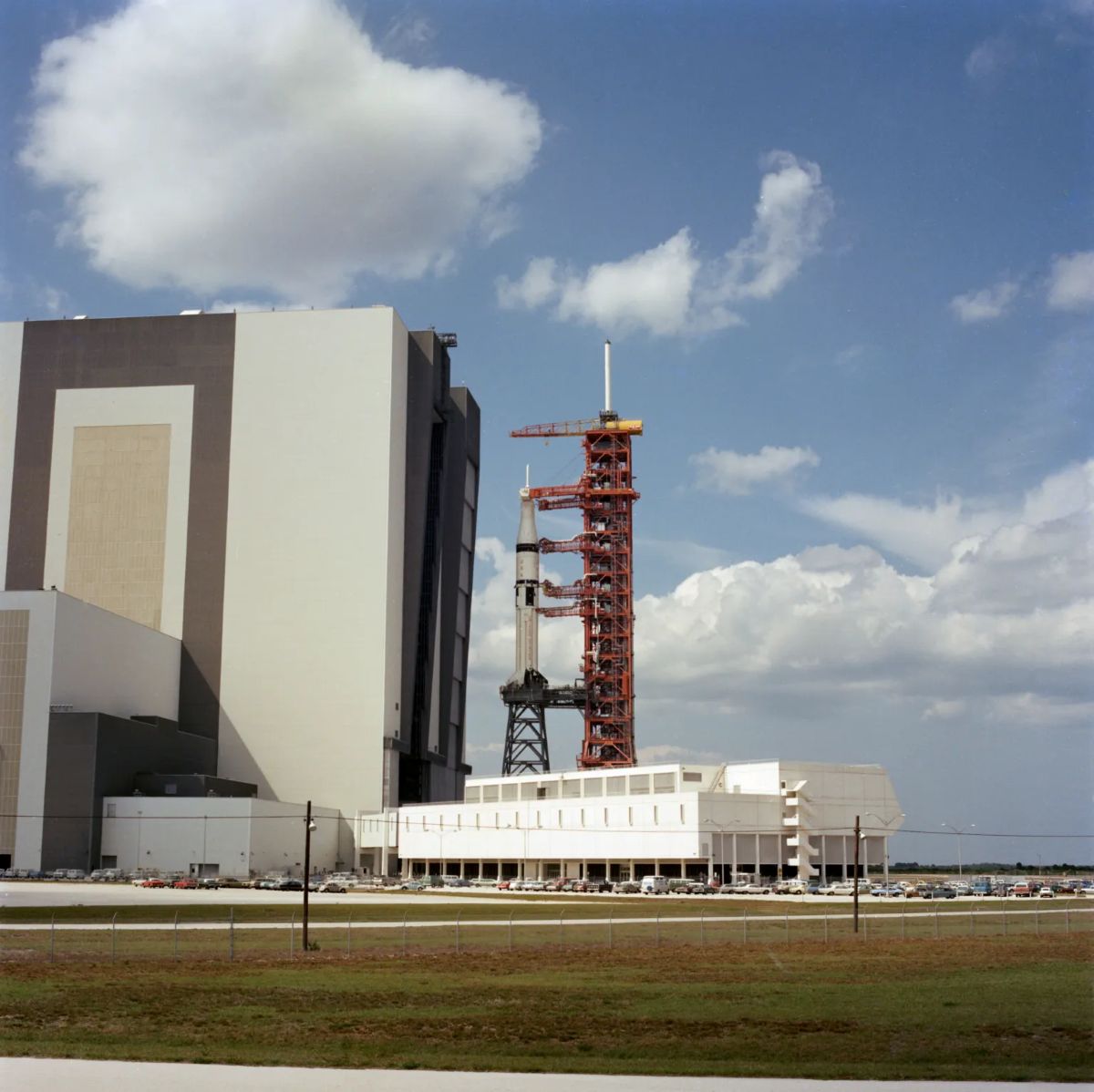
On March 24, 1975, the last in a long line of super successful Saturn rockets rolled out from the vehicle assembly building to Launch Pad 39B at NASA’s Kennedy Space Center in Florida. The Saturn IB rocket for the Apollo-Soyuz Test Project was the 19th in the Saturn class stacked in the assembly building, beginning in 1966 with the Saturn V 500F facilities…
Read More » -
NASA
50 Years Ago: Preparing the Final Saturn Rocket for Flight
With the historic first international space docking mission only six months away, preparations on the ground for the Apollo-Soyuz Test Project (ASTP) intensified. At NASA’s Kennedy Space Center (KSC) in Florida, workers in the Vehicle Assembly Building (VAB) stacked the rocket for the mission, the final Saturn rocket assembled for flight. In the nearby Manned Spacecraft Operations Building (MSOB), the…
Read More »