
Science in Space
-
NASA
Science in Space
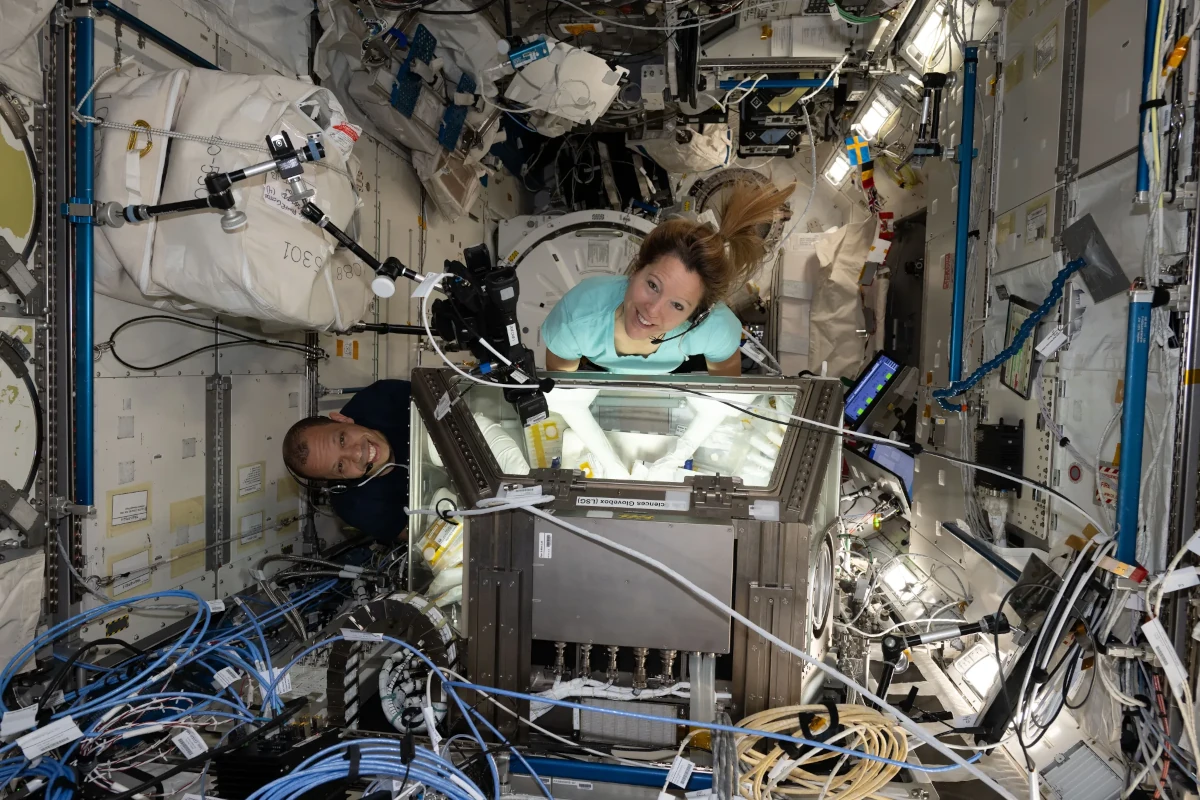
Astronauts Chris Williams of NASA and Sophie Adenot of the European Space Agency work together in the Kibo laboratory module’s Life Science Glovebox, processing genetic-material samples for the DNA Nano Therapeutics‑3 experiment. The investigation is exploring DNA‑inspired assembly techniques as a way to manufacture treatments—such as chemotherapy and immunotherapy—that can kill cancer cells and activate the immune system. Find out…
Read More » -
NASA

Navigation Technology
Science in Space April 2025 Humans have always been explorers, venturing by land and sea into unknown and uncharted places on Earth and, more recently, in space. Early adventurers often navigated by the Sun and stars, creating maps that made it easier for others to follow. Today, travelers on Earth have sophisticated technology to guide them. Navigation in space, including…
Read More » -
NASA
Studying the Sun
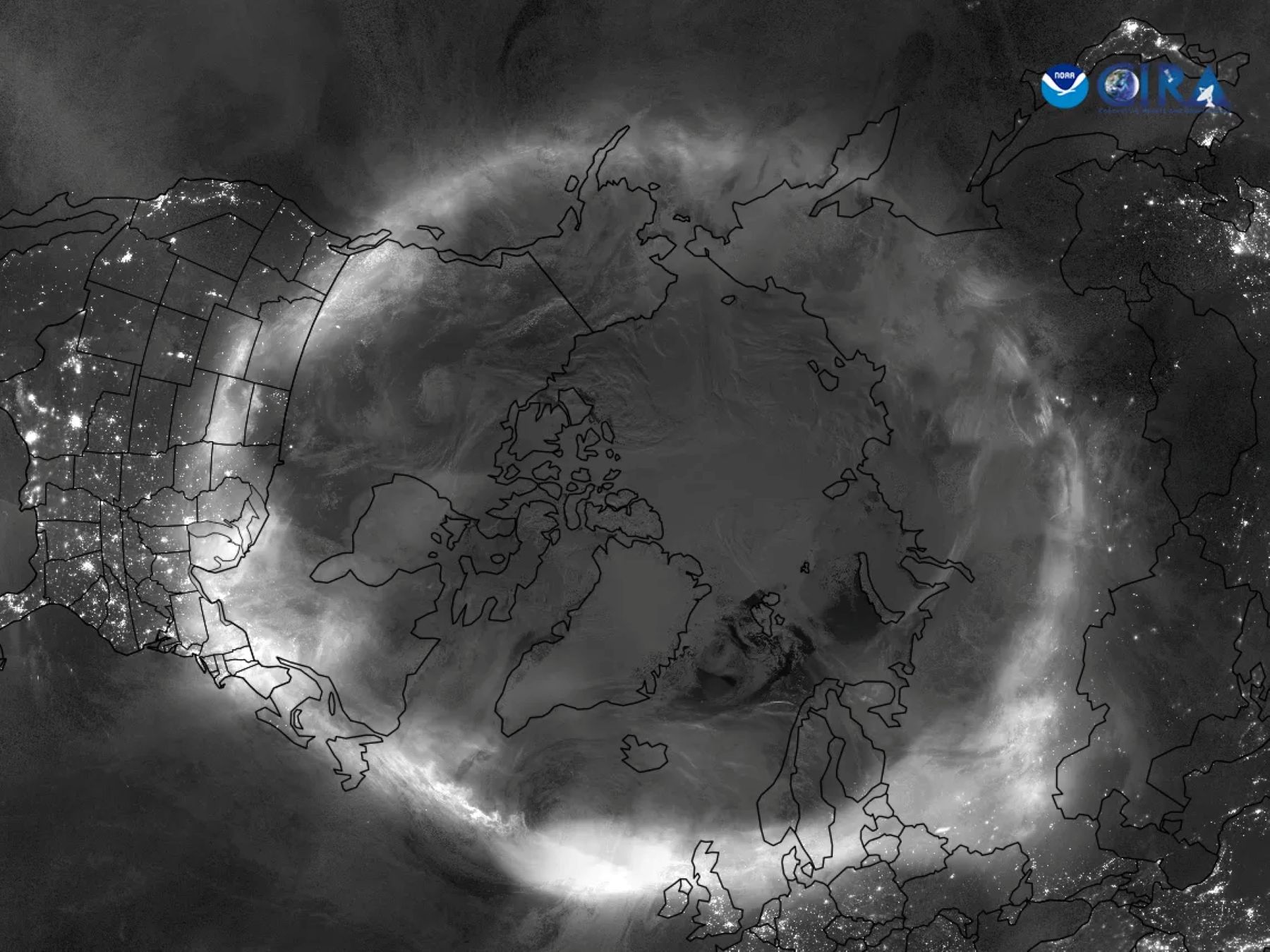
Science in Space: June 2024 The Sun wields a huge influence on Earth. Its gravity holds our planet in its orbit, and solar energy drives the seasons, ocean currents, weather, climate, radiation belts, and auroras on Earth. The solar wind, a flow of charged particles from the Sun, constantly bombards Earth’s magnetosphere, a vast magnetic shield around the planet. The…
Read More » -
NASA

Astrophysics Instruments
Science in Space – February 2024 Instruments on the exterior of the International Space Station provide data on astrophysical phenomena that are helping scientists better understand our universe and its origins. Crew members install and maintain these instruments robotically and scientific teams operate them remotely. One of the instruments, the Neutron star Interior Composition Explorer (NICER), measures X-rays emitted by…
Read More » -
NASA
Science in Space: Robotic Helpers
Crew time is a valuable resource on the International Space Station and its value only increases for future space missions. One way to make the most of crew time is using robotic technology either to assist crew members with various tasks and or to completely automate others. A current investigation on the space station, JEM Internal Ball Camera 2, is part…
Read More »