
Space Station Science
-
NASA
25 Years in Orbit: Science, Innovation, and the Future of Exploration
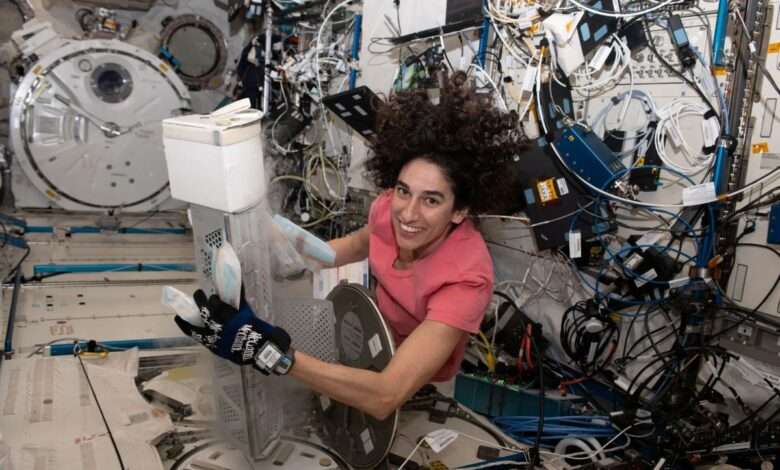
NASA and its partners have supported humans continuously living and working in space since November 2000. A truly global endeavor, the International Space Station has been visited by more than 290 people from 26 countries and a variety of international and commercial spacecraft. The unique microgravity laboratory has hosted more than 4,000 experiments from over 5,000 researchers from 110 countries.…
Read More » -
NASA
2025 Space Station Science Snapshots
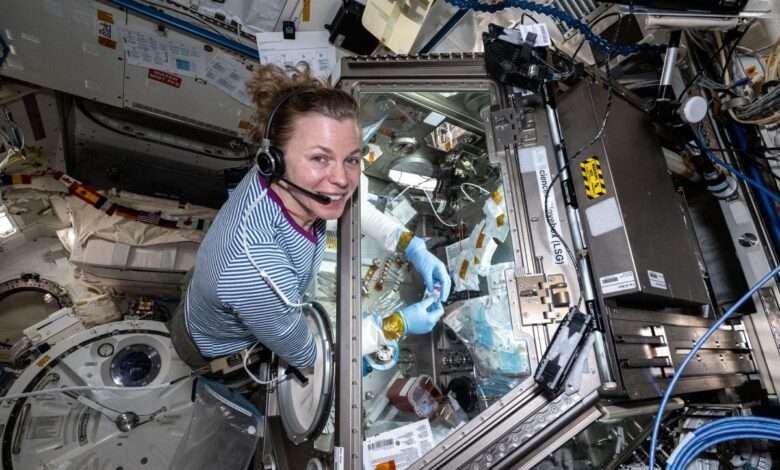
2025 marks another year pushing the boundaries of scientific research aboard the International Space Station. This past year, over 750 investigations were conducted aboard the space station, supported by crewed missions and resupply vehicles delivering essential cargo and experiments to the orbiting laboratory. This year’s research included testing DNA’s ability to store data, producing vital nutrients on demand, demonstrating technology…
Read More » -
NASA
Station Science Top News: Oct. 11, 2024
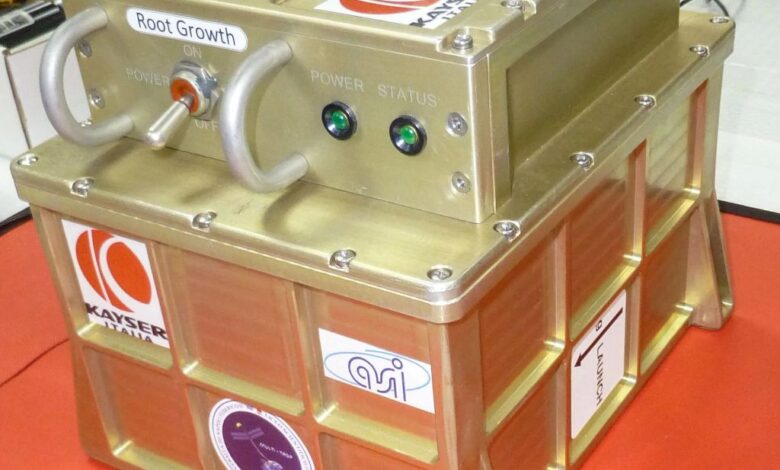
Researchers verified that 3D micro-computed tomography scans can map the orientation of plant roots in space and used the method to demonstrate that carrots grown in actual and simulated microgravity both had random root orientation. These findings suggest that simulated microgravity offers a reliable and more affordable tool for studying plant adaptation to spaceflight. MULTI-TROP evaluated the role of gravity and other factors on…
Read More » -
NASA
NASA Marshall Team Supports Safe Travels for Space Station Science
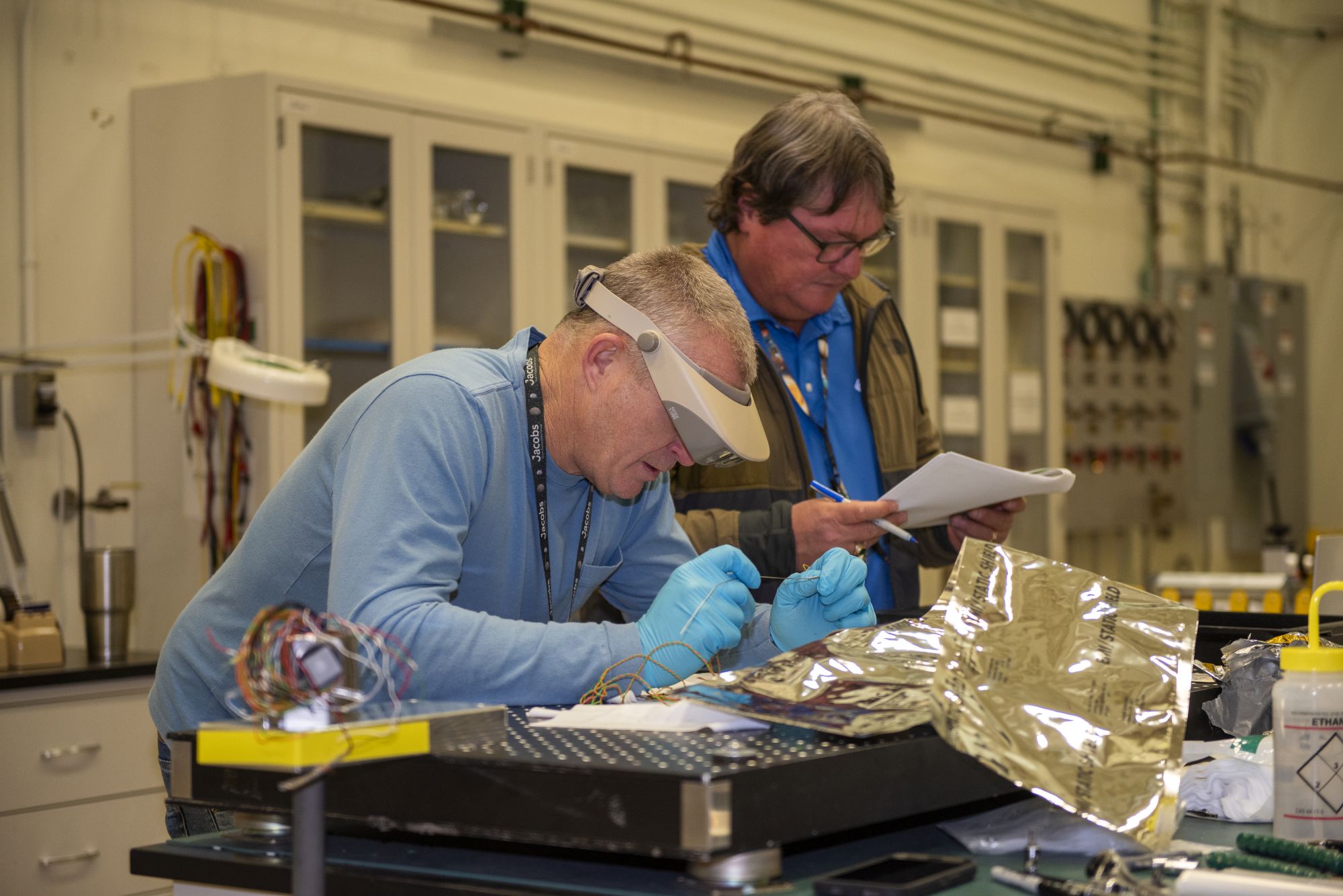
By Jessica Barnett During the International Space Station’s more than 25 years of operation, there have been more than 3,000 experiments conducted aboard the microgravity laboratory, and making sure scientific samples are kept safe through launch, spaceflight, experimentation, and the return trip to Earth takes a great deal of planning, testing, and preparation across NASA. In February, team members at…
Read More » -
NASA

Meet the Two Women Leading Space Station Science
The International Space Station provides researchers access to the unique features of low Earth orbit: long-duration microgravity, exposure to space, and a one-of-a-kind perspective of our planet. These special attributes enable scientists to conduct innovative experiments that can’t be done anywhere else. Employees in the International Space Station Research Integration Office at NASA’s Johnson Space Center help enable and execute…
Read More » -
NASA
Station Science 101: Epigenetics Research in Space
A growing body of research suggests a link between epigenetic mechanisms and a wide variety of illnesses and behaviors, including cancer, cardiovascular and autoimmune illnesses, and cognitive dysfunction. Epigenetics also plays a role in the changes humans and other living things experience in space. This phenomenon has become part of studies in a wide variety of fields, including microgravity research…
Read More »