
Space
-
NASA

Strap In! NASA Aeroshell Material Takes Extended Space Trip
Components of a NASA technology that could one day help crew and cargo enter harsh planetary environments, like that of Mars, are taking an extended trip to space courtesy of the United States Space Force. On Aug. 21, several pieces of webbing material, known as Zylon, which comprise the straps of the HIAD (Hypersonic Inflatable Aerodynamic Decelerator) aeroshell developed by…
Read More » -
NASA

Moonlight and Our Atmosphere
The Moon’s light is refracted by Earth’s atmosphere in this April 13, 2025, photograph from the International Space Station as it orbited into a sunset 264 miles above the border between Bolivia and Brazil in South America. Understanding the Moon helps us understand other planets, how they have evolved and the processes which have shaped their surfaces. It also helps us understand the…
Read More » -
Press Releases

Skynopy x SpaceLocker: Two startups team up to make space more accessible, more sustainable… and more connected
One offers an “Airbnb” for ground stations, the other makes orbital hosting plug-and-play. Startups Skynopy and SpaceLocker are joining forces to simplify and accelerate access to space and space data. During the Assises du NewSpace, SpaceLocker officially announces it has selected Skynopy to provide ground connectivity for its “Out of the Box” mission—its third mission and the first satellite fully operated by the company, set to launch into low…
Read More » -
NASA
From Space to Soil: How NASA Sees Forests
NASA uses satellite lidar technology to study Earth’s forests, key carbon sinks. The GEDI mission maps forest height and biomass from the International Space Station, while ICESat-2 fills polar data gaps. Together, they enable a first-of-its-kind global biomass map, guiding smarter forest conservation and carbon tracking. Original Video and Assets
Read More » -
NASA

Studying Storms from Space Station
Science in Space June 2025 Scientists use instruments on the International Space Station to study phenomena in Earth’s ionosphere or upper atmosphere including thunderstorms, lightning, and transient luminous events (TLEs). TLEs take many forms, including blue jets, discharges that grow upward into the stratosphere from cloud tops, and colorful bursts of energy above storms called Stratospheric/Mesospheric Perturbations Resulting from Intense…
Read More » -
NASA
How Big is Space? We Asked a NASA Expert: Episode: 61
How big is space? Space is really big. Thinking about our solar system, let’s imagine you could get in a car and drive to Pluto at highway speeds. It would take you about 6,000 years to get there. When we start to think about other stars outside of our solar system, we need to think about another unit of distance.…
Read More » -
NASA

The Universe’s Brightest Lights Have Some Dark Origins
Did you know some of the brightest sources of light in the sky come from the regions around black holes in the centers of galaxies? It sounds a little contradictory, but it’s true! They may not look bright to our eyes, but satellites have spotted oodles of them across the universe. One of those satellites is NASA’s Fermi Gamma-ray Space Telescope.…
Read More » -
NASA
Why Do We Grow Plants in Space?
Why do we grow plants in space? Plants are such versatile organisms that they can fulfill many roles in our exploration of space. Plants provide us with food, with oxygen, they can recycle water and waste, and they can even provide us with psychological benefits. So all these functions will help NASA in fulfilling our goal of trying to create…
Read More » -
NASA
NASA Goes Live: First Twitch Stream from Space Station
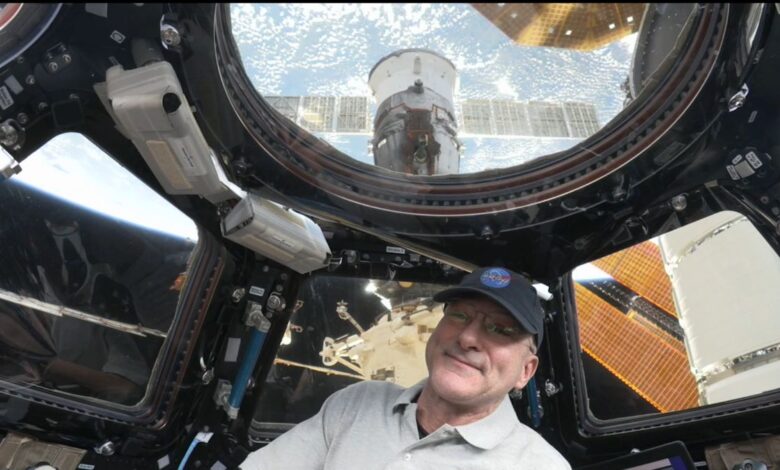
For the first time, NASA is hosting a live Twitch event from about 250 miles off the Earth aboard the International Space Station, bringing new audiences closer to space than ever before. Viewers will have the opportunity to hear from NASA astronauts live and ask questions about life in orbit. The event will begin at 11:45 a.m. EST on Wednesday,…
Read More » -
NASA
NASA International Space Apps Challenge Announces 2024 Global Winners
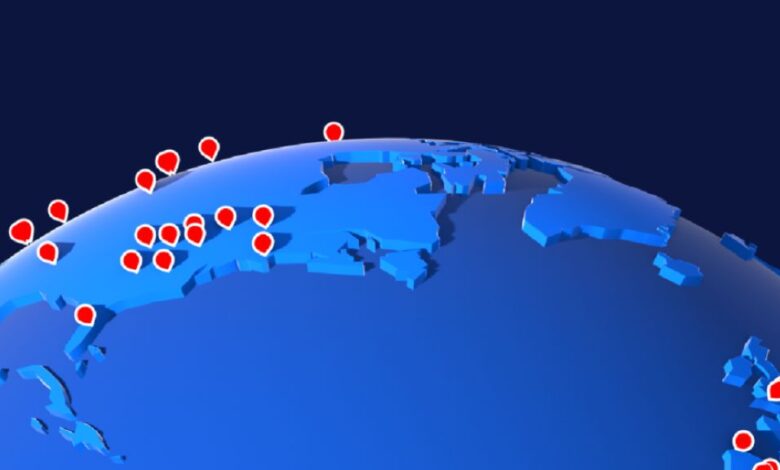
NASA Space Apps has named 10 global winners, recognizing teams from around the world for their exceptional innovation and collaboration during the 2024 NASA Space Apps Challenge. As the largest annual global hackathon, this event invites participants to leverage open data from NASA and its space agency partners to tackle real-world challenges on Earth and in space. Last year’s hackathon…
Read More »