Acer Launches New Gaming Laptops with the Latest CPUs and GPUs


- Powered by the latest 12th Gen Intel® Core™ processors and up to an NVIDIA® GeForce RTX™ 3080 Ti Laptop GPU, the Predator Triton 500 SE is a “special edition” gaming laptop with a clean aesthetic design that won’t look out of place in the workplace
- The Predator Helios 300 is a beast of a gaming laptop, featuring up to a 165 Hz QHD IPS[1] display and up to an NVIDIA GeForce RTX 3080 Laptop GPU or NVIDIA GeForce RTX 3070 Ti Laptop GPU
- The Acer Nitro 5 gives players everything they need to get into the game, with up to 12th Gen Intel® Core™ or AMD Ryzen™ 6000 Series processors, and up to NVIDIA GeForce RTX 3070 Ti GPUs
- The Predator Helios 300 and Acer Nitro 5 both feature new, clean designs
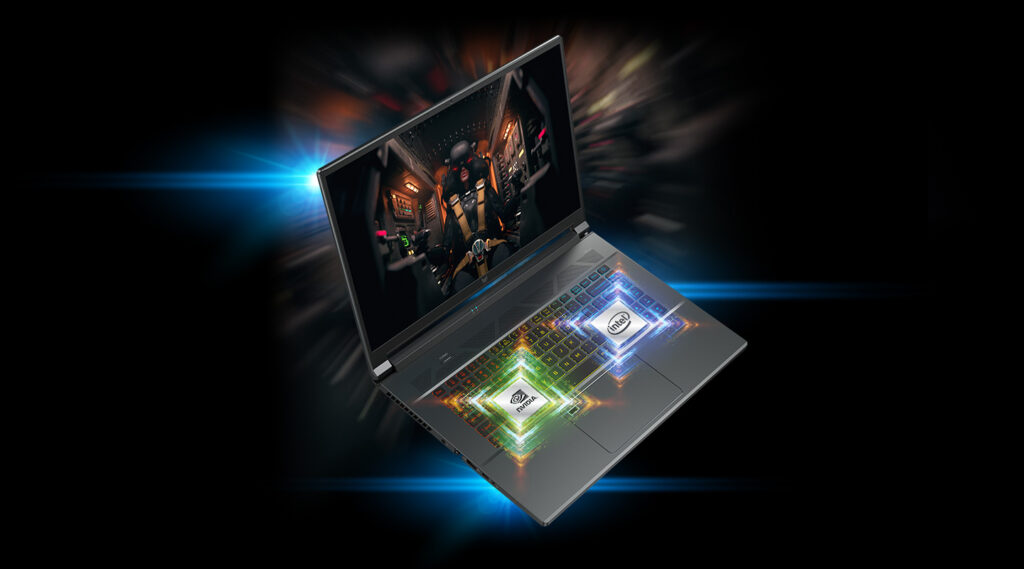
LAS VEGAS, Jan. 4, 2022 /PRNewswire/ — Acer announced refreshes across its lines of Predator and Nitro gaming laptops, starting off the year with new models of the Predator Triton 500 SE, Predator Helios 300 and Acer Nitro 5. All of the laptops feature the latest 12th Gen Intel® Core™ processors and NVIDIA® GeForce RTX™ 30 Series Laptop GPUs, while the Acer Nitro 5 also includes AMD Ryzen™ 6000 Series processor options. They also come with one month of Xbox Game Pass, giving gamers day-one access to popular titles and the ability to play with friends, whether they’re on PC or console.
“Our most popular gaming laptops have been updated with the latest silicon announced at CES,” said James Lin, General Manager, Notebooks, IT Products Business, Acer Inc. “Combine that with state-of-the-art cooling technology and high-refresh rate displays and you get exciting laptops that even the most demanding of players will love.”
“With a new performance hybrid architecture in addition to industry leading I/O, memory and connectivity support, 12th Gen Intel Core H-series processors deliver the blazing fast performance and platform capabilities that today’s gamers demand,” said Jerry Tsao, VP of Enthusiast Laptops at Intel. “The new Acer lineup of gaming notebooks with 12th Gen Intel Core feature incredible designs that gamers of all levels will be excited to play on.”
Predator Triton 500 SE — Thin Gaming Laptop
The Predator Triton 500 SE (PT516-52s) is a “special edition” laptop for gaming and work.On the inside, up to a 12th Gen Intel® Core™ i9 processor, an NVIDIA® GeForce RTX™ 3080 Ti Laptop GPU and 32 GB of 5200 MHz LPDDR5 memory[2] dish out the extreme performance necessary for the latest games. On the outside, its all-metal[3] spartan-styled aesthetics let it blend perfectly into the workplace or lecture hall. Just 19.9 mm (0.75 in)[2,4] at its thinnest point, the laptop can go wherever users do, while up to 2 TB of high-speed PCIe Gen4 storage offers plenty of space for games and files.
Backing up this powerful hardware is state-of-the-art cooling technology. The laptop utilizes a triple-fan system, including two 5th Gen AeroBlade™ 3D fans with 89 metal blades each. Acer’s Vortex Flow technology redirects the airflow those fans generate to critical components, while strategically-placed thermal foam, liquid-metal thermal grease on the CPU, and four heat pipes further improve cooling. Performance boost aside, this means that users won’t be feeling the heat while making the most of the long battery life granted by the laptop’s large 99.98 Wh battery.
Content looks great on the Triton 500 SE’s 16-inch display. Gamers will appreciate the industry-leading WQXGA (2560×1600) panel’s 240Hz[2] refresh rate and 3 ms[5] response time, topped off with support from the frame-syncing power of NVIDIA® G-SYNC® technology. Content creators will appreciate 500 nits of brightness, 100 percent coverage of the DCI-P3 color gamut, and a productivity-boosting 16:10 aspect ratio—plus an SD 7.0 card reader for offloading content.
The laptop runs Windows 11 out of the box and also features a full range of USB 3.2 Gen2 ports, including two Thunderbolt™ 4 Type-C ports with support for DisplayPort and power delivery[6], while an HDMI 2.1 port makes 4K@120 Hz possible by allowing users to plug into an external display. Topping everything off, an Intel® Killer™ E3100G 2.5G Ethernet Controller, Intel® Killer™ Wi-Fi 6E 1675 and Control Center 2.0 empower users with blazing fast connectivity.
Predator Helios 300 — All About Performance
The Predator Helios 300 (PH315-55) is a powerful gaming laptop equipped with a host of top-tier hardware: Up to a 12th Gen Intel Core i7 processor, NVIDIA GeForce RTX 3080 Laptop GPU or NVIDIA GeForce RTX 3070 Ti Laptop GPU, 32 GB of DDR5-4800 MHz memory and up to 2 TB of PCIe Gen4 SSD RAID 0 storage. This hardware muscle powers up to a 15.6-inch QHD (2560 x 1440) IPS[1] display with a 165 Hz refresh rate—and with a revamped, cleaner chassis, the outside of the laptop looks great, too. A thin light bar below the palm rest (configurable via PredatorSense) lets the device retain its gamer aesthetic in a slightly more subtle fashion.
A dual-fan layout that includes one 5th Gen AeroBlade 3D fan helps the keep the system running cool, further supported by liquid metal thermal grease and Acer’s CoolBoost™ technology. A single press of the built-in PredatorSense button offers users control over the fan speed via four preset operating modes, while a single press of the built-in Turbo key instantly maxes out these settings for improved gaming performance. Upping the cool factor, the laptop’s mini-LED[2] backlit keyboard features per-key[2] RGB.
Running Windows 11, the laptop comes with Killer DoubleShot Pro (E2600+1675i) and WiFi 6E connectivity in addition to a healthy range of ports, including an HDMI 2.1 for connecting to external monitors or consoles, a Thunderbolt™ Type-C port, and two USB 3.2 Gen2 ports, one of which allows users to charge a mobile device even if the laptop is turned off.
A 17.3-inch model (PH317-56) with an IPS panel (QHD 165 Hz or FHD 165 Hz / 144 Hz) is also available.
Acer Nitro 5 — Plentiful Configuration Options
The Acer Nitro 5 is a gaming laptop that gives players everything they need to explore and enjoy the latest titles, featuring up to a 12th Gen Intel® Core™ i7 (AN515-58) and up to an NVIDIA GeForce RTX 3070 Ti GPU. A pair of M.2 SSD slots (PCIe Gen 4) offer massive storage, while up to 32 GB of DDR4 3200 RAM offers players plenty of breathing room to handle multiple applications at once. Combined with a QHD 165 Hz panel that has a 3 ms[5] response time, the Nitro 5 delivers pleasantly fluid gameplay. For further control, Killer™ Ethernet E2600[2] and Intel® Killer™ Wi-Fi 6 AX1650i lets players make their network prioritize game traffic for even faster connectivity when every second counts.
The Acer Nitro 5 can also be equipped with up to an AMD Ryzen 6000™ Series processor (AN515-46) and up to an NVIDIA GeForce RTX 3070 Ti Laptop GPU, plus up to 32 GB of the latest-generation DDR5 4800 MHz RAM. This generation of the Nitro 5 comes with two options, an FHD 144 Hz panel or a 165 Hz QHD Panel, both taking advantage of AMD FreeSync™ technology[7] to offer smooth gameplay without screen tearing. Storage-wise, the AMD processor-powered Nitro 5 features two M.2 PCIe Gen 4 SSD slots (PCIe® Gen4 x1, PCIe® Gen3 x1).
It also comes with Windows 11 and a redesigned chassis that features dual-fan cooling, an intake on both the chassis’ top and bottom, and four exhaust ports. Users needing more or less cooling power can control fan speeds with the NitroSense utility app, a built-in software solution that also enables users to overclock[8] their CPU/GPU and customize the 4-zone RGB keyboard’s lighting.
Completing the gameplay experience, DTS:X® Ultra audio deepens their immersion by delivering clear sounds that can be delivered in a 3D spatial soundscape. This technology also translates into a competitive edge, enabling players to hear exactly where an opponent is coming from. Users wanting to play with headphones and other peripherals will enjoy the Nitro 5’s full range of ports, including HDMI 2.1 and support for both USB 3.2 Gen 1 and Gen 2. The Intel-powered model also includes a Thunderbolt™ 4 Type-C port. The AMD-powered model includes USB® 4.
A pair of 17.3-inch models (AN517-55, AN517-42) with an IPS panel (QHD/FHD 165 Hz, FHD 144 Hz) are also available.
Pricing and Availability
The Predator Triton 500 SE (PT516-52s) will be available in North America in March, starting at USD 2,299.99; in EMEA in February, starting at EUR 3,499; and in China in February, starting at RMB 24,999.
The 15.6-inch Predator Helios 300 (PH315-55) will be available in North America in May, starting at USD 1,649.99; in EMEA in February, starting at EUR 2,299; and in China in February, starting at RMB 11,999.
The 17.3-inch Predator Helios 300 (PH317-56) will be available in North America in March, starting at USD 1,749.99; in EMEA in February, starting at EUR 2,399; and in China in February, starting at RMB 11,999.
The Acer Nitro 5 [Intel processor, 15.6-inch] (AN515-58) will be available in North America in March, starting at USD 1,049.99; in EMEA in February, starting at EUR 1,549; and in China in February, starting at RMB 9,499.
The Acer Nitro 5 [AMD processor, 15.6-inch] (AN515-46) will be available in North America in April, starting at USD 1,099.99; in EMEA in April, starting at EUR 1,599; and in China in March, starting at RMB 8,999.
The Acer Nitro 5 [Intel processor, 17.3-inch] (AN517-55) will be available in North America in April, starting at USD 1,099.99; in EMEA in March, starting at EUR 1,649; and in China in February, starting at RMB 9,499.
The Acer Nitro 5 [AMD processor, 17.3-inch] (AN517-42) will be available in North America in May, starting at USD 1,149.99; in EMEA in April, starting at EUR 1,699; and in China in March, starting at RMB 8,999.
Exact specifications, prices, and availability for these new products may vary by region. To find out about availability, product specifications and prices in specific markets, please contact your nearest Acer office or retailer via www.acer.com.
Visit Acer’s press kit for product images and specifications, or visit our press room to see all announcements.
About Acer
Founded in 1976, Acer is one of the world’s top ICT companies with a presence in more than 160 countries. As Acer evolves with the industry and changing lifestyles, it is focused on enabling a world where hardware, software and services will fuse with one another, creating ecosystems and opening up new possibilities for consumers and businesses alike. Acer’s 7,500 employees are dedicated to the research, design, marketing, sale, and support of products and solutions that break barriers between people and technology.
© 2021 Acer Inc. All rights reserved. Acer and the Acer logo are registered trademarks of Acer Inc. Other trademarks, registered trademarks, and/or service marks, indicated or otherwise, are the property of their respective owners. All offers subject to change without notice or obligation and may not be available through all sales channels. Prices listed are manufacturer suggested retail prices and may vary by location. Applicable sales tax extra.
[1] All brands and product names mentioned herein include trademarks of their respective companies and are used solely to describe or identify the products
[2] Specifications may vary depending on model and/or region. All models subject to availability.
[3] Only top, base and bottom cover are metal. The frame area is ABS plastic.
[4] The laptop’s Z-height varies from 19.1 mm to 20.5 mm, depending on point of measurement.
[5] Non-native response time. Achieved via LCD Overdrive.
[6] Delivers up to 3 A at 5 V DC for USB charging. DC-in: requires power adapter or power source providing 65W at 20 V. For optimal performance please use a certified Acer power adapter or USB Power Delivery device.
[7] AMD FreeSync™ technology requires AMD Radeon™ graphics and a display that supports FreeSync technology as certified by AMD. AMD FreeSync™ Premium technology adds requirements of mandatory low framerate compensation and at least 120 Hz refresh rate at minimum FHD. AMD FreeSync™ Premium Pro technology adds requirements for the display to meet AMD FreeSync Premium Pro compliance tests. See www.amd.com/freesync for complete details. Confirm capability with your system manufacturer before purchase. GD-127
[8] AMD’s product warranty does not cover damages caused by overclocking, even when overclocking is enabled via AMD hardware and/or software. GD-26.