
Star Cluster
-
NASA
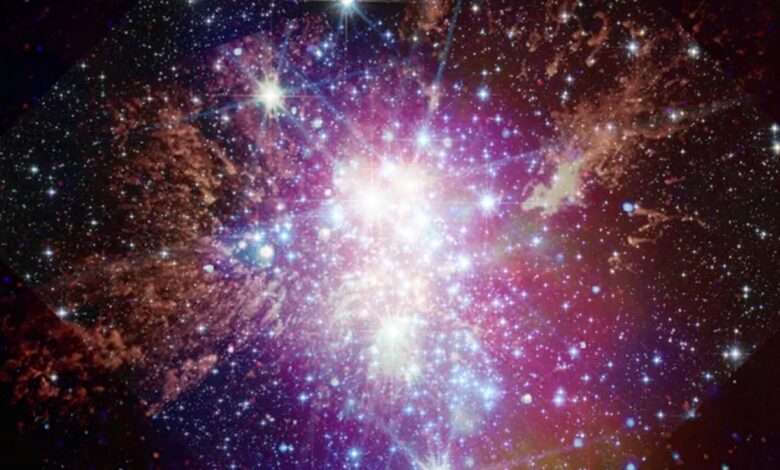
An Eye-catching Star Cluster
Westerlund 1, the biggest and closest “super” star cluster to Earth, dazzles in this image released on July 23, 2025. This view combines x-ray data from NASA’s Chandra X-ray Observatory (in pink, blue, purple, and orange), infrared data from NASA’s James Webb Space Telescope (in yellow, gold, and blue), and optical data from NASA’s Hubble Space Telescope (in cyan, grey, and light…
Read More » -
NASA
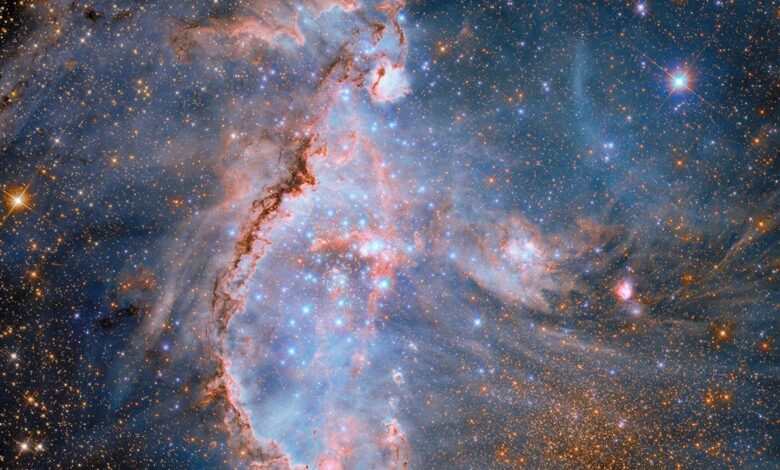
Sculpted by Luminous Stars
This new image, released on April 4, 2025, showcases the dazzling young star cluster NGC 346. Although both the James Webb Space Telescope and the Hubble Space Telescope have released images of NGC 346 previously, this image includes new data and is the first to combine Hubble observations made at infrared, optical, and ultraviolet wavelengths into an intricately detailed view of this vibrant star-forming factory.…
Read More » -
NASA
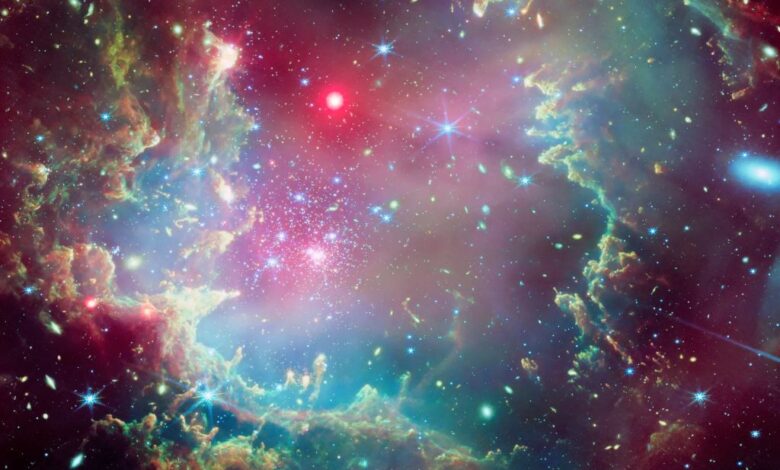
Chandra and Webb Spy a Cosmic Wreath
This new image of star cluster NGC 602, released on Dec. 17, 2024, combines data from NASA’s Chandra X-ray Observatory with a previously released image from the agency’s James Webb Space Telescope. Webb data provide the ring-like outline of the “wreath,” while X-rays from Chandra (red) show young, massive stars that are illuminating the wreath, sending high-energy light into interstellar space. NGC 602 lies on…
Read More » -
NASA
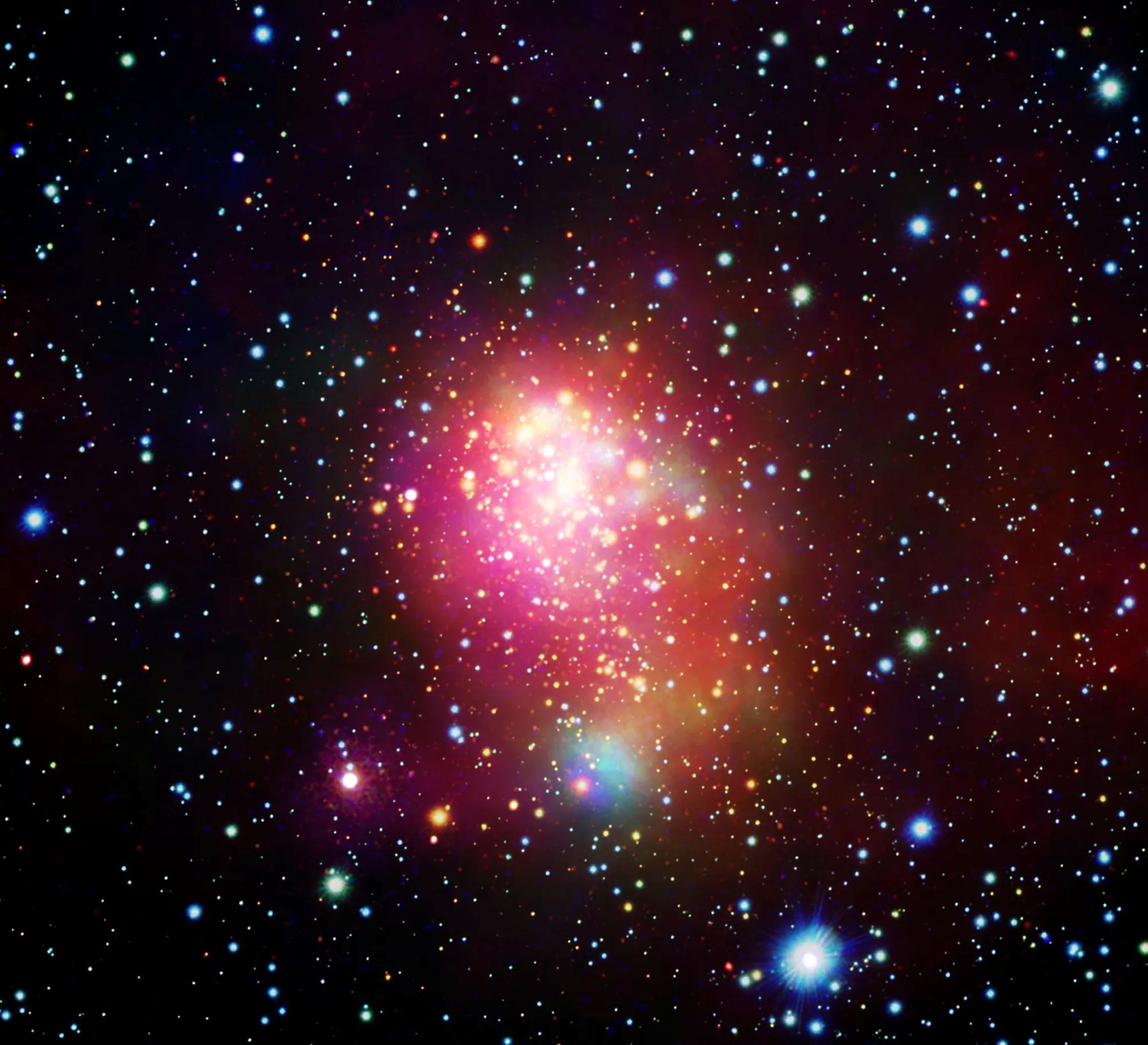
‘Super’ Star Cluster Shines in New Look From NASA’s Chandra
Westerlund 1 is the biggest and closest “super” star cluster to Earth. New data from NASA’s Chandra X-ray Observatory, in combination with other NASA telescopes, is helping astronomers delve deeper into this galactic factory where stars are vigorously being produced. This is the first data to be publicly released from a project called the Extended Westerlund 1 and 2 Open Clusters Survey, or EWOCS, led…
Read More » -
NASA
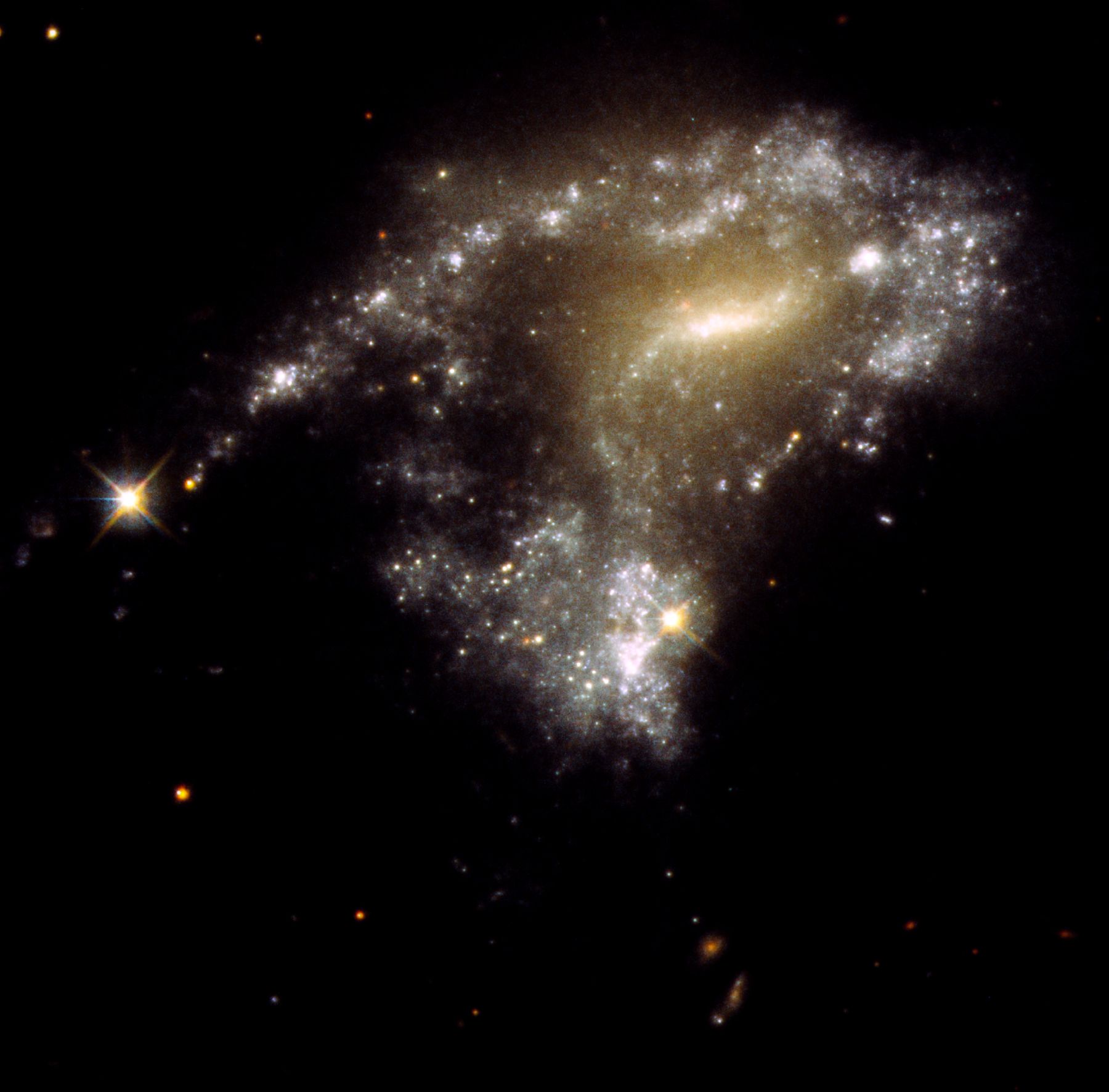
NASA’s Hubble Traces ‘String of Pearls’ Star Clusters in Galaxy Collisions
Contrary to what you might think, galaxy collisions do not destroy stars. In fact, the rough-and-tumble dynamics trigger new generations of stars, and presumably accompanying planets. Now NASA’s Hubble Space Telescope has homed in on 12 interacting galaxies that have long, tadpole-like tidal tails of gas, dust, and a plethora of stars. Hubble’s exquisite sharpness and sensitivity to ultraviolet light have uncovered…
Read More »